Category: Blog

Your blog category

  • 12 Paver Patio Design Ideas That Feel Custom

    12 Paver Patio Design Ideas That Feel Custom

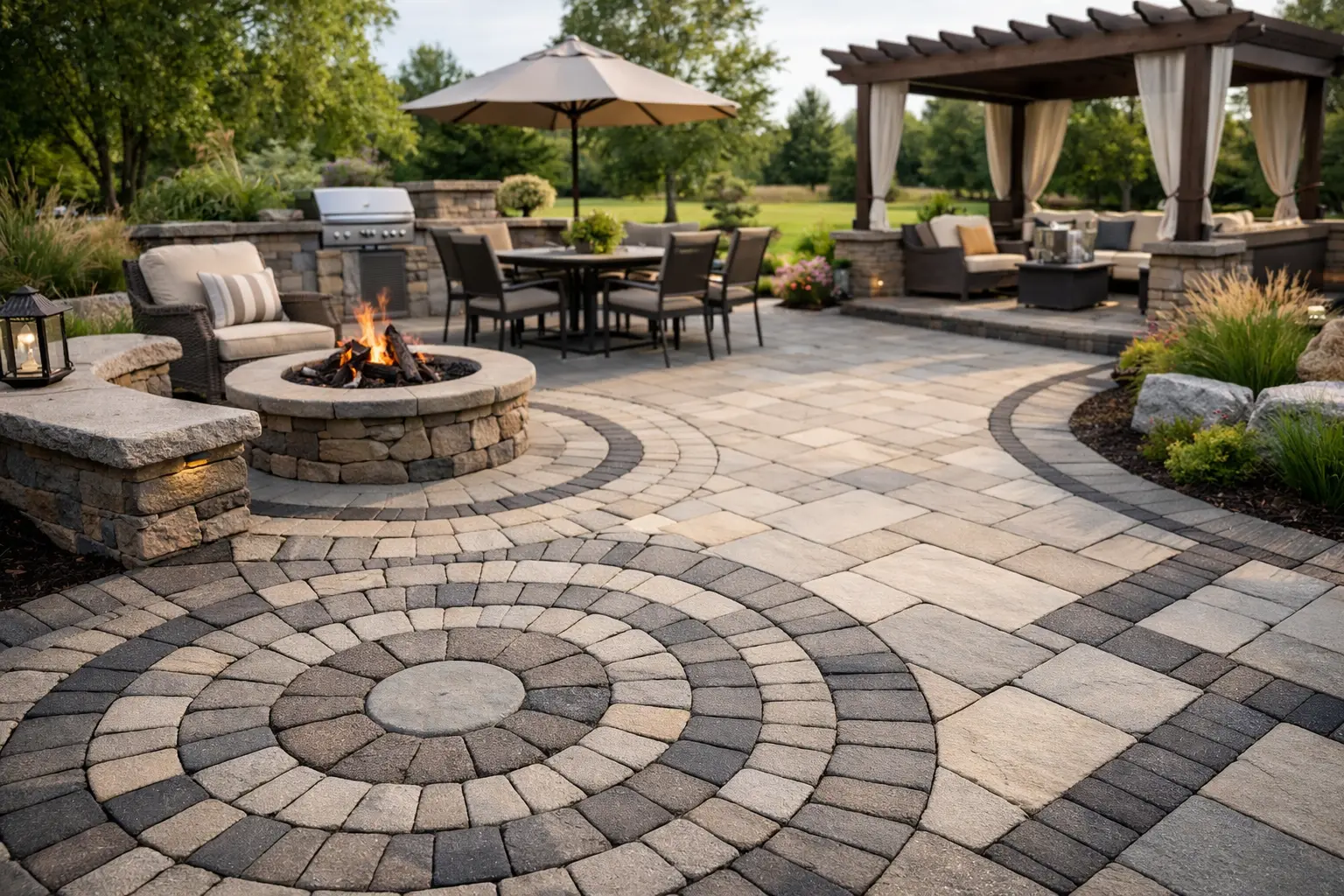
    A patio can either sit behind the house like an afterthought, or it can set the tone for the way you live outdoors. The best paver patio design ideas do more than fill space. They shape how guests arrive, where conversations happen, how dinner moves outside, and how your backyard feels at sunset.

    For homeowners investing in a higher-end outdoor environment, patio design is rarely just about choosing a paver color. It is about creating a setting that feels intentional from every angle – polished enough for entertaining, comfortable enough for daily use, and tailored to the architecture of the home. That is where thoughtful design makes the difference.

    What makes paver patio design ideas worth planning carefully

    Pavers offer a level of flexibility poured concrete simply cannot match. They can define a refined dining terrace, frame a resort-style pool deck, connect multiple destinations across the yard, or support a complete outdoor kitchen and fire feature composition. They also bring texture, pattern, and scale into the design in a way that feels custom rather than generic.

    That said, the most successful patios are not built from materials alone. Proportion, elevation, traffic flow, and the relationship between hardscape and landscape all matter. A beautiful paver selection can still feel flat if the layout ignores how the space will actually be used.

    12 paver patio design ideas for a more elevated backyard

    1. Create outdoor rooms instead of one oversized slab

    One large patio can seem practical on paper, but it often leaves the space feeling exposed and undefined. Breaking the layout into connected zones usually creates a more comfortable result. A dining terrace near the home, a lounge area under a pergola, and a fire pit circle a few steps away feels far more intentional.

    This approach also gives the backyard a sense of movement. Each space has a purpose, and the transitions between them make the entire design feel curated.

    2. Use contrasting borders to frame the patio

    A border is a small detail with a strong visual payoff. It can sharpen the perimeter of the patio, echo architectural lines from the house, and make the field pavers look more tailored.

    Contrast can be subtle or dramatic. A warm main paver with a charcoal border feels elegant and grounded, while a tone-on-tone combination creates definition without drawing too much attention. The right choice depends on the style of the home and how prominent you want the patio itself to feel.

    3. Let the pattern do some of the design work

    Pattern changes the personality of a patio quickly. Running bond can feel clean and contemporary. Herringbone tends to feel more classic and energetic. Modular patterns often suit larger spaces and higher-end homes because they create visual rhythm without looking busy.

    The trade-off is scale. A pattern that looks sophisticated on a broad entertaining terrace may feel too active in a compact courtyard. Pattern should support the space, not overpower it.

    4. Build around a focal point

    The strongest patios usually have a reason for the eye to settle. That focal point might be a fireplace, a water feature, a pool edge, a custom pergola, or even a statement dining table beneath a pavilion ceiling.

    Without a focal point, even expensive materials can feel scattered. With one, the entire patio starts to feel composed. It gives the design a center of gravity and helps every surrounding element make more sense.

    Paver patio design ideas that improve how the space functions

    5. Add built-in seating where people naturally gather

    Freestanding furniture has flexibility, but built-in seat walls bring structure. They define the edge of a patio, create extra seating for larger gatherings, and often help a space feel more complete.

    This is especially useful around fire features or patios with grade changes. A seat wall can solve a retaining need while also improving hospitality. That kind of layered function is what makes a backyard feel professionally designed.

    6. Blend the patio with an outdoor kitchen

    If outdoor cooking is part of the vision, the patio should support it from the beginning. Too often, homeowners add a grill island later and realize the layout no longer feels balanced.

    A better approach is to plan cooking, prep, dining, and circulation together. That may mean widening one section of the patio, changing the orientation of the dining area, or using paver bands to subtly define the kitchen zone. The result feels integrated instead of added on.

    7. Design for shade from day one

    In the Sunbelt, a patio that looks beautiful at noon but feels unbearable by 2 p.m. will not get used the way homeowners hope. Shade is not a luxury add-on. It is often essential to comfort.

    That can come from a pergola, pavilion, large umbrellas, or strategic tree placement. The right answer depends on sun exposure, budget, and whether the patio is intended for lounging, dining, or both. Permanent structures create the strongest visual presence, but even softer shade solutions should be considered early so the patio layout supports them.

    8. Use steps and elevation changes to add drama

    Not every backyard should be flattened into a single plane. Subtle changes in elevation can create a more dynamic experience and help large spaces feel more tailored.

    A raised lounge terrace, a few broad steps to a pool deck, or a sunken fire pit area can make the yard feel custom and expansive. Of course, level changes have to be handled carefully for safety and flow, especially in homes with frequent entertaining or multigenerational use. But when done well, grade becomes part of the design story.

    Design ideas that make a patio feel more custom

    9. Soften the edges with planting beds and low walls

    A paver patio should not feel dropped into the yard. It should feel anchored by the landscape around it. Layered planting beds, ornamental grasses, low evergreen structure, and seasonal color can soften hard edges and give the patio a finished look.

    Low garden walls can help as well. They create a graceful transition between patio and planting, especially in larger backyards where wide-open hardscape can feel too exposed without framing.

    10. Coordinate pavers with the home, not just the backyard

    One of the most overlooked paver patio design ideas is also one of the most important: choose materials that relate to the home itself. The paver tone, texture, and edge profile should feel connected to the house architecture, trim colors, and surrounding hardscape.

    A sleek modern home may call for larger-format pavers in restrained tones. A more traditional home may benefit from a textured surface and richer variation. Matching everything perfectly is not the goal. Harmony is.

    11. Extend the patio into connected walkways

    A patio feels more luxurious when it is part of a full outdoor composition rather than an isolated platform. Walkways that lead to the side yard, pool area, garden destination, or front approach can tie the property together beautifully.

    This is also practical. Guests should not have to cut across turf to reach the fire pit or outdoor bar. When paths are designed into the experience, the backyard feels easier to use and far more polished.

    12. Add lighting that highlights the hardscape at night

    Some patios look excellent during the day and disappear after dark. That is a missed opportunity, especially for homeowners who love evening entertaining.

    Integrated lighting in seat walls, step risers, columns, and nearby landscape beds can completely change the mood of the space. It adds safety, yes, but it also makes the patio feel warm, layered, and ready for guests long after sunset. A well-lit hardscape has a quiet kind of luxury.

    How to choose the right patio direction for your home

    The right patio concept depends on how you want the space to live. If your weekends center on dinner parties and long family meals, the layout should prioritize shade, dining space, and easy kitchen access. If your ideal evening involves cocktails by a fire feature, the lounge zone may deserve the most prominent location and best views.

    Budget matters too, but so does sequencing. Some homeowners prefer to phase the project, starting with the primary patio and planning for a pavilion, outdoor kitchen, or pool integration later. That can work well, as long as the original layout is designed with the full vision in mind. Otherwise, future additions can feel forced.

    This is where professional planning becomes valuable. A patio is rarely just a patio in a luxury backyard. It is the foundation for everything around it. At Beyond Backyard Living, that larger perspective is what turns separate features into one cohesive outdoor experience.

    The best patio is not simply the one with the most expensive pavers or the largest footprint. It is the one that fits your home, supports your lifestyle, and makes the backyard feel like a place people naturally want to stay a little longer.
  • 12 Outdoor Pizza Oven Ideas for Luxury Backyards

    12 Outdoor Pizza Oven Ideas for Luxury Backyards

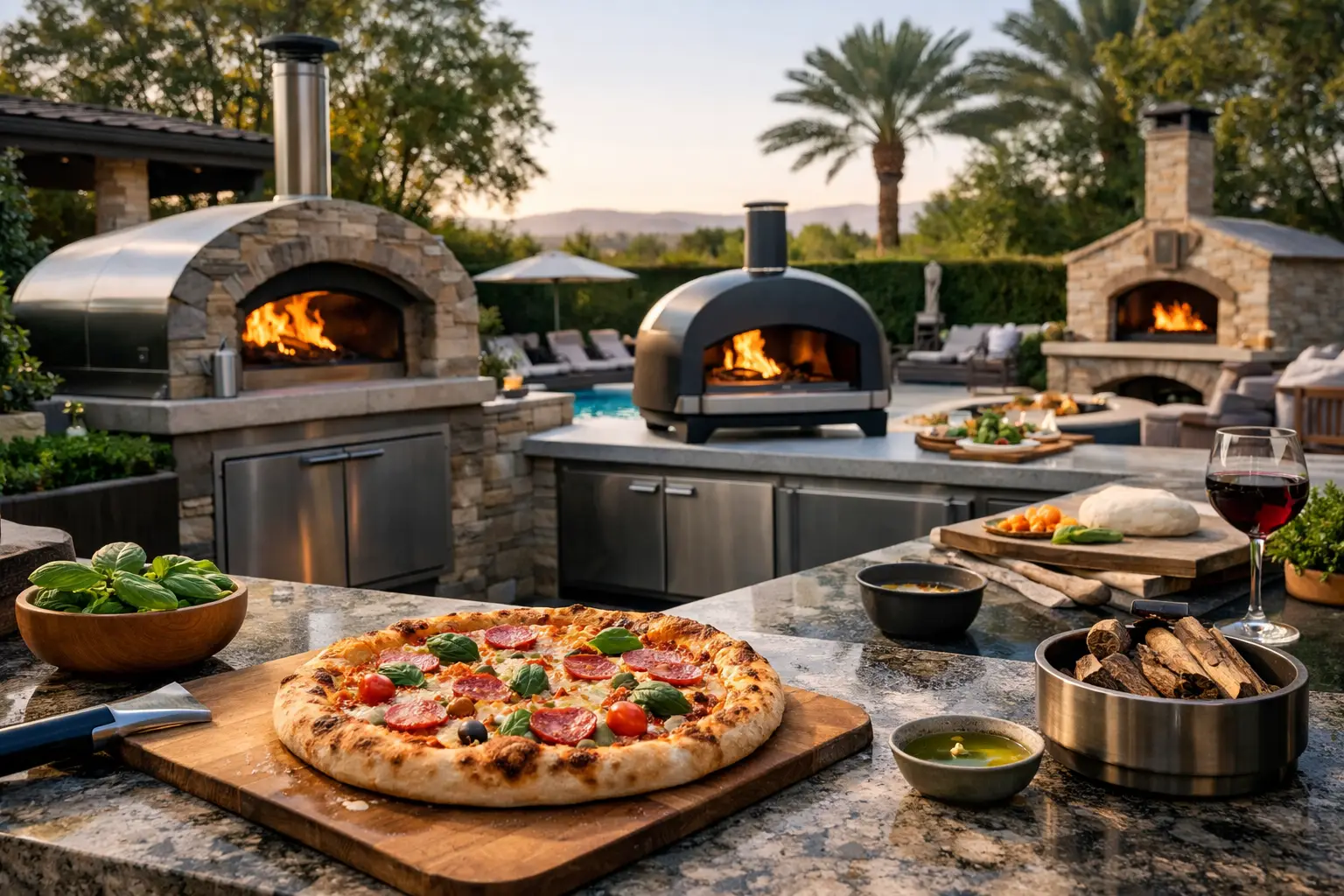
    A pizza oven changes the rhythm of a backyard. Instead of cooking inside and carrying plates out, the meal becomes part of the gathering. Guests linger near the fire, conversations start naturally, and the entire outdoor space feels more alive. That is why outdoor pizza oven ideas deserve more thought than simply picking a spot and choosing a finish.

    In a well-designed backyard, a pizza oven is not just an appliance. It can be a focal point, a social anchor, or the feature that ties an outdoor kitchen, lounge area, and dining space together. The best concepts feel effortless when you use them, but they are carefully planned around flow, proportion, materials, and the way your family actually entertains.

    What makes outdoor pizza oven ideas work

    The strongest outdoor pizza oven ideas begin with a simple question: how do you want people to gather? Some homeowners picture casual family pizza nights with kids shaping dough at the counter. Others want a polished entertaining space where cocktails, appetizers, and wood-fired entrées are all part of the experience.

    That difference matters. A compact oven tucked into a patio corner can be perfect for intimate use, while a larger built-in composition with generous prep space makes sense for frequent hosting. The oven itself may be the visual star, but the surrounding layout determines whether the space feels convenient or cramped.

    Heat, smoke direction, seating distance, and countertop access all need to be resolved early. So do aesthetics. A pizza oven can blend quietly into a refined hardscape or become a sculptural centerpiece with stone, stucco, brick, or tile detailing. Neither approach is better across the board. It depends on whether you want your backyard to read as understated and architectural or warm and expressive.

    12 outdoor pizza oven ideas to inspire your design

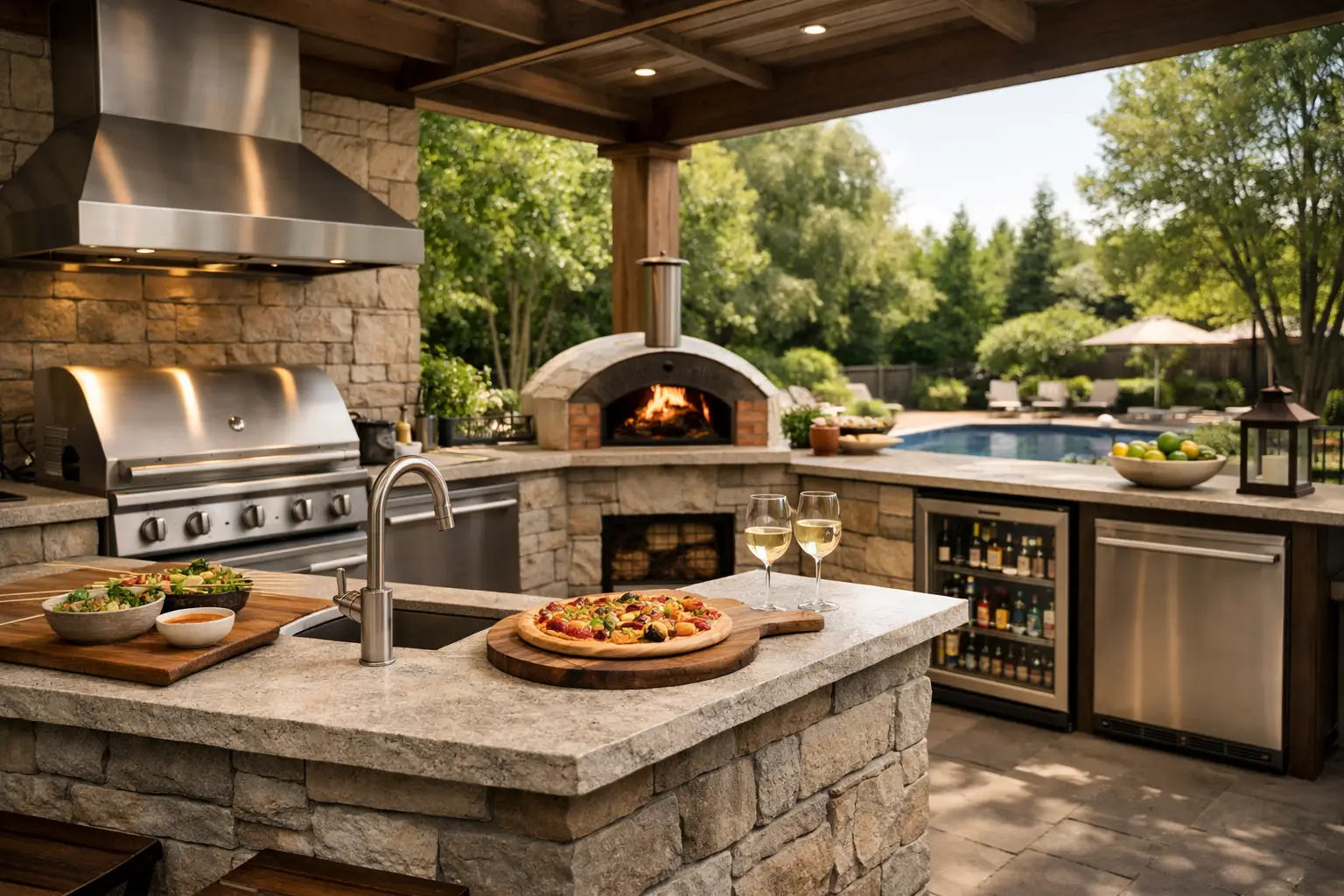
    1. Build the oven into a full outdoor kitchen

    This is often the most functional option for homeowners who love to entertain. When the pizza oven sits beside a grill, refrigeration, storage, and prep counters, everything works together as one cooking destination. You are not running back and forth to the house or balancing trays on a small side shelf.

    The advantage here is cohesion. A full kitchen composition can be designed to match the home and surrounding patio, making the oven feel like part of a complete outdoor living environment rather than a separate add-on.

    2. Make it the focal point of a covered pavilion

    A pizza oven under a pavilion creates instant atmosphere. The architecture frames the feature, gives the cooking zone a sense of permanence, and extends usability in both hot sun and light rain. For many Sunbelt homeowners, shade is not a luxury. It is what makes outdoor spaces comfortable for longer stretches of the year.

    This idea works especially well when the pavilion also shelters bar seating or a dining table. The cooking fire adds warmth and energy, while the structure gives the entire area a resort-like presence.

    3. Use stone for a timeless, estate-style look

    Natural stone or manufactured stone veneer gives a pizza oven weight and character. It feels rooted, substantial, and custom. If your property already includes retaining walls, columns, a fireplace, or stone-edged planting beds, repeating that material helps the oven belong to the larger design.

    Stone is ideal when you want the feature to feel enduring rather than trendy. The trade-off is that it can read heavier visually, so proportion matters. On a smaller patio, too much mass can overwhelm the space.

    4. Choose smooth stucco for a cleaner architectural finish

    If your home leans Mediterranean, modern, or transitional, stucco can produce a refined, sculptural effect. It allows the oven to feel elegant and tailored, especially when paired with simple counters, restrained color palettes, and crisp hardscape lines.

    This approach is often less rustic than brick or rough stone. It suits homeowners who want warmth from the live fire without making the backyard feel overly old-world.

    5. Create a pizza-and-cocktails entertaining zone

    Not every oven needs to anchor a full chef’s kitchen. Sometimes the smartest move is a more social arrangement with the oven, a beverage station, an ice maker, and a few generous counters for serving boards, wine, and appetizers.

    This setup shifts the emphasis from heavy cooking to relaxed hosting. It is ideal for people who imagine guests gathering around the process instead of sitting far away while one person works alone.

    6. Pair the oven with a fireplace or fire pit

    Fire draws people in. When a pizza oven is placed near a fireplace or adjacent fire pit lounge, the entire backyard takes on a layered, welcoming mood. You cook in one zone, then settle into another without losing the visual connection.

    The key is spacing. These elements should feel related, not crowded together. Done well, the oven becomes part of a broader fire-centered experience that carries the evening long after dinner ends.

    7. Add bar seating for interactive cooking

    One of the simplest outdoor pizza oven ideas is also one of the most effective: give people a place to sit close to the action. Bar-height seating turns cooking into entertainment. Guests can watch pizzas go in, talk with the cook, and stay connected to the meal as it happens.

    This arrangement works particularly well for families and frequent hosts. It creates a more inclusive atmosphere than pushing the oven off to the side with no room to gather.

    8. Design it into a poolside retreat

    In a luxury backyard, the best features rarely stand alone. A pizza oven near the pool can help the space work all day, from casual lunches with kids to evening entertaining after a swim. The oven gives the pool area a stronger hospitality feel, almost like a private club built around comfort and ease.

    You do need to think through circulation. Wet traffic, dining traffic, and cooking traffic should move smoothly without crossing awkwardly.

    9. Use lighting to make the oven glow after dark

    A pizza oven naturally creates visual drama at night, but the surrounding lighting determines whether that drama feels polished. Under-counter lighting, sconces, uplighting on nearby structures, and soft illumination along paths can make the oven zone feel intentional instead of isolated.

    This matters more than many homeowners expect. If your backyard is primarily used in the evening, lighting is part of the design, not an accessory added later.

    10. Frame it with dedicated dining space

    A pizza oven tends to work best when dining is close enough to feel connected. That does not mean cramming a table beside the oven. It means creating a clear relationship between cooking and eating so the experience feels natural.

    A long farmhouse table, a round table for family-style meals, or even a built-in banquette can all complement the oven depending on your layout. The right choice depends on whether you host large groups, intimate dinners, or both.

    11. Blend it into a multi-level patio plan

    If your yard has grade changes or a more expansive footprint, a multi-level layout can give the pizza oven its own destination. Perhaps the lounge sits near the house, the dining terrace steps down slightly, and the oven anchors the transition between the two.

    This can make a large backyard feel organized and purposeful. It also helps define each use area without making the design feel chopped up.

    12. Let the oven reflect the personality of the property

    Some backyards call for classic brick and old-world warmth. Others want clean lines, pale stone, and a more contemporary silhouette. The most memorable outdoor pizza oven ideas are not copied from a catalog. They are tailored to the architecture, the landscape, and the lifestyle of the people using them.

    That is where custom design makes such a difference. A beautifully built oven should feel inevitable in its setting, as if it was always meant to be there.

    How to choose the right idea for your space

    Start with how often you will really use it. If pizza night is an occasional treat, a simpler standalone installation may be enough. If you host often and want a true outdoor culinary experience, it usually makes sense to build the oven into a larger kitchen and entertaining plan.

    Then look at the backyard as a whole. The oven should support the way the rest of the space functions. Sightlines from the house, proximity to dining, access to utilities, and comfort in different seasons all play a role.

    Budget matters too, but value is not just about initial cost. A thoughtfully integrated oven can add more enjoyment and visual impact than a cheaper installation that feels disconnected. Premium outdoor spaces perform best when every feature belongs to a unified vision.

    For homeowners investing in a full transformation, this is often the difference between a backyard that looks upgraded and one that truly lives beautifully. That is the standard Beyond Backyard Living is built around – designing spaces where craftsmanship, hospitality, and everyday enjoyment come together in a way that feels effortless.

    A pizza oven has a way of making a backyard feel more generous. Not just more luxurious, but more inviting, more memorable, and more used. If you are planning one, think beyond the oven itself and design for the kind of evenings you want to keep having again and again.

  • 12 Outdoor Kitchen Design Ideas That Work

    12 Outdoor Kitchen Design Ideas That Work

    Picture a warm Saturday evening, the grill is going, drinks are set out, and nobody wants to be stuck running back and forth into the house. That is where thoughtful outdoor kitchen design ideas start to matter. The best ones do more than add a grill island – they shape how your backyard feels, how guests gather, and how easily your home shifts from private retreat to favorite hosting destination.

    For a high-end home, an outdoor kitchen should feel intentional, not improvised. It needs to belong to the architecture, support the way your family entertains, and hold up beautifully through heat, sun, rain, and regular use. A great design is not about adding every feature available. It is about choosing the right layout, materials, and details so the space feels effortless when you are using it and striking when you are not.

    Outdoor kitchen design ideas that start with layout

    Most homeowners begin with appliances, but layout drives everything. If the kitchen is too far from the dining area, meals feel disconnected. If seating crowds the cooking zone, guests end up in the way. If there is no visual relationship to the pool, fire feature, or patio lounge, the space can feel like an add-on instead of part of a larger outdoor living plan.

    A straight island works well when the goal is a clean, modern footprint with room for prep and casual seating. An L-shaped layout creates better separation between cooking and serving, which is helpful for families who entertain often. A U-shaped kitchen can feel especially luxurious because it creates a true room-like experience outdoors, though it needs enough square footage to avoid feeling tight.

    There is also the question of proximity to the home. Keeping the kitchen near the back door simplifies utilities and food transport. Moving it deeper into the yard can create a resort-like destination, especially when paired with a pool, pavilion, or fireplace. The right choice depends on how you want the backyard to function, not just where there is available space.

    Build around how you actually entertain

    Some homeowners want a chef-driven setup with serious cooking power, refrigeration, storage, and generous prep space. Others are building around relaxed weekend hosting, where the kitchen acts more like a social anchor with a grill, beverage station, and bar seating. Both can be beautiful. The difference is in what the space needs to support.

    If you host large groups, consider wider landing zones beside the grill, dedicated serving counters, and enough circulation space for multiple people to move comfortably. If your gatherings are smaller and more intimate, the kitchen can lean into atmosphere with a pizza oven, statement lighting, or a cozy counter where guests linger with a glass of wine while dinner cooks.

    This is where custom design makes a visible difference. A kitchen built around your entertaining style feels natural from the beginning. One built from standard modules can look polished at first but may miss the details that make the space truly enjoyable to use.

    Choose materials that feel elevated and last

    Luxury outdoors is never just about looks. Materials have to perform. Cabinetry, countertops, cladding, and flooring all need to handle weather exposure, temperature swings, and frequent cleaning without losing their finish or appeal.

    Natural stone adds depth, texture, and permanence, especially when it is coordinated with surrounding patios, retaining walls, or architectural features. Porcelain surfaces offer a refined, low-maintenance option and work particularly well in contemporary spaces. Stainless steel remains a strong choice for appliance components and certain cabinet applications, though it can read more commercial if it is not balanced with warmer finishes.

    The most successful palettes usually mix durable performance materials with visually rich textures. Stone veneer on the island base, a sleek countertop, warm wood-look ceiling detail under a pavilion, and pavers that tie into the rest of the backyard can create a kitchen that feels designed rather than assembled.

    Create zones, not just one cooking station

    One of the strongest outdoor kitchen design ideas is to think beyond a single grill island. The most memorable spaces use zones to make entertaining easier and more comfortable. A cooking zone keeps heat and activity contained. A prep and serving zone gives you room to plate and organize. A beverage zone allows guests or kids to grab drinks without crossing into the chef’s path.

    This kind of planning is especially valuable in larger backyards where the outdoor kitchen is part of a broader entertainment setting. If there is a dining terrace nearby, the kitchen should support it. If there is a lounge by the fire pit or pool, the kitchen should connect visually and functionally. When each zone has a role, the entire yard feels more composed.

    Cover matters more than many homeowners expect

    In the Sunbelt, weather is part of the design conversation from day one. Shade is not optional if you want the kitchen to be comfortable in the hottest months. A covered structure also protects finishes, expands the hours you can use the space, and gives the kitchen more architectural presence.

    A pavilion creates a substantial, resort-style feel and makes room for lighting, fans, speakers, and even a mounted television. A pergola offers a lighter visual footprint and can still define the kitchen beautifully, though it provides less complete protection. In some designs, a roof extension from the home creates the most cohesive look of all.

    The right overhead structure depends on the style of the house, the amount of exposure, and whether you want the kitchen to function in light rain or intense summer sun. It is one of the decisions that affects both comfort and long-term value.

    Lighting is what keeps the space alive after sunset

    A beautiful outdoor kitchen should not disappear at dusk. Lighting is what turns it from daytime feature to evening destination. It also affects safety, mood, and how luxurious the finished project feels.

    Task lighting near the grill and prep surfaces is essential. Ambient lighting under a pavilion ceiling or along surrounding hardscape softens the space and makes it inviting. Accent lighting can highlight stonework, bar fronts, nearby landscaping, or architectural details that deserve to be seen at night.

    This is an area where restraint matters. Too little light makes the kitchen impractical. Too much creates glare and flattens the atmosphere. The goal is a layered effect that feels warm, easy, and intentional.

    Add appliances selectively

    More is not always better. Premium outdoor kitchens often look strongest when the appliance package is edited to fit the lifestyle rather than loaded with every possible upgrade. A built-in grill is usually the centerpiece, but beyond that, choices should be based on use.

    A pizza oven creates a strong focal point and brings a fun, social energy to the space. Refrigeration is useful for frequent entertainers who want cold drinks and ingredients close at hand. An ice maker can be a smart addition in hot climates. Side burners, smokers, and warming drawers have their place, but only if they match how you cook.

    Every added appliance increases cost, utility requirements, and maintenance. The smartest investment is often in better layout, better materials, and better integration rather than simply more equipment.

    Make seating part of the design

    An outdoor kitchen becomes more welcoming when people have a reason to stay close. Counter seating is one of the simplest ways to make that happen. It allows conversation during meal prep and keeps the host connected to guests instead of isolated behind the grill.

    That said, seating needs enough space to work comfortably. Cramped stool placement can make the island look finished in photos but awkward in real life. If the kitchen is already near a dining area or lounge, you may not need a long bar. If the kitchen is the main social hub, then seating becomes more important and may deserve a larger footprint.

    This is one of those design choices where scale matters. The best kitchens feel balanced within the larger backyard, not oversized for the patio or undersized for the entertaining style.

    Tie the kitchen into the full backyard vision

    The most impressive outdoor kitchens are rarely stand-alone features. They are part of a complete environment with coordinated hardscaping, planting, architectural structures, and gathering areas. The kitchen should feel like it belongs to the pool terrace, the fireplace lounge, the dining space, and the home itself.

    That is why design continuity matters so much. Repeating materials, colors, and lines across the project helps the yard feel finished and high-end. A kitchen with one style, a patio with another, and a pergola that feels unrelated can weaken the overall effect, even if each feature is attractive on its own.

    For homeowners planning a major backyard transformation, this bigger-picture approach usually delivers the strongest result. It also helps prioritize where to invest for the most visual and lifestyle impact. A well-designed kitchen is powerful. A well-designed kitchen inside a cohesive outdoor living plan is what turns a backyard into a destination.

    Why custom outdoor kitchen design ideas pay off

    There is a clear difference between adding an outdoor cooking area and creating an outdoor kitchen that elevates the entire property. Custom design accounts for traffic flow, views, sun exposure, utilities, storage, seating, and the way every element works together. It also allows the finished space to reflect your home instead of looking like a prefabricated feature set in the yard.

    For homeowners who want a polished result, the details matter. Counter overhangs, venting, drainage, finish transitions, and placement of every appliance all affect the daily experience of the space. These are not the glamorous decisions, but they are often what determine whether the kitchen simply looks good or truly lives well.

    At Beyond Backyard Living, that full-picture thinking is what transforms outdoor spaces from functional to unforgettable. The right kitchen does not just give you a place to cook. It gives your backyard a center of gravity – a place where conversations stretch longer, celebrations feel easier, and home starts to feel a little more like a private resort.

    If you are collecting outdoor kitchen design ideas, look past the features that photograph well and focus on the space you want to create. The most rewarding designs are the ones that still feel beautiful after the guests leave, when the lights are low and the backyard finally feels like the escape you had in mind.

  • 12 Luxury Home Exterior Design Ideas

    12 Luxury Home Exterior Design Ideas

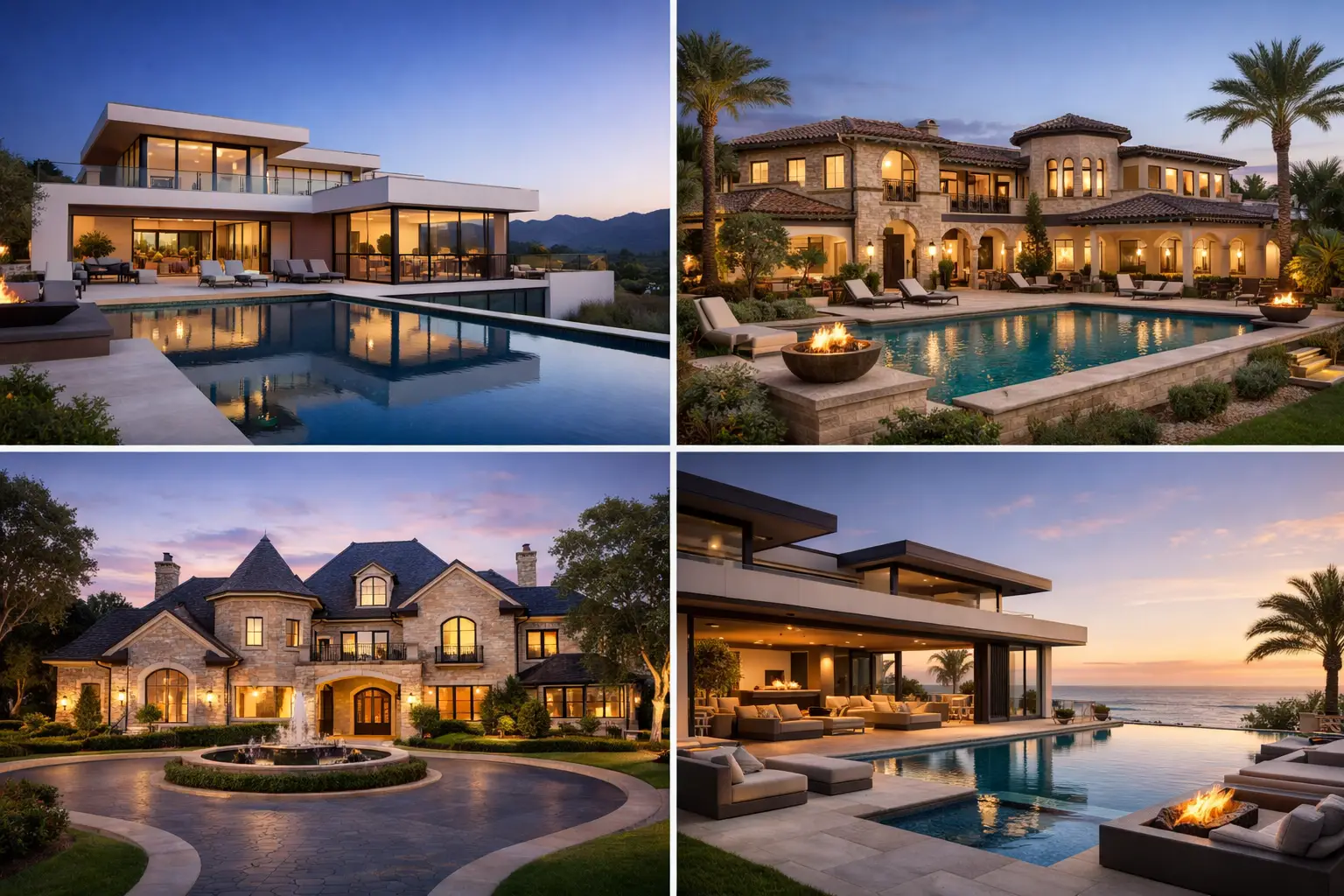
    The homes that feel truly elevated rarely rely on one standout feature. What sets them apart is how every exterior element works together – architecture, hardscape, lighting, planting, water, and gathering space all speaking the same language. The best luxury home exterior design ideas do not chase trends. They create a property that feels intentional from the street to the far edge of the backyard.

    For homeowners investing in a high-end outdoor environment, that distinction matters. A beautiful pool can still feel disconnected if the patio materials fight the home’s facade. A stunning front walk can lose impact if the lighting is flat or the planting feels generic. Luxury lives in cohesion, craftsmanship, and the way the space supports how you actually want to live outdoors.

    What luxury home exterior design ideas get right

    At the luxury level, exterior design is not about adding more. It is about editing with confidence. Every material choice, transition, and focal point should contribute to a complete experience. That means curb appeal matters, but so do the spaces behind the house where people gather, relax, cook, and celebrate.

    This is where a full-property mindset changes the result. Instead of treating the driveway, front entry, pool deck, outdoor kitchen, and landscape as separate projects, the strongest designs connect them. The home feels larger, more refined, and more memorable because the outdoor areas are planned as part of the architecture, not as accessories.

    1. Create a front entry that feels like an arrival

    Luxury begins before anyone steps inside. A front approach should feel composed and welcoming, with a clear sense of movement toward the entry. Wide walkways, generous landings, symmetrical framing, and layered lighting can all elevate the experience.

    Material selection matters here. Natural stone, large-format pavers, architectural concrete, or richly textured brick create weight and permanence. If the house has strong architectural lines, the path and entry should support them rather than compete with them. In some homes, that means crisp geometry. In others, it means a softer, estate-style approach with curved planting beds and a more gradual reveal.

    2. Upgrade the driveway from functional to statement-making

    A luxury exterior often announces itself with the driveway. It covers a large visual footprint, so treating it as an afterthought leaves value on the table. Paver driveways, decorative borders, custom inlays, and coordinated apron details can dramatically improve the presentation of the home.

    This is also an area where trade-offs matter. A dramatic pattern may look impressive in photos, but if it overwhelms the architecture, it can feel busy. The strongest solutions usually balance visual interest with restraint. The goal is polish, not noise.

    3. Use outdoor lighting as architecture after dark

    A well-designed lighting plan changes everything. It adds depth, extends usability, and gives the property presence at night without feeling theatrical. The most elegant lighting does not flood every surface. It highlights the right surfaces.

    Soft uplighting on specimen trees, subtle illumination along walkways, warm light at entry columns, and gentle washes across stone walls can make the entire property feel composed and secure. In entertaining spaces, lighting should shift with the mood. Dining areas need clarity, lounge areas benefit from warmth, and water features come alive when lit with intention.

    Luxury home exterior design ideas for outdoor living

    For many high-end homeowners, the backyard is where luxury becomes personal. It is one thing to admire a beautiful exterior from the curb. It is another to step into a space designed for long dinners, poolside afternoons, game days, and quiet evenings by the fire.

    4. Design distinct outdoor rooms

    The most memorable backyards are not one large patio with furniture scattered across it. They are organized into zones that feel purposeful. A dining terrace, lounge area, outdoor kitchen, fire feature, and pool deck can all relate to one another while serving different moments.

    This does not require a massive property, but it does require planning. Grade changes, retaining walls, pergolas, seat walls, and planting can define space without making it feel chopped up. The result is a backyard that feels curated and comfortable rather than oversized and empty.

    5. Build an outdoor kitchen people actually use

    A luxury outdoor kitchen should do more than look impressive next to a grill. It should support real entertaining. That means enough counter space, thoughtful appliance placement, durable finishes, shade where appropriate, and easy movement between cooking, serving, and dining.

    For some families, a built-in grill and refrigeration are enough. For others, the dream includes a pizza oven, bar seating, storage, and space for multiple hosts to move comfortably. It depends on how often you entertain and how ambitious your outdoor cooking tends to be. The best design starts there, not with a generic appliance package.

    6. Make water a focal point, not just an amenity

    A pool can absolutely anchor a luxury property, but shape, placement, and surrounding materials determine whether it feels integrated or isolated. In stronger designs, the pool relates directly to the home, the primary gathering spaces, and the broader landscape.

    Water can also show up in quieter ways. A raised spa with spillover detail, a custom fountain near the entry, or a waterfall built into a retaining wall can add movement and sound without demanding the entire spotlight. These choices often bring a resort-like quality to the property, especially when paired with layered lighting and premium stonework.

    7. Add fire for warmth and atmosphere

    Few elements invite people to linger like fire. An outdoor fireplace adds structure and vertical presence, while a fire pit creates a more casual, social center. Both can become signature features when they are scaled well and finished with materials that echo the home.

    If the backyard already includes a pool, kitchen, and pavilion, fire often provides the emotional balance. Water cools the scene. Fire warms it. Together, they create a space that feels complete across seasons and occasions.

    8. Use shade structures to add comfort and character

    In warm climates, comfort drives design decisions. Shade is not optional if you want outdoor spaces that perform beautifully through long summers. Pergolas, pavilions, covered patios, and architectural roof extensions can make the difference between a backyard that looks good and one that gets used.

    There is also a visual payoff. Shade structures add height, rhythm, and a sense of enclosure. They help outdoor rooms feel finished, especially when paired with ceiling details, fans, lighting, and well-proportioned columns or beams.

    9. Elevate the landscape beyond basic planting

    Planting design is one of the clearest separators between a standard exterior and a luxurious one. Luxury landscapes feel layered and intentional. They use structure, texture, repetition, and seasonal interest to frame views and soften hardscape.

    This does not mean stuffing every bed with variety. In fact, too many plant types can make a high-end property feel visually restless. Cleaner massing, sculptural trees, evergreen anchors, and a restrained palette often deliver a more sophisticated look. In the Sunbelt, climate performance should shape those decisions. A lush look is possible, but it should still be realistic for heat, sun, irrigation, and maintenance.

    10. Treat retaining walls and grade changes as design features

    On sloped properties, retaining walls are often necessary. On luxury properties, they can also become part of the visual identity of the space. Stone-faced walls, integrated stairs, built-in seating, and planting pockets can turn grade management into architectural interest.

    This is one of those areas where craftsmanship shows immediately. Poor transitions, awkward stair placement, or walls that feel purely utilitarian can pull down the whole design. When handled well, these features make the property feel grounded and custom.

    11. Bring in recreation without losing elegance

    Basketball courts, putting greens, and other backyard recreation elements are increasingly popular in luxury exterior design, especially for families who want their home to support everyday fun as well as entertaining. The challenge is integration.

    A recreation feature should feel designed into the property, not dropped onto it. That may mean strategic placement, landscape screening, premium surfacing, or surrounding architecture that helps it belong. The right solution lets the space be playful without sacrificing sophistication.

    12. Choose materials that age with grace

    Many luxury home exterior design ideas look impressive in the short term but lose their appeal if the materials weather poorly or feel trendy within a few years. Timelessness is part of luxury. Natural stone, quality pavers, rich wood tones, architectural concrete, and durable metal accents tend to hold up better visually than overly fashionable finishes.

    That does not mean every property should look traditional. Modern homes can be extraordinary with a restrained palette and crisp detailing. Transitional homes often benefit from mixing clean lines with warmer textures. The key is choosing materials that fit the architecture and climate, then carrying them consistently across the property.

    The real luxury is a cohesive plan

    The biggest mistake in exterior design is making expensive decisions in isolation. A homeowner invests in a patio one year, a pool the next, lighting later, and planting somewhere in between. Each element may be attractive on its own, but the final property still feels pieced together.

    A luxury result usually starts with a complete vision. That does not mean every feature has to be built at once. It means the layout, materials, grading, circulation, and style are considered together from the beginning. That is how front and back spaces feel connected. That is how entertaining becomes easier. That is how a property starts to feel like a private resort instead of a series of upgrades.

    For homeowners ready to think bigger, that is where the transformation happens. Beyond Backyard Living approaches exterior design with that full-picture mindset, shaping spaces that are not only beautiful but deeply livable. When the plan is right, every step outside feels like arriving somewhere special.

    The most compelling exterior is not the one with the most features. It is the one that fits your home, your routines, and the way you want people to feel when they arrive and stay awhile.

  • Luxury Outdoor Living Rooms That Feel Custom

    Luxury Outdoor Living Rooms That Feel Custom

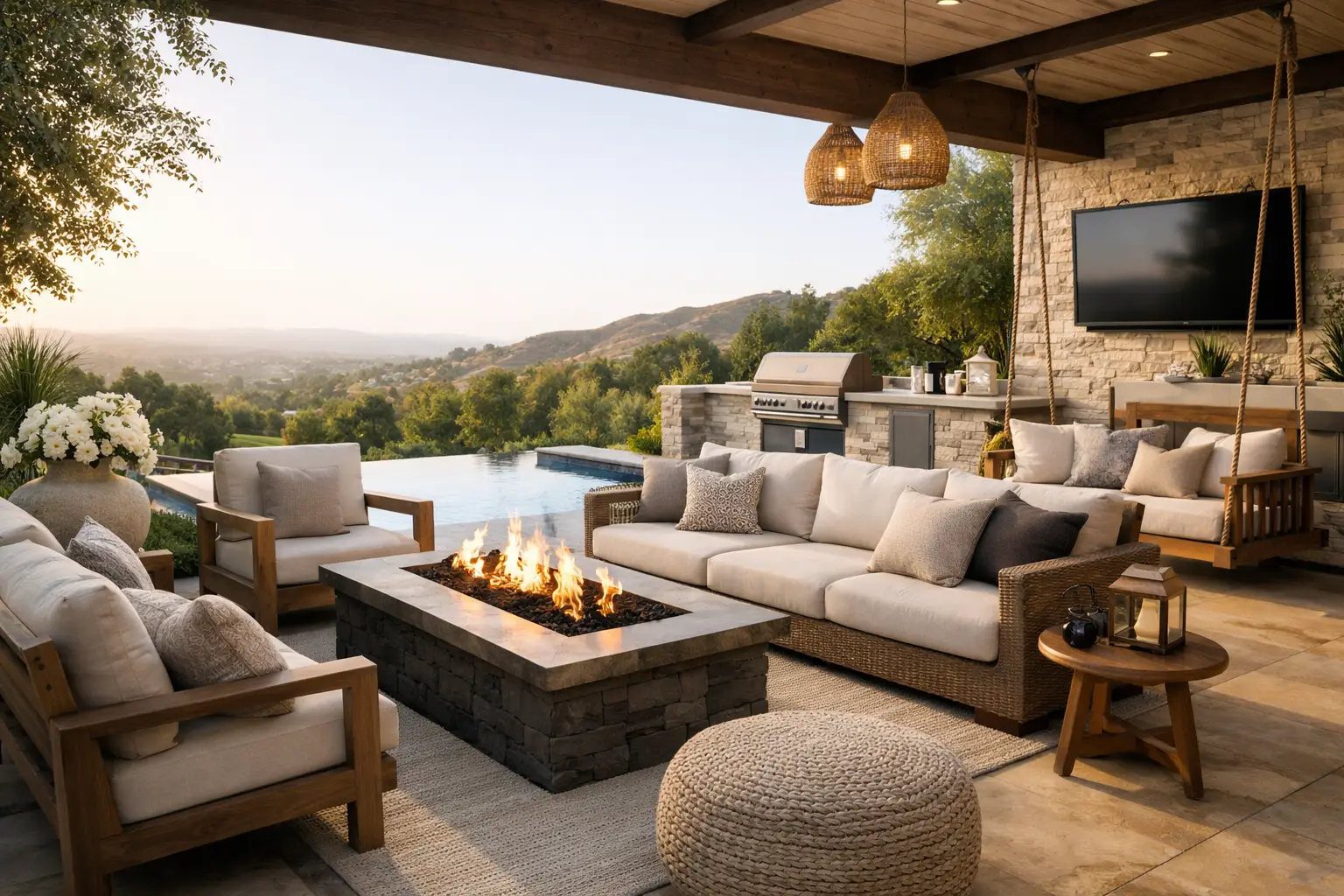
    A few well-placed chairs on a patio can give you a place to sit outside. But luxury outdoor living rooms do something very different. They create a setting that feels intentional, comfortable, and fully connected to the way you want to live at home – whether that means slow mornings by the fire, family dinners under a pavilion, or weekends filled with guests who never want to leave.

    The difference is not just better furniture or a bigger budget. It is the way every element works together. Layout, shade, lighting, materials, views, and amenities all need to support the same experience. When they do, the backyard stops feeling like leftover square footage and starts feeling like one of the best rooms on the property.

    What makes luxury outdoor living rooms feel elevated

    The most successful outdoor living spaces do not try to copy an indoor family room piece for piece. They borrow the comfort, warmth, and usability of an interior space, then adapt it for open air, weather, and the natural rhythm of the property.

    That usually begins with a clear sense of purpose. Some homeowners want a relaxed lounge centered around a fireplace and conversation seating. Others want an entertainment hub near the pool with a bar, outdoor kitchen, and layered lighting for evening gatherings. Some need both. Luxury comes from designing for real use, not from adding features simply because they look impressive in a photo.

    Scale also matters more than many people expect. A space can have beautiful finishes and still fall flat if the proportions are off. Seating that is too spread out feels cold. A fire feature that is too small gets visually lost. A pavilion that is oversized can dominate the yard rather than frame it. The most polished spaces feel balanced from every angle.

    Designing luxury outdoor living rooms around lifestyle

    Before selecting stone, fabrics, or appliances, it helps to ask a more revealing question: how do you want people to feel in the space?

    If the answer is relaxed and tucked away, the design may lean toward softer edges, layered plantings, warmer lighting, and a more intimate seating arrangement. If the goal is to entertain often, the plan may open up into larger gathering zones with defined circulation, durable surfaces, and easy access to cooking and serving areas. Neither approach is better. It depends on how the backyard will actually be used through the year.

    For many Sunbelt homeowners, shade becomes one of the first luxury decisions, not an afterthought. A stunning lounge area will not get much use in midsummer if there is no meaningful relief from direct sun. Pergolas, pavilions, covered patios, strategically placed trees, and ceiling fans all shape comfort in a major way. Shade also affects mood. It can make a space feel resort-like, private, and calm.

    Proximity to the home matters too. An outdoor living room placed just off the back door can feel like a true extension of the interior, which is ideal for everyday use and entertaining. A more secluded lounge farther into the landscape can feel like a destination. Some properties benefit from both – one space for convenience, another for retreat.

    The materials that separate premium spaces from average ones

    Luxury is often felt before it is named. It shows up in the texture underfoot, the visual weight of a wall, the way a step is detailed, and how materials age over time.

    That is why premium outdoor living rooms usually rely on materials chosen for both beauty and performance. Natural stone, high-end pavers, architectural concrete, stained or painted wood accents, and thoughtfully selected metals all bring character. The goal is not to overload the space with expensive finishes. It is to create a restrained, cohesive palette that looks refined in daylight and even better at dusk.

    Durability deserves as much attention as style. In warm climates, materials have to stand up to UV exposure, heat, rain, and frequent use. Cushions need performance fabrics. Cabinetry and countertops in adjacent kitchens need to handle the elements. Flooring needs traction as well as visual appeal. A luxury space that becomes difficult to maintain quickly loses its shine.

    This is also where custom design earns its value. Off-the-shelf solutions can work for smaller upgrades, but a truly integrated outdoor room often requires details tailored to the home’s architecture, lot conditions, and family habits. That might mean a seat wall that doubles as casual party seating, a fireplace scaled precisely to anchor the patio, or a retaining wall that quietly creates level changes and privacy without interrupting the view.

    Comfort is the feature people remember most

    Beautiful hardscaping gets attention. Comfort gets use.

    When guests talk about an unforgettable backyard, they usually remember how easy it was to settle in. Deep seating, supportive cushions, layered shade, gentle lighting, and a sense of enclosure all matter more than a long list of accessories. The best outdoor living rooms feel inviting at first glance and even better after an hour.

    Temperature control plays a major role here. In some regions, that means a fireplace, fire pit, or infrared heating for cooler evenings. In hotter climates, it may mean misting elements, fans, pool adjacency, or strategic orientation to capture breeze and avoid western sun. A luxury environment should extend the season and increase the number of hours the space feels good to use.

    Sound can shape comfort as much as temperature. A subtle water feature can soften road noise and make the yard feel more private. Planting design can help buffer neighboring properties. Even the placement of speakers should feel deliberate, never harsh or overpowering. Luxury is not loud. It is controlled.

    Bringing the room together with layered features

    The most compelling outdoor living rooms rarely stand alone. They work because they are part of a larger backyard composition.

    A lounge beside a custom pool naturally supports a resort-style experience. A fireplace near an outdoor kitchen makes hosting feel effortless because cooking, dining, and relaxing all happen within one connected environment. Walkways, walls, and planting beds help guide movement so the entire space feels organized rather than crowded.

    Lighting is one of the most overlooked upgrades in this process. During the day, a project may look beautiful. At night, it either comes alive or disappears. Well-planned lighting adds warmth, highlights architectural details, improves safety, and gives the space a finished, welcoming presence. The effect should be soft and confident, not theatrical.

    There is also a case for restraint. Not every luxury backyard needs a pizza oven, oversized TV wall, water feature, and full bar. In fact, too many focal points can dilute the experience. Sometimes one signature element – a pavilion with a stone fireplace, for example – gives the space more identity than five competing upgrades.

    Why a cohesive plan matters more than individual upgrades

    One of the most common mistakes in backyard improvement is building in pieces without a unifying vision. A patio goes in one year. Furniture arrives later. Then a fire pit. Then maybe an outdoor kitchen. Each addition may be attractive on its own, but together they can feel disconnected.

    Luxury outdoor living rooms benefit from a master plan because the best results depend on relationships. The ceiling height of a pavilion should relate to the scale of the home. The materials around a pool should complement the lounge area. Drainage, grading, electrical needs, and traffic flow should be solved early, not patched afterward. When the design is cohesive from the start, the finished space feels calm, effortless, and complete.

    That is especially important for homeowners making a significant investment. A premium outdoor project should not only look exceptional on reveal day. It should continue performing beautifully through gatherings, seasons, and years of use. Design-build firms with a strong point of view can help simplify those decisions and protect the overall vision. That is a big part of how Beyond Backyard Living approaches transformation – not as a collection of products, but as a fully realized outdoor lifestyle.

    Is a luxury outdoor living room worth it?

    For the right homeowner, absolutely. But the value is not only in resale or curb appeal, though both can benefit. The real return is lifestyle. It is having a place that draws people outside, makes entertaining easier, and gives your home a more expansive, enjoyable way to live.

    Of course, the answer depends on priorities. If you rarely spend time outdoors, a simpler patio may be enough. If your family loves to host, swim, cook, and relax at home, investing in a custom outdoor living room can change how the property functions every week. The best projects are not driven by trends. They are shaped by habits, aspirations, and the kind of hospitality you want your home to offer.

    A backyard with real presence does not happen by accident. It is designed with purpose, built with care, and finished with enough restraint to let quality speak for itself. If your outdoor space has the square footage but not the feeling, that gap is often where the best transformation begins.

  • 10 Luxury Covered Patio Ideas That Last

    10 Luxury Covered Patio Ideas That Last

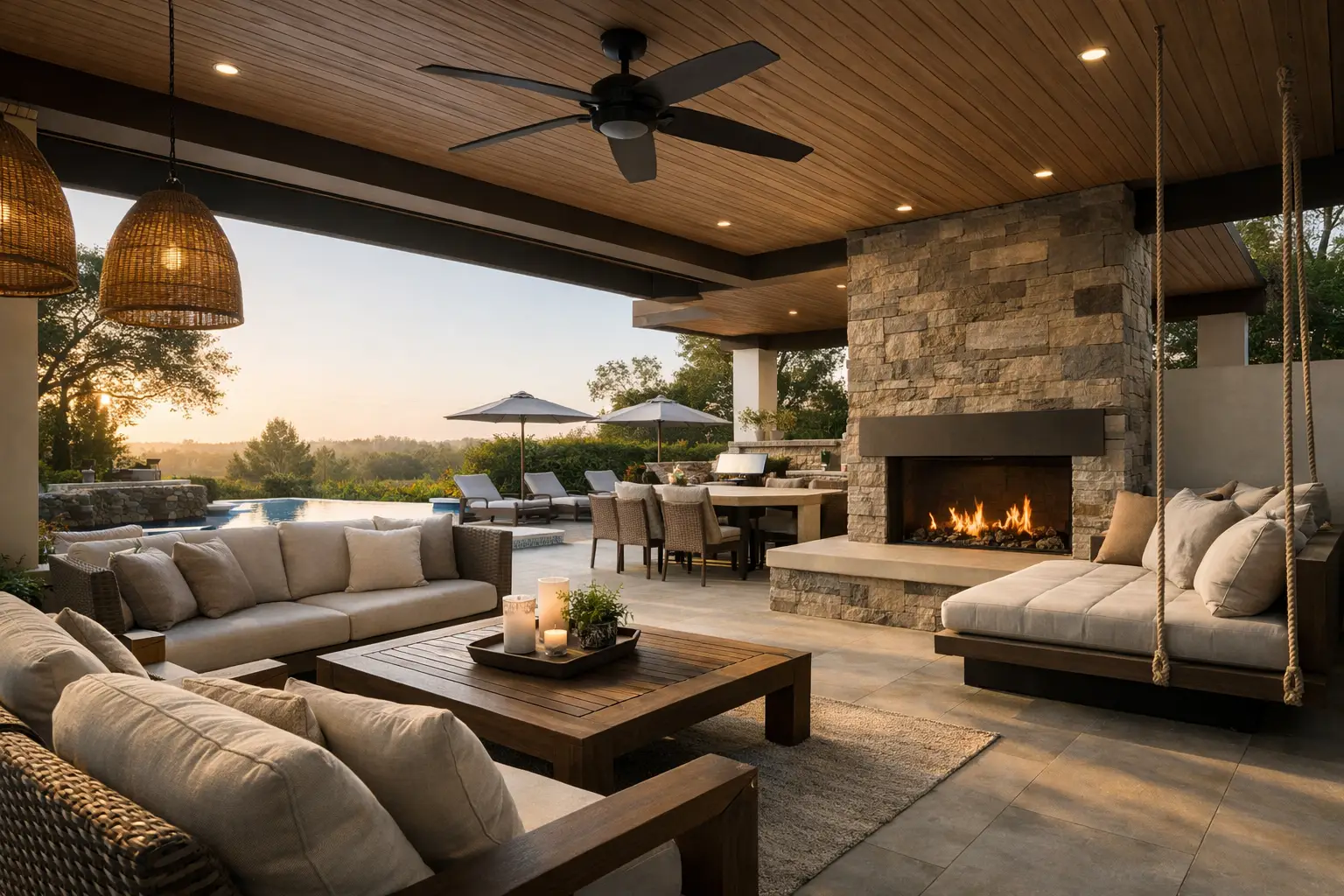
    A covered patio stops feeling ordinary the moment it starts shaping how you live. The best luxury covered patio ideas do more than add shade – they create an outdoor room with presence, comfort, and a clear sense of purpose. For homeowners investing in a full backyard transformation, that distinction matters. A patio cover should not feel like an add-on. It should feel like architecture.

    That is where high-end design changes everything. Materials, scale, lighting, and layout all work together to make the space feel intentional. Whether your goal is relaxed family evenings, polished entertaining, or a backyard that feels closer to a private resort, the right covered patio can become the visual and social center of the property.

    What makes luxury covered patio ideas feel truly elevated

    Luxury is not just about spending more. It is about proportion, permanence, and how naturally every element belongs together. A covered patio feels elevated when the structure complements the home, the finishes hold their own against the landscape, and the experience under the roof is as inviting as any indoor living space.

    That usually means moving beyond a basic slab and a standard cover. Ceiling details matter. Columns matter. So does the transition from patio to pool, kitchen, fire feature, or garden edge. In a premium backyard, each piece should support the next.

    There is also a practical side to luxury. In the Sunbelt, the right cover can soften harsh sun, create a cooler seating zone, protect furnishings, and make the backyard usable for more of the year. Done well, it adds comfort without sacrificing openness.

    1. A pavilion-style roof for architectural presence

    If you want the patio to feel substantial, a pavilion-style roof is one of the strongest moves you can make. It gives the backyard a defined destination and introduces height, symmetry, and visual weight. This works especially well behind larger homes where a smaller cover might look undersized.

    A vaulted ceiling, exposed beams, and a finish that echoes the home can make the entire setting feel custom rather than prefabricated. The trade-off is scale. A pavilion needs enough space around it to breathe. On a compact lot, a lower-profile structure may feel more balanced.

    2. A wood-look ceiling that warms up stone and masonry

    Luxury outdoor spaces often include strong hardscape materials like natural stone, large-format pavers, brick, or stucco. A warm wood or wood-look ceiling balances those surfaces and keeps the patio from feeling too hard or formal.

    This is one of the most effective luxury covered patio ideas for homeowners who want the space to feel refined but still relaxed. Tongue-and-groove planks, stained beams, or a rich ceiling finish can shift the atmosphere immediately. In humid climates, material selection matters. Natural wood can be stunning, but low-maintenance alternatives may be the smarter fit if longevity and upkeep are top priorities.

    3. An outdoor kitchen built directly under the cover

    For families who entertain often, covering the kitchen zone changes how the backyard performs. It gives the cook a more comfortable place to work, protects key appliances, and keeps guests gathered in the center of the action instead of scattering between indoor and outdoor spaces.

    The design has to be handled carefully. Ventilation, lighting, clearances, and traffic flow all matter more when heat-producing features sit under a roof. But when it is planned correctly, the result feels polished and highly functional. It also makes the patio work harder across seasons, especially when paired with bar seating or a nearby dining table.

    4. Retractable screens for privacy and climate control

    Some of the smartest high-end patios are not the flashiest at first glance. Retractable screens are a good example. They preserve the openness of a covered patio when you want fresh air and views, then add privacy, shade, or bug protection when the setting calls for it.

    This feature is especially valuable in neighborhoods where homes sit closer together or where afternoon sun hits one side of the patio hard. It is a detail that improves comfort without changing the architecture. If you want flexibility without committing to a fully enclosed space, this is often the right middle ground.

    5. Layered lighting that makes the patio feel finished

    A luxury patio should look as good at 8:30 p.m. as it does at noon. That only happens when lighting is treated as part of the design, not something added at the end.

    The most inviting covered patios usually combine several layers: recessed ceiling lights for general illumination, decorative fixtures for character, and accent lighting around columns, nearby planting beds, or steps. The goal is not brightness for its own sake. It is atmosphere. Soft, intentional lighting makes dinners linger longer and turns an outdoor room into a destination after sunset.

    6. A fireplace or fire feature as the focal point

    A covered patio becomes more memorable when there is a natural place for people to gather. A fireplace, especially one integrated into the structure or anchored just beyond it, creates that center of gravity.

    This choice tends to work well for homeowners who want the patio to feel like an outdoor living room rather than just a shaded dining area. It adds visual depth and extends seasonal use, though placement is important. Under-cover fire features need thoughtful design, code awareness, and proper ventilation. In some layouts, a fire pit just outside the covered area may give you the same emotional payoff with fewer structural constraints.

    7. Luxury covered patio ideas with indoor-level furnishings

    One of the easiest ways to tell whether a covered patio was designed at a premium level is the furniture plan. Not the furniture itself, but the plan. The space should support real conversation groupings, dining, lounging, and circulation without feeling cramped or oversized.

    Deep seating, performance fabrics, and custom-scale pieces help the patio feel curated instead of improvised. If the cover is large enough, zoning the space into separate experiences can be especially effective – perhaps a dining area on one end and a lounge area near the fireplace on the other. The key is restraint. Too many pieces make even a beautiful structure feel cluttered.

    8. Integrated ceiling fans, heaters, and audio

    Comfort is one of the clearest markers of a luxury outdoor environment. If the patio is beautiful but too warm, too still, or not set up for entertaining, it will not get used the way it should.

    Ceiling fans are nearly essential in many warm climates, and discreet heaters can make cool evenings far more enjoyable. Built-in audio adds another layer of hospitality, especially for homeowners who love to host. These details are easy to overlook early in planning, but they have an outsized effect on how the patio feels once the project is complete.

    9. A covered patio that connects to the poolscape

    Some of the most compelling backyard designs use the covered patio as the bridge between the home and the pool. It becomes the place where dry conversation, dining, and lounging meet the energy of the water.

    This works particularly well when the material palette carries through the entire space. Matching or complementary pavers, coordinated coping, repeated column details, and sightlines that lead toward a raised spa, water feature, or sun shelf make the whole backyard feel composed. It is less about the patio in isolation and more about how it belongs to a complete outdoor environment.

    10. Custom details that match the home instead of copying trends

    The strongest luxury covered patio ideas are often the most personal. Arched openings, substantial columns, custom masonry, decorative trim, or a ceiling finish that mirrors interior design elements can make the patio feel like a true extension of the house.

    Trends come and go quickly outdoors. What lasts is architecture that looks rooted to the property. That is why custom design matters so much in high-end work. A modern home may call for clean steel lines and large-format surfaces. A more traditional home may need timber detailing, classic masonry, and a softer roof profile. Neither is better. The right answer depends on the house, the lot, and how you want to live outside.

    How to choose the right covered patio concept

    The best starting point is not style. It is lifestyle. Think about whether your patio needs to support large-scale entertaining, quiet evenings, outdoor cooking, poolside supervision, or a mix of all four. Once that is clear, the structure can be shaped around real use instead of wishful thinking.

    Budget also plays a role, but in premium backyard design, value often comes from cohesion rather than cutting features. A simpler covered patio that is beautifully integrated with the home and surrounding hardscape will usually feel more luxurious than a larger structure filled with mismatched elements. That is one reason many homeowners choose a full-service design-build approach. It allows the patio, landscape, lighting, and amenities to be planned as one experience.

    At Beyond Backyard Living, that bigger-picture thinking is what turns a nice backyard into a space that feels finished, personal, and ready to host.

    If you are considering a covered patio, aim for more than shade. Aim for a space that changes how your home feels on a Friday evening, during a family celebration, or on an ordinary afternoon when stepping outside feels like checking into your favorite retreat.

  • Why Every Grandparent Should Build a Backyard Water Oasis 

    As grandparents, few things are more rewarding than creating unforgettable memories with your grandchildren. Every visit, hug, and laugh strengthens the bond you share. But in today’s fast-paced, screen-driven world, finding ways to entertain and engage kids can be a challenge. This is where the idea of building a backyard water oasis comes in. Beyond just a fun summer activity, a backyard water feature can become a space for connection, creativity, and lifelong memories. Here’s why every grandparent should consider building one for their grandkids.

    1. Create Lasting Memories

    Childhood is fleeting, and the moments you spend with your grandkids are precious. By building a water oasis in your backyard, you create a space that’s special and unique to your home. Whether it’s splashing in a shallow pool, running through sprinklers, or discovering hidden treasures in a pond, your grandkids will associate your home with fun, laughter, and adventure. These moments will stay with them long after they’ve outgrown the backyard, leaving a legacy of joy and love.

     2. Encourage Outdoor Play

    With screens and technology competing for kids’ attention, it’s more important than ever to encourage outdoor play. A backyard water oasis offers an irresistible alternative to staying indoors. Water play promotes physical activity and helps develop motor skills, hand-eye coordination, and balance. Whether it’s a simple splash pad or an intricate fountain, a water oasis draws kids outside where they can explore, run, jump, and be active. It’s the perfect way to promote healthy habits while ensuring your grandchildren have fun at the same time.

     3. Bond Over Fun and Adventure

    One of the greatest benefits of having a backyard water oasis is the bonding experience it creates. Whether you’re chasing the grandkids through the sprinkler, hosting family water balloon fights, or sitting together by a bubbling fountain, a water feature brings people together. These shared moments of fun and adventure will deepen the connection you have with your grandkids, allowing you to enjoy their world and for them to see you as the ultimate fun grandparent.

     4. Spark Curiosity and Imagination

    A backyard water oasis can be a place of learning and exploration. By introducing elements like small waterfalls, shallow ponds, or even a few fish, you create an environment that sparks curiosity. Children are naturally drawn to water, and they will love discovering the creatures, plants, and science that come with it. This natural interest can turn into teaching moments about wildlife, nature, and ecosystems—all while having fun. Your backyard can become a mini oasis of wonder where imagination and creativity flow freely.

    5. Low-Maintenance and Customizable

    Contrary to popular belief, building a backyard water feature doesn’t have to be a major undertaking or cost a fortune. From small splash pads to simple water fountains, there are endless options to fit your budget and available space. Many water features are also low-maintenance, designed to run efficiently and blend seamlessly into your landscape. You can choose the features that best suit your family’s needs—whether that’s a kid-friendly shallow pool, a beautiful koi pond, or an interactive water fountain that grandkids can control with the press of a button.

    6. Enhance Your Backyard’s Appeal

    Not only is a backyard water oasis great for your grandchildren, but it also enhances your home’s outdoor space. Water features like fountains, ponds, and small waterfalls add beauty, tranquility, and charm to your backyard. It becomes a place of relaxation for you, even when the grandkids aren’t around. Imagine enjoying a cup of tea next to a serene pond or reading a book while the sound of water trickles in the background. A well-designed water feature can add both aesthetic value and a sense of peace to your backyard, making it a win-win for both you and your grandkids.

    7. Give Them a Reason to Visit More Often

    We all love when the grandkids come to visit, and having a unique, fun attraction in your backyard is one way to guarantee they’ll want to come over more often. A water oasis makes your home stand out as a place of adventure and excitement. Grandparents who create engaging environments—especially ones that include water—often find that their home becomes the go-to destination for playdates, family gatherings, and summer fun.

    Conclusion: Create a Space Where Memories Flow

    Building a backyard water oasis is more than just a way to entertain your grandchildren—it’s an investment in their happiness, growth, and the time you get to spend together. From encouraging outdoor play to creating a magical space for bonding and discovery, the benefits are endless. You’ll create a backyard paradise where memories flow like water, bringing joy to both you and your grandchildren for years to come.

    Ready to turn your backyard into a haven of fun and adventure? Visit Beyond Backyard Living .com for expert tips, ideas, and inspiration to create the perfect water oasis for your family.