By Terrance Schabilion, Beyond Backyard Living – Custom Pool Builder Spring Hill FL
Custom Pergola Builder Spring Hill FL: Aluminum vs Wood Architectural Shade
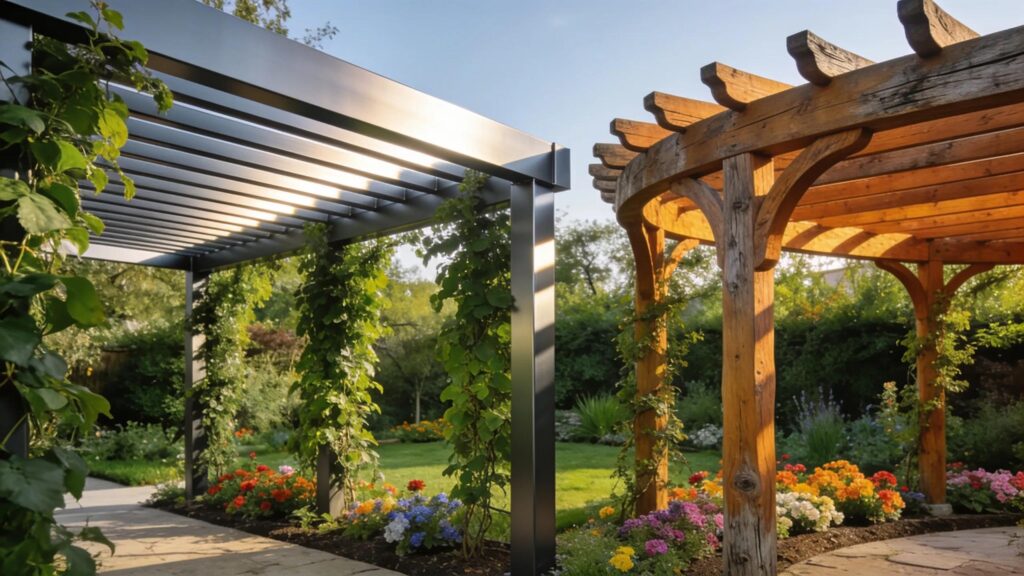
Choosing the right material for your shade structure is paramount when selecting a custom pergola builder Spring Hill FL. Our expertise lies in delivering expertly designed aluminum pergola vs wood options that excel in Florida’s challenging environment. Beyond Backyard Living offers custom pergolas in Florida that blend architectural precision with durable materials, addressing demands of sun, rain, humidity, and hurricane forces. Whether you desire the sleek modernity of aluminum or the warm natural aesthetic of wood, our custom solutions ensure architectural shade that meets performance and style expectations throughout the year.
Long-Term Durability: Comparing Wood and Aluminum Pergolas
Extruded 6063-T6 Structural Architectural Aluminum vs Rough-Sawn Western Red Cedar & Pressure-Treated Pine
Aluminum pergolas utilize extruded 6063-T6 architectural grade aluminum known for an outstanding strength-to-weight ratio and excellent corrosion resistance. This material withstands Florida’s subtropical climate by resisting rot, rust, and termite damage without frequent upkeep. Conversely, wood options like Western Red Cedar and pressure-treated pine offer aesthetic warmth but require ongoing maintenance due to their vulnerability to moisture and biological degradation. Selecting aluminum ensures higher structural longevity and diminished maintenance footprints compared to wood alternatives.
AAMA 2604/2605 Marine-Grade Powder Coating vs Coastal Salt Air, Chalking & High Humidity
Aluminum pergolas finished with AAMA 2604/2605 marine-grade powder coatings offer superior protection against Florida’s aggressive coastal conditions. These finishes prevent chalking, fading, and corrosion caused by salt spray, high humidity, and ultraviolet exposure. Wood, lacking such protective coatings, tends to degrade more rapidly under these conditions, demanding regular refinishing to preserve its appearance and durability.
Sub-Tropical UV Radiation, Rot, Termite Infestation & Wood Warping Vulnerabilities
Florida’s intense sub-tropical UV radiation accelerates wood deterioration through discoloration, drying, and warping. Combined with termite infestations and moisture-induced rot, wood pergolas require proactive treatment and inspection to ensure longevity. Aluminum’s inherent resistance to biological decay and UV degradation eliminates these concerns, making it the prudent choice for outdoor structures in Florida.
Motorized Louvered Roof Technology & Dynamic Shade Control
Dual-Walled Aluminum Louver Extrusions & 0–140 Degree Solar Angle Modulation
Our motorized louvered roofs incorporate dual-walled aluminum louvers engineered for precise 0 to 140-degree rotation, enabling optimal solar angle modulation. This allows users to finely tune sunlight penetration and shade levels, enhancing comfort while mitigating glare and heat accumulation within outdoor environments.
Automated Smart Weather Sensors: Rain-Activated Seals & Wind-Release Protocols
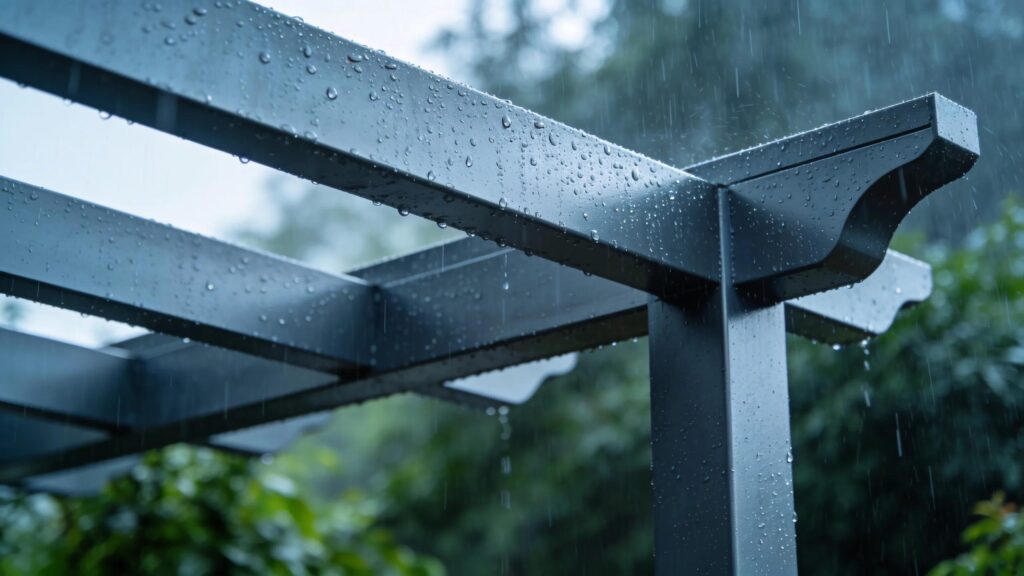
Advanced automation integrates optical rain sensors and wind anemometers that trigger rain-activated louver sealing and wind-release mechanisms. These smart controls safeguard the pergola and outdoor furnishings by autonomously closing the louvers during precipitation and adjusting for strong gusts prevalent in Florida’s weather patterns.
Concealed Internal Beam Gutter Systems & Downspout Hydraulic Management
Concealed internal gutters within louver beams direct water runoff through integrated downspouts discreetly embedded in support columns. This hydraulic management effectively conveys water away from the pergola’s base, preventing soil erosion and moisture pooling, critical in Florida’s high rainfall habitats.
Florida Building Code (FBC) 160+ MPH Hurricane Wind Load Engineering
Structural Footers, Embedded Anchor Bolts & High-Velocity Hurricane Zone (HVHZ) Ratings
Our pergolas in Florida are engineered to meet or exceed FBC requirements for 160+ mph hurricane wind loads, especially in High-Velocity Hurricane Zones (HVHZ). Structural footers are reinforced with embedded anchor bolts, ensuring secure anchorage to withstand uplift and lateral stresses imposed by severe storms.
Tensile Strength, Structural Deflection & Long-Span Engineering
The tensile strength of extruded 6063-T6 aluminum permits expansive louver spans while controlling structural deflection within code limits. Our engineering accounts for these factors to deliver robust, resilient pergola systems that maintain integrity and performance under extreme wind conditions.
Life Cycle Cost Analysis & Resale ROI (10-Year vs 25-Year Outlook)
Upfront Construction Costs vs Ongoing Staining, Sealing & Maintenance Expenses
While aluminum pergolas may carry a higher initial construction cost compared to wood options, their minimal maintenance demands—no staining, sealing, or termite treatments—yield substantial savings over a 25-year period. Wood, although initially less expensive, incurs significant recurrent upkeep costs that affect total ownership expenditure.
Appraisal Value & Return on Investment in Tampa Bay Luxury Real Estate
Homes in Tampa Bay with aluminum pergolas and motorized louvered roofs show enhanced appraisal values due to durable, low-maintenance outdoor living spaces. Our clients benefit from improved curb appeal and long-term investment returns, correlating with luxury market expectations for quality and resilience.
Hernando & Pasco County Pergola Permitting & Engineering FAQs
Do aluminum and wood pergolas require engineering calculations and building permits in Hernando County?
Yes, Hernando County requires engineering plans and building permits for both aluminum and wood pergolas to ensure compliance with Florida Building Code standards and safety regulations. Partnering with a custom pergola builder Spring Hill FL ensures proper permitting and code adherence.
How does extruded 6063-T6 aluminum withstand Florida hurricanes compared to heavy timber cedar?
Extruded 6063-T6 aluminum exhibits superior strength-to-weight ratio and corrosion resistance, maintaining structural integrity under 160+ mph hurricane winds. Heavy timber cedar, while robust, is vulnerable to moisture-induced deterioration and requires additional treatments for hurricane resilience, often falling short of aluminum’s engineering standards.
What maintenance is required to prevent powder-coated aluminum from oxidizing in coastal Florida salt air?
Marine-grade powder-coated aluminum requires minimal maintenance; regular washing to remove salt deposits is typically sufficient to prevent oxidation and maintain finish integrity. This is substantially less intensive than the frequent sealing and staining needed for wood.
How do motorized louvered pergolas integrate with outdoor kitchens, fire pits, and pool patios?
Motorized louvered pergolas offer flexible shade and weather protection, seamlessly integrating with outdoor kitchens, fire pits, and pool patios. We also supply automation compatible with smart home systems allowing users to adjust environment controls, create comfortable microclimates, and safeguard accessories like Kamado ceramic smokers.
Beyond Backyard Living Creations emphasizes impeccable craftsmanship and architectural engineering prowess when building custom pergolas in Spring Hill and Central Florida. Whether selecting an aluminum pergola vs wood, or integrating state-of-the-art motorized louvered pergolas Florida, our solutions combine long-term value, enduring aesthetics, and unmatched performance.
Additionally, many Florida homeowners complement their custom pergolas with quality hardscaping like paver driveway installation to upgrade curb appeal and functionality. Visit our guide on paver installer spring hill fl and learn about the benefits of concrete vs paver driveway in Florida for an integrated luxury outdoor living experience.
For further insights on appropriate driveway materials and techniques, read our detailed article Concrete vs. Paver Driveways in Florida: Durability, Heat & Sinking Prevention.