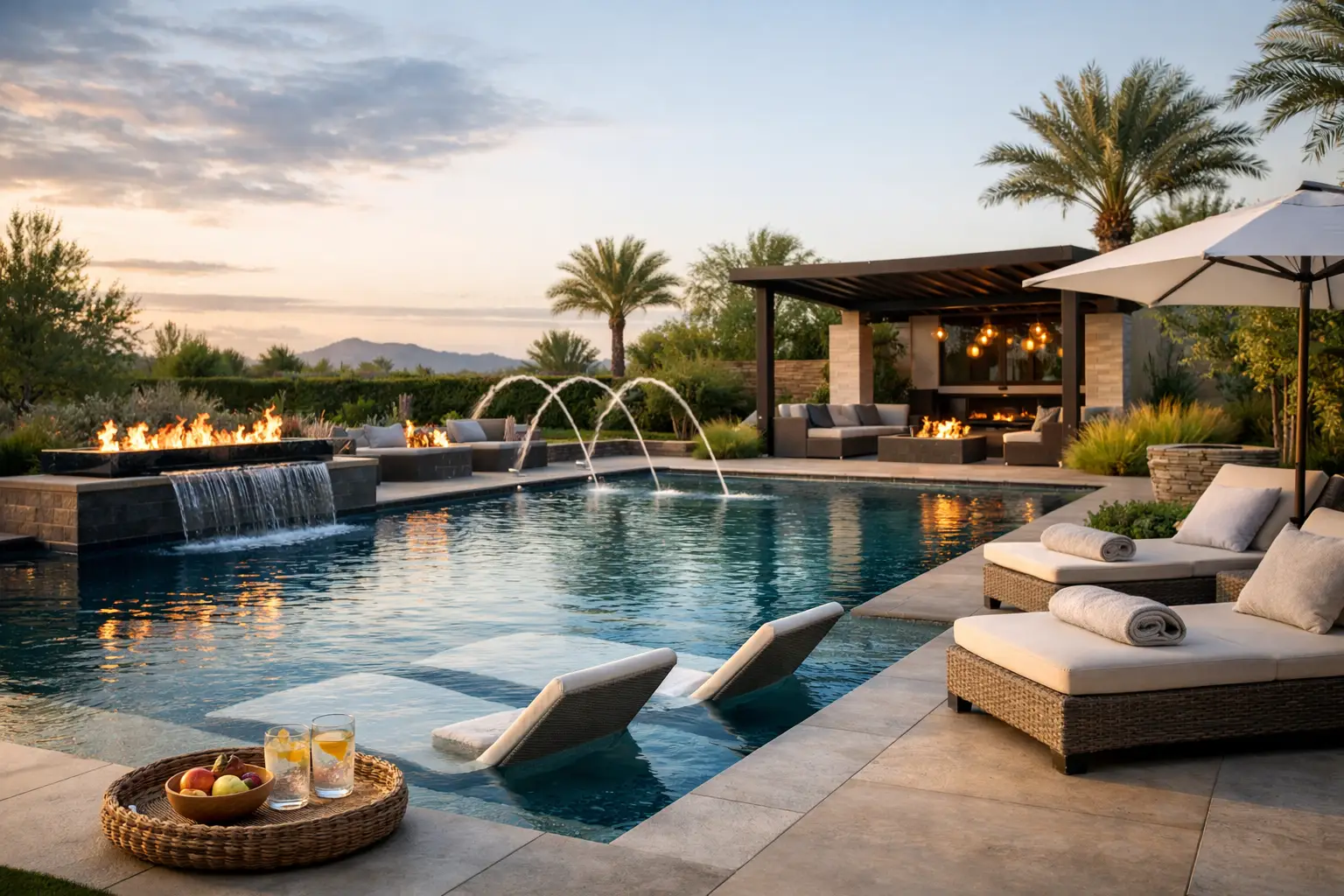
A luxury pool is no longer a standalone feature placed at the edge of the patio. The most compelling pool trends treat water as the center of an entire outdoor experience – one designed for a quiet morning, a family swim, an al fresco dinner, and a full house of guests without ever feeling overdone. For homeowners investing in a major backyard transformation, the question is not simply what pool shape is popular. It is how every material, view, and gathering space can work together to make home feel more extraordinary.
Pool Trends That Create a Complete Escape
The strongest pool designs feel inevitable in their setting. They respond to the architecture of the home, the character of the property, and the way a family actually entertains. Rather than choosing features one at a time, homeowners are asking for layered outdoor environments that offer places to swim, lounge, cook, gather, and step away from the noise.
That shift has brought more intention to pool planning. A beautiful waterline tile matters, but so does the sightline from the kitchen. A fire feature adds atmosphere, but it also needs to make sense next to seating, circulation paths, and prevailing wind. The result is a more tailored kind of luxury: a backyard that looks polished in photographs and works beautifully on an ordinary Tuesday night.
Clean-lined pools with architectural presence
Geometric pools remain a defining choice for contemporary homes, especially when their lines echo the home’s roofline, terrace, or window placement. Long rectangles, squared corners, and carefully proportioned tanning ledges create a calm, architectural presence. They also provide a versatile foundation for features such as raised spas, negative edges, and linear fire bowls.
This does not mean every high-end pool needs to be sharply modern. Softer forms are gaining ground in landscapes where a natural, garden-forward look feels more appropriate. Gentle arcs, curving entry steps, and freeform edges can feel equally refined when they are thoughtfully composed. The right shape depends on the home’s architecture and the experience you want to create. A formal pool can anchor a crisp outdoor entertaining area, while an organic layout may better suit a wooded property or a relaxed coastal-style retreat.
Tanning ledges designed for real relaxation
The tanning ledge has evolved from a simple shallow shelf into one of the most-used areas of the pool. Large enough for chaise lounges, umbrella sleeves, and young children at play, it gives swimmers and non-swimmers a place to enjoy the water together. For many families, it becomes the natural daytime hub of the backyard.
The key is scale. A ledge that is too narrow can look like an afterthought, while an oversized shelf may take valuable room from the swimming area. Its best dimensions depend on the pool’s overall footprint, the furniture you plan to use, and whether the space should serve adults lounging, children splashing, or both. Built-in bubblers can add movement and a soft water sound without requiring a more elaborate water feature.
Material palettes that feel connected to the home
Current pool palettes are moving away from isolated statements and toward materials that carry throughout the property. Natural stone coping may continue into patio steps and retaining walls. Porcelain pavers can frame the pool while extending to an outdoor kitchen or covered pavilion. A carefully chosen plaster color can shift the water from bright aqua to deep blue-green, changing the mood of the entire space.
This continuity is what makes a backyard feel designed rather than assembled. It also creates a stronger transition from indoors to out, particularly when interior flooring, cabinet finishes, or architectural stonework have a natural counterpart outside.
Lighter, cooler-feeling deck materials are especially valuable in Sunbelt climates, where barefoot comfort matters as much as appearance. Yet visual appeal should not outweigh performance. Textured surfaces, drainage planning, slip resistance, and maintenance requirements all deserve consideration before a material is selected. The best choice balances the look you want with the way the space will be used year after year.
Water and fire used with restraint
Sheer descents, scuppers, spillover spas, deck jets, and bubblers remain popular because they bring motion and sound to the landscape. But the most elegant designs use them with purpose. One broad sheet of water against a stone wall can feel more dramatic than a crowded collection of features competing for attention.
The same principle applies to fire. Linear fire features, low fire bowls, and a fireplace near an outdoor lounge can extend the season and create a striking evening setting. Their placement should support conversation and preserve views across the water. When fire is positioned merely as decoration, it can interrupt traffic flow or create uncomfortable heat near seating. When it is integrated into the architecture of the space, it gives the backyard a warm, destination-like quality after sunset.
Smart Pool Features That Simplify Ownership
Luxury should not mean more work. Homeowners are increasingly looking for pool systems that make daily operation easier without making the equipment feel complicated. Automated controls can manage lighting, water temperature, cleaning cycles, and water features from a phone or wall-mounted panel. Variable-speed pumps and efficient heaters can help reduce operating demands, while modern LED lighting allows the pool to shift from bright and practical to softly atmospheric in the evening.
Technology is most valuable when it is selected around the owner’s habits. A homeowner who hosts frequently may appreciate easy lighting scenes and spa controls. A family that travels often may prioritize remote monitoring and automated cleaning. Not every feature is necessary for every project, and adding technology simply because it is available can create unnecessary complexity. A thoughtful design team will help distinguish between useful convenience and novelty.
Equipment placement matters, too. Pumps, filters, heaters, and automation systems need accessible service areas, but they should not dominate a view from the patio or dining space. Screening, planting, walls, and smart site planning help preserve the sense of escape that the pool is meant to create.
The Pool Is Becoming Part of the Entertaining Plan
One of the most meaningful pool trends is the move toward hospitality-driven backyard design. Instead of a pool on one side and a grill on the other, homeowners are creating connected zones that make entertaining feel natural. A covered pavilion offers shade and shelter. An outdoor kitchen keeps the host in the conversation. A dining terrace, fireplace lounge, or pizza oven creates reasons to stay outside long after the swim is over.
These spaces work best when circulation is considered early. Guests should be able to move from the house to the pool, kitchen, seating, and restroom access without crossing through a cramped passage or cutting between loungers. Outdoor rooms also benefit from a mix of sun and shade. Full sun is perfect for swimmers, but a comfortable entertaining environment needs relief during the hottest parts of the day.
Privacy deserves the same attention. Strategic evergreen planting, masonry walls, pergola screens, and changes in elevation can create an intimate setting without making the yard feel closed in. This is especially important on neighborhoods lots, where a carefully framed view can make a modest backyard feel surprisingly expansive.
Lighting for atmosphere, safety, and drama
A pool should be just as inviting at night as it is in the afternoon. Layered lighting makes that possible. Underwater LEDs give the pool depth and sparkle, while path lighting helps guests move safely through the landscape. Soft lighting in planting beds adds dimension, and focused illumination at steps, kitchens, and dining areas supports practical use.
Avoid treating every surface as a stage. Overlighting can flatten the landscape and create glare across the water. A more sophisticated approach lets shadows remain, highlights a few architectural focal points, and uses warm light where people gather. The goal is a backyard that feels welcoming from inside the home and magical once you step outside.
Designing Beyond What Is Trending
Trends can offer useful inspiration, but a backyard investment should be built around a longer view. The features with lasting appeal are the ones that reflect the home, the site, and the people who will enjoy them. A bold tile may be perfect for one property and distracting in another. A zero-edge pool can create an unforgettable visual statement, but it requires the right grade, outlook, and construction approach to justify the investment.
At Beyond Backyard Living, that broader perspective guides the design process. The pool is considered alongside patios, plantings, structures, cooking areas, walls, and recreational features, so each decision contributes to one complete environment. That level of planning helps prevent the common frustration of adding elements over time only to find that the layout never quite comes together.
The right trend is the one that makes your backyard feel more like your favorite place to be. Start with the moments you want to host, the routines you want to protect, and the view you want to come home to. From there, the most beautiful pool design has a clear direction: it is built for your life, not just for the current season.