By Terrance Schabilion, Beyond Backyard Living – Custom Pool Builder Spring Hill FL
Choosing the right pergola for your outdoor space in Florida involves several critical components, particularly considering the local climate. Custom cedar and architectural aluminum pergolas each offer unique benefits and limitations regarding wind resistance, rot prevention, and longevity. As Florida is known for its severe weather, including high winds and humidity, understanding these qualities ensures a sound investment for your backyard oasis. This guide will explore these materials in-depth, providing homeowners with the information to make an informed decision. We’ll delve into categories such as wind resistance, rot prevention strategies, longevity expectations, and the advantages and disadvantages of both materials.
Comprehensive Guide: Custom Cedar vs. Architectural Aluminum Pergolas in Florida
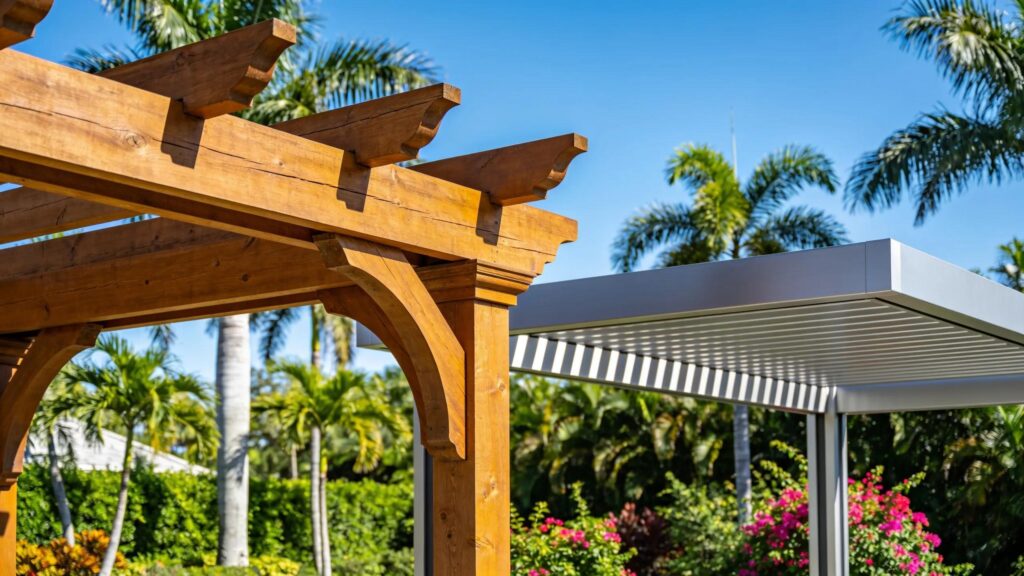
Custom cedar and architectural aluminum pergolas serve as appealing outdoor structures, yet they differ significantly in composition and resilience to Florida’s unique environmental challenges. Custom cedar pergolas are crafted from high-quality wood, showcasing natural beauty and aesthetics that harmonize with outdoor greenery. Cedar is valued for its resistance to warping and decay when maintained properly. Conversely, architectural aluminum pergolas offer a modern aesthetic, enhanced durability, and minimal maintenance needs, making them ideal for many Florida homeowners.
Wind Resistance
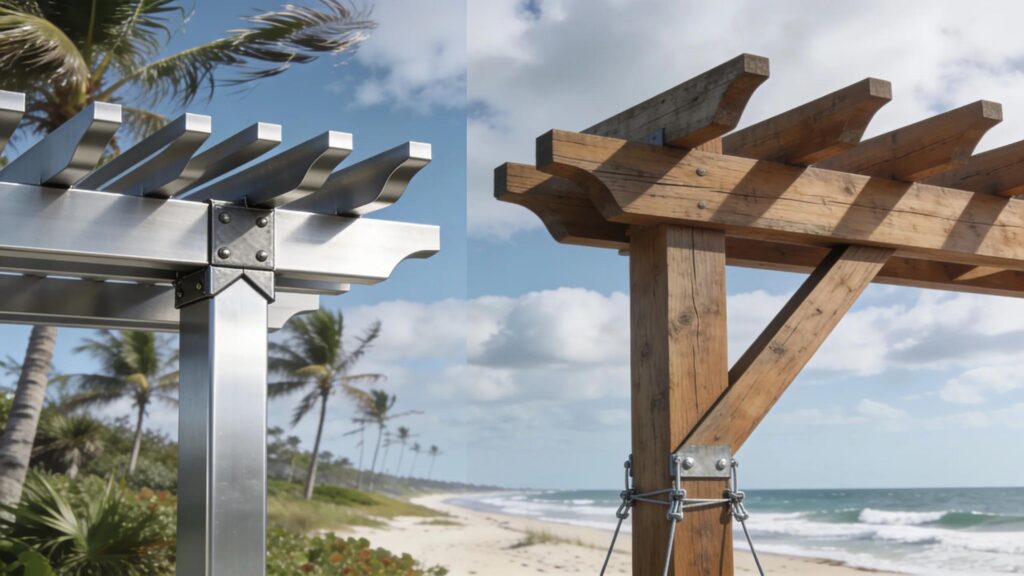
Wind resistance is crucial for outdoor structures in hurricane-prone Florida. Architectural aluminum pergolas have the advantage thanks to their lightweight and robust design, which effectively withstands strong winds. The aluminum framework is engineered for durability, ensuring that it maintains structural integrity during severe weather conditions. In comparison, cedar pergolas may require additional reinforcements to meet building codes for wind resilience, as they can be more susceptible to damage in extreme wind events.
Rot Prevention
In Florida’s humid climate, rot prevention is a key consideration in choosing pergola materials. Aluminum’s inherent properties make it impervious to moisture, eliminating the risk of rot. It doesn’t require the treatment that cedar does to resist decay, making aluminum an appealing choice for homeowners seeking longevity. Cedar, however, naturally contains oils that enhance its resistance to rot. Proper maintenance, including regular sealing and staining, can significantly extend the life of a cedar pergola, though attention is necessary to counter moisture-related issues effectively.
Understanding how moisture impacts wood over time highlights why proactive care is essential for outdoor timber structures in damp climates.
Rot Prevention and Wood Maintenance in Humid Climates
The maintenance of wooden structures in traditional houses located in humid environments poses significant challenges due to the high risk of damage caused by moisture, fungal growth, and termite infestation. Qualitative study of maintenance of wooden structures of traditional houses in damp environments, 2025
Longevity
The longevity of both custom cedar and architectural aluminum pergolas varies significantly. Properly maintained cedar pergolas can last upwards of 15-30 years, but longevity can be compromised without regular care. In contrast, architectural aluminum pergolas can last 40 years or longer with minimal upkeep. The long lifespan, coupled with resistance to rot and pests, makes aluminum an attractive choice for homeowners looking for a long-term investment.
Advantages and Disadvantages
When deciding between cedar and aluminum pergolas, it’s vital to consider their respective advantages and disadvantages. This comparison can aid homeowners in selecting the best fit for their needs.
Aluminum Pergolas
- Durability: Aluminum is highly resistant to weathering, meaning it can maintain its appearance even under extreme conditions.
- Low Maintenance: Aluminum requires far less maintenance than wood, saving homeowners time and effort over the years.
- Versatility: Available in various colors and finishes, aluminum can match any home’s aesthetic seamlessly.
Cedar Pergolas
- Natural Aesthetics: Cedar offers a warm, natural look that many homeowners find appealing for enhancing outdoor spaces.
- Customizability: Cedar can be shaped and designed in various ways to meet specific design requirements or preferences.
- Environmental Impact: For those concerned about sustainability, cedar wood is a renewable resource when sourced responsibly.
When deciding between cedar and aluminum for your pergola, it’s essential to weigh each material’s strengths and weaknesses against your specific needs and environmental conditions. Custom cedar pergolas can offer unparalleled natural beauty, while architectural aluminum pergolas excel in durability and maintenance. Understanding the mechanics of wind resistance, rot prevention capabilities, and longevity will guide you in choosing the perfect structure for your outdoor area. To ensure a solid foundation for your outdoor living space, incorporating a settlement warranty can provide peace of mind. For personalized design consultations and insights tailored to the Florida climate, Beyond Backyard Living Creations is a premier choice to consider for your custom pergola project.