A sloped backyard does not have to feel like a limitation. With the right decorative retaining wall options, a grade change can become a dramatic garden terrace, a poolside lounge, a built-in seating moment, or the architectural backdrop that makes an outdoor kitchen feel complete. The difference is in treating the wall as part of the overall experience, not simply a necessary fix for soil.
For a high-end outdoor environment, a retaining wall should work as beautifully as it works hard. It has to manage elevation and drainage, but it can also frame a fire feature, define a courtyard, soften the edge of a patio, and create the sense that every part of the landscape belongs together.
Decorative Retaining Wall Options That Shape the Backyard
The most successful wall material depends on the home’s architecture, the amount of grade being held back, and how the wall connects to surrounding hardscapes. A wall near a modern pool may call for clean lines and refined texture. A hill-country-style entertaining space may feel more at home with substantial natural stone. The right choice is rarely about one material in isolation. It is about how that material carries through the entire outdoor design.
Natural stone for lasting character
Natural stone retaining walls bring weight, variation, and a level of permanence that is difficult to replicate. Fieldstone, ledgestone, limestone, and flagstone can be selected and set to feel rustic, tailored, or somewhere in between. Larger-cut stone with tight joints reads more formal, while irregular stones and a more relaxed joint pattern can make a landscape feel established and organic.
Stone is especially compelling when the backyard is meant to feel like a private retreat rather than a collection of new additions. It pairs naturally with waterfalls, mature plantings, fire pits, and shaded lounging areas. The trade-off is that natural stone is a premium material and installation is highly dependent on skilled craftsmanship. Stone selection, wall proportions, cap details, and the way corners are handled all affect the finished result.
Architectural block with a refined finish
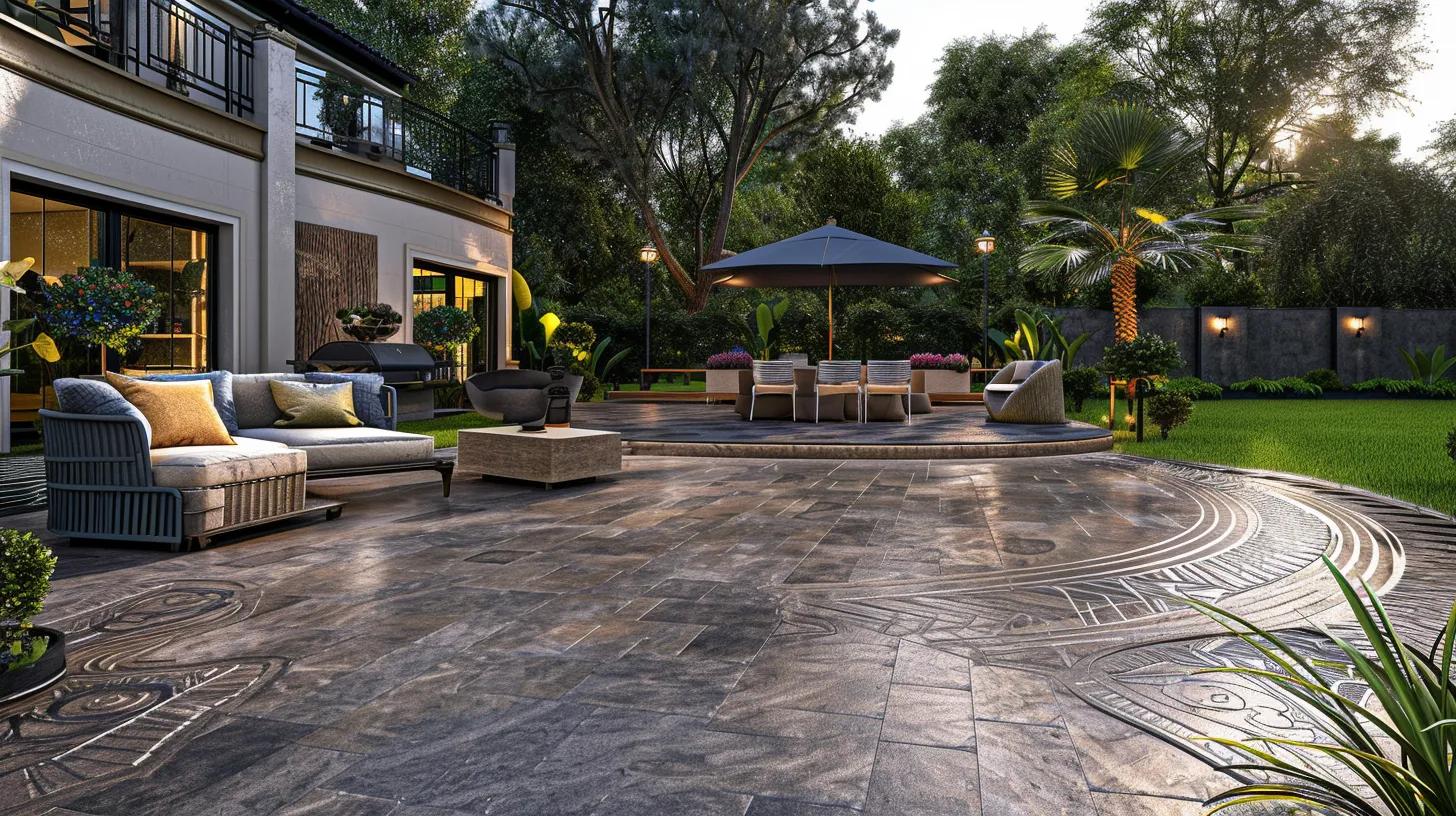
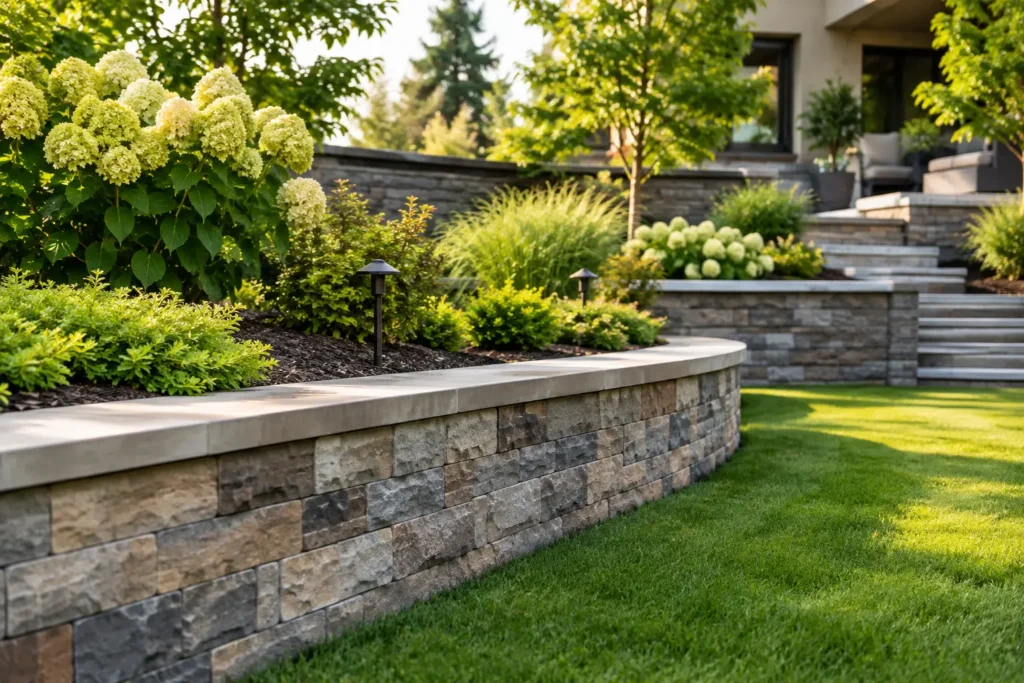
Segmental retaining wall block is one of the most versatile choices for residential landscapes. Today’s higher-end block systems are available in sophisticated blends, textured faces, and modular formats that can complement contemporary, transitional, and traditional homes. They offer consistency in color and sizing, which is useful when a wall needs to tie into paver patios, walkways, or a structured planting plan.
This option is often a smart fit for larger engineered walls, especially where significant elevation changes require a proven structural system. It can also be elevated with a natural-stone cap, integrated lighting, broad steps, or a bench seat. The key is avoiding a purely utilitarian look. Thoughtful layout, clean curves or intentional straight runs, and carefully resolved transitions keep the wall from feeling like an afterthought.
Stone veneer for a custom-built look
A structural concrete or masonry wall finished in natural or manufactured stone veneer offers considerable design freedom. Veneer makes it possible to coordinate a retaining wall with a home’s exterior, outdoor fireplace, kitchen island, or pool house, creating a cohesive architectural language across the property.
For many luxury projects, this is less about disguising a wall and more about designing a substantial feature. A veneer-faced wall can include recessed planters, a waterfall spillway, lighting niches, or a raised hearth. Because the finish is applied over a structural substrate, the details matter. Proper drainage, waterproofing, and cap installation are essential to preserving the wall’s appearance through changing weather and irrigation cycles.
Poured concrete for modern landscapes
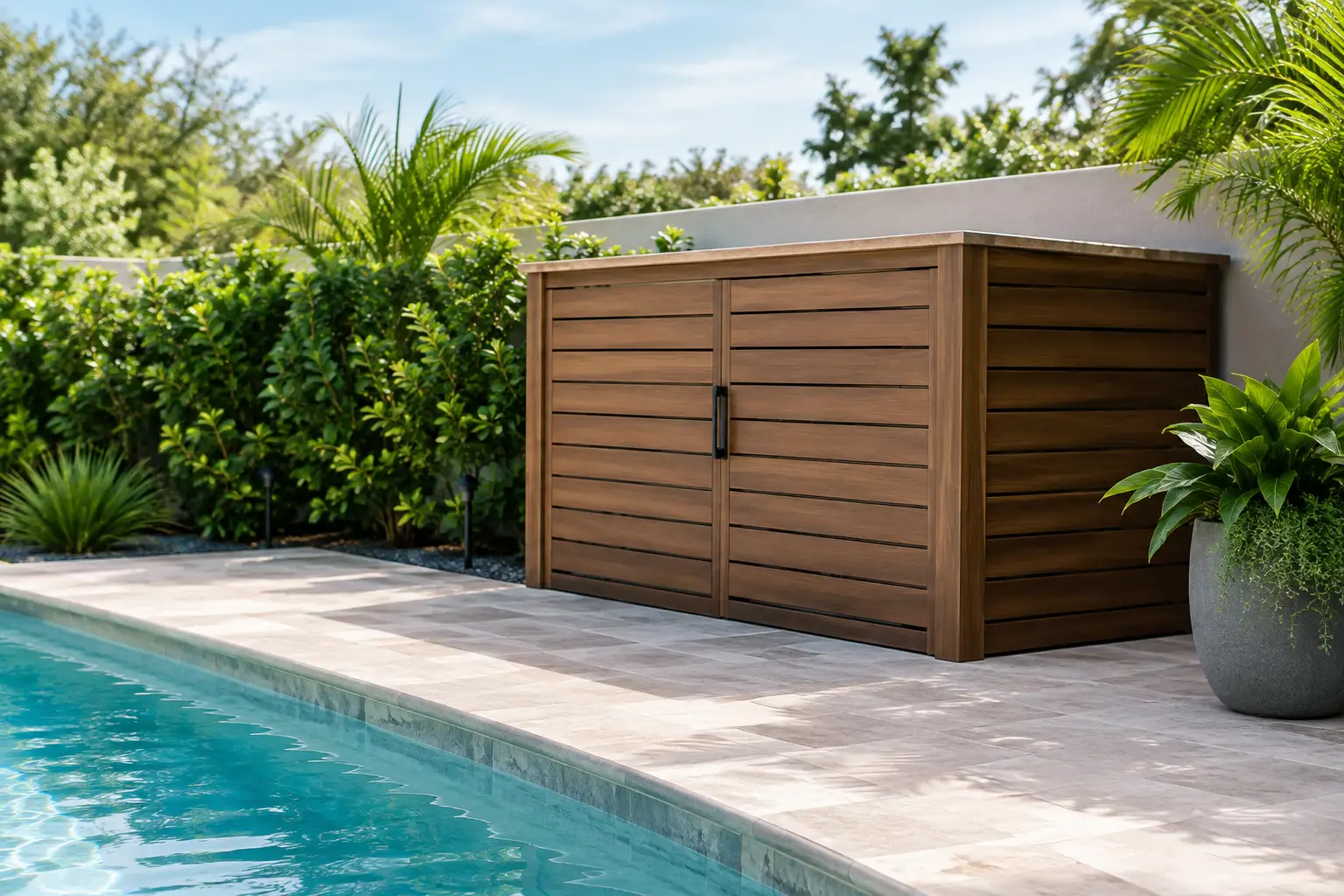
Poured concrete retaining walls are a natural match for contemporary homes and outdoor spaces with crisp geometry. They can be finished smooth, lightly textured, board-formed, stained, or clad in another material. Their flexibility allows designers to create thin, elegant wall profiles, monolithic planter walls, and strong linear edges around pools and patios.
Concrete is not automatically cold or industrial. Warm-toned porcelain, wood accents, lush planting, and layered outdoor lighting can give it a welcoming presence. Still, it is an option that demands precision. Formwork, drainage, expansion considerations, and finish quality all become highly visible in a minimalist design. There is very little room for a casual detail when the wall itself is meant to be a focal point.
Stucco and masonry walls for Mediterranean warmth
In regions where stucco architecture is common, a stucco-finished masonry retaining wall can make an outdoor space feel integrated with the home from day one. Soft neutral finishes, warm earth tones, and rounded corners suit courtyards, garden terraces, and pool settings with a Mediterranean or Spanish-inspired character.
This approach works beautifully with clay pavers, tile accents, wrought iron, and water features. It also provides a clean canvas for built-in seating or colorful ceramic planters. Because stucco surfaces can show stains and hairline cracks over time, material selection and drainage planning should reflect the local climate and the wall’s exposure to water.
Make the Retaining Wall Part of the Experience
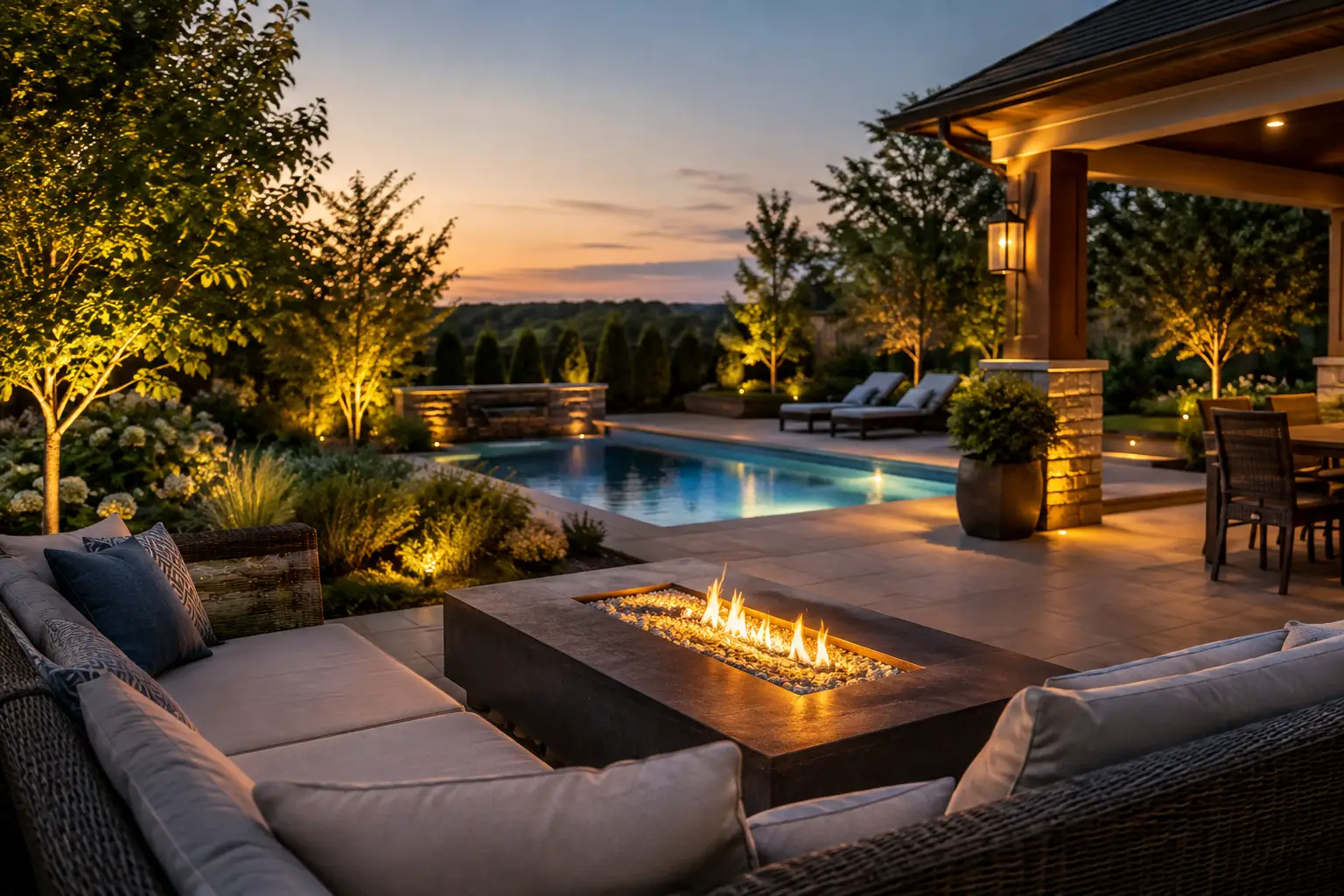
A decorative wall earns its place when it does more than hold soil. Consider what happens along its face, above it, and beside it. A low garden wall can become extra seating near a fire pit. A taller wall behind a pool can create privacy and a dramatic backdrop for cascading water. Tiered walls can turn a difficult slope into a series of usable destinations instead of one unused hillside.
Built-in features are often what transform a necessary structure into a defining outdoor element. A stone cap wide enough for guests to sit on can extend entertaining capacity without crowding the patio with furniture. Integrated step lights improve safety and give evening gatherings a polished glow. Planter pockets introduce seasonal color and soften the transition between hardscape and garden.
Water is another powerful design tool. A retaining wall can support sheet falls, scuppers, or a naturalistic stream that moves toward a pool or pond. These features need to be designed early, not added late, so plumbing, access, waterproofing, and the wall’s visual proportions all work together.
The Structural Details Behind a Beautiful Wall
Retaining walls are not simply decorative masonry. They manage pressure from soil, water, and often nearby loads such as patios, pools, or driveways. A wall that looks beautiful on installation day can fail prematurely if it lacks appropriate base preparation, drainage stone, perforated drainpipe, geogrid reinforcement, or proper grading above the wall.
Wall height is a major consideration, but it is not the only one. Soil conditions, slope above and below the wall, water flow, and the placement of structures all influence the engineering approach. In many areas, taller walls require permits and engineered plans. Even lower walls deserve professional attention when they support a valuable outdoor living area.
This is where a unified design-build process creates real value. Rather than designing a patio, pool, planting plan, and retaining wall as separate projects, the entire site can be considered at once. Drainage can be directed intentionally. Materials can be coordinated. Elevations can be planned around how people will move, gather, and relax in the finished space.
Choosing a Style That Will Still Feel Right Years From Now
Trends can inspire a project, but the strongest outdoor spaces are rooted in the architecture of the home and the way the family intends to live outside. A sleek concrete wall may be perfect for a minimalist poolscape. A hand-laid stone wall may be the right answer for a shaded backyard built around a fireplace and dining terrace. Neither is inherently better. The best option is the one that makes the finished landscape feel inevitable.
It also helps to think beyond the initial view from the patio door. Consider sightlines from inside the home, where guests arrive, how the wall appears at night, and whether it creates opportunities for planting, seating, or privacy. A retaining wall can quietly support the landscape, or it can become the feature guests remember after an evening outside.
At Beyond Backyard Living, the goal is not to add a wall for the sake of adding one. It is to shape elevation, material, light, and lifestyle into an outdoor setting that feels personal, purposeful, and ready to welcome the people you love.