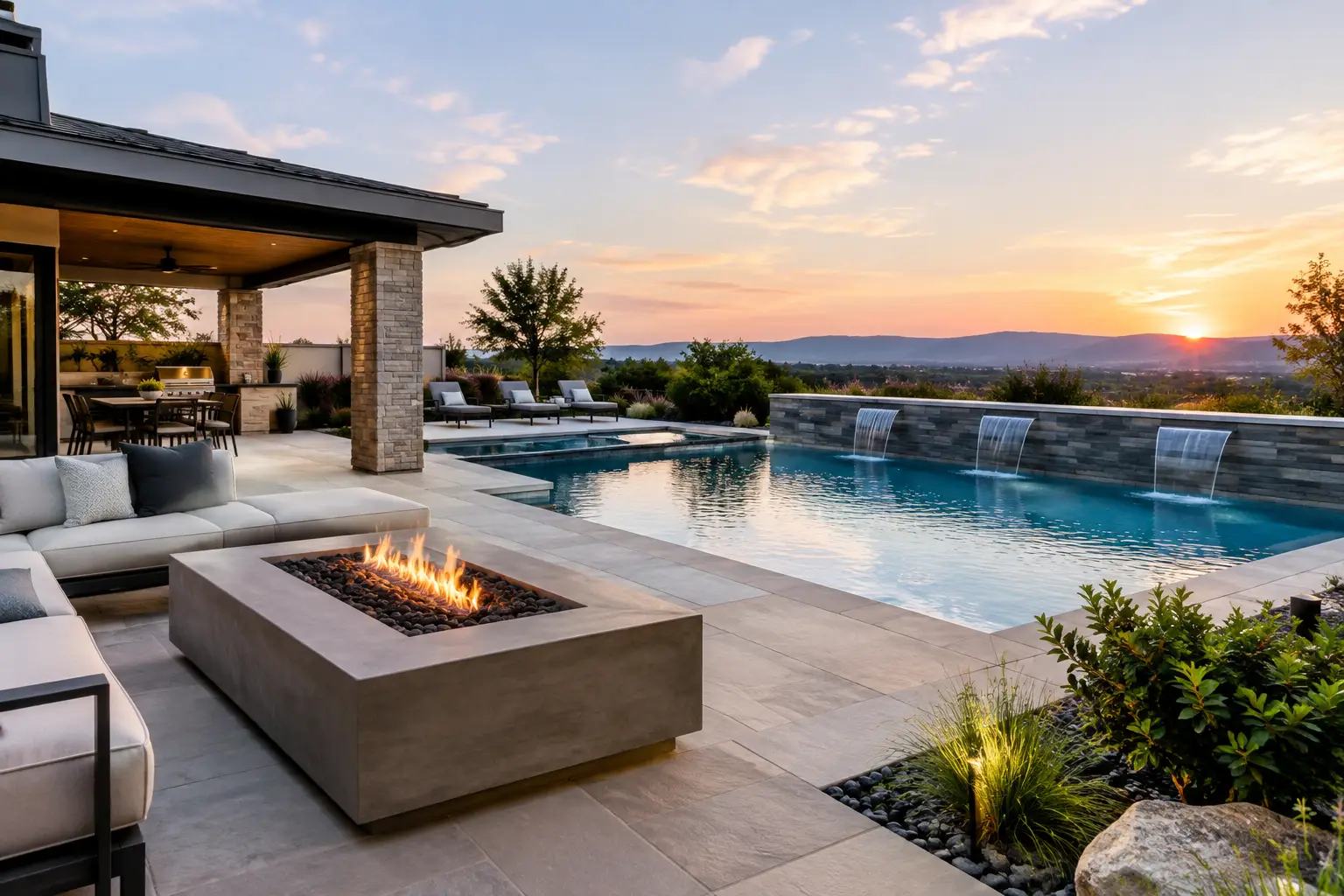
The right overhead structure can completely change how your backyard feels. When homeowners compare pergola vs covered patio options, they are rarely just choosing between two rooflines. They are deciding how they want to entertain, relax, cook, and spend time outside for years to come.
For some homes, a pergola creates exactly the kind of open-air elegance that makes a patio feel layered and inviting. For others, a covered patio delivers the comfort, protection, and architectural presence that turns the backyard into a true outdoor room. The better choice depends on how you live, what your property allows, and how much performance you expect from the space.
Pergola vs Covered Patio: The Core Difference
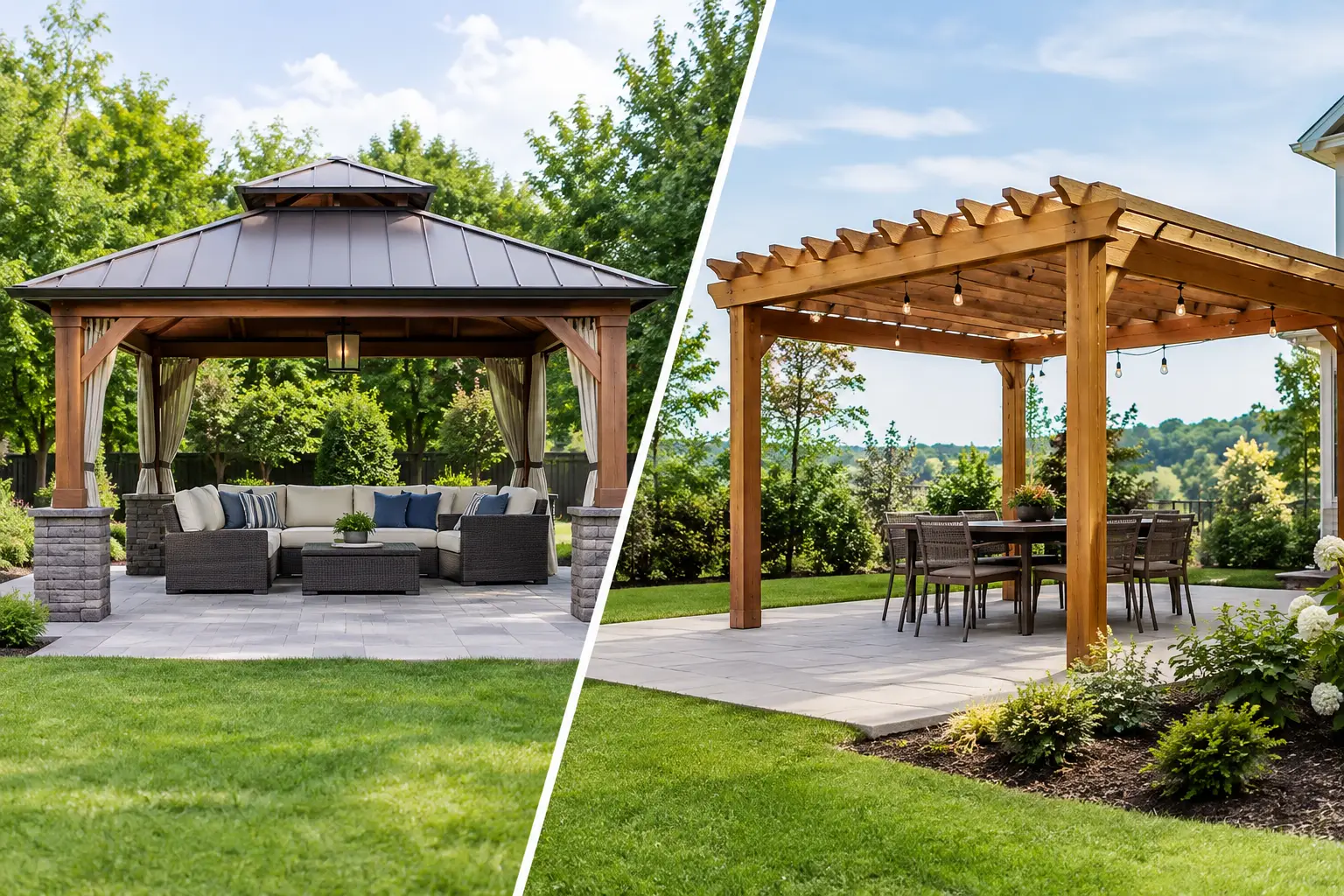
At a glance, the distinction is simple. A pergola is an outdoor structure with vertical posts and an open or partially open roof, often made with evenly spaced beams or slats. A covered patio has a solid roof that provides more complete protection from sun and rain.
But the real difference shows up in the experience. A pergola feels airy, sculptural, and social. It defines space without closing it in. A covered patio feels more substantial and protective, especially in hot or unpredictable climates where shade is not just a luxury but part of daily comfort.
That is why this decision should never be made on appearance alone. In a high-end backyard, the overhead structure needs to work with the home’s architecture, the orientation of the sun, and the way the space connects to features like a pool, outdoor kitchen, fireplace, or dining area.
When a Pergola Makes More Sense
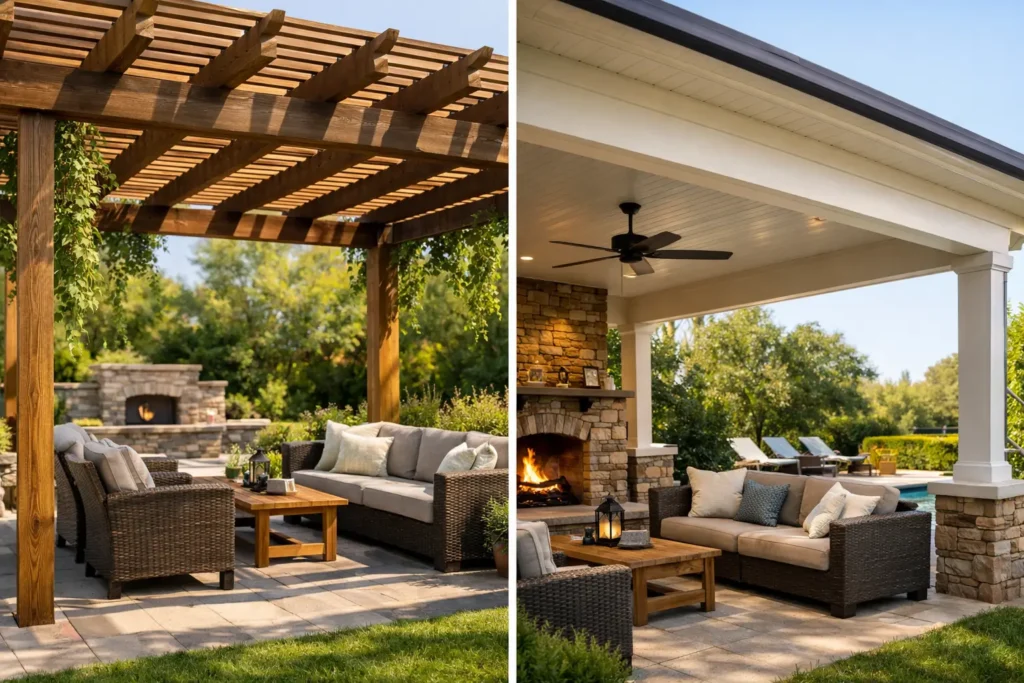
A pergola is often the right answer when the goal is atmosphere as much as function. It frames a lounge or dining space beautifully and gives the yard a resort-style quality that feels intentional and refined. In larger outdoor environments, it can help break up wide open hardscape areas and create a distinct destination within the landscape.
Because the roof is open or partially open, a pergola allows more light to filter through. That can be a major advantage if you want a space that feels bright, breezy, and visually connected to the sky. It also makes a pergola an ideal place for layered design details like statement lighting, drapery, climbing vines, or a suspended swing or daybed.
The trade-off is performance. A pergola does not provide full shelter from rain, and depending on slat spacing and sun angle, shade can vary throughout the day. In the Sunbelt, where summer heat can be intense, that matters. If your family wants to use the patio during the hottest hours, partial shade may not be enough unless the pergola includes upgraded features such as retractable canopies or added screening.
A pergola also tends to feel best when it is part of a larger composition. It can anchor a fire feature, complement a pool deck, or create an elegant transition between the house and garden. It is often less about maximum weather protection and more about creating a space with character, structure, and visual rhythm.
Best uses for a pergola
A pergola shines over a conversation area, a poolside retreat, or a dining space used mostly in pleasant weather. It is especially appealing for homeowners who want definition and beauty without making the yard feel too enclosed.
If your priority is ambiance, architectural interest, and an outdoor setting that feels relaxed but polished, a pergola can be a strong fit.
When a Covered Patio Is the Better Investment
A covered patio is built for comfort and consistency. With a solid roof overhead, the space becomes more usable across seasons and throughout the day. That added protection can make a dramatic difference if you enjoy outdoor dining, host frequently, or want a dependable extension of your interior living area.
For many homeowners, this is where the value becomes clear. A covered patio can support ceiling fans, integrated lighting, heaters, media features, and a more complete outdoor kitchen setup. It creates a stronger sense of enclosure, which often makes the space feel finished, furnished, and ready for real use rather than occasional use.
This option is especially compelling if the patio sits directly off the home. A well-designed covered patio can feel like a natural continuation of the architecture, improving both curb appeal and backyard flow. It also gives guests a more comfortable experience when the weather shifts or the sun is beating down in the late afternoon.
The trade-off here is that a covered patio has more visual weight. If the structure is oversized or poorly proportioned, it can darken the adjacent interior or make the backyard feel heavier than intended. The design needs to be thoughtful, with the right ceiling height, materials, and scale for the home.
Best uses for a covered patio
A covered patio is often the best choice for outdoor kitchens, dining areas, and living spaces that need reliable shade and shelter. If you picture yourself watching a game outside, serving dinner under soft lighting, or enjoying the patio after a summer storm rolls through, the covered option usually delivers more of what you need.
Shade, Climate, and Everyday Comfort
In the pergola vs covered patio conversation, climate should carry real weight. In warm Southern regions, outdoor comfort depends on more than looks. The position of the sun, the heat retained by pavers or stone, and the amount of moving air all affect how often the space actually gets used.
A pergola can be comfortable in the morning or evening and strikingly beautiful at midday, but still leave you wanting more shade during peak summer heat. A covered patio offers stronger sun protection, which can lower surface temperatures and make furniture, cooking areas, and lounge seating much more pleasant.
Rain matters too. If afternoon showers are common in your area, a covered patio can save outdoor plans that would otherwise be cut short. That practicality becomes more important when the patio includes dining furniture, electronics, cabinetry, or upholstered seating.
Style and Architecture Matter More Than People Think
Both options can look exceptional, but only when they feel integrated with the home. A pergola often complements transitional, Mediterranean, contemporary, and resort-inspired properties beautifully. It introduces shape and elegance without competing with the house.
A covered patio tends to feel more permanent and architectural. It can be designed to match the home’s rooflines, finishes, and structural details so the entire outdoor space feels original to the property rather than added later.
This is where custom design becomes especially valuable. The best outdoor environments are not assembled piece by piece. They are planned as one cohesive experience, where the overhead structure works in harmony with the patio layout, materials, pool placement, lighting plan, and entertaining zones.
Pergola vs Covered Patio Cost and Long-Term Value
Cost varies widely based on size, materials, site conditions, and customization, so there is no honest one-price-fits-all answer. In general, a pergola can be less expensive than a fully roofed structure, especially if it is simple in form and finish. But that gap narrows quickly when you add premium materials, lighting, motorized shade, or custom detailing.
A covered patio usually requires more construction, more coordination, and often more permitting. It may also involve tying into the home or engineering a freestanding roof system with a more finished ceiling and integrated utilities.
Still, value is not just about upfront cost. It is about how often the space gets used and how complete the backyard feels once the project is done. If a covered patio allows you to entertain comfortably for much more of the year, the higher investment may be the smarter one. If a pergola gives the yard exactly the architectural lift it needs while preserving an open, airy feel, that can be the better use of budget.
The Best Answer Might Be Both
In larger outdoor living projects, this is not always an either-or decision. A covered patio near the home can provide dependable shade for dining and cooking, while a pergola farther into the yard can define a separate lounge, fire feature, or poolside destination.
That layered approach often creates the richest result. It gives the backyard dimension and allows each space to do its job well. One area offers protection and convenience. Another offers openness and visual drama.
For homeowners pursuing a full outdoor transformation, this kind of combination often feels more natural than forcing one structure to solve every need.
How to Choose the Right Structure for Your Backyard
Start with how you want to live outside, not just how you want the structure to look. If your dream space centers on all-weather dining, outdoor cooking, and dependable daily use, a covered patio is usually the stronger choice. If your vision is more about ambiance, architectural elegance, and creating a defined outdoor destination, a pergola may be exactly right.
Then consider the larger plan. The best decision comes from understanding how the structure will interact with the house, the sun, the hardscape, and the rest of the property. At that point, the question becomes less about pergola vs covered patio and more about what kind of backyard experience you want to create.
A beautiful outdoor space should not just fill square footage. It should make the home feel more generous, more inviting, and more enjoyable every time people gather there.