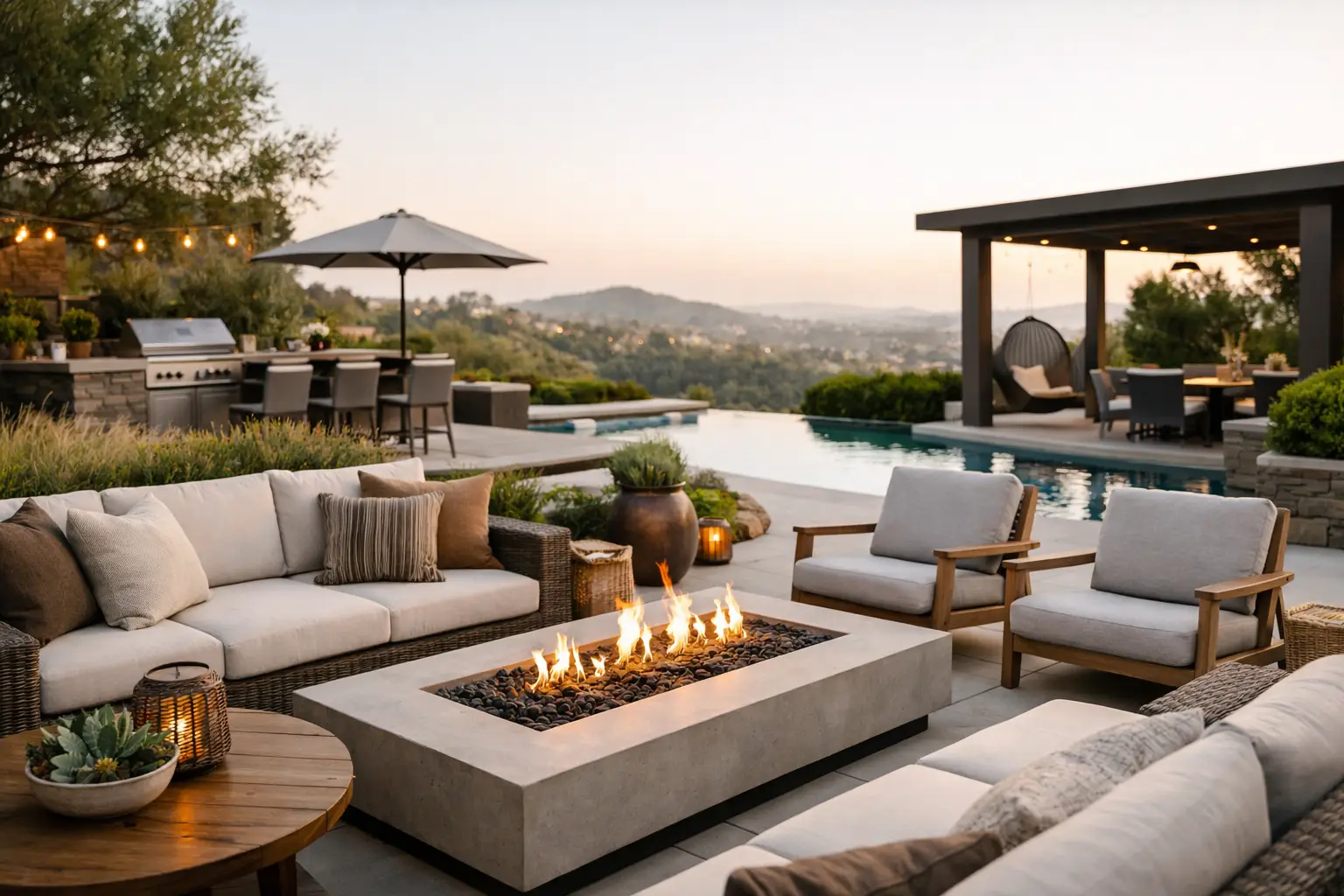
A beautiful backyard is no longer treated as a collection of upgrades. The most compelling outdoor living design trends are shaped around a complete experience: where guests arrive, where dinner is prepared, where children play, and where the evening naturally settles in around the fire. For homeowners investing in a lasting transformation, the goal is not to chase a look. It is to create a private retreat that feels effortless to use and unmistakably your own.
The Backyard Is Becoming a True Living Space
The strongest shift in luxury outdoor design is simple: exterior spaces are being planned with the same intention as interiors. A patio is no longer just a slab outside the back door. It becomes a furnished room with defined zones, architectural materials, lighting, and a clear relationship to the home.
This approach matters because larger backyard projects have many moving parts. A pool, pavilion, outdoor kitchen, fire feature, landscape planting, and walkway can each look impressive on their own. Without a unified plan, however, the result can feel fragmented or crowded.
A professionally designed outdoor environment considers movement first. Guests should know where to gather. The cook should have a natural connection to the dining area. Pool traffic should not cut through a quiet lounge space. These details are what give a backyard the relaxed confidence of a resort rather than the feel of several separate additions.
Defined zones, connected by purpose
Today’s outdoor rooms often include a dining area near the kitchen, a deeper lounge zone anchored by a fireplace or fire pit, and a poolside space designed for sun and conversation. The best layouts connect these zones with generous walkways, changes in paving texture, low walls, or carefully placed planting beds.
The trade-off is space. Trying to fit every possible feature into a modest yard can make the design feel busy. In smaller backyards, two exceptional zones with thoughtful transitions will often create more impact than five undersized destinations.
Shade Has Become an Architectural Feature
In Sunbelt climates, shade is not a finishing touch. It is what makes a backyard comfortable enough to enjoy through more of the year. That is why pavilions, pergolas, covered patios, and poolside cabanas remain among the most meaningful outdoor living design trends.
A solid-roof pavilion creates the strongest all-weather experience and can support ceiling fans, integrated lighting, heaters, and a full outdoor kitchen. It is ideal for homeowners who want to entertain in bright summer heat or host dinners when the forecast is uncertain. A pergola offers a lighter, more open feeling, especially when paired with slatted shade structures, climbing plants, or retractable canopy systems.
The right choice depends on how you live. If the space is primarily a poolside escape, filtered shade may be all that is needed. If it is meant to serve as a true open-air entertaining room, a more substantial roof structure often earns its footprint. Either way, the structure should feel connected to the architecture of the home through its proportions, columns, finishes, and roofline.
Outdoor Kitchens Are Designed for Hosting, Not Just Grilling
The outdoor kitchen is evolving from a grill surrounded by stone veneer into a hardworking hospitality center. Homeowners are asking for generous prep space, refrigeration, storage, seating, and dedicated cooking features that make hosting feel less like a relay between the house and patio.
A custom grill island can be the right solution for casual weekends. For families who regularly host, a larger kitchen with an oversized counter, sink, beverage station, pizza oven, or smoker can transform the rhythm of the entire backyard. The cook stays part of the conversation, and guests naturally gather around the activity.
Placement deserves as much attention as the appliance package. An outdoor kitchen should be close enough to the indoor kitchen for convenience, but not positioned so smoke drifts toward the main seating area or into the home. It also benefits from shade, task lighting, and a view toward the pool, lawn, or fire feature. A kitchen that supports the way you entertain will always feel more luxurious than one selected only for its list of amenities.
Fire and Water Create the Evening Experience
Outdoor spaces that feel memorable after sunset are increasingly designed around the contrast of fire and water. A linear fire feature can bring a contemporary edge to a patio. A masonry fireplace adds permanence and creates a natural focal point for a covered lounge. A fire pit, whether sunken or freestanding, encourages conversation and makes a large backyard feel intimate.
Water features are also becoming more tailored to the atmosphere homeowners want to create. Some prefer the clean sound of a pool scupper or sheer descent. Others want a more natural waterfall integrated into boulders and lush planting. The choice is not simply aesthetic. A louder cascade can help soften traffic or neighborhood noise, while a quieter water feature may be better suited to a serene courtyard setting.
These features require thoughtful engineering and maintenance planning. Gas fire features offer convenience and a clean burn, while wood-burning fireplaces bring a traditional ritual that some homeowners value. Similarly, a dramatic waterfall may be striking, but it should fit the pool’s style, scale, and long-term maintenance expectations. Great design balances the emotional effect with the realities of ownership.
Materials Are Getting Warmer and More Layered
The era of one material used everywhere is fading. Current luxury landscapes favor a layered palette that brings depth without visual clutter. Natural stone, porcelain pavers, textured concrete, wood-look finishes, smooth stucco, and richly toned masonry can work together when united by a clear color story.
For pool decks and patios, homeowners are often looking for surfaces that stay comfortable underfoot, hold up to weather, and feel refined enough for an elevated setting. Porcelain pavers offer crisp lines and consistent color. Natural stone brings variation and character. Concrete can be shaped and finished in highly customized ways. There is no universal winner, because durability, maintenance, budget, and the home’s architecture all influence the best choice.
The most successful designs repeat materials with restraint. A stone used on a fireplace might reappear on a retaining wall or outdoor kitchen. A paver selected for the patio may carry into a walkway or driveway accent. These quiet repetitions make a large project feel composed.
Landscape Planting Is More Intentional
Planting design is moving beyond filling empty edges. Trees, ornamental grasses, flowering shrubs, and evergreen structure are being used to frame views, create privacy, soften hardscape, and establish a sense of arrival.
In warm climates, layered planting can also make a backyard feel cooler and more secluded. A canopy tree near a lounge area, screening along a property line, and low planting around a pool deck can create enclosure without closing off the space. The goal is not a landscape that looks full on installation day. It is a landscape designed to mature beautifully.
This is where patience matters. Instant privacy through large material can be valuable, but it comes with a higher investment and greater establishment needs. Younger plantings are more budget-friendly, yet they require time to deliver the same presence. A thoughtful plan often combines both: larger anchor plants where immediate impact matters most, supported by a planting palette that grows into the design.
Recreation Is Being Built Into the Landscape
Backyard recreation is becoming more polished and less separate from the rest of the property. Putting greens, sport courts, bocce areas, and open lawns are being woven into the overall landscape rather than treated as isolated amenities.
A putting green can be positioned as a visible focal point near the patio or tucked into a quieter side of the yard. A sport court may need screening, lighting, drainage, and a careful relationship to neighboring homes. These additions work best when their circulation, views, and materials are addressed from the beginning, not added after the primary backyard is complete.
For families, this kind of planning creates a space that serves different ages at once. Adults can enjoy dinner under the pavilion while children use the pool, lawn, or court nearby. The backyard becomes more than a place to host. It becomes a place people naturally choose to spend time.
Design for the Way You Want to Feel at Home
Trends can offer useful inspiration, but the right backyard should not feel like a catalog of what is popular this season. It should make everyday life more inviting, whether that means morning coffee beside a quiet water feature, a pool day that flows into dinner, or a fire-lit evening with friends who stay longer than planned.
At Beyond Backyard Living, that kind of transformation begins with a conversation about how you want the space to work, look, and feel. Start with the experiences that matter most, then build the setting that makes them possible.