By Terrance Schabilion, Beyond Backyard Living – Custom Pool Builder Spring Hill FL
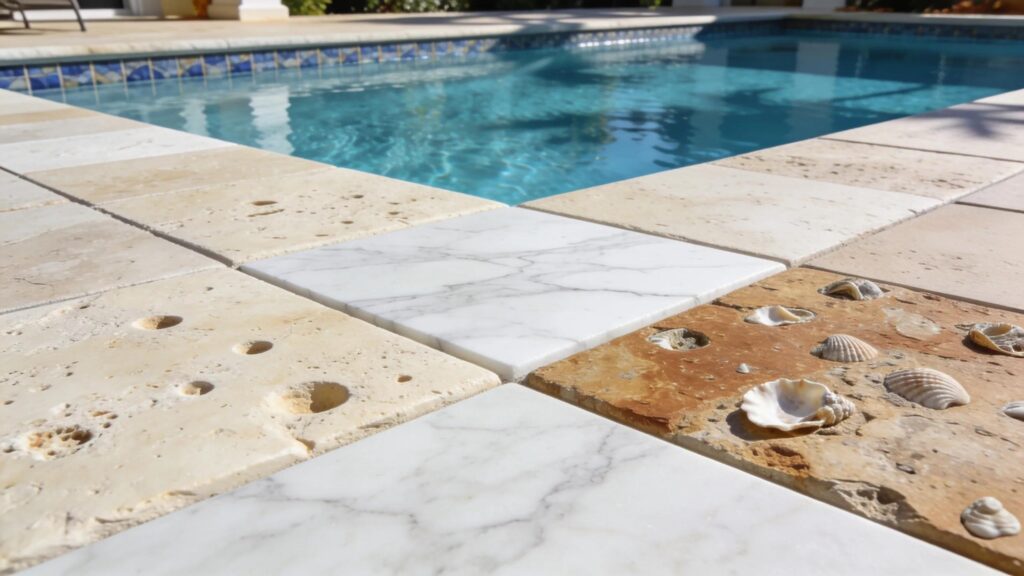
When considering materials for pool decks and patios in Florida, homeowners face an important choice between three popular options: travertine, marble, and shellstone. Each of these materials has unique characteristics that influence not only their aesthetic appeal but also their performance in specific weather conditions and use cases. The article will explore the key factors of slip resistance, heat absorption, and sealing requirements, enabling readers to make informed decisions for their outdoor spaces. Understanding these aspects helps homeowners optimize safety, comfort, and durability while enhancing the luxurious design of their pool areas.
Material Comparison, Slip & Heat Ratings
When evaluating pool deck options, travertine, marble, and shellstone each present distinct advantages and drawbacks. First, let’s delve into what these materials offer regarding slip resistance, heat absorption, and maintenance.
While travertine is renowned for its slip-resistant properties, marble requires a bit more caution due to its tendency to become slippery when wet. Shellstone provides a middle ground, combining reasonable slip resistance with a unique aesthetic appeal. Each material’s performance can vary widely based on its finish, texture, and maintenance.
In addition to evaluating these materials, it is crucial to consider their long-term value. Installation costs, maintenance requirements, and durability will all influence the ultimate decision on which material to choose for a stunning luxury patio design. Beyond Backyard Living Creations operates as a premier custom hardscape design-and-build contractor specializing in luxury pool decks and patios in the Florida Spring Hill and Nature Coast region.
Slip Resistance:
Slip resistance is critical for any pool deck material, particularly in humid Florida where water accumulation is common. Each material has varying levels of grip, affecting safety and comfort for users.
| Material | Slip Resistance Quality | Recommended Use |
|---|---|---|
| Travertine | High | Pool deck and patio spaces with high foot traffic |
| Marble | Medium | Areas requiring aesthetic appeal but needing caution in wet conditions |
| Shellstone | Moderate | Versatile use; suitable for both aesthetic and functional applications |
Implementing the right choice regarding slip-resistant materials is essential. Travertine is favored for its excellent grip, while marble can be slippery when wet. Homeowners must assess their specific needs and preferences, especially when designing custom hardscape features.
Heat Absorption:
The ability of pool deck materials to absorb heat significantly impacts comfort during hot Florida summers. Different stones exhibit varied heat absorption capacities, thus, impacting the overall temperature of the surface.
- Travertine retains less heat than both marble and shellstone, making it a more comfortable choice for walking barefoot.
- Marble, while luxurious, tends to absorb and retain significant heat, causing discomfort during peak sun exposure.
- Shellstone provides a cooler option but requires careful consideration depending on its finish and exposure to sunlight.
Choosing the correct material can significantly enhance the usability of outdoor spaces, ensuring comfort during summer months. Integrating design considerations effectively reduces heat impact on luxury pool decks.
Sealing Requirements:
Proper sealing is crucial for maintaining the longevity and appearance of natural stone surfaces. Each material has unique sealing requirements that homeowners should consider.
- Travertine may need sealing approximately every 3-5 years, but quality sealers can prolong the look and durability of the stone.
- Marble should be sealed more frequently due to its porosity and susceptibility to staining from pool chemicals.
- Shellstone requires attention to detail regarding sealing; an annual check could prevent unwanted wear and tear.
To ensure the best outcomes, integrating professional sealing methods during installation can provide long-lasting results. Beyond Backyard Living Creations highlights the importance of a solid sealing strategy to protect stone investment.
How does Florida’s climate impact natural stone slip resistance?
Florida’s humid climate significantly impacts the performance characteristics of natural stone used in outdoor settings. The high levels of moisture and rainfall can lead to the accumulation of water on surfaces. Consequently, understanding how different stones perform in wet conditions is paramount for homeowners.
Which stone offers the safest surface for pool patios in Florida?
Considering the environment, travertine emerges as the safest option for pool patios in Florida. Its textured surface provides sufficient traction, even when wet. In contrast, marble can be deceptive; while it offers sophistication, its slick nature necessitates caution to prevent slips and falls. Ultimately, educated decision-making informs safer outdoor spaces for families and guests.
How do travertine, marble, and shellstone compare in heat absorption for outdoor patios in Florida?
Examining these three materials reveals varying heat absorption capabilities:
- Travertine remains consistently cooler, providing comfort for users even in peak summer.
- Marble has a tendency to heat up quickly, creating an uncomfortable walking surface.
- Shellstone balances both aesthetics and heat absorption, yet its performance may hinge on specific product selections.
Why does travertine retain less heat than marble and shellstone?
Travertine’s porous structure allows it to retain less heat compared to the denser marble and shellstone. This property is particularly beneficial in Florida’s sunny climate, where comfort is paramount. Choosing travertine can alleviate concerns regarding scorching heat during hot summer months, ensuring a pleasant environment for outdoor relaxation.
What design considerations reduce heat impact on luxury pool decks?
Design solutions such as strategic placement of pavers and incorporating shaded structures significantly mitigate heat retention. Lighter shades and textured finishes can also enhance comfort. Choosing stone types that minimize heat absorption aligns with creating a more enjoyable experience for spending time outdoors.
What sealing methods and maintenance plans optimize durability for natural stone pool decks?
Proper sealing and maintenance strategies extend the life and aesthetic appeal of natural stone pavers.
- Regular inspections and sealing every 3-5 years for travertine enhance durability.
- Frequent resealing for marble helps preserve its surface from stains and damage.
- Shellstone should undergo an annual assessment for optimal protection against the elements.
Sealing prevents water penetration, which can lead to cracking and deterioration over time. Protecting stone pavers not only enhances safety but also maintains their visual appeal.
How does sealing improve slip resistance and stain protection on stone pavers?
Adequately sealed stone pavers provide a barrier against moisture, reducing the risk of algae growth, which contributes to slippery conditions. In addition, sealants help prevent staining from chemicals typically found in pool water, thus preserving both functionality and visual integrity.
Proper maintenance also relies heavily on structural integrity, as research demonstrates that effective surface treatments can reinforce the pavement against moisture-related damage.
Importance of Joint Sealing in Stone Pavement Maintenance
Joint sealing is needed to avoid water intrusion and to prevent pumping phenomena. According to a literature review, the sealing process improves the structural behavior, interlocking, and roughness.
Sealing of paving stone joints, F Maltinti, 2018
What are the benefits of annual protection plans for Florida pool patios?
Implementing annual protection plans offers several key advantages:
- Enhanced Longevity: Regular maintenance extends the lifespan of natural stone.
- Maintained Aesthetics: Longevity ensures the original beauty is preserved.
- Cost-Effectiveness: Preventative care is often less expensive than major repairs down the line.
This proactive approach avoids much deeper issues that can arise from neglecting maintenance, ensuring a beautiful patio for years to come.
What makes Beyond Backyard Living Creations’ turnkey process ideal for custom natural stone pool decks?
Beyond Backyard Living Creations delivers a unique turnkey process that streamlines the design and installation of luxury pool decks. This seamless approach ensures homeowners receive a tailored experience that encapsulates their aesthetic preferences and functional needs.
How does 3D design and engineering improve luxury pool deck outcomes?
Utilizing advanced 3D design and engineering techniques, the company can visualize the final product before installation. This leads to accurate planning that considers materials, layout, and aesthetics, resulting in a beautifully crafted outdoor space.
What warranty and installation systems ensure stone paver durability?
By providing transparent warranty options for their installations, Beyond Backyard Living Creations assures clients of the quality and durability of their work. Effective installation practices combined with reliable warranties safeguard homeowners’ investments, delivering peace of mind.