The sound of water can change the entire feeling of a backyard. It softens nearby road noise, gives a patio a more private atmosphere, and creates the kind of arrival moment that makes guests pause before they ever reach the outdoor kitchen or pool. Custom water feature design is not simply about adding a waterfall. It is about shaping how your outdoor environment looks, sounds, moves, and feels when you are living in it.
For a high-end residential property, the best water features belong to the overall vision. They work alongside the architecture of the home, the scale of the pool, the materials underfoot, and the way your family prefers to gather. A dramatic stone cascade may be right for one property, while another calls for a quiet sheet of water spilling from a clean-lined wall. The difference is not just style. It is thoughtful design.
Custom Water Feature Design Starts With the Setting
A water feature should feel as though it was always meant to be there. That begins with studying the setting rather than choosing a feature from a catalog. The home’s architecture, existing grade changes, views from inside, sun exposure, and neighboring properties all influence the right solution.
A naturalistic backyard with boulders, mature trees, and irregular planting beds may call for a stream or waterfall that appears to emerge from the landscape. In contrast, a contemporary home often benefits from refined geometry: a raised water wall, linear scuppers, or a reflecting basin framed in porcelain pavers and crisp masonry. Neither approach is better. The right choice is the one that reinforces the character of the property.
Placement matters just as much as form. A feature positioned near a lounge area can create a calming soundtrack for quiet afternoons. One placed near a pool entry can become a visual focal point and set a resort-style tone from the moment someone enters the yard. When the feature is visible from a kitchen, primary suite, or family room, it extends the experience of the landscape well beyond outdoor hours.
Choose the Water Experience You Want to Create
Water can be energetic, architectural, reflective, playful, or nearly still. Before discussing finishes and equipment, it helps to decide what role it should play in your lifestyle.
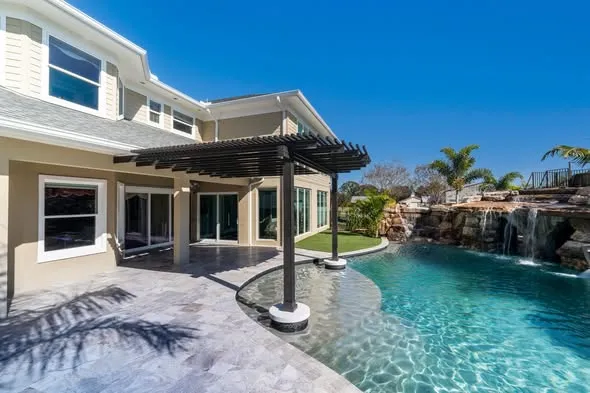
A cascading waterfall creates movement and sound, making it a natural fit for homeowners who want their backyard to feel immersive and secluded. It can be built into a pool, integrated with a spa, or formed as a standalone landscape feature with natural stone and planting. The sound level can be adjusted through the height of the falls, water volume, and the surfaces the water lands on. More drama generally means more sound, which can be an advantage near a busy street but may be too lively beside a quiet reading terrace.
A sheer descent or scupper offers a more tailored look. Water flows in a smooth, controlled line from a raised wall into a pool or basin below. These features pair beautifully with modern architecture, structured plantings, and clean hardscape lines. They are visually striking without requiring the larger footprint of a rock waterfall.
Bubblers and small fountains bring animation to shallow pool shelves or compact courtyard spaces. They are especially effective where children play, where a full waterfall would overwhelm the scale, or where the goal is a subtle detail rather than a central statement. A reflecting pool, meanwhile, is about stillness. It captures sky, architecture, firelight, and surrounding greenery, giving a formal patio or entry garden a composed, luxurious presence.
Design Water and Fire as a Single Composition
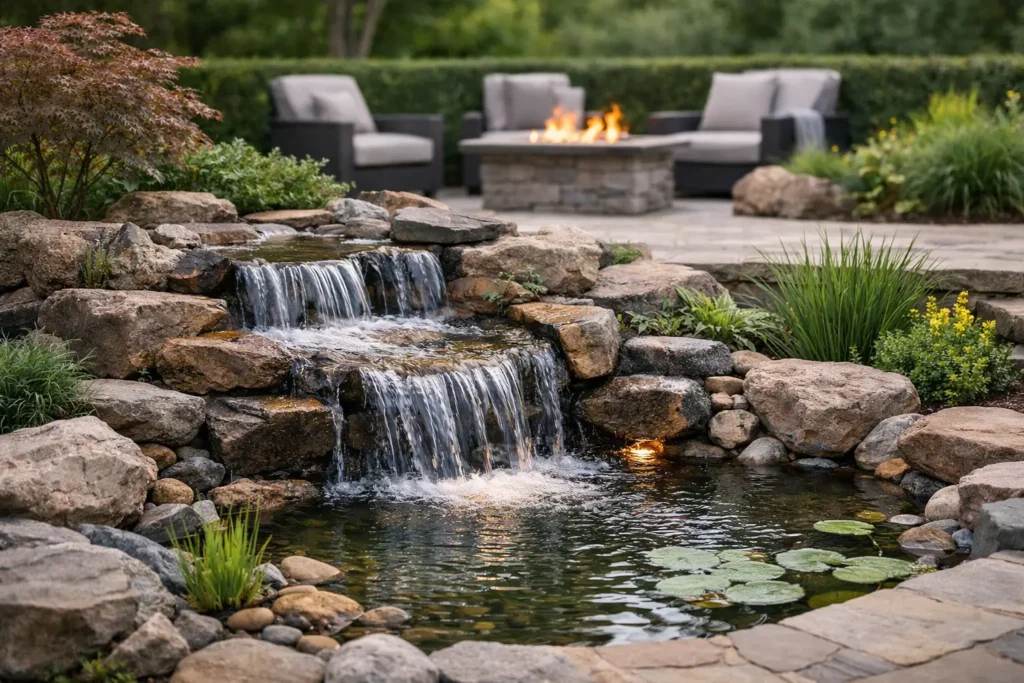
Few outdoor elements create atmosphere as quickly as water and fire. The flicker of a fire bowl reflected on a pool surface can make an ordinary evening feel like a private resort experience. A fireplace set near a waterfall adds contrast: warm, intimate gathering space beside the movement and sound of water.
The key is restraint. Too many flames, jets, spillways, and lighting effects can compete for attention. In a polished outdoor environment, each focal point should have a purpose. A linear fire feature may frame a pool view, while quiet scuppers add rhythm along the waterline. A stone fireplace may be the social center, with a low waterfall providing background sound from a nearby planting bed.
Material selection brings these elements together. The same stone used on a retaining wall can wrap a waterfall structure. Tile selected for a spa spillway can reappear on a fire feature or outdoor kitchen backsplash. Repeating materials does not mean every surface must match. It means the finished space has a clear design language.
The Details That Separate a Feature From a Focal Point
Luxury is often felt in the details homeowners do not notice immediately. Waterline elevation, coping thickness, stone texture, the width of a spillway, and the way lighting catches moving water all affect the finished result.
Proportion is particularly important. A waterfall that is too small can disappear against a large pool and expansive patio. One that is oversized may block views, dominate seating areas, or make conversation difficult. The feature needs to relate to the yard as a whole, including the height of the home and the scale of nearby structures such as pavilions, pergolas, or raised planters.
Lighting should be designed early, not added after the installation is complete. Underwater fixtures can make a pool spillway glow after sunset, while low landscape lighting reveals stone texture and nearby foliage. Warm lighting usually supports a relaxed hospitality-driven setting. Colored lighting can be fun for celebrations, but it is best used as an optional effect rather than the everyday look.
Planting completes the illusion. Ornamental grasses can soften a contemporary water wall, while ferns, liriope, and layered evergreens help a natural stone feature settle into the landscape. In Sunbelt climates, plant selection also needs to account for heat, irrigation needs, and the amount of reflected light coming from pools and pale pavers.
Plan the Engineering Before the Beauty
A beautiful feature must also be dependable. Pumps, plumbing, filtration, drainage, electrical connections, and access points deserve the same level of planning as the visible stone or tile. This is where a full-service design-build approach protects the investment.
The desired sound and water effect determine pump sizing and flow requirements. A long sheer descent, for example, needs enough water volume to maintain an even curtain rather than a broken trickle. A pondless waterfall requires a properly sized underground basin and thoughtful water management. Features connected to a pool need to work with the pool’s circulation system without compromising performance.
Maintenance is another honest consideration. More moving water and more intricate surfaces can mean more cleaning, especially in yards with heavy leaf drop or frequent windblown debris. Quality equipment, accessible valves, and well-designed filtration make care easier, but they do not eliminate it. The best design balances the visual experience you want with the level of upkeep you are comfortable managing.
Make the Feature Part of How You Entertain
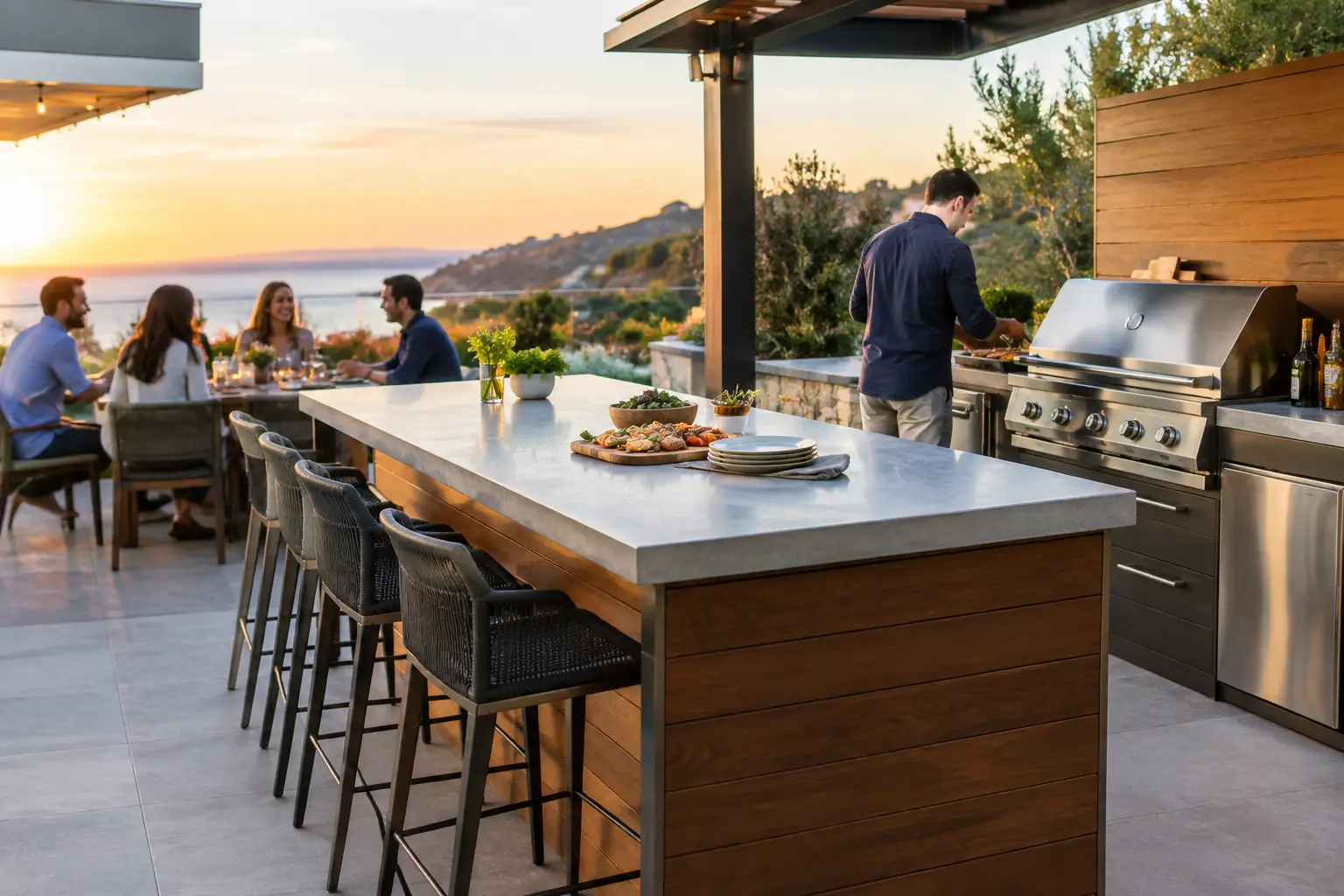
The most memorable backyards are designed around people, not isolated amenities. Think about where guests will stand with a drink, where children will move between the pool and lawn, where dinner will be served, and where a couple might sit after everyone else has gone home.
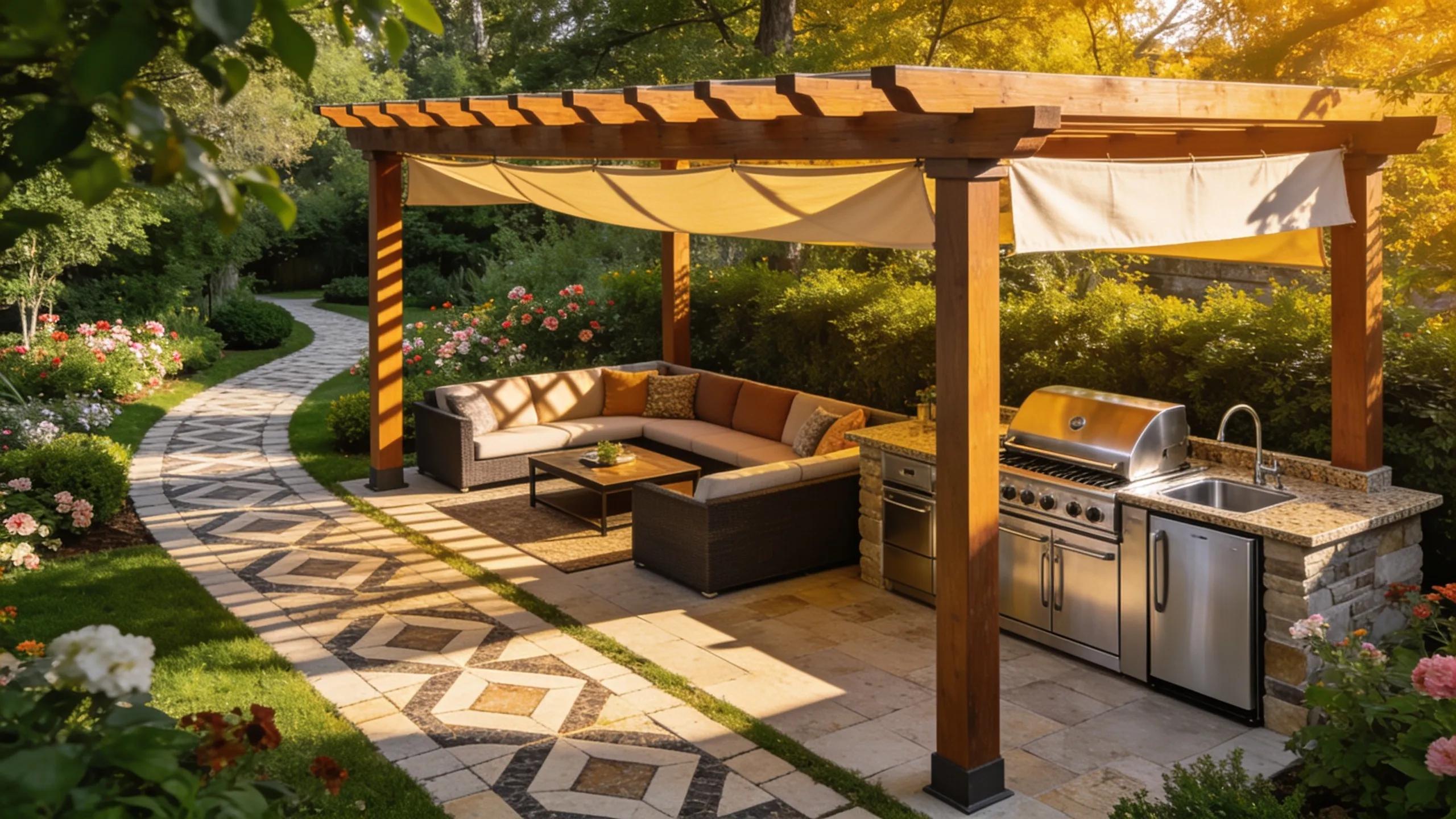
A water feature can define these moments. A raised spa with a tiled spillway gives a dining terrace a beautiful view. A waterfall beyond a putting green creates a destination at the far end of the yard. A fountain near an outdoor kitchen can make the cooking area feel more finished while helping separate it from the pool zone.
Sightlines matter here. From the primary entertaining area, the eye should land on something intentional: a waterfall, a fire feature, a sculptural tree, or a carefully framed pool view. When those moments are planned together, the backyard feels generous and complete, even when every square foot is working hard.
Invest in a Cohesive Backyard Vision
Custom water feature design is most successful when it is considered early in a larger backyard transformation. Retrofitting is possible, but it can introduce compromises around plumbing routes, hardscape removal, drainage, and material matching. Planning the feature with the pool, patio, retaining walls, planting, lighting, and outdoor living spaces creates a more refined result and often avoids costly rework later.
At Beyond Backyard Living, the goal is not to place a beautiful feature in the yard and call the project finished. It is to create an exterior environment where every material, movement, and gathering space feels connected. The water becomes part of the atmosphere, not an accessory.
Whether your vision is a bold poolside waterfall, a quiet courtyard fountain, or a clean-lined water wall beside a fire lounge, start with the feeling you want your home to deliver. The right feature will not only be seen. It will become part of the way your family relaxes, celebrates, and welcomes people in.