A beautiful backyard can lose its magic fast when every conversation, pool day, or quiet evening feels like it has an audience. The best backyard privacy solutions do more than block a view – they shape atmosphere, soften noise, and make the space feel like a true retreat designed for living well.
For homeowners investing in an elevated outdoor environment, privacy should never feel like an afterthought. The right solution has to match the architecture of the home, the way the yard is used, the local climate, and the level of screening you actually want. A backyard meant for entertaining around a pool and outdoor kitchen needs a different approach than a side patio meant for morning coffee or a fire feature tucked into a garden corner.
What makes the best backyard privacy solutions work
The strongest privacy designs solve more than one problem at a time. They create separation, yes, but they also improve the look of the space, guide movement, frame focal points, and make outdoor areas feel more intentional.
That is why the best results usually come from layered design rather than a single fix. A tall fence may stop direct sightlines, but it can also feel flat or imposing on its own. Planting alone can be lush and beautiful, but it takes time to mature and may not provide full coverage year-round. When hardscape, structures, and landscaping work together, privacy feels integrated instead of added on.
1. Landscape screening with trees and layered planting
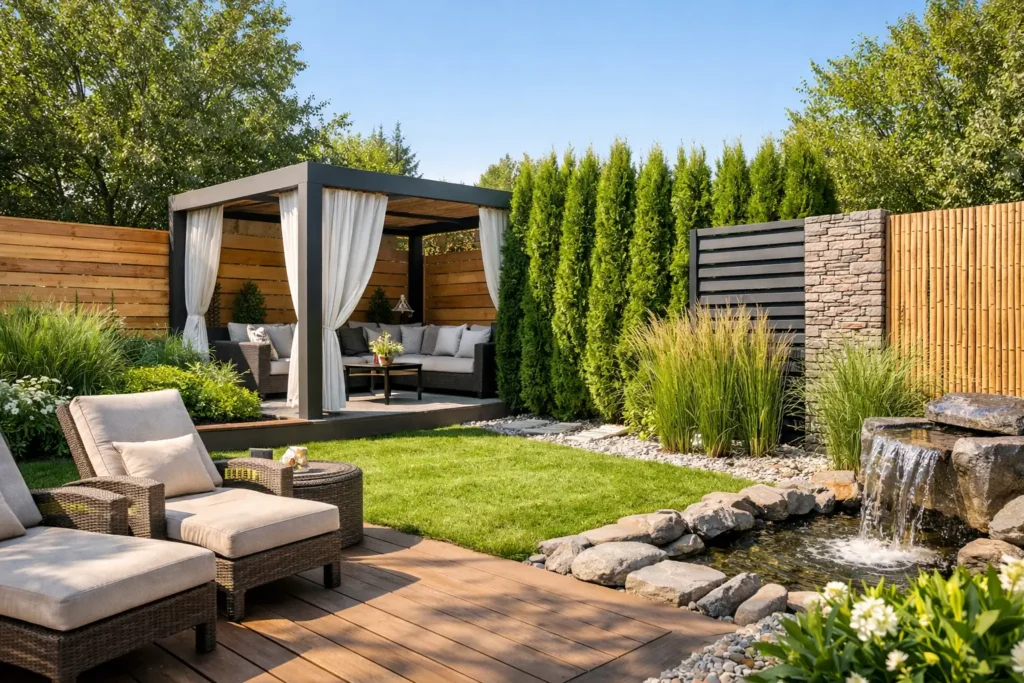
For many properties, living privacy is the most attractive answer. Rows of evergreens, ornamental trees, and layered shrubs can create a soft, upscale enclosure that feels far more refined than simply boxing in the perimeter.
This approach works especially well in larger Sunbelt backyards where there is enough room to create depth. Instead of a single row of plants, a more tailored composition might use taller screening trees in the rear, medium shrubs in front, and low plant material to give the edge a finished look. The result feels lush and established rather than defensive.
The trade-off is patience. If immediate privacy is the priority, younger plantings will not solve the problem on day one. Spacing, irrigation, and long-term maintenance also matter. Done well, though, planting brings shade, texture, and a resort-like softness that hard barriers alone cannot match.
2. Privacy fencing with a more architectural look
Fencing remains one of the most direct backyard privacy solutions, but not all fences deserve the same reputation. Basic panel fencing can feel purely functional. A custom privacy fence, on the other hand, can become a strong design feature.
Horizontal wood lines, stained finishes, masonry columns, decorative caps, and mixed-material details can help fencing feel aligned with a premium outdoor setting. This matters in a backyard where the goal is not just seclusion, but beauty.
Fence height, material performance, and neighborhood regulations all influence what makes sense. In windy or high-sun environments, material choice becomes especially important. The most successful fence designs feel substantial enough to create privacy without making the yard feel smaller or closed in.
3. Pergolas and pavilions that define space
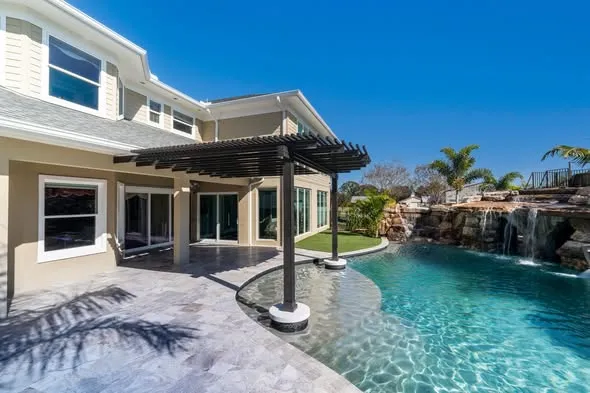
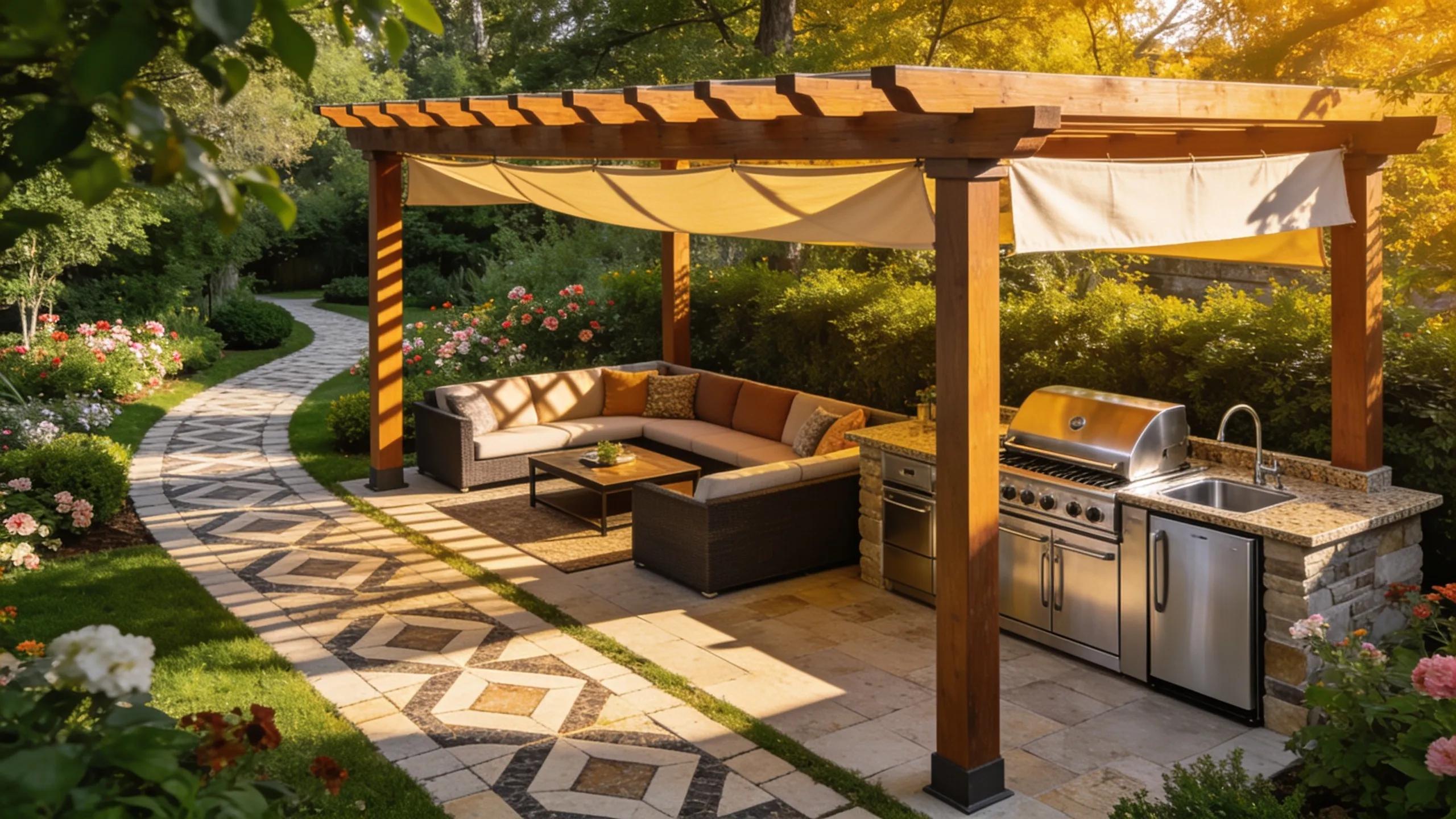
A structure overhead changes the feeling of privacy in a subtle but powerful way. Pergolas and pavilions do not always block views completely, but they create a sense of enclosure that makes outdoor rooms feel more intimate.
This is particularly effective over dining patios, outdoor kitchens, lounge spaces, and poolside seating areas. Add drapery panels, slatted walls, climbing vines, or integrated screens, and the structure starts doing real privacy work while still keeping the space open and elegant.
Pavilions offer more shelter and a stronger architectural presence. Pergolas are lighter and often better for homeowners who want partial screening without losing airiness. Which one fits best depends on how the space is used and how much visual weight the yard can handle.
4. Decorative privacy screens for targeted coverage
Sometimes privacy is not needed around the full perimeter. It is needed in one precise location – between a spa and a neighbor’s window, beside a pool lounge area, or near an outdoor shower.
That is where decorative screens shine. Metal, composite, wood, or custom-cut panels can create focused screening exactly where it matters most. They also introduce pattern, shadow, and a polished layer of detail that elevates the whole design.
These screens work especially well when paired with masonry walls, planting beds, or structural elements. On their own, they may not solve every privacy issue. As part of a broader composition, they can make the yard feel custom and thoughtfully resolved.
5. Retaining walls and raised planters with dual purpose
In sloped yards or multi-level outdoor spaces, grade changes can become privacy assets. Retaining walls and raised planters can help separate entertainment zones, shield seating areas, and support dense planting that lifts screening to a more effective height.
This is one of the smartest options when privacy and landscape architecture need to work together. A raised planter behind a patio, for example, allows shrubs or small trees to screen neighboring views without requiring an oversized fence. It also adds dimension and a more finished, estate-style feel.
The value here is not just visual. Walls and planters help organize the yard, improve drainage strategy, and create stronger transitions between spaces. They are most effective when designed as part of the entire outdoor plan, not inserted later as a patch.
6. Pool privacy that still feels open and luxurious
Pool areas need a different privacy mindset. Too much enclosure can make the space feel boxed in or interfere with views across the yard. Too little, and the space never feels fully relaxed.
The best backyard privacy solutions for pools usually rely on a mix of elements: selective fencing, strategic plant groupings, cabanas or pavilions, and feature walls that shield key lounging or tanning areas. The idea is to protect the moments that feel most exposed while preserving the broad, open feel that makes a poolscape inviting.
This is where custom design matters most. A family-focused pool used for weekend gatherings has different needs than a sleek, resort-inspired pool intended for adult entertaining. Privacy should support the experience, not overpower it.
7. Outdoor fireplaces, water features, and built-in focal points
Not every privacy solution is visual. Sometimes what homeowners want is a greater sense of separation from nearby activity, sound, or the feeling of being overlooked.
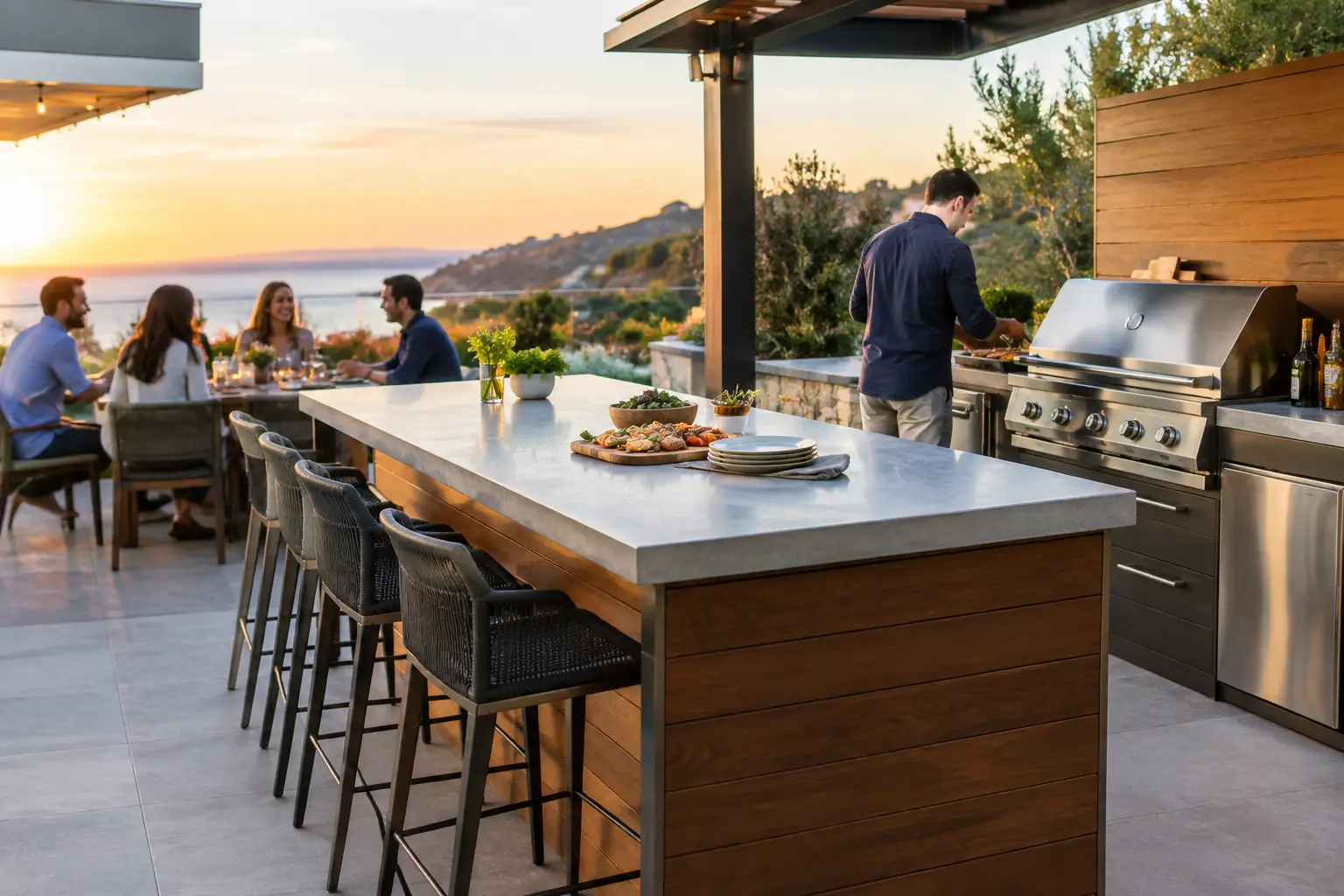
Built-in features can help create that effect. An outdoor fireplace anchors a seating area and draws attention inward. A water feature adds sound that masks nearby noise. A substantial pizza oven, kitchen wall, or bar structure can subtly shield a patio without reading as a barrier.
These elements do not replace true screening where direct sightlines are a problem. What they do offer is emotional privacy – the sense that your outdoor room has its own identity, rhythm, and center of gravity.
8. Curtains, screens, and flexible privacy options
Some outdoor spaces benefit from privacy that can change with the occasion. Motorized screens, outdoor curtains, sliding panels, and movable partitions let homeowners adjust exposure based on sun, wind, guests, and time of day.
This works particularly well in covered patios, pavilions, and outdoor dining areas where flexibility matters. During a larger gathering, the space can feel more open. During a quiet dinner or an afternoon spent working outside, it can become more secluded.
The key is choosing materials and systems that feel tailored to the rest of the project. In a high-end backyard, temporary-looking solutions stand out quickly. Flexible privacy should still look permanent, intentional, and beautifully integrated.
9. The best backyard privacy solutions are usually layered
A single element can help, but layered privacy is what gives a backyard depth and elegance. A masonry feature wall backed by planting. A pergola with side screens near an outdoor kitchen. A pool lounge framed by ornamental trees and a raised planter. These combinations feel richer because they solve privacy from multiple angles.
They also age better. If one layer changes over time – plants mature, furniture layouts shift, neighboring views change – the space still works. That is a major advantage for homeowners making a meaningful investment in their property.
How to choose the right privacy approach for your yard
Start with the real problem, not the first product that comes to mind. Is the issue a second-story neighbor view, a lack of intimacy around the pool, road noise, or an exposed patio at the property line? Different problems call for different solutions.
Then consider how you want the yard to feel. Some homeowners want complete seclusion. Others want selective screening while keeping the space visually open. Privacy is not one-size-fits-all, especially in a backyard built for entertaining, relaxing, and spending time with family.
Budget and timeline matter too. Mature planting and custom structures create extraordinary results, but they require planning. If the goal is a full outdoor transformation, privacy should be designed at the same time as patios, pools, kitchens, and gathering areas. That is how the entire environment feels cohesive rather than pieced together.
At Beyond Backyard Living, that is often where the biggest shift happens. Privacy stops being a boundary issue and becomes part of the experience – part of what makes a backyard feel polished, welcoming, and entirely your own.
The most memorable outdoor spaces do not just keep neighbors out of view. They make you want to stay longer, host more often, and enjoy home in a way that feels elevated every single day.