A still pool can be beautiful. But when water begins to move – slipping from a raised wall, spilling from natural stone, or falling in a clean sheet beside the spa – the entire backyard changes character. Pool waterfalls bring sound, motion, and atmosphere into the design, turning a standard swimming pool into a space that feels composed, immersive, and distinctly resort-inspired.
For homeowners investing in a custom outdoor environment, that difference matters. A waterfall is not simply an add-on. It can become the visual anchor of the poolscape, the backdrop for evening entertaining, and the feature that makes the whole setting feel finished.
Why pool waterfalls have such a strong impact
Water has a way of softening a space while making it feel more alive. In a backyard setting, pool waterfalls introduce a sensory layer that hardscape alone cannot create. The sound helps mask street noise and neighboring activity. The movement catches light throughout the day. At night, the feature can take on an entirely different personality when paired with thoughtful illumination.
There is also an emotional effect. Backyards designed for gathering and relaxation should feel like a retreat, not just a collection of amenities. A waterfall contributes to that feeling immediately. It adds rhythm to the environment and gives the pool a point of focus beyond the waterline itself.
That said, the best results come from intentional design. A waterfall that suits the architecture, grade changes, materials, and scale of the yard feels effortless. One added without a clear relationship to the rest of the space can feel decorative rather than integrated.
Choosing the right style of pool waterfalls
Not every waterfall belongs in every backyard. The right choice depends on the look you want, how the pool is positioned, and how the surrounding spaces are meant to function.
Natural rock waterfalls
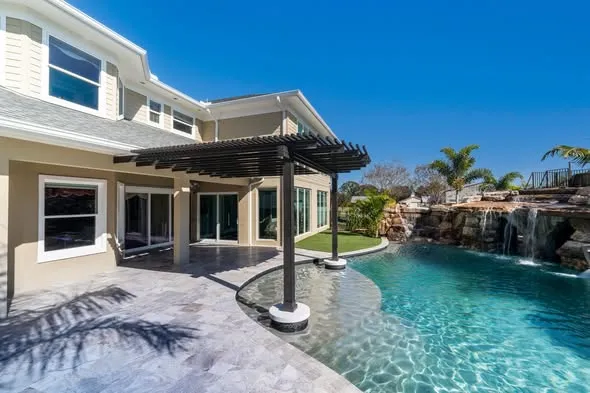
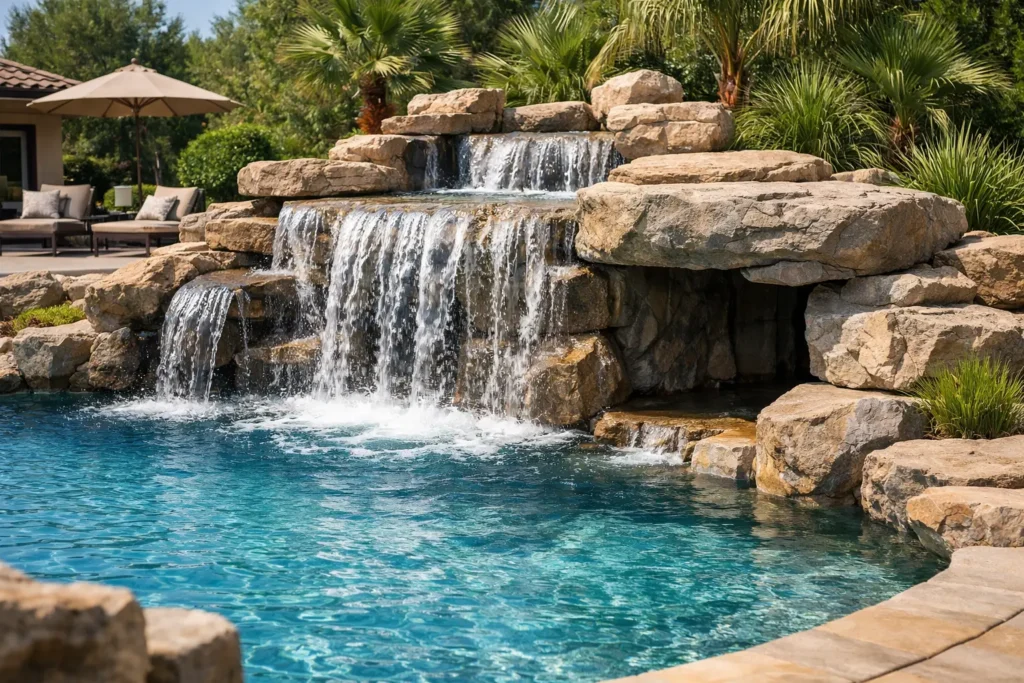
For homeowners drawn to a more organic, destination-style setting, natural rock waterfalls create texture and visual drama. These designs often pair well with freeform pools, lush planting, and layered landscaping. The water can tumble in a way that feels relaxed and irregular, which adds to the sense of escape.
This style can be especially appealing in larger backyards where the goal is to create a private oasis. The trade-off is that naturalistic waterfalls require careful composition. If the stone selection or scale feels forced, the result can look artificial. The craftsmanship matters just as much as the concept.
Sheer descents and clean architectural falls
For a more refined and contemporary setting, linear waterfalls offer a different kind of luxury. A sheer descent or slot-style spillway creates a crisp, controlled effect that works beautifully with geometric pools, modern homes, and streamlined hardscapes.
These features tend to feel quieter visually, even when the water itself is active. They complement minimalist design and often integrate well into raised walls, tanning ledges, and spa structures. If your outdoor space leans more architectural than tropical, this direction usually feels more natural.
Spa spillovers and integrated transitions
Some of the most elegant pool waterfalls are the ones that do more than one job. A raised spa with a spillway into the pool creates movement while reinforcing the layout of the space. It helps connect the features rather than making them feel separate.
This approach is often ideal for homeowners who want visual interest without introducing a large standalone waterfall element. It is subtle, polished, and highly effective, especially in backyards where every line and proportion is being considered.
Design details that make a waterfall feel custom
A luxury backyard is rarely defined by one feature alone. It is defined by how each element supports the whole. That is particularly true with pool waterfalls.
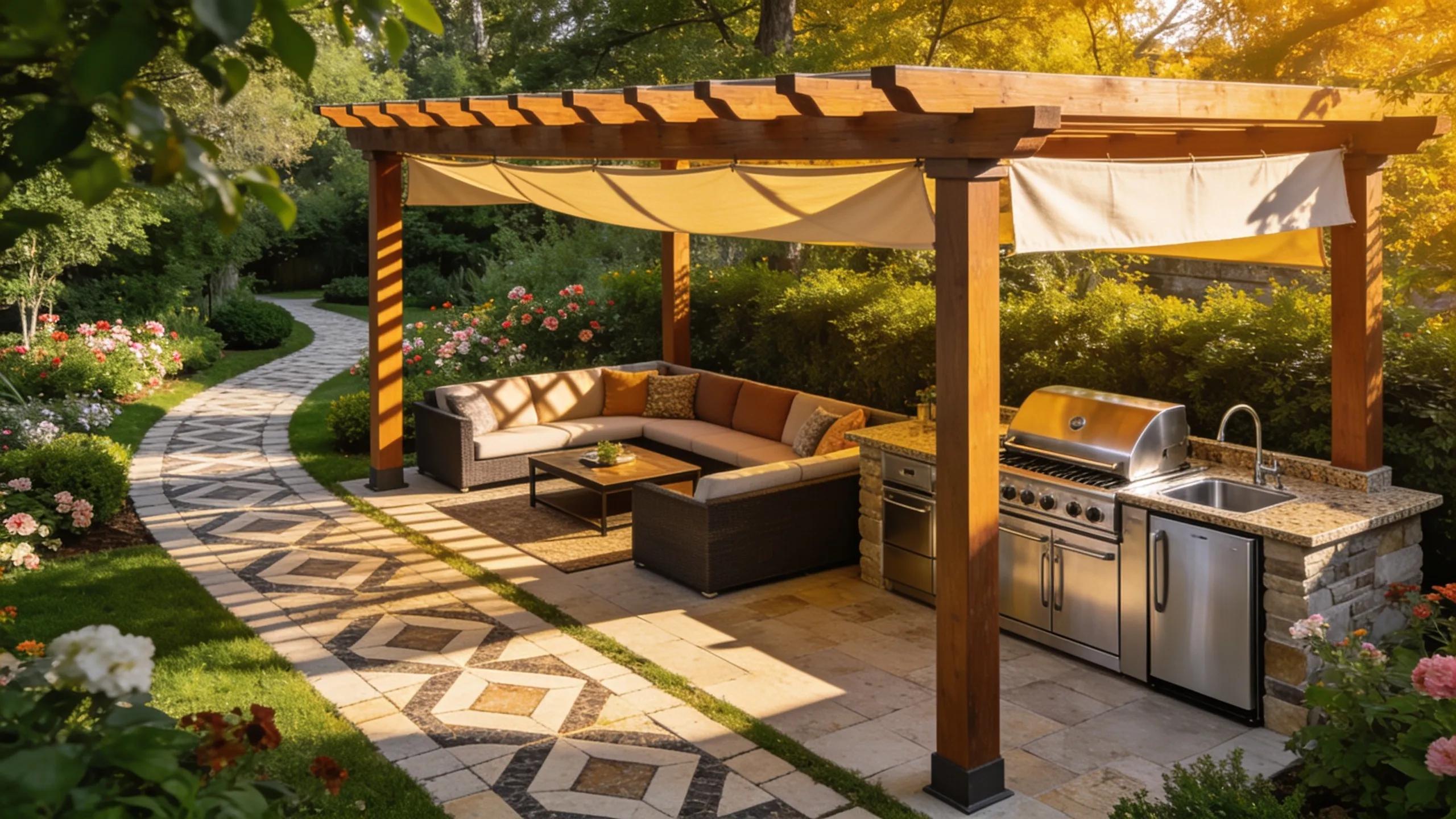
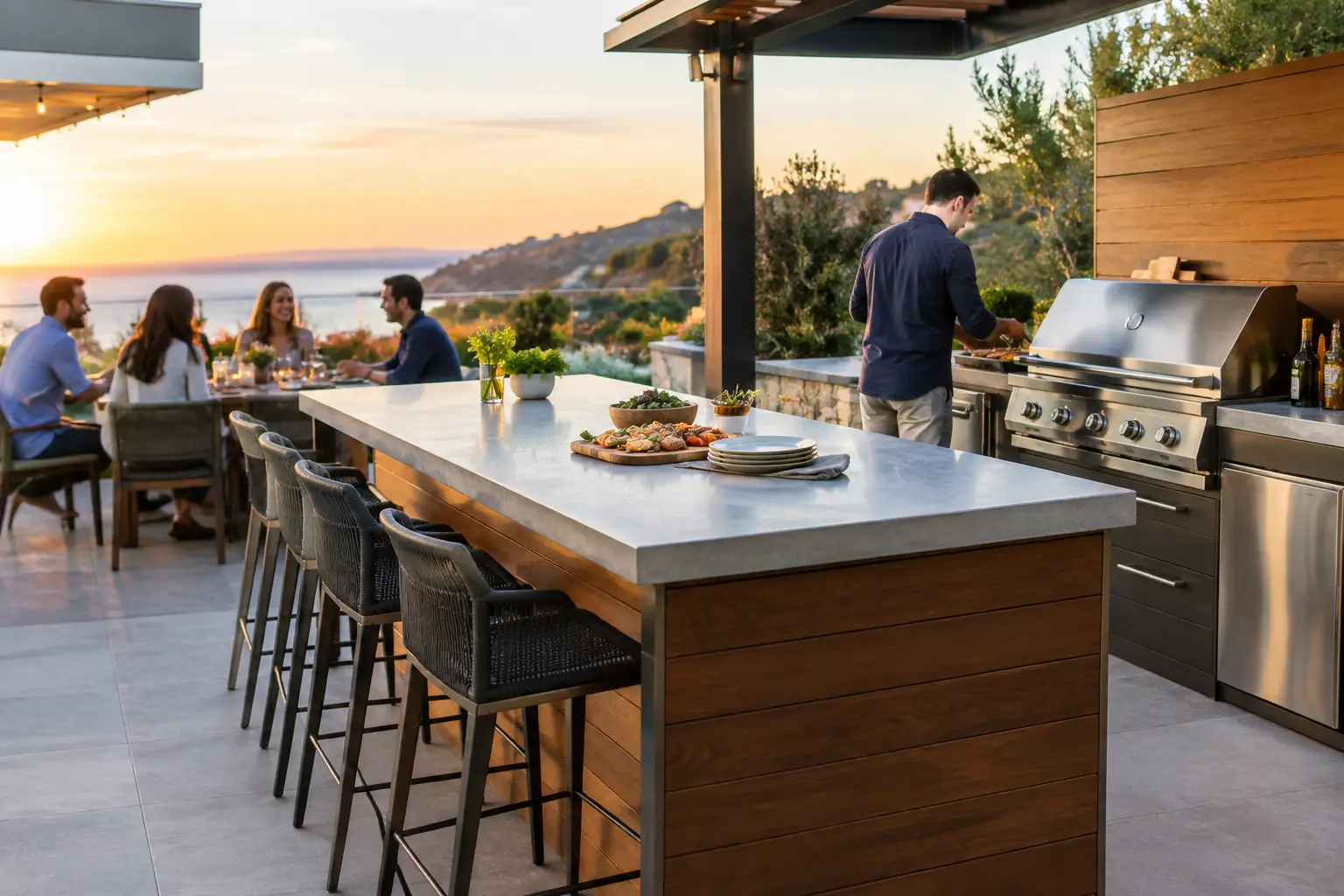
Placement is one of the first decisions that shapes the experience. A waterfall viewed from the main patio or outdoor kitchen becomes part of everyday living, not just something seen from inside the pool. If the primary goal is relaxation, positioning it near a lounge area can make sense. If the backyard is designed around entertaining, a waterfall that creates a dramatic focal point from the main gathering zone may be the stronger move.
Material selection matters just as much. Stone, tile, stucco, and concrete finishes should feel connected to the home and hardscape palette. In well-designed spaces, the waterfall does not appear imported from another project. It feels born from the same vision as the patio, coping, retaining walls, and architectural details.
Scale is another area where experience shows. A feature that is too small can disappear. One that is too large can overpower the pool and limit usable deck space. The right proportion depends on yard size, elevation changes, viewing angles, and the overall ambition of the design.
The practical side homeowners should think about
A waterfall may look effortless once it is complete, but the planning behind it should be anything but casual. There are real performance considerations that affect both enjoyment and long-term maintenance.
Sound is one of the biggest. Some homeowners want a gentle background effect. Others want stronger white noise that helps screen surrounding distractions. The size of the drop, the volume of water, and the receiving surface all influence how the waterfall sounds. This is one of those areas where personal preference matters more than trend.
Water movement also affects evaporation and splash. In hotter Sunbelt climates, that can become more noticeable, especially with larger or more active waterfalls. Wind exposure can amplify the issue. A beautiful design should still make sense for the setting.
Energy use is another factor. Waterfalls typically require circulation support, and larger features may need dedicated pumps or automation controls. That does not mean they are impractical. It simply means the design should account for how the feature will actually be used. Many homeowners prefer systems that allow them to adjust flow and run times based on the occasion.
Maintenance depends on materials, water chemistry, and construction quality. Natural stone can create a stunning effect, but some materials are more prone to mineral buildup or weathering than others. Clean-lined spillways may appear lower maintenance, yet they still require precision to keep water flowing evenly. The goal is not to avoid complexity at all costs. It is to make informed decisions upfront.
Pool waterfalls work best as part of a complete backyard vision
The most memorable outdoor spaces do not treat the pool as one project and the rest of the yard as an afterthought. They are composed as a complete environment. That is where pool waterfalls become especially powerful.
A waterfall can reinforce grade transitions between upper and lower patios. It can tie a raised spa into the pool composition. It can soften the edge of a retaining wall or create a visual connection between the pool and surrounding planting beds. When approached this way, the feature does more than decorate the water. It helps organize the space.
This is also where lighting, fire elements, seating walls, and outdoor living areas come into play. A waterfall viewed next to a fire feature creates contrast and drama. A spillway framed by elegant stonework and layered landscaping feels intentional from every angle. The richer the composition, the more natural the luxury feels.
For homeowners planning a major backyard transformation, that level of integration is often the difference between a nice pool and a destination at home. Beyond Backyard Living approaches outdoor environments with that full-picture mindset because high-end results come from coordination, not isolated upgrades.
When to Invest in a Pool Waterfall vs Other Backyard Features
A waterfall is often worth the investment when the backyard needs a focal point, when the setting would benefit from sound, or when the design includes vertical opportunities such as a raised spa, wall, or slope. It can also be the right move when the goal is to create a stronger sense of arrival and atmosphere.
But there are cases where another feature may deserve priority. In a compact yard, usable deck space, shade, or seating may do more for day-to-day enjoyment. In a very modern design, a subtle water detail may fit better than a dramatic cascade. If the budget has to be allocated carefully, the smartest decision is the one that supports how you actually want to live outside.
That is the value of custom design. The right answer is not whether waterfalls are beautiful. They are. The real question is what type of water feature belongs in your space, at your scale, and within the experience you want your backyard to deliver.
When that answer is handled well, a waterfall does more than complete the pool. It gives the entire outdoor setting a sense of life, elegance, and welcome that people feel the moment they step outside.