A beautiful backyard can lose its appeal quickly when rainwater pools beside the patio, softens a lawn into mud, or flows toward the foundation. The right backyard drainage solutions do more than move water out of sight. They protect the investment in your pool, hardscape, plantings, and gathering spaces while helping every part of the landscape feel intentional after a summer storm.
For a high-end outdoor environment, drainage should never be an afterthought. It is part of the design language. When grades, drains, walls, and planting areas work together, your backyard remains inviting through wet weather instead of becoming a space you avoid until everything dries out.
Water Always Finds a Path
In many Sunbelt backyards, drainage challenges begin with a combination of intense rainfall, compacted soil, flat lots, and added hardscape. A new patio, pool deck, or outdoor kitchen changes how water moves across the property. Without a plan, runoff can collect at the edge of a paver patio, wash mulch into the lawn, or create pressure behind a retaining wall.
The warning signs are often easy to spot: standing water that remains for more than a day, bare or eroded areas in the lawn, water stains along a wall, and downspouts emptying directly beside the home. A soggy patch may seem like a minor nuisance, but repeated saturation can damage turf, shift pavers, weaken a base layer, and create the conditions insects love.
The goal is not simply to get rid of water as fast as possible. A well-considered plan collects runoff where it naturally gathers, directs it safely through the landscape, and releases it where it will not create a new problem. That balance is what turns a drainage system into an invisible part of a polished outdoor retreat.
Backyard Drainage Solutions Begin With a Site Plan
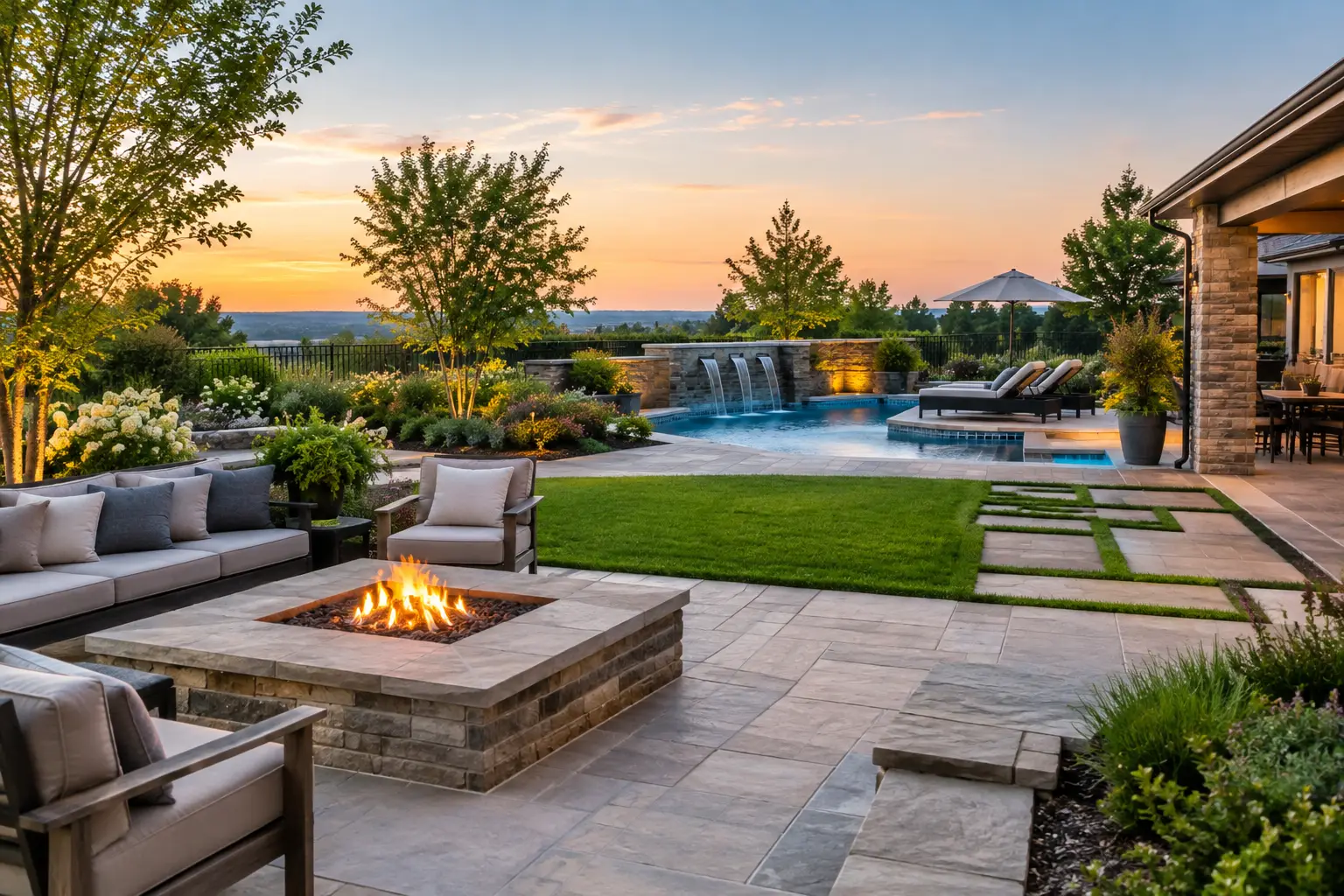
Effective drainage starts before materials are selected. A professional site assessment looks at the natural slope of the property, roof runoff, soil conditions, neighboring elevations, existing trees, and the placement of future amenities. This is especially important when a backyard is being transformed in phases. A fire pit today may become part of a larger pool and pavilion plan tomorrow, and the drainage infrastructure should be ready for both.
The best approach depends on where the water originates and where it has a legal, practical place to go. A small low spot in the lawn calls for a different solution than runoff traveling down a side yard toward a patio. Likewise, a pool deck needs drainage details that preserve a clean, uninterrupted look while keeping water away from the home and equipment.
Grade the Landscape With Purpose
Grading is the foundation of most drainage work. The finished surface should slope gradually away from the home and away from structures, encouraging water to move naturally without making the yard feel tilted or awkward. Around patios and walkways, the grade needs to feel comfortable underfoot while still directing runoff toward collection points.
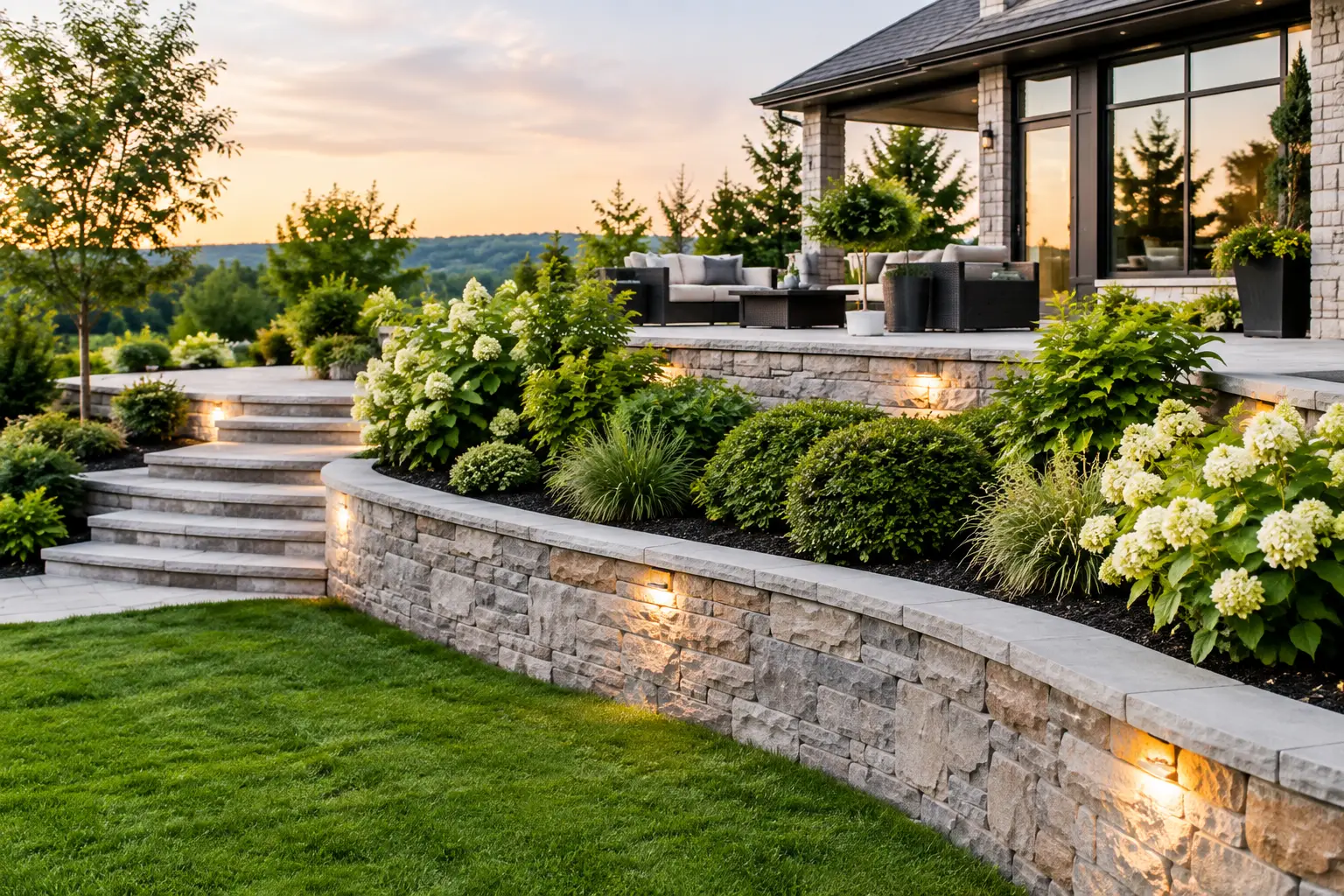
In luxury landscapes, grade changes can also become design opportunities. A gentle rise may frame a lawn, create a more private dining terrace, or support layered planting beds. Where a more significant elevation change is needed, a retaining wall can shape the space and manage soil at the same time. Behind that wall, proper drainage stone, pipe, and outlet details are essential. A striking wall without relief for water can eventually bow, stain, or fail.
Use Surface Drains Where Water Collects
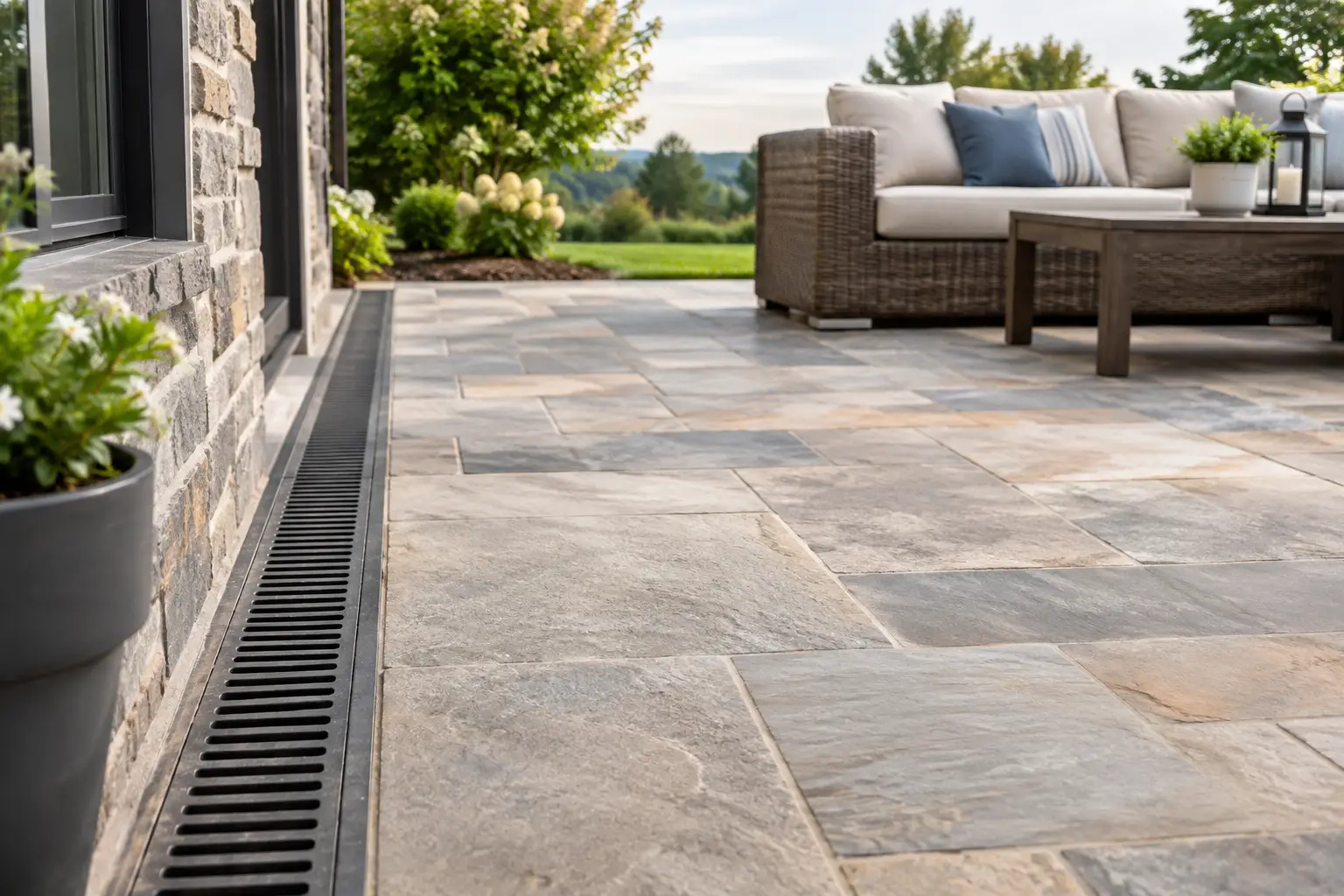
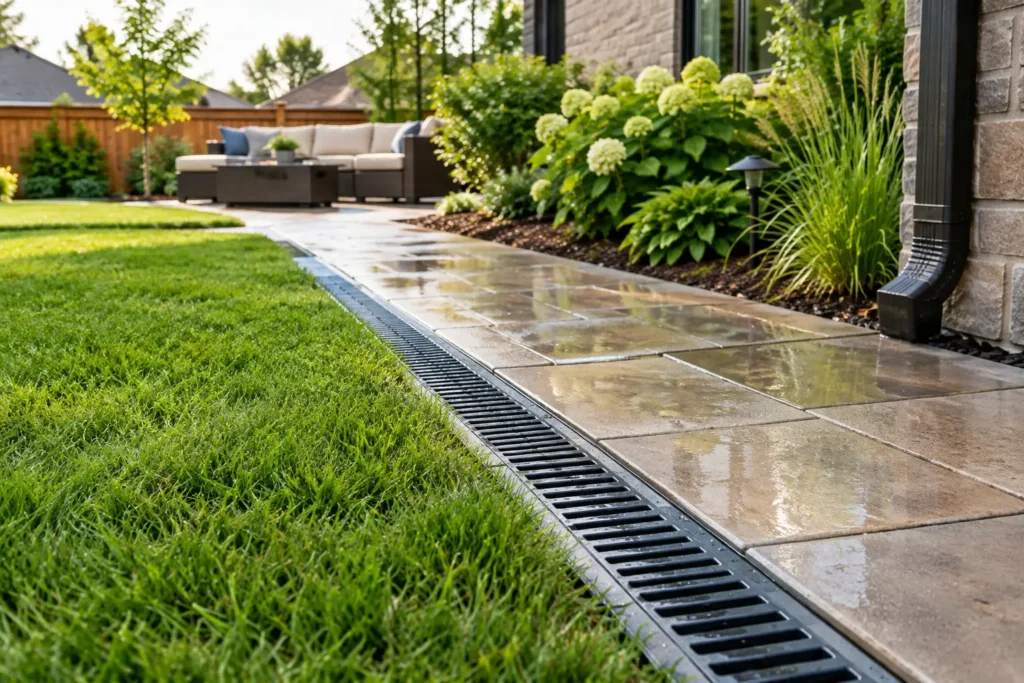
Area drains and channel drains are often the most direct answer for hardscape surfaces. A channel drain can be placed along the edge of a pool deck, at the entrance to a covered patio, or across a driveway where water would otherwise cross the paving. It collects sheet flow before it reaches a doorway, outdoor kitchen, or lower terrace.
The visual details matter. Drain grates are available in finishes and profiles that can complement pavers, natural stone, concrete, and contemporary pool materials. The goal is to place them strategically so they perform without disrupting the lines of the design. A drain should feel integrated, not added on after the fact.
Move Water Below the Surface
French drains and solid drainpipe systems carry water underground from collection areas to an approved discharge point. A French drain typically uses perforated pipe surrounded by clean stone, allowing water in the soil to enter and flow away. It can be useful along a wet lawn edge, behind retaining walls, or beside a foundation where subsurface moisture is the primary issue.
Solid pipe is often used for roof runoff and surface drains because it transports larger volumes without allowing water to seep into the surrounding soil. The two systems can work together, but they should not be treated as interchangeable. A design-build team determines pipe size, slope, cleanout locations, and outlet strategy based on the amount of water expected during heavy rain.
Give Runoff a Thoughtful Destination
Every drainage system needs a discharge plan. Depending on the site and local requirements, water may be directed to a swale, a lower landscape area, a dry well, a stormwater connection, or another approved outlet. Sending water toward a neighboring property is not a solution, and directing it too close to a structure simply moves the risk.
Dry wells and infiltration areas can be attractive options where soil conditions allow, especially when homeowners want to preserve a clean landscape without visible outlets. However, they are not ideal for every property. Clay-heavy soil, a high water table, or limited space can reduce how effectively water infiltrates. This is one reason drainage deserves site-specific planning rather than a one-size-fits-all installation.
Match Drainage to the Way You Live Outside
The most successful backyard drainage solutions protect the features that make outdoor living special. Around a pool, drainage needs to keep rainwater from carrying debris into the water while preventing puddles on walking surfaces. Near an outdoor kitchen, it should protect cabinetry, appliances, and the foundation beneath the patio. Around a pavilion or pergola, roof runoff should be captured and moved away before it splashes into seating areas or floods adjacent planting beds.
Planting design also plays a role. Deep-rooted ornamental grasses, carefully placed shrubs, and layered beds can stabilize soil and soften the look of drainage grades. River rock may help in a designed swale, particularly where water occasionally needs a visible path. Used thoughtfully, it can feel like a landscape feature rather than a concession to a drainage problem. Used everywhere, it can make a yard look harsh and overly engineered.
Pavers require special attention because the beauty of a patio depends on what sits beneath it. Proper base preparation, edge restraint, joint material, and drainage slope all help preserve a level, refined surface. If water is allowed to saturate the base, movement and settling can follow. The same principle applies to walkways, driveways, and sport courts.
Why Piecemeal Fixes Often Fall Short
A downspout extension may solve one wet corner, and regrading a small area may improve a low spot. Those fixes can be appropriate for isolated issues. But when several symptoms appear across the backyard, patchwork repairs often lead to repeated disruption and unnecessary expense.
Drainage becomes more complex when it intersects with a pool excavation, a retaining wall, property-line constraints, or planned utilities for lighting and an outdoor kitchen. Coordinating these elements at the design stage protects the finished look and avoids tearing into newly completed hardscape later. It also gives homeowners a clearer picture of what is included, why it matters, and how each investment supports the larger vision.
At Beyond Backyard Living, drainage is considered alongside the full outdoor experience, from the first grading decisions to the final planting details. That integrated perspective helps create spaces that are as dependable during a downpour as they are impressive on a clear evening.
Build a Backyard That Holds Up Beautifully
Water management may be largely invisible once construction is complete, but its benefits are felt every time the patio stays dry, the lawn recovers quickly, and the landscape retains its crisp, finished character. If your property has persistent wet areas or you are planning a major outdoor transformation, address drainage before selecting the final finishes. The most beautiful backyard is one you can enjoy with confidence, whatever the forecast brings.