Day: October 16, 2026

  • How a Waterfall Is Created: Natural to Backyard Build

    How a Waterfall Is Created: Natural to Backyard Build

    By Terrance Schabilion, Beyond Backyard Living

    Waterfalls hold a unique allure, capturing the imagination through their mesmerizing movement and sound. Understanding how a waterfall is created encompasses both natural and artificial processes, revealing intricate geological and hydrological phenomena. This article will delve into the fascinating journey of waterfall formation, starting from the natural processes that shape our world’s breathtaking landscapes to the bespoke designs that homeowners can create in their own backyards. The advantage of knowing how waterfalls form lies in the ability to recreate these stunning features, whether in a natural setting or as part of an outdoor design project. We will explore natural formation, essential materials for construction, sustainable practices, and the role expert contractors play in crafting personalized waterfall experiences.

    What Are the Natural Processes Behind Waterfall Formation?

    Natural waterfalls are marvels of geology, primarily shaped by erosion and water flow over time. Erosion occurs when water moves over rock surfaces, wearing them down and creating varying landscapes. This process not only sculpts the rocks themselves but also influences the vegetation and soil composition around the waterfall. Two primary geological factors, the types of rock and the slope of the land, contribute significantly to waterfall formation. As water cascades over the terrain, it creates stunning drops while sculpting features such as cliffs and pools.

    How Does Erosion Sculpt Natural Waterfall Landscapes?
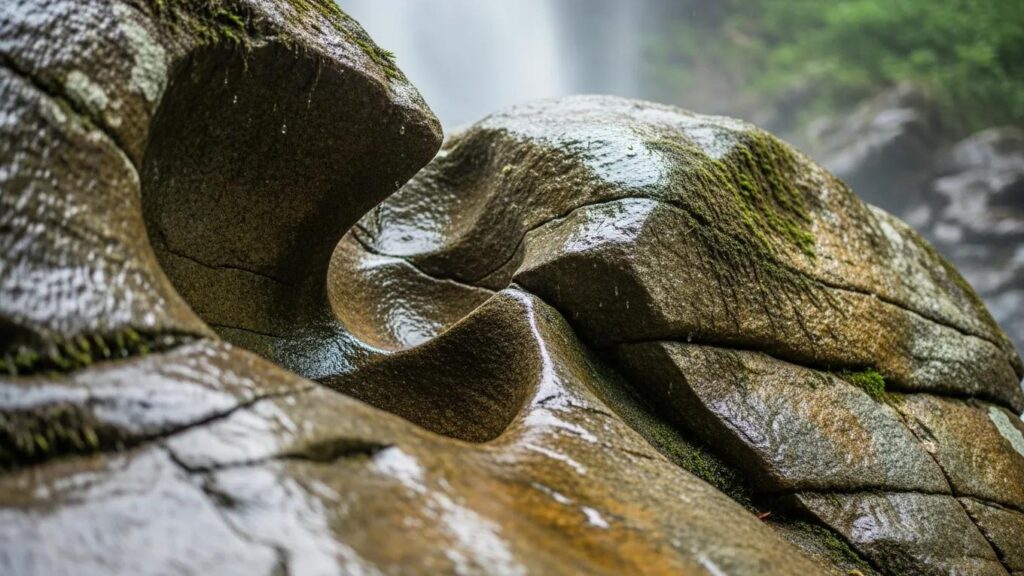
    Close-up of eroded rock formations near a waterfall, showcasing the effects of water flow on landscapes

    Erosion is the driving force behind the creation of natural waterfalls, as it gradually carves out channels and depressions in the landscape. The types of erosion processes involved include hydraulic action, which occurs when water pressure forces air bubbles into cracks, weakening the rock structure. Additionally, abrasion occurs when rocks and sediment are transported by water flow, further wearing down the landscape. Famous examples include Niagara Falls, where a combination of these processes leads to its iconic form. Understanding these mechanisms illustrates the sheer power of nature and serves as inspiration for designers crafting artificial waterfall features.

    Which Geological and Hydrological Factors Influence Waterfall Development?

    Several geological and hydrological factors directly impact waterfall development. Primarily, the type of rock—such as softer sedimentary rock versus harder igneous rock—determines the rate at which erosion occurs. Water sources, often the result of melting glaciers or rainfall, also play a crucial role in maintaining the waterfall’s flow. Environmental factors, including weather patterns and vegetation, contribute to the steady state and aesthetics of the waterfall. By examining these elements, one can gain deeper insights into how natural waterfalls evolve over time.

    What Materials and Equipment Are Essential for Custom Backyard Waterfall Construction?
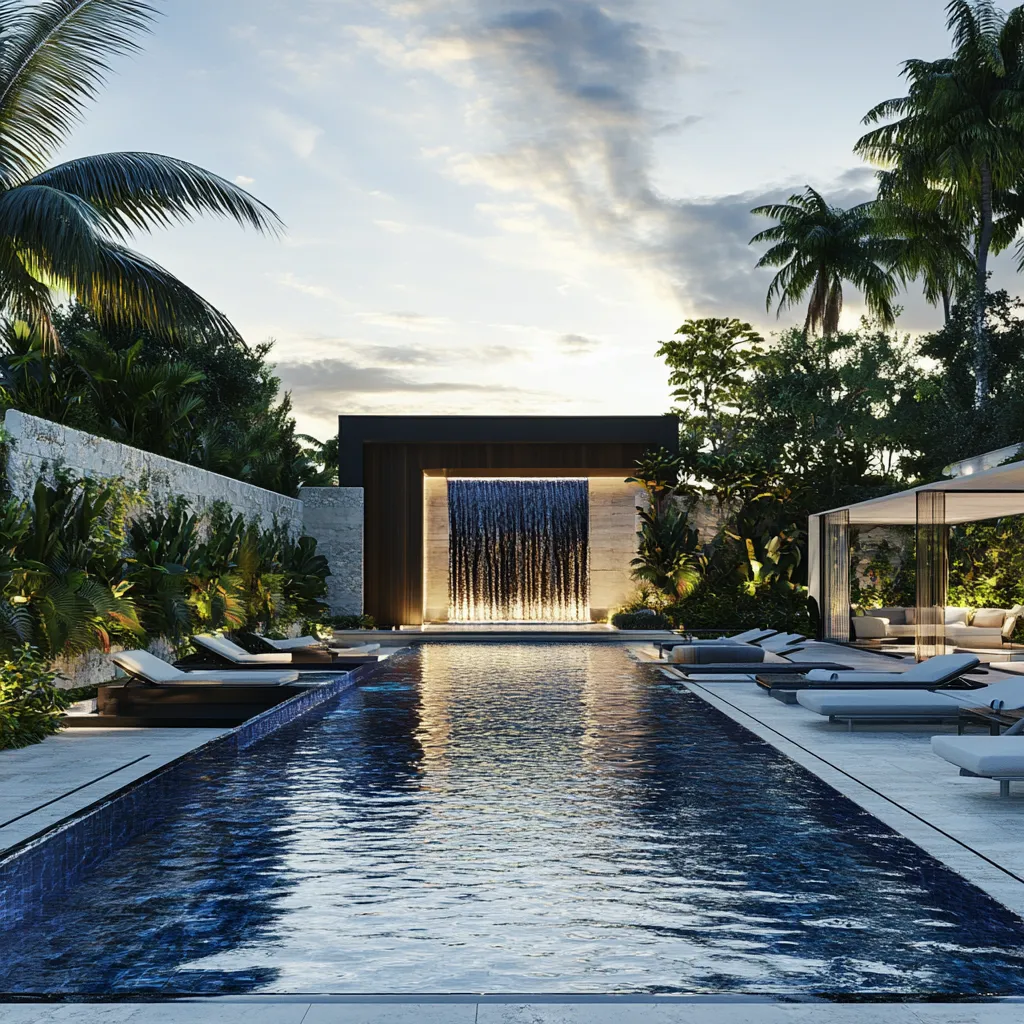
    Custom waterfall in a backyard setting, highlighting materials and design elements for outdoor aesthetics

    Creating a custom backyard waterfall requires a careful selection of materials and tools to ensure durability and aesthetic appeal. Important materials include natural stone, concrete, or preformed basins, which offer versatility depending on the desired design. Equipment like water pumps and filtration systems is essential to facilitate sustainable water circulation and maintain the waterfall’s charm. Considering these components will lead to a successful and lasting installation, enhancing any backyard setting.

    Which Rock Types and Landscape Elements Are Ideal for Waterfall Features?

    When selecting rocks and landscape elements for waterfall construction, certain types prove to be more effective. Ideal rock types include moss rock, boulders, and river rocks, all of which complement the natural aesthetic desired for outdoor waterfalls. Integrating natural landscape elements such as plants can enhance the customization process while blending the waterfall seamlessly into the environment. Utilizing the right materials contributes to the overall design and longevity of the feature, ensuring that it remains a focal point.

    How Do Water Pumps and Filtration Systems Enable Sustainable Water Circulation?

    Water pumps and filtration systems are crucial components of any artificial waterfall. Pumps circulate water effectively, creating movement that mimics natural waterfalls, while filtration systems maintain clear water and reduce algae growth. Opting for energy-efficient pumps aids in sustainable design, supporting environmental health by minimizing energy consumption. Together, these systems ensure that the waterfall not only functions well but also contributes positively to its surroundings.

    How Are Bespoke Backyard Waterfalls Designed and Installed by Expert Contractors?

    When planning a bespoke backyard waterfall, collaborating with expert contractors can ensure that the design aligns perfectly with the homeowner’s vision. These professionals utilize a range of design considerations, from site assessment to material selection, ensuring that the waterfall complements the overall backyard aesthetics. By understanding both the artistry and technical requirements, contractors create stunning, personalized waterfalls that enhance outdoor spaces.

    What Are the Key Principles in Crafting Custom Waterfall Designs Aligned With Home Aesthetics?

    Crafting custom water features requires a holistic approach that considers the overall aesthetic of the home. Selecting materials that complement architectural styles is crucial, as is ensuring that the waterfall’s design integrates smoothly with landscaping features. The balance between functionality and aesthetics enhances the overall ambiance, leading to a waterfall that feels like a natural extension of the property. This principle of design alignment is essential for achieving visual harmony.

    Which Steps Define the Professional Installation Process for Luxury Water Features?

    The installation process for luxury water features follows specific steps that ensure precision and quality. Initially, a professional consultation helps determine the homeowner’s needs and preferences. Following the initial discussions, site assessments are conducted to evaluate factors like sun exposure and soil conditions. During the construction phase, careful planning and execution are vital, with steps including excavation, material placement, and system installation. Each phase is meticulously handled to deliver a high-quality waterfall feature.

    How Is the Longevity and Maintenance of Custom Water Features Ensured?

    Maintaining the longevity of custom water features is critical for preserving their beauty and functionality. Regular maintenance practices help ensure that water flow is uninterrupted and structural integrity is maintained. Homeowners can adopt strategies that include seasonal cleaning, inspecting mechanical components, and addressing any signs of wear early. These practices not only prolong the life of the waterfall but also enhance its visual appeal.

    What Are Best Practices for Maintaining Water Flow and Structural Integrity?

    To maintain optimal water flow and structural integrity, homeowners should engage in periodic maintenance checks. Ensuring that pumps and filters are functioning correctly is essential, as any failure could disrupt the waterfall’s operation. Additionally, addressing sediment build-up and repairing any cracks or leaks promptly can prevent larger issues down the road. By adhering to these best practices, the longevity of the water feature can be assured.

    How Do Sustainable Design Choices Support Environmental Integration and Ongoing Performance?

    Sustainable design choices in waterfall construction offer substantial benefits for the environment and the feature’s ongoing performance. Selecting materials that are locally sourced reduces ecological impact, while using energy-efficient systems supports environmental health. Such choices not only enhance aesthetic fulfillment but also integrate the waterfall more seamlessly into the surrounding environment. Sustainability will remain an important aspect of outdoor living as environmental awareness increases.

    About the Author

    Terrance Schabilion is a landscape design expert and the founder of Beyond Backyard Living, a premier outdoor living design and construction company. With over 35 years of General Contracting experience specializing in custom water features and sustainable landscaping, Terrance holds certifications from the National Association of Landscape Professionals and is a LEED Accredited Professional, emphasizing eco-friendly design practices. Terrance is committed to educating homeowners on integrating natural elements with innovative technology to create beautiful, sustainable outdoor environments.

    Learn more about Terrance’s expertise and services at Beyond Backyard Living.
  • Exquisite Waterfall Design Ideas: Styles, Materials & Tips for Your Waterfall Design

    Exquisite Waterfall Design Ideas: Styles, Materials & Tips for Your Waterfall Design

    By Terrance Schabilion, Beyond Backyard Living

    By Terrance Schabilion, Beyond Backyard Living

    Creating a stunning outdoor space often involves incorporating a water feature that captures attention and enhances the ambiance. Waterfalls offer a unique aesthetic, bringing serenity and elegance to various landscape designs. In this article, we will explore an array of waterfall design ideas, covering different styles, materials, and essential tips to elevate your outdoor environment. You’ll learn about the distinctions between natural and modern waterfall aesthetics, the materials that enhance their beauty, and maintenance insights for longevity. Additionally, we will discuss how expert craftsmanship can transform your space, ensuring your waterfall becomes a focal point of your outdoor living area. For more in-depth insight, consider reading about how a waterfall is created, from natural formation to backyard build, and how a waterfall works as a complete guide to backyard water features, which provide foundational knowledge beneficial for your project.

    Styles

    Waterfalls come in numerous styles, each with its personality and design principles. Whether you prefer the naturalistic flow of a rock waterfall or the sleek lines of a modern tiered design, understanding various waterfall styles is crucial for enhancing your outdoor aesthetics.

    1. Naturalistic Waterfalls: These designs mimic natural water flows, often using boulders, logs, and native plants to integrate seamlessly into the landscape. The soothing sounds of water cascading over rocks create a tranquil outdoor oasis.
    2. Modern Waterfalls: Incorporating clean lines and contemporary materials, modern waterfalls prioritize minimalism. They often use linear shapes and integrate into modern architectural elements of a home or landscape.
    3. Tiered Waterfalls: Characterized by cascading water across multiple levels, tiered waterfalls create dramatic visual interest. This style effectively utilizes elevation changes in the landscape and can be designed to suit various styles, from rustic to sleek.

    Each style serves to create distinct environmental sounds and visual experiences, making your outdoor space enchanting.

    Materials

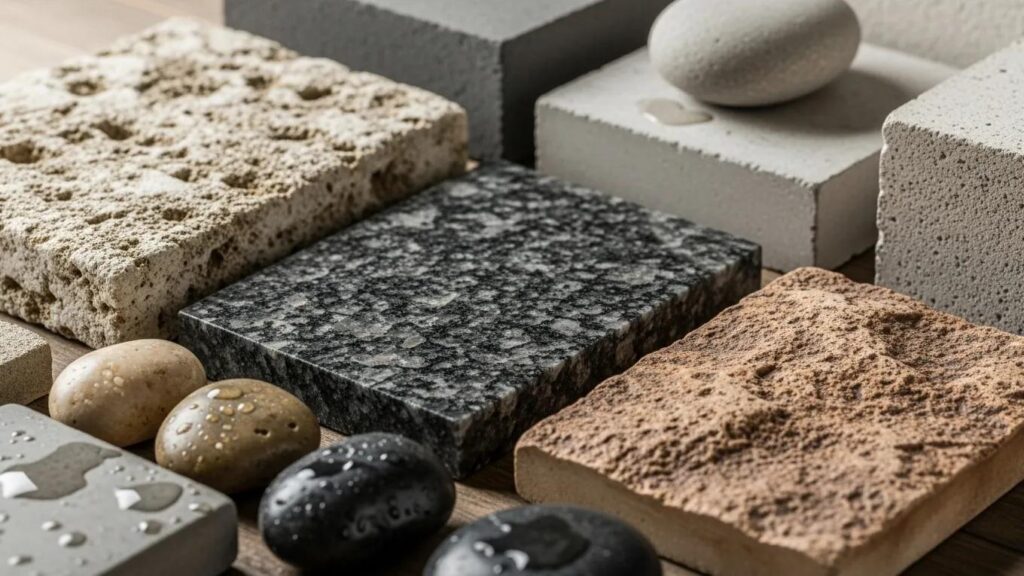
    High-quality materials for waterfall construction including granite and concrete

    Selecting the right materials is critical for constructing a durable and visually appealing waterfall. Here, we will discuss common materials used for water features and their attributes.

    MaterialTypeExample
    Natural StoneTimeless and rusticLimestone, granite
    ConcreteVersatile and modernPrecast concrete elements
    Composite MaterialsSustainable optionsRecycled plastics or resins

    Natural stone provides an organic appearance, whereas concrete allows for precise shapes and contemporary aesthetics. Composite materials present a sustainable alternative, appealing for eco-conscious designs. The choice of material impacts not only appearance but also functionality and longevity.

    Beyond aesthetics, considering how materials affect water flow and maintenance will ensure your waterfall not only looks stunning but functions well.

    Which Premium Materials Elevate Custom Waterfall Craftsmanship?

    For premium waterfall designs, it’s essential to choose high-quality materials that enhance durability and visual impact. Some exceptional options include:

    • Granite: Known for its strength and beauty, granite withstands weather elements, maintaining its integrity over time.
    • Copper: Offers an elegant look and develops a charming patina with time, adding character to the design.
    • Glass or Acrylic: These materials provide a modern touch and can be used in designs that emphasize clear water and light.

    Using premium materials can significantly improve the overall appeal and functionality of your waterfall, making it a statement piece in your landscape. Beyond Backyard Living serves the Tampa Bay, Spring Hill, Brooksville, and Central Florida region, providing expert craftsmanship in these premium materials.

    Why Choose Natural Stone Versus Sustainable Concrete for Water Features?

    When selecting materials for a waterfall, consider the advantages of natural stone versus sustainable concrete. Natural stone offers an unmatched aesthetic appeal with various textures and colors; it blends beautifully into natural landscapes. However, its weight and installation complexity can be more challenging.

    Sustainable concrete presents a lightweight alternative that allows for innovative designs, especially for modern outdoor spaces. It’s easier to work with and often more cost-effective while still providing exceptional durability.

    Expert Tips

    Creating a gorgeous waterfall involves more than just selecting materials. Incorporating expert tips into your design and installation can lead to a stunning outcome.

    1. Integration with Landscape: Ensure the waterfall complements the surrounding garden. Integrate native plants and natural elements to create a cohesive look.
    2. Water Sound Design: Consider how the waterfall’s height and the quality of rock placement will affect sound. A well-placed rocky surface can amplify soothing water sounds, while a smooth surface may create gentler sounds.
    3. Lighting Considerations: Use integrated LED lighting to enhance nighttime aesthetics. Proper lighting can accentuate water movements and create a magical ambiance that invites relaxation.

    By following these expert tips, you can ensure your waterfall design maximizes both visual appeal and tranquility.

    Benefits

    Incorporating a waterfall into your outdoor space brings numerous benefits, enhancing the overall experience of your garden.

    1. Aesthetic Appeal: Waterfalls serve as stunning focal points, adding beauty and sophistication to landscapes.
    2. Soundscape Enhancement: The soothing sound of flowing water masks unwanted noise from nearby roads or construction.
    3. Increased Property Value: Well-designed water features can elevate the overall appeal and value of your property.

    These benefits illustrate why integrating a waterfall into your outdoor environment can transform simple gardens into exquisite retreats.

    What Distinctive Styles Define Luxurious Outdoor Waterfalls?

    Luxurious outdoor waterfalls can be distinguished by their meticulous craftsmanship and innovative designs, which integrate seamlessly with luxurious landscapes. Notably, characteristics inclusive of:

    • Grand Scale: Designed to make a statement, these waterfalls may be much larger than traditional options.
    • Customized Form: Often featuring intricate shapes and forms that echo the design of the surrounding space, luxurious waterfalls emphasize bespoke elements with personalized characteristics.
    • Advanced Mechanisms: High-end designs may incorporate smart technology for water management.

    These high-caliber features create exquisite outdoor experiences and invite envious admiration.

    What Characterizes Natural Stone and Rock Waterfall Designs?

    Natural stone and rock waterfall designs stand out due to their organic, rugged beauty. The characteristics include:

    • Natural Appearance: These waterfalls blend seamlessly with the surroundings, appearing as if they’ve been a part of the landscape for centuries.
    • Durability: Natural stone offers excellent durability against the elements, ensuring long-lasting designs that require minimal maintenance.
    • Versatility: They can adapt to various landscape themes from rustic to enchanting fairy-tale gardens.

    Natural stone involves meticulous planning and skilled craftsmanship, celebrating the beauty of nature.

    How Do Modern and Tiered Waterfall Styles Enhance Contemporary Landscapes?

    Modern and tiered waterfall styles have gained popularity in contemporary landscape design. These styles enhance outdoor environments through:

    • Sleek Lines: Modern waterfalls utilize geometric shapes that resonate with contemporary architecture, providing a clean, uncluttered look.
    • Visual Dynamics: Tiered designs create movement by compelling the eye to travel through multiple levels, offering an engaging visual narrative.
    • Creative Integration: These styles can incorporate elements like lighting and plant beds, creating multi-dimensional experiences.

    Such designs align beautifully with modern landscaping trends that prioritize minimalism and functionality.

    How Does Integrated LED Lighting Augment Waterfall Ambiance and Functionality?

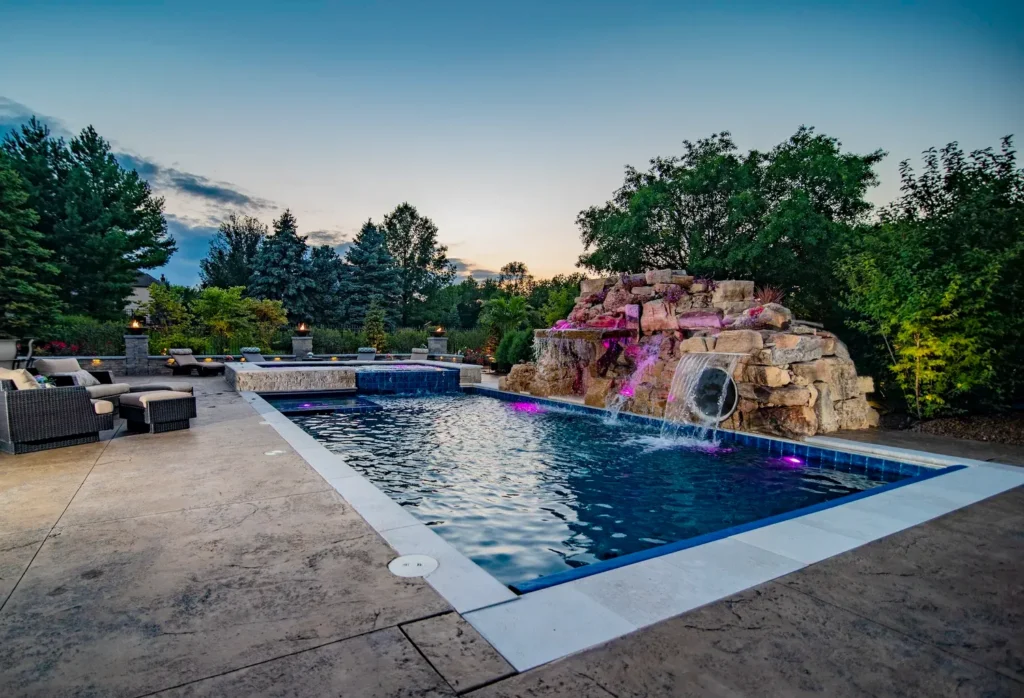
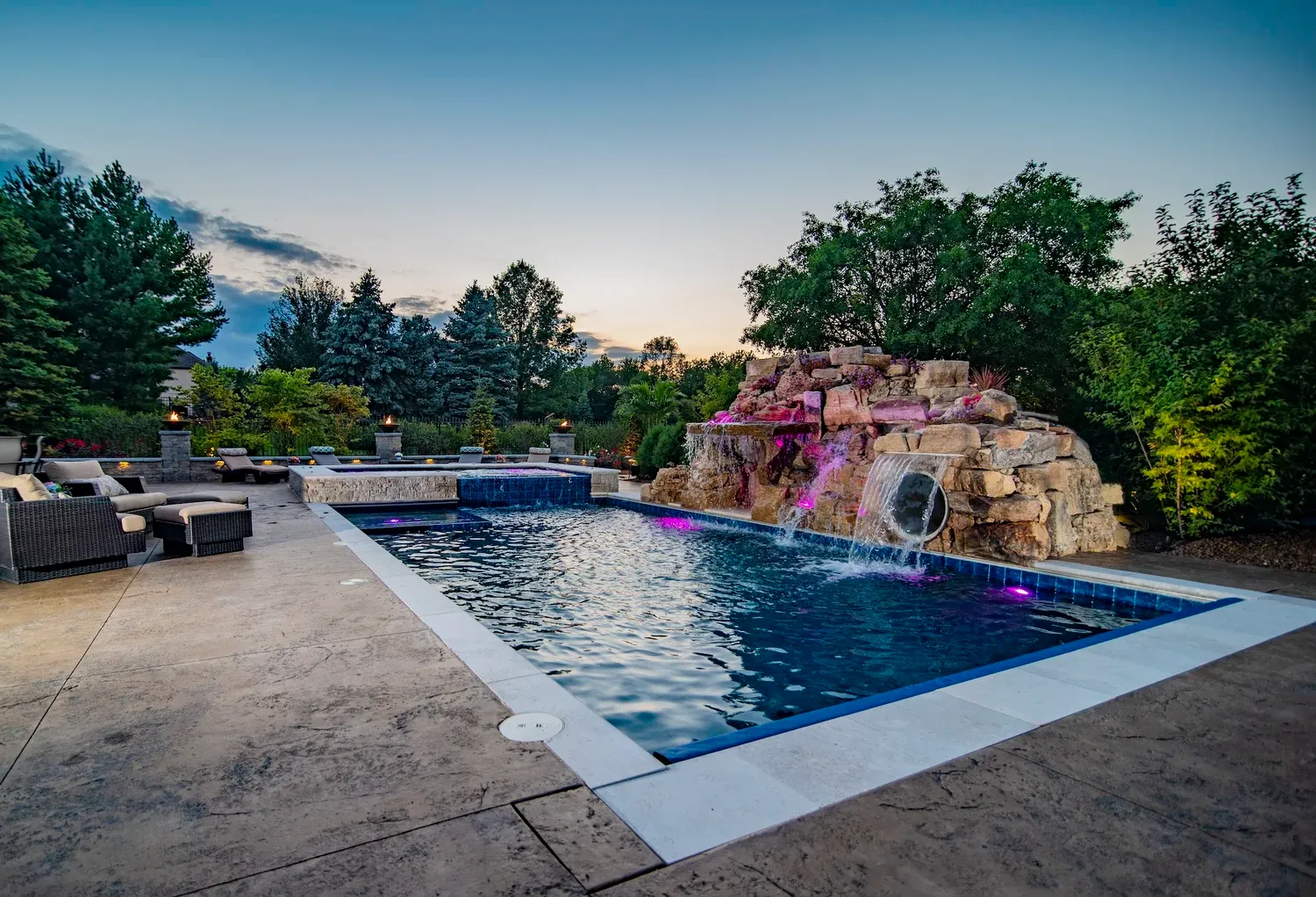
    Illuminated swimming pool with rock waterfall, hot tub, and patio furniture at twilight.

    Integrated LED lighting can transform the aesthetic and functional qualities of your waterfall. By carefully positioning LED fixtures, you can:

    • Highlight Features: Effective lighting can draw attention to specific waterfall features, enhancing its visual impact during the evening.
    • Create Atmosphere: Soft lighting can establish a calming ambiance, boosting the relaxation factor in your backyard retreat.
    • Increase Safety: Lighting pathways and surrounding areas contribute to overall safety during nighttime outdoor activities.

    Utilizing integrated lighting provides an opportunity to enjoy your waterfall and outdoor space day and night.

    What Essential Installation Considerations Ensure Timeless Waterfall Excellence?

    Installing a waterfall requires thoughtful consideration of multiple factors to ensure longevity and functionality. Essential installation aspects include:

    1. Site Selection: Choose an appropriate location that supports water drainage and complements the existing landscape design.
    2. Water Flow Management: Implementing a reliable water source and circulation system prevents stagnation and promotes healthy water conditions.
    3. Material Selection: Opt for durable materials that match the intended style and usage of your waterfall.

    These considerations are crucial for avoiding common pitfalls and ensuring a successful waterfall installation that remains an attractive feature for years.

    Which Steps Constitute the Meticulous Garden Waterfall Installation Process?

    To successfully install a waterfall, several key steps should be adhered to:

    1. Planning: Begin with a detailed design plan that includes dimensions, materials, and landscaping elements.
    2. Excavation: Prepare the site by excavating the area where the waterfall will be installed, making sure to establish a stable base.
    3. Structure Assembly: Carefully place selected rocks, stones, or other materials to form the waterfall structure, ensuring secure and visually appealing results.

    By following these meticulous steps, you can create a flawless masterpiece that enhances the natural beauty of your garden.

    How Do Climate and Regional Conditions Influence Sunbelt Waterfall Designs?

    Regional climate considerably affects the design and functionality of waterfalls in the Sunbelt region. Main considerations include:

    • Drought Resistance: Choosing water-efficient features and native plants that withstand dry conditions is essential for maintaining attractive landscapes.
    • Heat Endurance: Materials selected must endure higher temperatures without degrading or fading.
    • Humidity Management: Water features may need to include mechanisms to prevent algae growth due to the warmer climate.

    Understanding these climate-related factors ensures a successful integration of your waterfall into its environment, providing an attractive water feature that thrives through local challenges. Beyond Backyard Living specializes in creating drought-resistant and climate-appropriate designs for clients throughout Tampa Bay, Spring Hill, Brooksville, and Central Florida.

    How Should Discerning Homeowners Maintain and Maximize Their Water Features?

    Maintaining a waterfall is crucial for keeping it healthy and visually appealing. Some essential maintenance tips for homeowners include:

    • Regular Cleaning: Remove debris from the waterfall to allow for proper water flow and avoid clogging.
    • Water Testing: Periodically check water quality to ensure a healthy environment for plant life and fish, if applicable.
    • Seasonal Care: Adjust maintenance routines according to seasonal changes, including preparing for winter conditions that could affect water flow or material integrity.

    By adopting these practices, homeowners can ensure their waterfalls remain stunning focal points in their landscapes.

    What Are Expert Tips for Sustaining Natural Stone Waterfall Longevity and Beauty?

    To maintain the allure of a natural stone waterfall, several expert tips can be applied:

    1. Periodic Sealing: Protect the stone from moisture and staining by applying a suitable sealant, enhancing longevity.
    2. Inspections: Regularly check for any shifts or cracks in the stones, addressing issues promptly to prevent complications.
    3. Gentle Cleaning: Use mild cleaners to remove algae without damaging the stone’s surface.

    Using these methods enhances both the long-term durability and stunning appearance of natural stone features.

    In What Ways Do Custom Waterfall Designs Enhance Property Value and Outdoor Living Elegance?

    Custom waterfall designs act as powerful assets in boosting property value and outdoor living appeal:

    • Unique Features: A bespoke water feature attracts buyers seeking distinctive property elements that stand out in the market.
    • Expanded Outdoor Utility: Waterfalls create inviting atmospheres for gatherings, enhancing outdoor living experiences.
    • Curb Appeal: Well-designed landscapes incorporating water features contribute significantly to overall curb appeal and aesthetic harmony.

    Incorporating a custom waterfall design is not only an investment in beauty but also a strategic enhancement to one’s home value and lifestyle.

    About the Author

    Terrance Schabilion is the founder of Beyond Backyard Living, a Spring Hill, FL-based outdoor living design-build firm. With a team of 11 specialists, the company was founded on water feature craftsmanship — including ponds, pondless waterfalls, and natural pool waterfalls — and has since expanded into luxury outdoor kitchens, paver patios, and fire features across the Tampa Bay and Central Florida region.

    Custom Outdoor Environments by Beyond Backyard Living

    Beyond Backyard Living delivers award-winning, custom outdoor environments with end-to-end design and construction. Visit beyondbackyardliving.com or call (352) 607-7778 to schedule a consultation.

  • A Complete Guide to Backyard Water Features

    A Complete Guide to Backyard Water Features

    By Terrance Schabilion, Beyond Backyard Living

    Backyard waterfalls are not only stunning visual features but also serve as functional elements that enhance the tranquility of outdoor spaces. This complete guide explains how waterfalls work, their various design options, and the benefits they bring to your landscape. Waterfalls operate through the principles of gravity and water circulation, creating an ongoing flow that mimics natural streams. Many homeowners appreciate the soothing sounds of flowing water, which can provide a peaceful retreat in a busy world. In this article, we’ll cover key design considerations, maintenance tips, aesthetic benefits, customization options, and the mechanics behind waterfall circulation, all while integrating insights from Beyond Backyard Living, a specialist in high-end backyard water features.

    Comprehensive Guide on Backyard Waterfalls for Homeowners

    Backyard waterfalls can transform ordinary spaces into extraordinary retreats. Understanding their design and maintenance is crucial for homeowners aiming to create serene outdoor environments. These features not only add beauty but also contribute to overall landscape health by aerating water and supporting biodiversity. Homeowners should prioritize aesthetic integration, functionality, and adaptability in their designs to maximize the benefits that these structures offer.

    Water’s Aesthetic & Functional Role in Landscape Design When the history of landscape art is examined, water initially used primarily for agricultural and hygienic purposes has evolved over time into diverse forms that support both passive and active recreation, exert physical and psychological restorative effects, provide thermal and visual comfort, and in some contexts serve as an indicator of social status. Today, in addition to these traditional functions, water also plays a crucial role in supporting ecological processes and sustaining natural cycles. For landscape architects who seek to integrate natural and built environments, water represents one of the most powerful and versatile elements facilitating this integration. As a fundamental human need, water is an indispensable component of landscape architectural design due to its functional, aesthetic, and ecological properties. Aesthetic and functional use of water in landscape architecture, A Akbana, 2026

    Design Considerations:

    When designing a backyard waterfall, several considerations come into play:

    • Integration with Landscape: The waterfall should harmonize with the surrounding features, enhancing the overall aesthetic.
    • Scale and Proportions: The size of the waterfall must complement the available space, ensuring it is neither overpowering nor diminutive.
    • Material Selection: Choosing natural stones or contemporary materials can significantly impact the waterfall’s visual appeal and durability.

    With a custom approach, Beyond Backyard Living can help you tailor these elements to suit your private oasis.

    Maintenance Tips:

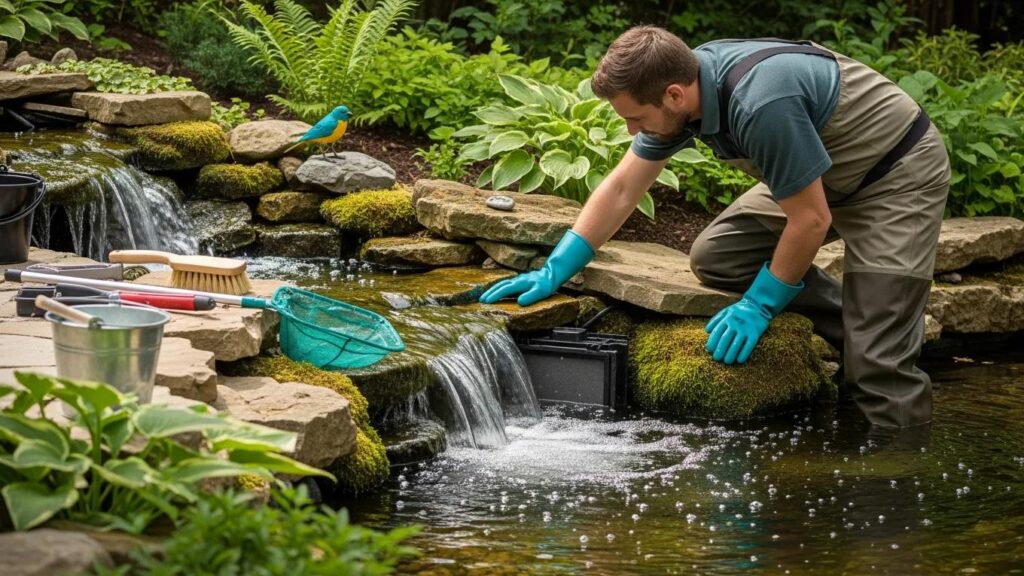
    Professional maintaining a backyard waterfall with tools and clear water

    Maintaining a backyard waterfall is essential for ensuring its longevity and performance. Here are some practical tips for effective upkeep:

    • Efficient Systems: Utilize high-quality water pumps and filtration systems to maintain water clarity and circulation.
    • Regular Checks: Schedule seasonal inspections to clear debris, check for wear on pumps, and inspect the overall structure.
    • Seasonal Considerations: Prepare your waterfall for winter by properly draining and protecting equipment to avoid damage from freezing temperatures.

    Beyond Backyard Living provides essential maintenance services designed to keep water features operating efficiently and looking pristine.

    Aesthetic Benefits:

    Waterfalls provide numerous aesthetic benefits that enhance outdoor living spaces:

    • Focal Point Creation: A well-placed waterfall serves as a captivating focal point in your backyard, drawing attention and admiration.
    • Social Gathering Enhancement: The sound of flowing water invites relaxation and conversation, making it an ideal spot for gatherings.
    • Connection to Nature: Waterfalls can emulate natural environments, fostering a sense of tranquility and connection to nature.

    With beautiful custom installations, Beyond Backyard Living specializes in creating waterfalls that elevate your outdoor experience.

    Customization Options:

    Customizing your backyard waterfall can lead to unique designs that reflect your personal style. Options to consider include:

    • Design Flexibility: Choose from various styles, such as tiered, pondless, or freestanding waterfalls to suit your aesthetic preferences.
    • Integrated Features: Consider incorporating lighting, sound systems, or surrounding flora to enhance the waterfall’s ambiance and functionality.

    Beyond Backyard Living works closely with clients to ensure each waterfall is a perfect match for their vision.

    What Are the Core Mechanics Behind Backyard Waterfall Circulation?

    Understanding how a backyard waterfall functions requires an exploration of its core mechanics. These systems rely on principles of gravity, pump technology, and water filtration to create the desired flow and maintain quality.

    How Do Waterfall Pump Systems Facilitate Continuous Flow?

    Waterfall pump systems are critical in recycling water and creating a continuous flow. The key components include:

    • Pump Selection: Choosing the right pump size and power is crucial to achieving the desired flow rate and height for your waterfall.
    • Water Source: Generally, water is sourced from a pond or reservoir, allowing for easy circulation through a closed system.
    • Gravity-Fed Design: Utilizing gravity ensures that water flows naturally down the waterfall, adding to the realistic visuals.

    Understanding pump efficiency and selection can lead to better waterfall performance and lower utility costs, which professionals at Beyond Backyard Living can help optimize.

    What Is the Role of Filtration in Maintaining Water Quality?

    Filtration systems play a vital role in maintaining the aesthetics and health of your waterfall. The main functions include:

    • Debris Removal: Effective filtration eliminates leaves, algae, and pollutants that can clog the system and detract from the water’s clarity.
    • Chemical Balance: Maintaining proper chemical levels through filtration ensures that the ecosystem remains healthy for any fish or plants introduced into the water.
    • Circulation Optimization: Good filtration improves water flow, preventing stagnation and enhancing the overall beauty of the waterfall.

    Incorporating advanced filtration methods is part of what Beyond Backyard Living offers to ensure long-lasting and visually appealing water features.

    Which Design Elements Define Sophisticated Backyard Water Features?

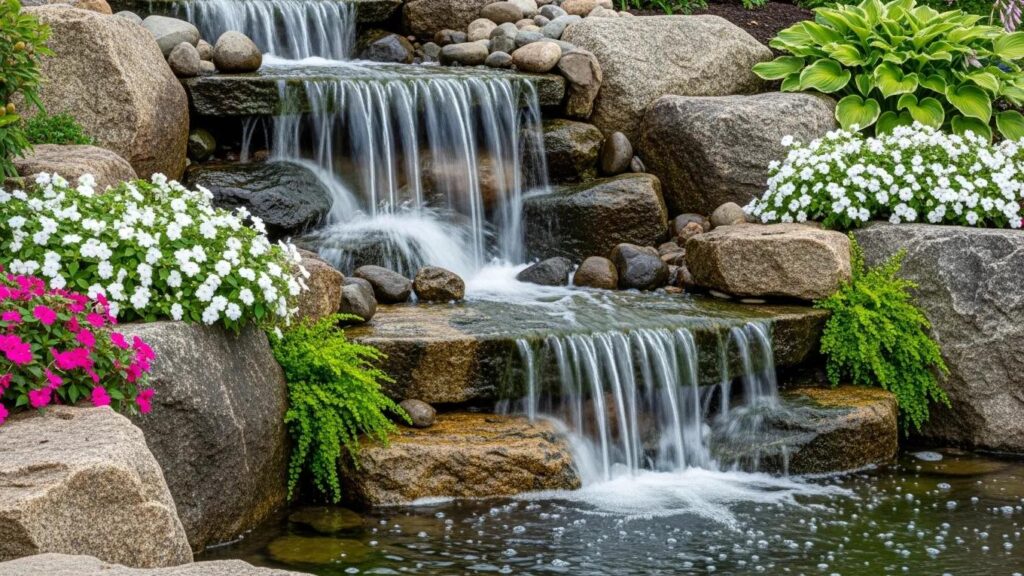
    Close-up of sophisticated design elements in a backyard waterfall depicting natural stone and landscaping

    Design elements in backyard waterfalls can significantly define their sophistication and appeal. Homeowners should consider incorporating the following features:

    • Natural Stone: Using natural stones creates a more genuine and organic appearance compared to synthetic alternatives.
    • Flow Dynamics: Designing waterfalls with varying flow rates can enhance visual interest and mimic natural environments.
    • Integrated Landscaping: Surrounding the waterfall with suitable plants or rock configurations can provide a lush backdrop and enhance the feature’s integration into the landscape.

    Sophisticated design choices are a hallmark of the creations by Beyond Backyard Living, reflecting quality craftsmanship and attention to detail.

    What Materials and Craftsmanship Elevate Waterfall Aesthetics?

    The choice of materials and the quality of craftsmanship can significantly elevate the visual appeal of backyard waterfalls.

    How Are Lighting Solutions Integrated to Enhance Visual Elegance?

    Effective lighting can dramatically alter the ambiance of a waterfall. Consider these aspects:

    • Highlighting Features: Strategically placed lights can emphasize the waterfall’s contours and flowing water, transforming the nighttime atmosphere.
    • Color Temperature: Selecting warm lights can create a welcoming environment, while cooler LEDs offer a contemporary feel.
    • Remote Control Options: Integrating smart technologies allows for convenient control over lighting displays, enhancing usability and enjoyment.

    Beyond Backyard Living utilizes the latest lighting techniques to ensure that your waterfall is mesmerizing at all hours.

    What Are the Essential Steps for Pond and Garden Waterfall Installation?

    Installing a backyard waterfall involves several crucial steps to ensure functionality and aesthetic appeal.

    Which Pump Sizes and Specifications Suit Various Waterfall Scales?

    Selecting the appropriate pump is critical for successful installation. Considerations include:

    • Waterfall Size: Larger waterfalls require more powerful pumps to create the necessary flow.
    • Height Configuration: The pump must overcome gravitational resistance, particularly in tiered waterfalls.
    • Volumetric Needs: Calculate the volume of water required for your specific waterfall design, ensuring the pump can handle the workload.

    Beyond Backyard Living conducts thorough assessments to recommend the most suitable systems tailored to your waterfall’s design.

    How Is Sustainable Water Circulation Achieved in Different Climates?

    Sustainable water circulation requires techniques that adapt to various environmental factors:

    • Environmental Readiness: Design waterfalls that can cope with seasonal changes to minimize maintenance and maximize visual appeal.
    • Water Conservation: Implement recycling systems that minimize water waste, crucial for environmentally conscious homeowners.
    • Temperature Management: Use elements that help regulate water temperatures, vital in regions with extreme weather conditions.

    Partnering with experts from Beyond Backyard Living ensures that your waterfall is sustainable and efficient year-round.

    How Should One Maintain and Preserve the Excellence of Backyard Water Features?

    Proper maintenance is essential for preserving the beauty and functionality of backyard waterfalls.

    What Practices Ensure Longevity of Waterfall Pumps and Filtration Systems?

    To maintain the integrity of waterfall pumps and filtration systems:

    • Regular Maintenance: Schedule routine checks to assess wear and tear on components, ensuring they operate as intended.
    • Quality Parts: Invest in high-quality, durable pump and filter materials to minimize the likelihood of expensive replacements down the line.
    • Professional Guidance: Utilize the expertise of companies like Beyond Backyard Living for comprehensive maintenance services to keep your system operating optimally.

    By adhering to these practices, homeowners can enjoy the benefits of a stunning waterfall for years to come.

    How Do Sustainable Materials Contribute to Effortless Water Feature Care?

    Utilizing sustainable materials in the construction of waterfalls not only enhances durability but also reduces the ecological footprint. By selecting eco-friendly materials, your waterfall can remain visually striking while requiring less maintenance over time. Beyond Backyard Living emphasizes the importance of sustainability in its design process, ensuring that your backyard feature is a responsible choice for the environment.

    Unique Case Studies and Insights on Backyard Water Features

    While the foundational principles and benefits of backyard waterfalls are well-established, exploring unique case studies can shed light on innovative applications and homeowner experiences. Below are expanded insights into exemplary projects that reveal specific challenges, solutions, and results.

    • Urban Oasis Transformation: A homeowner in a densely populated metropolitan area repurposed a narrow, shaded backyard into a vibrant, multi-tiered waterfall feature. The design incorporated native plants tailored to low-light conditions and a pondless recirculating system to optimize space and water use. Challenges included mitigating urban noise pollution by optimizing water flow sound and selecting materials that withstand city pollution. The end result was a serene habitat attracting local birds and pollinators, effectively creating a micro-ecosystem. This project involved extensive soil analysis for planting stability and advanced pump calibration to maintain steady flow without excessive noise.
    • Seasonal Adaptability in Cold Climates: In northern regions where freezing temperatures threaten outdoor water features, one installation leveraged modular pump systems with engineered freeze protection. The waterfall was designed with removable components and integrated heaters for critical parts prone to ice damage. Seasonal operational protocols included automated winterizing procedures coordinated through smart home devices. The project utilized data from local climate patterns to optimize filtration cycle timing, reducing power consumption in colder months. These innovations allowed the waterfall to remain aesthetically pleasing and operational year-round, providing wintertime sensory enjoyment.
    • Sensory Garden Integration: An innovative installation combined a cascading waterfall within a therapeutic sensory garden designed for community use, including individuals with disabilities. The design emphasized multi-sensory engagement by layering auditory elements from varied water flow rates, tactile surfaces with smooth and textured stones, and plantings aromatic to enhance the space’s calming effect. Collaboration with landscape therapists informed the waterfall’s geometry to evoke relaxation and mental restoration. The system employed low-noise pumps and adaptive lighting synced to circadian rhythms. Outcomes included measurable increased use of the garden for wellness activities and positive feedback on the water feature’s unique therapeutic contribution.

    These detailed case studies highlight how tailored designs and thoughtful engineering extend beyond conventional uses, offering inspiration for discerning homeowners to achieve distinctive and meaningful backyard water features. Incorporating such innovative solutions and insights ensures that your waterfall is not only beautiful but also highly functional, responsive to environment and purpose, and supportive of wellness and biodiversity.

    By understanding the intricacies of backyard waterfalls and maintaining them with care, you can create an outdoor haven that brings joy for years to come.

  • Backyard Drainage Solutions for Outdoor Living

    Backyard Drainage Solutions for Outdoor Living

    A beautiful backyard can lose its appeal quickly when rainwater pools beside the patio, softens a lawn into mud, or flows toward the foundation. The right backyard drainage solutions do more than move water out of sight. They protect the investment in your pool, hardscape, plantings, and gathering spaces while helping every part of the landscape feel intentional after a summer storm.

    For a high-end outdoor environment, drainage should never be an afterthought. It is part of the design language. When grades, drains, walls, and planting areas work together, your backyard remains inviting through wet weather instead of becoming a space you avoid until everything dries out.

    Water Always Finds a Path

    In many Sunbelt backyards, drainage challenges begin with a combination of intense rainfall, compacted soil, flat lots, and added hardscape. A new patio, pool deck, or outdoor kitchen changes how water moves across the property. Without a plan, runoff can collect at the edge of a paver patio, wash mulch into the lawn, or create pressure behind a retaining wall.

    The warning signs are often easy to spot: standing water that remains for more than a day, bare or eroded areas in the lawn, water stains along a wall, and downspouts emptying directly beside the home. A soggy patch may seem like a minor nuisance, but repeated saturation can damage turf, shift pavers, weaken a base layer, and create the conditions insects love.

    The goal is not simply to get rid of water as fast as possible. A well-considered plan collects runoff where it naturally gathers, directs it safely through the landscape, and releases it where it will not create a new problem. That balance is what turns a drainage system into an invisible part of a polished outdoor retreat.

    Backyard Drainage Solutions Begin With a Site Plan

    Effective drainage starts before materials are selected. A professional site assessment looks at the natural slope of the property, roof runoff, soil conditions, neighboring elevations, existing trees, and the placement of future amenities. This is especially important when a backyard is being transformed in phases. A fire pit today may become part of a larger pool and pavilion plan tomorrow, and the drainage infrastructure should be ready for both.

    The best approach depends on where the water originates and where it has a legal, practical place to go. A small low spot in the lawn calls for a different solution than runoff traveling down a side yard toward a patio. Likewise, a pool deck needs drainage details that preserve a clean, uninterrupted look while keeping water away from the home and equipment.

    Grade the Landscape With Purpose

    Grading is the foundation of most drainage work. The finished surface should slope gradually away from the home and away from structures, encouraging water to move naturally without making the yard feel tilted or awkward. Around patios and walkways, the grade needs to feel comfortable underfoot while still directing runoff toward collection points.

    In luxury landscapes, grade changes can also become design opportunities. A gentle rise may frame a lawn, create a more private dining terrace, or support layered planting beds. Where a more significant elevation change is needed, a retaining wall can shape the space and manage soil at the same time. Behind that wall, proper drainage stone, pipe, and outlet details are essential. A striking wall without relief for water can eventually bow, stain, or fail.

    Use Surface Drains Where Water Collects

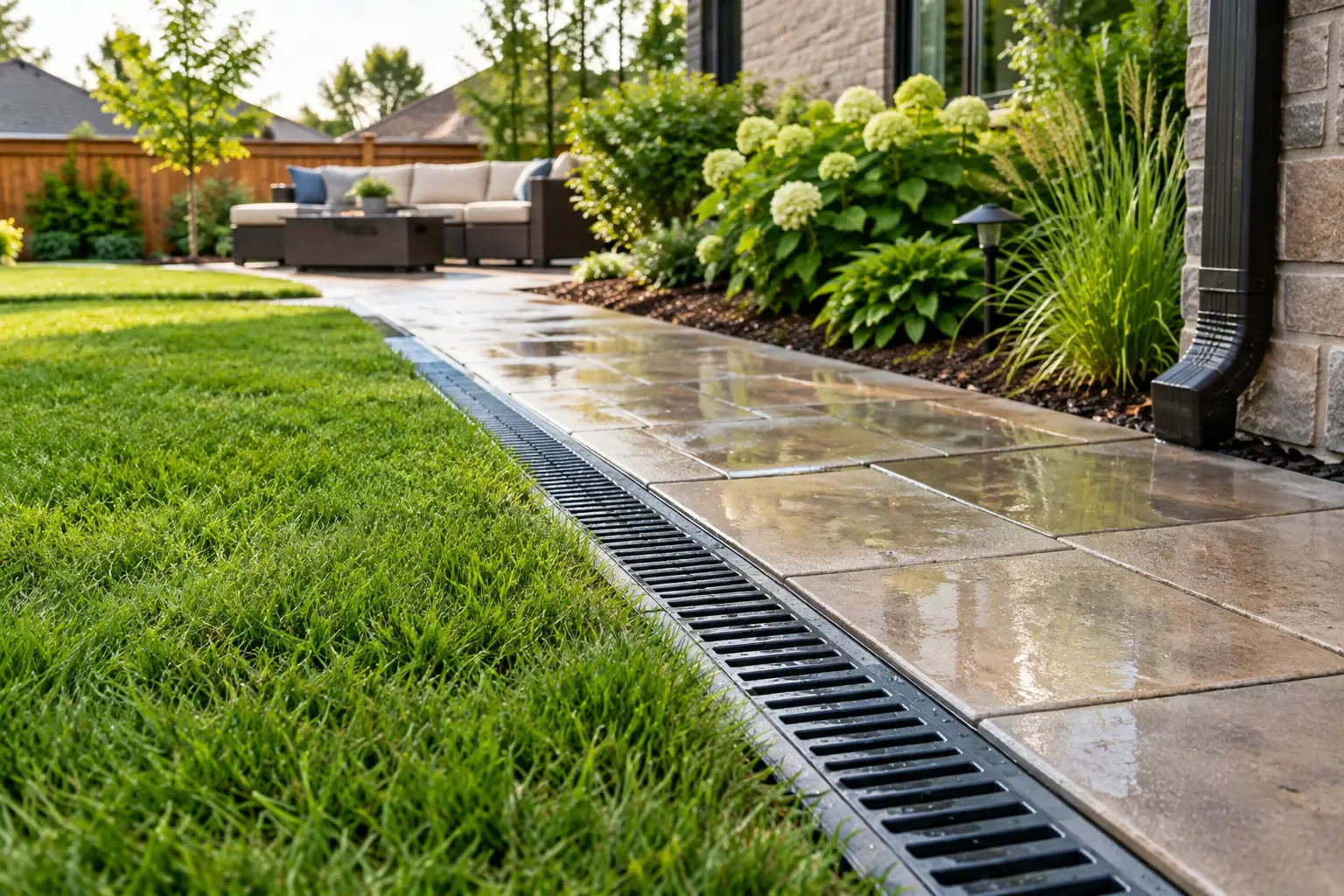
    Area drains and channel drains are often the most direct answer for hardscape surfaces. A channel drain can be placed along the edge of a pool deck, at the entrance to a covered patio, or across a driveway where water would otherwise cross the paving. It collects sheet flow before it reaches a doorway, outdoor kitchen, or lower terrace.

    The visual details matter. Drain grates are available in finishes and profiles that can complement pavers, natural stone, concrete, and contemporary pool materials. The goal is to place them strategically so they perform without disrupting the lines of the design. A drain should feel integrated, not added on after the fact.

    Move Water Below the Surface

    French drains and solid drainpipe systems carry water underground from collection areas to an approved discharge point. A French drain typically uses perforated pipe surrounded by clean stone, allowing water in the soil to enter and flow away. It can be useful along a wet lawn edge, behind retaining walls, or beside a foundation where subsurface moisture is the primary issue.

    Solid pipe is often used for roof runoff and surface drains because it transports larger volumes without allowing water to seep into the surrounding soil. The two systems can work together, but they should not be treated as interchangeable. A design-build team determines pipe size, slope, cleanout locations, and outlet strategy based on the amount of water expected during heavy rain.

    Give Runoff a Thoughtful Destination

    Every drainage system needs a discharge plan. Depending on the site and local requirements, water may be directed to a swale, a lower landscape area, a dry well, a stormwater connection, or another approved outlet. Sending water toward a neighboring property is not a solution, and directing it too close to a structure simply moves the risk.

    Dry wells and infiltration areas can be attractive options where soil conditions allow, especially when homeowners want to preserve a clean landscape without visible outlets. However, they are not ideal for every property. Clay-heavy soil, a high water table, or limited space can reduce how effectively water infiltrates. This is one reason drainage deserves site-specific planning rather than a one-size-fits-all installation.

    Match Drainage to the Way You Live Outside

    The most successful backyard drainage solutions protect the features that make outdoor living special. Around a pool, drainage needs to keep rainwater from carrying debris into the water while preventing puddles on walking surfaces. Near an outdoor kitchen, it should protect cabinetry, appliances, and the foundation beneath the patio. Around a pavilion or pergola, roof runoff should be captured and moved away before it splashes into seating areas or floods adjacent planting beds.

    Planting design also plays a role. Deep-rooted ornamental grasses, carefully placed shrubs, and layered beds can stabilize soil and soften the look of drainage grades. River rock may help in a designed swale, particularly where water occasionally needs a visible path. Used thoughtfully, it can feel like a landscape feature rather than a concession to a drainage problem. Used everywhere, it can make a yard look harsh and overly engineered.

    Pavers require special attention because the beauty of a patio depends on what sits beneath it. Proper base preparation, edge restraint, joint material, and drainage slope all help preserve a level, refined surface. If water is allowed to saturate the base, movement and settling can follow. The same principle applies to walkways, driveways, and sport courts.

    Why Piecemeal Fixes Often Fall Short

    A downspout extension may solve one wet corner, and regrading a small area may improve a low spot. Those fixes can be appropriate for isolated issues. But when several symptoms appear across the backyard, patchwork repairs often lead to repeated disruption and unnecessary expense.

    Drainage becomes more complex when it intersects with a pool excavation, a retaining wall, property-line constraints, or planned utilities for lighting and an outdoor kitchen. Coordinating these elements at the design stage protects the finished look and avoids tearing into newly completed hardscape later. It also gives homeowners a clearer picture of what is included, why it matters, and how each investment supports the larger vision.

    At Beyond Backyard Living, drainage is considered alongside the full outdoor experience, from the first grading decisions to the final planting details. That integrated perspective helps create spaces that are as dependable during a downpour as they are impressive on a clear evening.

    Build a Backyard That Holds Up Beautifully

    Water management may be largely invisible once construction is complete, but its benefits are felt every time the patio stays dry, the lawn recovers quickly, and the landscape retains its crisp, finished character. If your property has persistent wet areas or you are planning a major outdoor transformation, address drainage before selecting the final finishes. The most beautiful backyard is one you can enjoy with confidence, whatever the forecast brings.