A beautifully designed backyard should not disappear when the sun goes down. The right lighting reveals the texture of a stone patio, gives a pool its evening glow, and makes guests feel naturally drawn toward the fire, the dining table, or the lounge chairs. Knowing how to plan backyard lighting means designing for those moments first, then selecting fixtures that make them possible.
For a high-end outdoor environment, lighting is not an accessory added at the end of construction. It is part of the architecture. It should guide movement, create atmosphere, support safety, and let the best parts of your property hold their presence long after daylight fades.
Begin With the Evenings You Want to Create
Before choosing a fixture style or deciding where a transformer belongs, picture the way you want to use the space after sunset. A backyard designed for quiet weeknights needs a different approach than one built around pool parties, holiday dinners, and game-day gatherings.
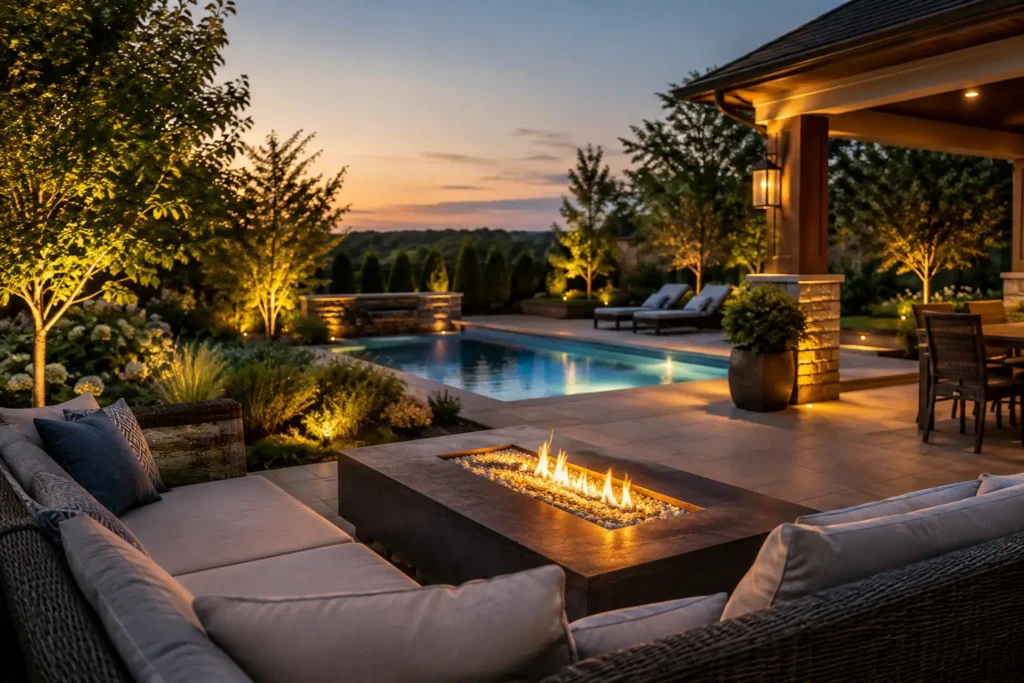
Start by identifying the areas that deserve their own lighting purpose. The route from the house to the pool may need clear, low-level illumination. An outdoor kitchen needs bright, accurate task lighting at the grill and prep counter. A pergola-covered dining space benefits from a warm, flattering glow that encourages people to stay at the table. Around a fire feature, the goal is usually restraint. The flame should remain the focal point, not compete with an overhead fixture.
This is where a unified plan becomes valuable. A backyard is rarely just a patio or just a pool. It is a sequence of destinations. Lighting should make the transition between them feel intentional and effortless.
Use Layers Instead of Trying to Light Everything
The most sophisticated outdoor lighting rarely looks bright. It looks composed. That effect comes from layering light, much as an interior designer layers ambient, task, and accent lighting inside a home.
Ambient light sets the overall mood
Ambient lighting provides the gentle base layer that makes an outdoor setting feel welcoming. It may come from recessed lights in a pavilion ceiling, discreet downlights mounted within a pergola, or carefully placed fixtures washing a broad patio surface with soft illumination.
Warm color temperatures tend to create the most inviting result in residential outdoor spaces. A soft warm-white light feels comfortable beside natural stone, wood, planting beds, and fire features. Cooler light can appear harsh, especially when it reflects off pale pavers, water, or polished pool finishes.
Task light supports cooking, dining, and movement
Task lighting earns its place where people need to see clearly. Think grill stations, pizza ovens, outdoor bars, steps, gates, and equipment areas. The objective is functional visibility without flooding the entire yard with glare.
A professional plan places task lighting precisely. Under-cabinet fixtures at an outdoor kitchen, for example, can illuminate a countertop while preserving the relaxed mood of the surrounding patio. Step lights can define changes in elevation without placing a bright fixture at eye level.
Accent light gives the property its personality
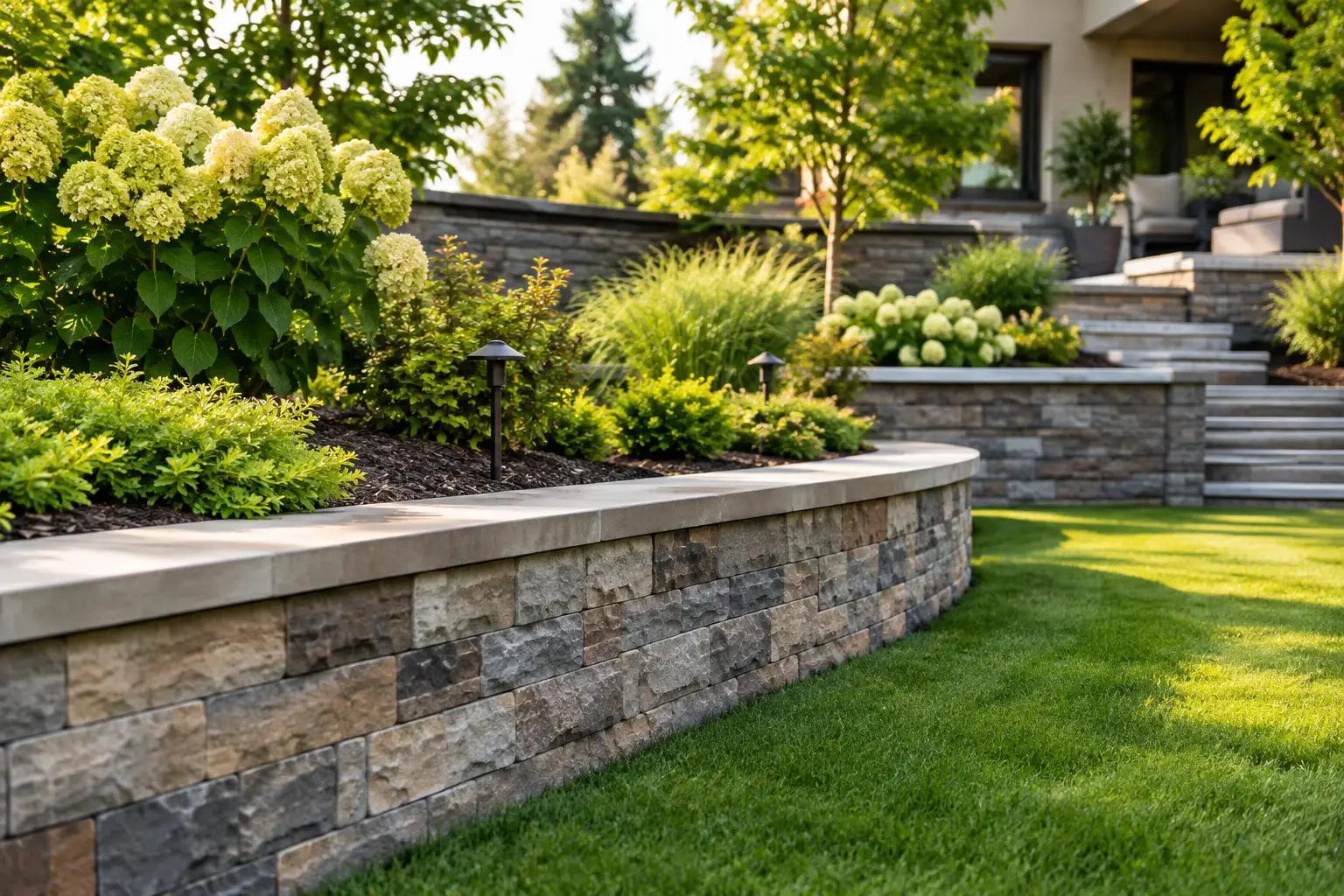
Accent lighting is where the landscape becomes memorable. An uplight can reveal the sculptural branching of a mature tree. A narrow beam can emphasize a stone retaining wall, an architectural column, or the movement of water in a waterfall. Softly lit planting beds make a backyard feel deeper and more dimensional, even from inside the home.
The key is selectivity. Not every tree, wall, and planting bed needs a fixture. Choose the elements with the strongest form, texture, or sentimental value. A few well-composed focal points are more elegant than a yard that is uniformly lit from edge to edge.
Plan the View From Indoors
One of the most overlooked parts of backyard lighting design is the view through the windows. Your backyard should feel alive from the kitchen, family room, and primary suite, not only when you are standing outside.
After dark, glass reflects interior light. If the exterior is too dim, the view becomes a mirror. Thoughtfully illuminated trees, water features, pathways, and architectural details give the eye somewhere to travel beyond the glass. That visual depth can make the entire home feel more expansive and connected to the landscape.
Consider the scenes you see most often. Perhaps it is the pool viewed from the living room, a fire feature beyond the dining area, or a garden wall visible from the primary bedroom. These are ideal places to invest in a layered nighttime composition.
Make Safety Feel Built In, Not Bolted On
Safety lighting should be present without announcing itself. Paths, steps, grade changes, pool decks, and transitions between hardscape areas all deserve careful attention. Yet the answer is not simply installing brighter fixtures everywhere.
Low, shielded path lights can help guests navigate without shining into their eyes. Integrated riser lights or recessed step lights make stairs easier to read while preserving the clean lines of a patio. Downlighting from a tree or structural beam can provide a natural moonlit effect across a walkway, often with less visual clutter than a row of fixtures.
Pool areas require particular care. Lighting should make deck edges, changes in elevation, and access routes easy to see while maintaining a calm, resort-style atmosphere. Placement also matters around reflective water surfaces, where poorly aimed fixtures can create distracting glare.
Choose Fixtures That Belong to the Design
A premium backyard calls for fixtures that look considered in daylight and perform beautifully at night. Material, finish, scale, and mounting method all affect the final result. A small bronze path light may disappear gracefully into a lush planting bed, while a bulky fixture can interrupt the clean geometry of a contemporary landscape.
Durability matters as much as appearance, especially in Sunbelt climates where heat, rain, irrigation, and intense sun test every exterior material. Quality fixtures, solid connections, and professional installation help prevent uneven light output, corrosion, and the frustrating maintenance issues that can take away from an otherwise polished space.
LED technology is generally the practical choice for a permanent lighting plan because it uses less energy and requires less frequent lamp replacement. Still, not all LEDs create the same quality of light. Color temperature, beam spread, dimming performance, and color consistency should be selected with the overall design in mind.
Control the Mood With Zones and Scenes
Lighting controls are what turn a collection of fixtures into an experience. Instead of relying on one switch for the entire backyard, divide the system into zones based on how each area is used.
A typical design may separate pool lighting, landscape accents, patio ambient light, kitchen task lighting, and architectural lighting. This makes it easy to create distinct scenes. A weeknight dinner scene may keep the kitchen and dining area gently illuminated. An entertaining scene can activate the pool, pathways, and landscape focal points. A late-night scene may leave only soft path lighting and a few tree uplights on.
Smart controls can make these adjustments simple from a wall keypad or mobile device, but convenience should not overcomplicate the system. The best control plan is one every member of the household can use without a tutorial. Timers and astronomical scheduling are particularly useful for ensuring the landscape comes alive at dusk and turns off at a sensible hour.
Avoid the Common Lighting Mistakes
The quickest way to diminish an exceptional backyard is to overlight it. Too many fixtures can flatten texture, erase shadows, and make a carefully crafted patio feel more like a parking area. Darkness is part of the composition. It gives illuminated features contrast and gives the eye a place to rest.
Another common misstep is placing lights where they shine directly into seating areas, windows, or neighboring properties. Aim and shielding matter. A fixture can be technically bright enough while still being uncomfortable to live with.
It is also wise to avoid treating lighting as a final, disconnected phase. When the design team plans lighting alongside the pool, hardscape, planting, pavilion, and outdoor kitchen, they can conceal wiring, coordinate fixture locations, and protect the uncluttered finish that defines a luxury outdoor space.
Let the Design Lead the Technology
There is no single blueprint for how to plan backyard lighting because every property has different architecture, elevations, mature trees, entertaining habits, and priorities. A compact courtyard may need carefully controlled wall washing and dining illumination. A large resort-style backyard may call for layered zones that connect a pool, outdoor kitchen, fireplace, pavilion, and garden pathways.
The strongest plans begin with a complete vision rather than a fixture count. At Beyond Backyard Living, that means considering the nighttime experience from the earliest design conversations, so light supports the beauty, hospitality, and craftsmanship of the entire environment.
When your backyard is designed to glow with purpose, sunset does not signal the end of the day. It becomes an invitation to step outside, linger a little longer, and enjoy the retreat you created at home.