A patio can be beautiful for a few hours a day. A pavilion changes how often you use it. It gives your backyard a sense of arrival, creates a destination for guests, and makes outdoor living feel considered rather than improvised. So, are pavilions worth the cost? For homeowners who want a backyard built for gathering, relaxing, and enjoying through more of the year, the answer is often yes – provided the pavilion is designed as part of the larger space.
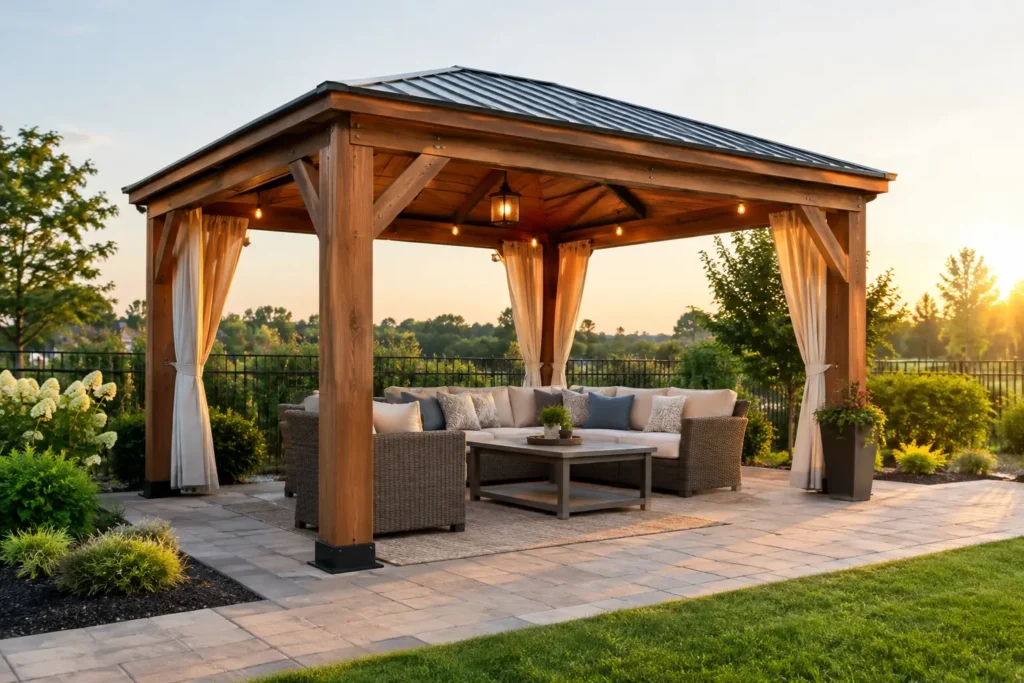
A pavilion is not simply a roof over outdoor furniture. It is an architectural feature that can anchor a pool deck, frame an outdoor kitchen, shelter a dining area, or turn an open patio into a true extension of the home. Its value lies in what it allows your family to do outside, and how naturally it fits into the property.
What You Are Really Paying for in a Pavilion
The price of a pavilion reflects much more than lumber, roofing, and labor. A well-built structure needs to be engineered for local wind conditions, properly anchored, sized for its intended use, and finished with materials that complement your home and hardscape. Premium details such as stained or painted timber, tongue-and-groove ceilings, stone columns, integrated lighting, fans, and electrical outlets all influence the final investment.
Site conditions matter, too. A pavilion set on a new paver patio or pool deck may require grading, footings, drainage planning, and coordination with existing utilities. If it is part of a larger backyard transformation, the work must also be sequenced around patios, retaining walls, kitchens, fire features, plantings, and water features. That coordination is one reason custom pavilions feel polished when the project is complete.
A prefabricated kit may seem like the lower-cost option at first. It can be a reasonable fit for a simple shade structure in a straightforward location. But it rarely delivers the proportions, finish quality, electrical planning, or architectural connection that make a pavilion feel like it has always belonged with the house. The difference becomes especially visible in a high-end outdoor environment.
Are Pavilions Worth the Cost for Everyday Living?
The best way to judge the investment is not by asking how often you will look at the pavilion. Ask how often it will change your plans. Will you have dinner outdoors when the afternoon sun is intense? Will friends linger after a swim because there is a comfortable, shaded place to sit? Will you use your outdoor kitchen more when the cook is protected from sun and a passing shower?
In the Sunbelt, shade is not a decorative extra. It is what makes outdoor spaces usable during the hours when people actually want to gather. A solid roof provides deeper, more dependable coverage than an umbrella or open pergola. With a ceiling fan, lighting, and thoughtfully placed furnishings, it can remain comfortable from brunch through evening cocktails.
A pavilion also creates a stronger sense of hospitality. It gives guests a clear place to congregate and helps organize a large backyard into inviting outdoor rooms. One family may use it as a poolside lounge, while another may place a dining table beneath it near a pizza oven and fireplace. The structure is the same, but the experience is personal.
The Pavilion Has to Fit the Plan
A pavilion delivers the greatest return when it solves a specific design need. Adding one without considering traffic flow, views, sun angles, and the surrounding materials can make even an expensive structure feel disconnected. It may block an important sightline, crowd a seating area, or cast shade where homeowners hoped to grow lawn or garden beds.
Before choosing a location, consider where the sun falls at the times you spend outdoors, how guests move between the house and the backyard, and what the pavilion should face. A pool pavilion may need a direct view of the water and easy access to towels, restrooms, or the kitchen. A dining pavilion may work better closer to the home, with a clear connection to grilling and food preparation.
Scale is equally important. A small pavilion can feel cramped once dining chairs are pulled out or a sectional is added. One that is too large can overwhelm the patio and the home itself. The right proportions leave room for circulation and allow the structure to frame the outdoor setting instead of consuming it.
Design details that earn their keep
Certain upgrades may increase upfront cost, but they can make a pavilion substantially more enjoyable over time. A finished ceiling softens the look overhead. Recessed lights and dimmers extend the space into the evening. Fans move air on humid days, while heaters can make a cool night more comfortable. Built-in speakers, a television wall, or motorized screens may be worthwhile when the pavilion is intended as a frequent entertaining hub.
The key is to choose features that support how you live. A family that hosts game days may value a media wall and generous lounge seating. Homeowners who love long dinners may prioritize lighting, a large table, and easy access to an outdoor kitchen. Luxury is not about adding every available feature. It is about making the space feel effortless for the people using it.
Home Value Matters, but Lifestyle Value Matters More
A professionally designed pavilion can improve a home’s appeal, especially when it complements a cohesive landscape and outdoor living plan. Buyers often respond to finished outdoor spaces because they can immediately picture themselves using them. A pavilion adds architectural presence and can make a property feel more complete.
Still, it is wise not to approach a pavilion solely as a resale calculation. No exterior feature guarantees a dollar-for-dollar return in every market. The return is influenced by neighborhood expectations, the quality of the installation, regional climate, and whether the backyard feels cohesive overall.
For most homeowners, the more meaningful value comes from daily use. If the pavilion encourages family dinners outside, gives teenagers a place to gather, or turns your home into the preferred place for holidays and celebrations, its payoff is measured in more than an appraisal. A backyard should support the life happening there now, not only a future listing photo.
When a Pavilion May Not Be the Right Investment
There are situations where another solution makes more sense. If you need filtered light for planting areas or want an open-air feel, a pergola may better match the space. If the primary issue is a small seating area that gets hot for an hour or two each day, a quality umbrella or retractable shade solution could be enough.
A pavilion may also be premature if the patio is undersized, drainage problems have not been addressed, or the overall backyard layout is still unsettled. Building the roof first can limit later design choices. In those cases, it is usually smarter to create a master plan, even if the project will be completed in phases.
That planning process also prevents a common disappointment: investing in a beautiful pavilion, then realizing it needs more patio space, better lighting, a fire feature, or a cooking area to become the destination you imagined. Designing the surrounding environment at the same time helps each element work harder.
How to Decide if Your Backyard Needs One
Imagine your ideal Saturday at home. If your answer includes coffee outside, kids in the pool, a leisurely lunch, an afternoon nap in the shade, and friends arriving for dinner, a pavilion may be one of the most useful features you can build. It creates a dependable center for the day instead of leaving everyone to chase shade around the yard.
Start with the purpose, then let the design follow. Decide whether the pavilion is for dining, lounging, cooking, poolside comfort, or a blend of all four. Consider how many people you host, the seasons you want to use the space, and which features would make it feel complete. From there, materials, dimensions, roof style, columns, finishes, and amenities become informed choices rather than expensive add-ons.
At Beyond Backyard Living, that larger vision is where custom design makes the difference. A pavilion can stand beautifully on its own, but it becomes far more compelling when it is part of a backyard designed around your home’s architecture and your favorite ways to spend time together.
A well-planned pavilion is an invitation to stay outside a little longer. If that is the feeling you want your backyard to create, begin with a thoughtful conversation about the life you want the space to hold.