A great backyard no longer ends at the patio door. It unfolds in experiences: a shaded lunch beside the pool, a pizza oven warming up before friends arrive, a quiet seat near moving water after dark. The most meaningful landscape design trends are moving away from disconnected features and toward complete outdoor environments designed around the way a family truly lives.
For homeowners investing in a high-end property, the goal is not to chase a look that will feel dated in two years. It is to create a polished, personal retreat where architecture, landscape, entertaining, and relaxation feel intentionally connected. These are the ideas shaping the most memorable outdoor spaces right now.
Landscape Design Trends That Feel Like Home
Outdoor rooms with a real purpose
The strongest trend is also the most practical: designing the backyard as a sequence of outdoor rooms. Rather than placing a patio, pool, and fire pit wherever there is open space, a thoughtful plan gives each area a role and a relationship to the next.
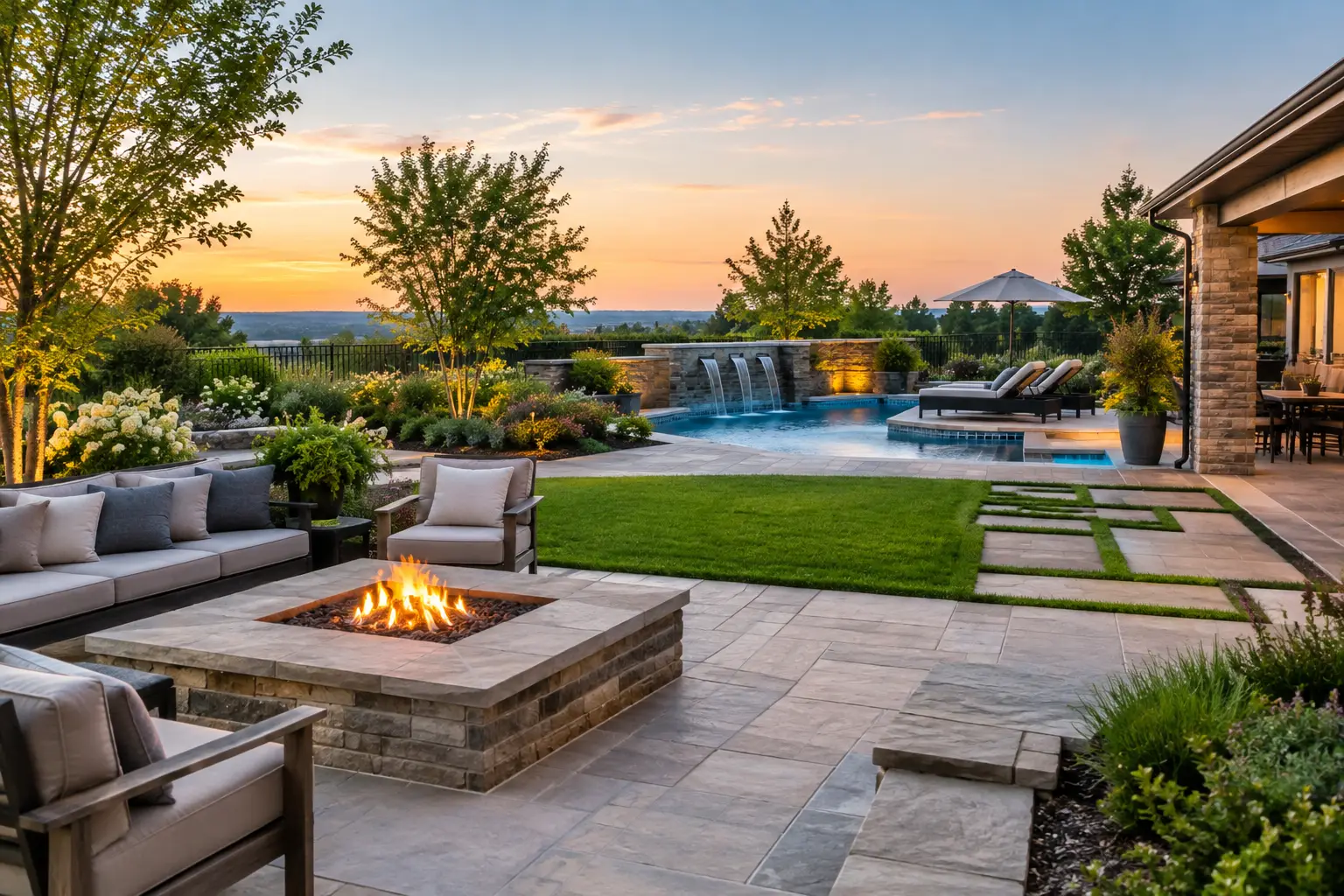
A dining terrace may sit close to the outdoor kitchen for effortless hosting. A fireside lounge can be set slightly apart, creating a more intimate destination after dinner. A pool pavilion might offer shade, a changing area, and a visual anchor at the far end of the yard. Paths, planting beds, changes in paving, and low walls guide movement without making the landscape feel overly divided.
This approach matters because a beautiful feature is not always a useful one. An oversized patio with no shade may sit empty in the heat. A fire feature that faces away from the gathering area can become scenery rather than a place people use. Designing for purpose first gives every square foot a reason to belong.
Resort-style water, tailored to the setting
Pools remain central to luxury backyard transformations, but the design language is becoming more architectural and more integrated. Clean-lined pools, tanning ledges, raised spas, water bowls, scuppers, and quiet sheet falls are often used as part of one composed view rather than as stand-alone statements.
Water features are also expanding beyond the pool. A formal fountain near an entry, a stone-lined rill beside a walkway, or a naturalistic waterfall tucked into a planted slope can bring sound and movement to areas of the property that need more atmosphere. The right choice depends on the home and the desired mood. A sleek contemporary home may call for a precise linear water feature, while a more rustic setting may suit boulders, lush plantings, and a softer cascade.
There is a trade-off to consider. More dramatic water features demand careful engineering, quality equipment, and a maintenance plan. When they are designed well from the beginning, however, they add a sensory richness that a flat lawn simply cannot match.
Warm Materials and Lasting Craftsmanship
Natural texture over one-note finishes
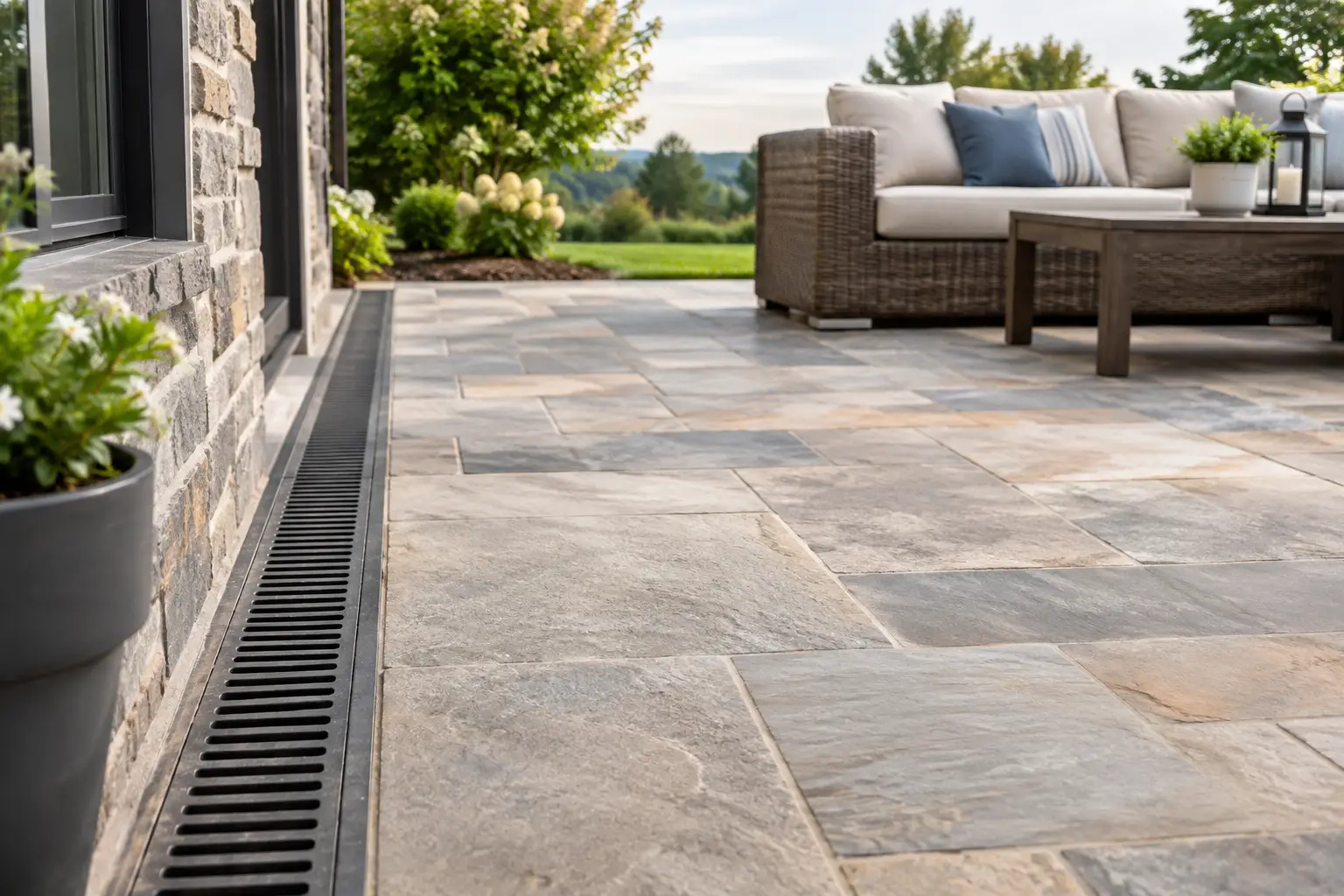
Homeowners are gravitating toward materials that look substantial, tactile, and grounded in the landscape. Natural stone, premium pavers, wood-toned ceilings, porcelain tile, hand-finished masonry, and warm metal accents bring depth to hardscapes that might otherwise feel flat or overly uniform.
The best material palettes usually stay disciplined. A home with light stucco and dark window frames may pair beautifully with soft gray stone, charcoal accents, and layered green planting. A traditional brick home may feel more cohesive with tumbled pavers, limestone details, and warm, low-voltage lighting. Contrast can be striking, but it should never compete with the architecture.
Craftsmanship is the difference between a collection of expensive materials and a finished environment that feels timeless. Crisp edges, well-proportioned steps, thoughtful drainage, intentional joint patterns, and properly built retaining walls are not decorative details. They are the foundation of a space that performs beautifully through changing weather, regular entertaining, and years of use.
Fire features made for gathering
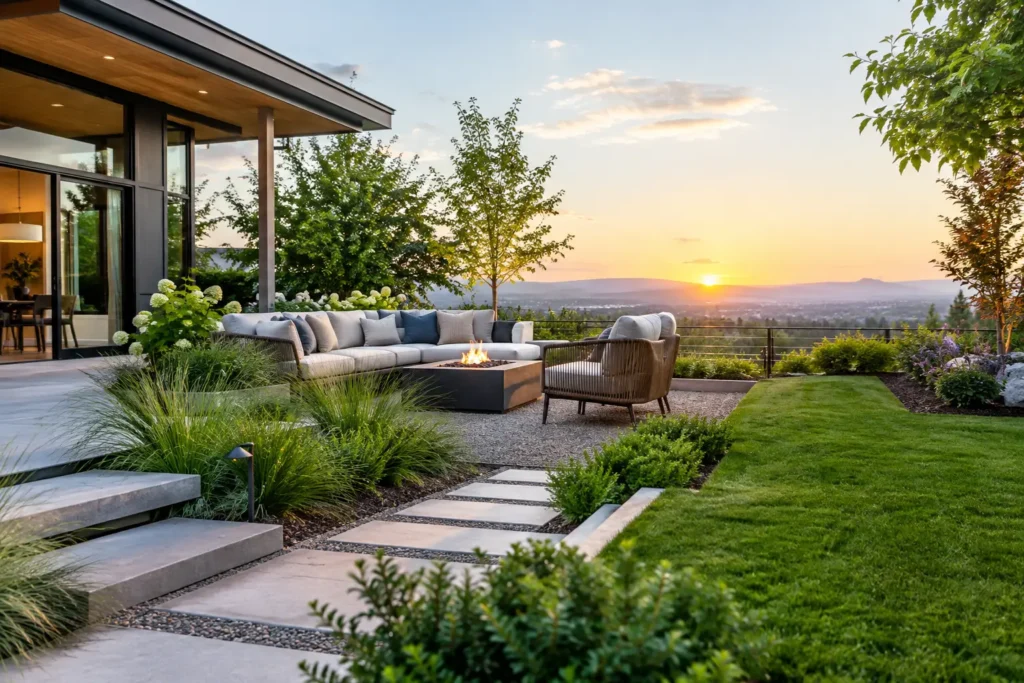
Fire is becoming less of an accessory and more of a destination. Custom fireplaces, linear fire tables, built-in fire pits, and fire bowls around a pool extend the use of the backyard into cooler evenings and create an instant focal point for guests.
The most successful designs account for seating, wind direction, circulation, and sightlines. A fire pit with room for only two chairs may photograph well but fail as a family gathering spot. A substantial fireplace can define an outdoor living room beneath a pavilion, especially when it is paired with comfortable furnishings, a television niche, or an adjacent kitchen.
Fuel choice matters, too. Gas offers easy operation and a clean, consistent flame. Wood-burning fire features deliver a more traditional ritual, but require storage, cleanup, and attention to local regulations. The right answer comes down to how the space will be used most often.
Hospitality-Driven Backyards
Outdoor kitchens that earn their footprint
Today’s outdoor kitchen is designed for more than grilling. It supports the full rhythm of hosting, from a quick family dinner to a game-day crowd. Generous prep space, refrigeration, storage, pizza ovens, smokers, sinks, ice makers, and bar seating can all be part of the plan when they serve the homeowner’s routine.
Placement is critical. The kitchen should be close enough to the indoor home for convenience, but positioned so the cook remains part of the conversation rather than facing a wall. Shade, task lighting, ventilation, and durable surfaces deserve equal attention. A beautiful island is only as enjoyable as it is functional on a bright July afternoon.
For many homes, a pavilion or pergola completes the experience. A pavilion creates a more protected, architectural outdoor room, while a pergola offers filtered light and an open-air feel. Neither is automatically better. The climate, lot orientation, desired level of shelter, and the style of the home should guide the decision.
Lighting that changes the entire mood
Luxury landscapes are increasingly designed for the evening, not just daylight. Layered lighting makes patios safer, highlights key architecture, and gives the yard a welcoming glow long after sunset.
The most refined plans combine functional lighting with subtle atmosphere. Step lights and path lights make movement easy. Downlighting from trees can create a soft moonlit effect. Gentle uplighting can reveal the texture of a specimen tree, retaining wall, or water feature. Under-cap lighting on seat walls and counters adds polish without glare.
Restraint is essential. Too many bright fixtures can make a backyard feel commercial. The goal is to create depth, comfort, and a sense of invitation, allowing the home and landscape to remain the stars.
Planting With Privacy, Climate, and Character in Mind
Planting is becoming more intentional, particularly across the Sunbelt where heat, intense sun, and water use shape the long-term success of a landscape. Homeowners want lushness, but they also want a landscape that can handle the climate without constant replacement or excessive maintenance.
Layered planting delivers that balance. Evergreen screening can establish privacy along property lines. Ornamental trees create shade and vertical interest. Grasses, flowering perennials, and groundcovers soften hardscape edges and bring seasonal movement. The result should feel composed from every major viewpoint, including from inside the home.
Native and climate-adapted selections are playing a larger role, but a sustainable landscape does not need to look sparse or overly casual. With the right plant palette, irrigation strategy, mulch, and soil preparation, it can feel full, refined, and distinctly personal. The key is selecting plants for the site rather than forcing a planting style that fights the conditions.
Design for Flexibility, Not Just First Impressions
A backyard should evolve with the people who use it. Families may want open lawn for younger children now and a putting green or expanded lounge area later. Frequent hosts may prioritize a large dining space, while homeowners seeking a quieter retreat may value a private spa garden, water feature, and sheltered seating.
That is why a comprehensive master plan is one of the most valuable investments in an exterior project. It allows pools, patios, planting, drainage, utilities, lighting, and future additions to be considered together. Even if the work is completed in phases, the finished property can still feel like one coherent vision.
The most enduring landscape design trends do not ask your home to imitate someone else’s backyard. They ask a better question: what would make stepping outside feel like arriving at your favorite place? Start there, and the result can become a setting for everyday ease, long conversations, and the kind of gatherings people remember long after the evening ends.