A backyard with a steep drop, soggy erosion lines, or an awkward hill is not just a design challenge. It is often the moment homeowners start asking when should retaining walls be used, and whether this one feature could turn a difficult yard into something polished, useful, and beautiful.
The short answer is that retaining walls are used when a landscape needs support. But in a well-designed outdoor environment, they do more than hold back soil. They shape gathering spaces, create level areas for patios and pools, improve drainage, protect structures, and give a property the kind of finished architecture that makes the entire home feel more elevated.
When should retaining walls be used in a backyard?
Retaining walls make sense anytime the ground needs to be held in place or reworked to support a better layout. If your yard slopes sharply, sheds soil after heavy rain, or leaves you with unusable terrain, a retaining wall may be the difference between a frustrating outdoor space and one that feels intentional.
One of the most common reasons is grade change. A sloped lot can limit what you can build and how you can move through the yard. If you want a level patio, an outdoor kitchen, a lawn for kids, or space for a pool deck, the land often needs to be reshaped first. A retaining wall creates that structure. It gives the grade a clean stopping point, allowing one area to sit comfortably above or below another without soil shifting over time.
They are also used when erosion becomes a real problem. This is especially common in properties with runoff issues, exposed slopes, or areas where stormwater repeatedly washes mulch, soil, and planting beds downhill. Left alone, that kind of movement can wear away your landscape and eventually affect nearby hardscapes or foundations.
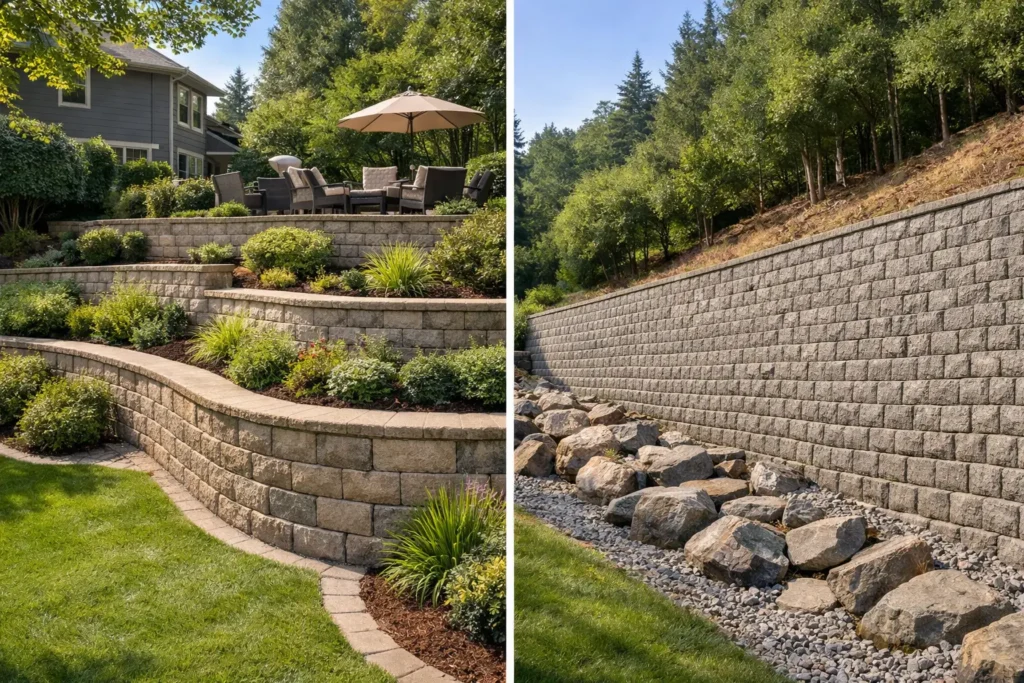
In premium outdoor design, retaining walls are not only corrective. They are architectural. A carefully designed wall can terrace a yard, frame a fire feature, edge a paver terrace, or create a transition between the pool area and a lower lawn. What starts as a structural solution often becomes one of the most visually grounding features in the entire project.
Signs your property may need a retaining wall
Some properties make the need obvious. Others show quieter warning signs that are easy to miss until the problems become expensive.
If parts of your yard are difficult to mow, too steep to furnish, or impossible to use comfortably, the layout may be working against you. A retaining wall can convert steep or broken ground into flat, functional space that actually supports the lifestyle you want. That matters when your goal is not just to fix a problem, but to build an outdoor setting that feels ready for entertaining, relaxing, and daily use.
You may also need a retaining wall if soil is moving where it should not. This can show up as bare patches on a slope, mulch washing into walkways, or planting beds that never seem to hold their shape. In more serious cases, you might notice water pooling at the base of a hill, cracks in nearby hardscaping, or subtle shifting around steps and edges.
Another strong signal is when a planned feature requires stable, level ground. Pools, patios, pavilions, outdoor kitchens, and sport courts all depend on proper site preparation. If the yard naturally drops or rises too aggressively, retaining walls may be part of what makes the design possible.
Slopes, drainage, and support issues
A retaining wall is often recommended when a slope creates pressure that simple edging or planting cannot control. The wall resists the force of the soil behind it and helps manage the grade safely.
Drainage is part of that conversation. A good retaining wall is never just a stack of blocks or stone. It needs engineering, base preparation, and drainage planning so water does not build up behind it. Without that, even an attractive wall can fail. This is one reason retaining walls should be approached as a design-build element, not an afterthought.
Lifestyle goals matter too
Not every retaining wall is installed because something is wrong. Sometimes it is used because the property has more potential than the current grade allows.
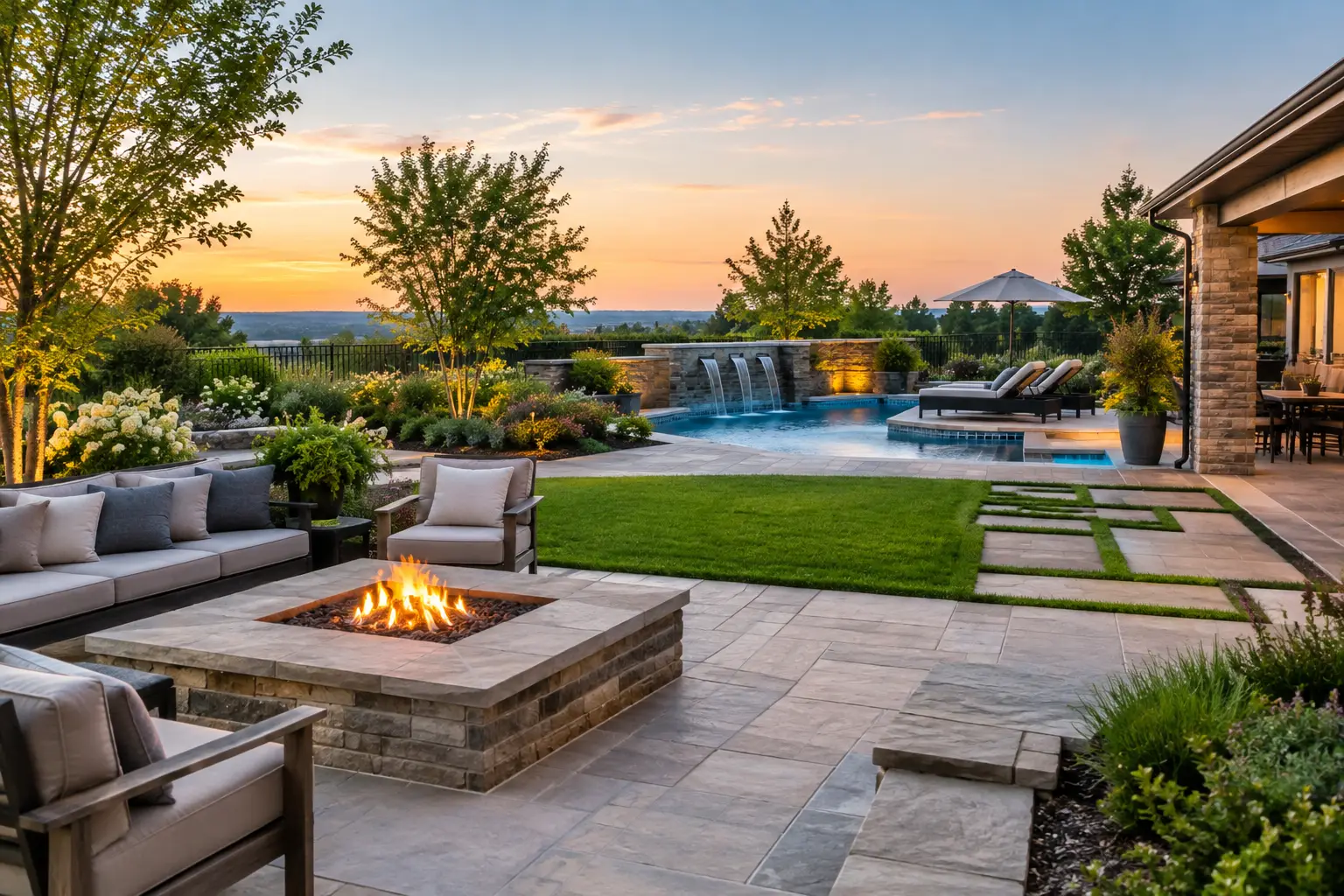
If you are investing in a custom outdoor living space, retaining walls can help organize the experience. They can define outdoor rooms, create dramatic elevation changes, and make a large yard feel more curated. A dining terrace can step down to a lounge area. A raised lawn can overlook a pool. A fire feature can sit within a stone-wrapped wall that feels built into the landscape rather than placed on top of it.
That is where craftsmanship matters. The right wall should not look like a fix. It should feel like it belonged there from the beginning.
When should retaining walls be used for structural protection?
There are cases where retaining walls are less about aesthetics and more about protecting the property. If a slope sits near the house, driveway, pool, or another hardscape feature, holding back that soil may be necessary to preserve long-term stability.
For example, a home built into a hill may need retaining walls to manage the grade around the foundation. A driveway cut into a slope may require side support to prevent collapse or washout. In backyards with major elevation changes, retaining walls can protect stairs, terraces, and seating areas from the gradual movement that happens when soil is left unsupported.
This is where design choices carry real consequences. Height, load, drainage, and material all affect performance. A low decorative wall is very different from a taller engineered retaining wall that supports a significant mass of soil. Homeowners do not need to calculate that themselves, but they should understand that not all walls serve the same purpose.
If the wall will support large grade changes or sit near major structures, site-specific planning is essential. Done correctly, it protects the beauty of the project and the investment behind it.
Choosing a retaining wall that fits the design
Once a wall is truly needed, the next question is how it should look and function within the overall landscape. That answer depends on the architecture of the home, the style of the outdoor space, and the role the wall needs to play.
Natural stone delivers richness and permanence. It feels especially at home in luxury landscapes where texture and timelessness matter. Segmental block systems offer clean lines and reliable structural performance, often with a more tailored appearance. Poured concrete can work well in contemporary settings where minimalism and sharp geometry lead the design.
Material choice matters, but proportion matters just as much. A retaining wall should feel integrated with the scale of the house and the flow of the yard. If it is too heavy, it overwhelms the space. If it is too slight, it can look disconnected or perform poorly.
The best designs also think beyond the wall itself. Built-in lighting, steps, seat walls, planting pockets, and coordinated hardscape finishes can turn a necessary retaining wall into a signature feature. This is often where a high-end project separates itself from basic landscape construction. The wall is not hidden. It is composed as part of the overall experience.
It depends on the property, not just the problem
Homeowners often want a simple yes or no answer, but retaining walls are one of those features where context changes everything. Two yards can have the same slope and need completely different solutions based on drainage, soil conditions, intended use, and the features being built around them.
In some cases, a gentle slope can be regraded without a wall. In others, adding a wall creates better circulation, stronger visual structure, and more usable square footage. There are also times when a wall solves one issue but increases cost and complexity more than the project really needs. Good design weighs all of that.
That is why the smartest starting point is not choosing a wall style online. It is evaluating the property as a whole. When the grade, drainage, architecture, and lifestyle goals are considered together, the answer becomes much clearer.
For homeowners creating a more refined outdoor retreat, retaining walls are often one of the quiet heroes of the project. They make bold design possible, support the spaces where people gather, and bring order to land that would otherwise feel difficult or unfinished. Beyond Backyard Living approaches them that way – as structural elements with the power to shape beauty.
If your yard has slopes, runoff, or terrain that keeps you from building the outdoor space you really want, a retaining wall may not just be useful. It may be the feature that makes the rest of your vision possible.