By Terrance Schabilion, Beyond Backyard Living
Designing a custom pool that complements your backyard’s unique layout is an exciting venture that can transform your outdoor space into a personal oasis. This comprehensive guide will walk you through the essential steps involved in the custom pool design process, particularly tailored for Florida’s diverse landscapes. Homeowners often face challenges in creating a pool that not only fits their aesthetic preferences but also adheres to local regulations and climate considerations. By following these five key steps, you can ensure that your pool design is both functional and visually appealing.
In this article, we will cover the initial consultation and vision casting, design development, material selection, permitting and regulations, and construction and installation. Additionally, we will explore how local climate factors into your design decisions and provide tips for optimizing space and aesthetics. Whether you’re looking to create a serene retreat or a vibrant entertainment area, understanding these steps will help you achieve your dream pool.
Initial Consultation and Vision Casting
The initial consultation is a critical first step in the custom pool design process. During this phase, homeowners discuss their goals, preferences, and budget with a design professional. This conversation is essential for capturing the vision of what the pool should look like and how it will function within the existing landscape.
A key aspect of this stage is creating a “Dreambook,” where clients can compile images and ideas that inspire them. This visual reference helps the designer understand the homeowner’s style and preferences, ensuring that the final design aligns with their vision. By establishing clear communication and expectations, the initial consultation sets the foundation for a successful project.
Design Development
The design development phase involves translating the homeowner’s vision into a tangible layout. This process includes creating a detailed plan that considers the pool’s shape, size, and integration with outdoor elements such as landscaping and hardscaping.
Designers often utilize software to create 3D renderings, allowing clients to visualize the final product before construction begins. This phase also involves considering the lifestyle of the homeowners, such as whether they prefer a space for relaxation or entertaining guests. By focusing on these elements, the design can be tailored to meet the specific needs of the family.
Beyond Backyard Living specializes in custom outdoor living solutions, emphasizing personalized layouts that fit homeowners’ specific backyard dimensions and preferences. Their expertise in the custom pool design process ensures that each project is unique and reflective of the client’s desires.
In addition to the common structural styles, custom fiberglass designs offer homeowners versatile and attractive options. These pre-formed shapes can be tailored with specific dimensions to suit various backyard sizes and layouts. To explore innovative possibilities, consider viewing custom fiberglass swimming pool designs that blend durability with aesthetic appeal seamlessly.
Material Selection
Choosing the right materials for your pool is crucial for both aesthetics and functionality. The selection process should consider factors such as durability, maintenance, and how well the materials complement the architecture of the home.
Common materials used in pool construction include:
- Concrete: Highly customizable and durable, ideal for unique shapes.
- Fiberglass: Quick to install and low maintenance, available in pre-formed shapes.
- Vinyl: Cost-effective and offers a smooth surface, but may require more maintenance.
When selecting materials, it’s essential to consider the local climate, as certain materials may perform better in Florida’s heat and humidity. For instance, choosing lighter-colored materials can help keep the pool area cooler under the sun.
| Material | Type | Benefits |
|---|---|---|
| Concrete | Customizable | Durable and long-lasting |
| Fiberglass | Pre-formed | Quick installation and low maintenance |
| Vinyl | Cost-effective | Smooth surface and variety of designs |
This table illustrates the different materials available for pool construction, highlighting their unique benefits. Understanding these options can help homeowners make informed decisions that align with their design goals.
Permitting and Regulations
Before construction can begin, it’s essential to navigate the permitting process and comply with local regulations. Each municipality in Florida has specific codes and requirements that must be adhered to, including safety standards and zoning laws.
Homeowners should research these regulations early in the design process to avoid delays. Obtaining the necessary permits ensures that the pool is built safely and legally, protecting both the homeowner and the contractors involved. Understanding these requirements can also help streamline the construction timeline.
Understanding the specific legal framework for pool construction in Florida is crucial for a compliant project.
Florida Pool Permit & Compliance Requirements Approval of the permit shall be based upon the pool’s 489, FS, licensed pool contractor or a Florida licensed professional aspects of the pool shall comply with the requirements of this 64E-9.001 General.
Construction and Installation
The construction and installation phase is where the design comes to life. This stage involves overseeing the entire construction process, coordinating with contractors, and ensuring that the design is executed as planned.
Key steps in the construction process include:
- Site Preparation: Clearing the area and preparing the ground for excavation.
- Excavation: Digging the pool’s shape according to the design specifications.
- Installation: Building the pool structure, including plumbing and electrical work.
Throughout this phase, communication with the design team is crucial to address any issues that may arise. Homeowners should also be prepared for potential changes, as unforeseen circumstances can impact the construction timeline.
Scheduling a consultation with Beyond Backyard Living can provide valuable insights into the construction process and help ensure that your custom pool project runs smoothly. Their expertise in custom outdoor living solutions allows them to guide homeowners through each step, from design to installation.
Considerations for Local Climate and Regulations
Florida’s climate plays a significant role in pool design decisions. Homeowners must consider factors such as heat exposure, evaporation rates, and seasonal weather patterns when planning their pools.
For instance, incorporating features like shaded areas or water features can help mitigate the effects of the sun and keep the pool area comfortable. Additionally, understanding local regulations regarding water usage and pool safety is essential for compliance and sustainability.
Tips for Optimizing Space and Aesthetics
To enhance the overall design of your pool area, consider the following tips:
- Use Tanning Ledges: These shallow areas provide a perfect spot for sunbathing and relaxation.
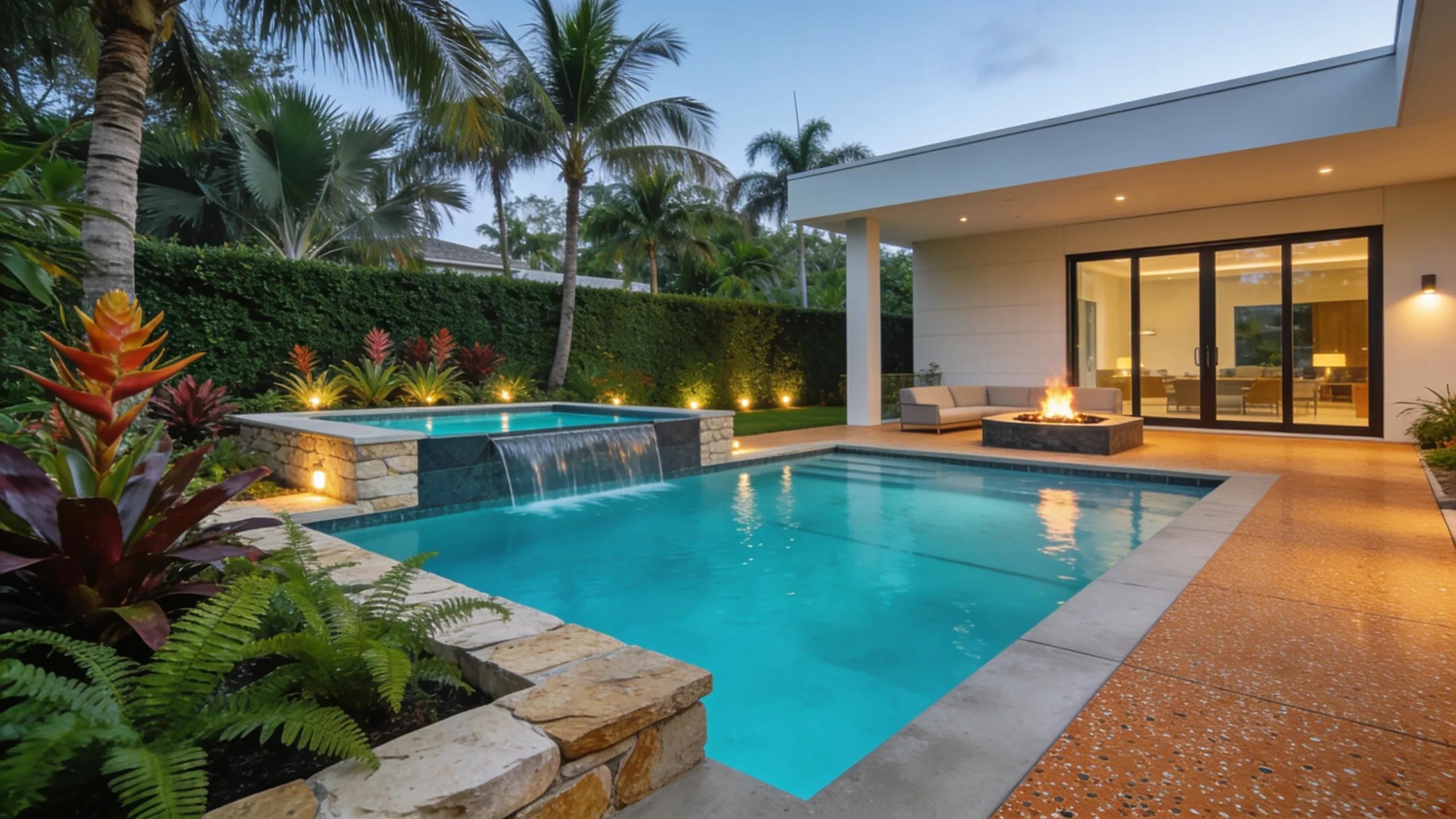
- Integrate Fire Features: Fire pits or outdoor fireplaces can create a cozy atmosphere for evening gatherings.
- Create Distinct Zones: Designate areas for different activities, such as lounging, dining, and swimming, to maximize functionality.
These design elements not only improve the aesthetics of the pool area but also enhance the overall outdoor living experience.
How Do You Initiate the Custom Pool Design Process in Florida?
Starting the custom pool design process involves several key steps that ensure a smooth and successful project.
What Is the Importance of Initial Site Assessment and Backyard Layout Analysis?
An initial site assessment is crucial for understanding the unique characteristics of the property. This analysis helps identify potential challenges, such as drainage issues or existing landscaping that may impact the design. By evaluating these factors early on, homeowners can create a cohesive design that enhances functionality and aesthetics.
How Does Local Florida Climate Influence Pool Design Decisions?
Florida’s climate significantly influences pool design decisions. Homeowners must consider heat exposure, humidity, and seasonal weather patterns when planning their pools. For example, selecting materials that withstand high temperatures and incorporating features that provide shade can enhance the pool’s usability throughout the year.
Which Pool Shapes and Layout Ideas Best Complement Florida Backyards?
When designing a pool for a Florida backyard, homeowners have various shape options to consider. Freeform pools offer a natural look that blends seamlessly with landscaping, while rectilinear pools provide a modern aesthetic. The choice of shape should reflect the homeowner’s style and the overall design of the outdoor space.
What Are the Most Suitable Pool Shapes for Varied Backyard Dimensions?
Different backyard dimensions call for specific pool shapes. Rectilinear pools are ideal for modern homes with limited space, while freeform pools can be customized to fit larger, irregularly shaped yards. Homeowners should consider their available space and desired features when selecting a pool shape.
How Can Backyard Landscaping Enhance Your Outdoor Living Space Design?
Landscaping plays a vital role in enhancing the overall design of the pool area. Layered landscaping can create visual interest, while strategic planting can provide privacy and shade. Incorporating native plants can also improve sustainability and reduce maintenance.
What Are the Essential Steps in the Pool Construction Process in Florida?
The essential steps in the pool construction process include:
- Obtaining Permits: Ensuring compliance with local regulations.
- Site Preparation: Clearing and preparing the area for excavation.
- Excavation: Digging the pool according to the design specifications.
- Installation: Building the pool structure and installing necessary systems.
These steps are crucial for a successful construction process, ensuring that the pool is built safely and efficiently.
How Is the Construction Timeline Structured for Custom Pools?
The construction timeline for custom pools can vary based on several factors, including design complexity and weather conditions. Typically, the process can take anywhere from 8 to 12 weeks from the initial consultation to completion. Homeowners should be prepared for potential delays and maintain open communication with their contractors throughout the process.
Which Local Regulations and Building Codes Must Be Considered?
Local regulations and building codes are essential considerations in the pool design process. Homeowners must familiarize themselves with safety standards, zoning laws, and water usage regulations to ensure compliance. Understanding these requirements can help streamline the permitting process and avoid potential issues during construction.
How Can Energy Efficiency and Sustainability Be Integrated into Custom Pool Design?
Integrating energy efficiency and sustainability into pool design is increasingly important for homeowners. Options include using energy-efficient pumps and heaters, incorporating solar panels, and selecting sustainable materials. These choices not only reduce environmental impact but can also lead to long-term cost savings.
What Energy Efficient Pool Design Options Are Available for Florida Homes?
Florida homeowners can explore various energy-efficient pool design options, such as:
- Solar Heating Systems: Utilizing solar energy to heat the pool.
- Variable-Speed Pumps: Reducing energy consumption by adjusting pump speed based on demand.
- LED Lighting: Offering energy-efficient lighting solutions for the pool area.
These options contribute to a more sustainable pool design while enhancing the overall experience.
How Do Sustainable Materials and Smart Pool Systems Enhance Longevity?
Sustainable materials and smart pool systems can significantly enhance the longevity of a pool. By selecting durable materials that withstand Florida’s climate and incorporating smart technology for monitoring and maintenance, homeowners can ensure their pool remains functional and aesthetically pleasing for years to come.
Why Is Scheduling a Bespoke Consultation Crucial for Your Custom Pool Project?
Scheduling a bespoke consultation is essential for ensuring that your custom pool project meets your specific needs and preferences.
What Does the Comprehensive Consultation Process Entail?
During the comprehensive consultation process, homeowners can expect to discuss their vision, budget, and any unique challenges they may face. This meeting typically involves sharing ideas, reviewing design options, and establishing a timeline for the project.
How Does Expert Guidance Ensure a Tailored Outdoor Living Experience?
Expert guidance is invaluable in navigating the complexities of custom pool design. Professionals can provide insights into design trends, material selection, and local regulations, ensuring that the final product aligns with the homeowner’s vision while adhering to industry standards. This tailored approach enhances the overall outdoor living experience, making it both functional and enjoyable.
To further enhance your pool’s longevity, consider exploring smart pool systems. These systems offer advanced monitoring and maintenance capabilities.