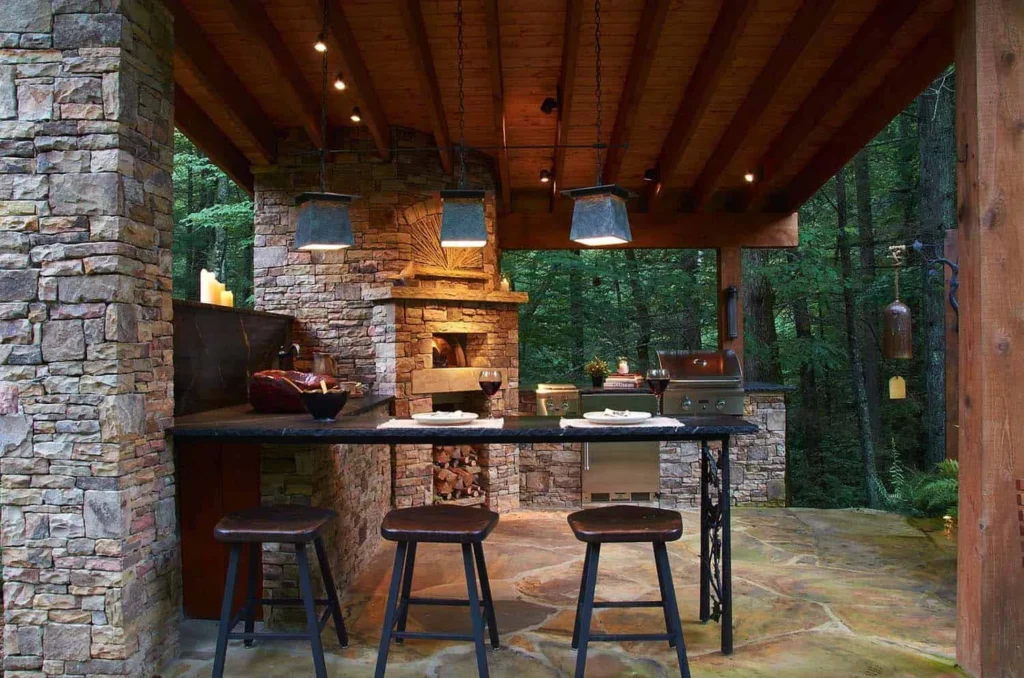
Why 11,000 PSI Concrete Is Indispensable for Tampa Outdoor Kitchen Foundations
By Terrance Schabilion, Beyond Backyard Living
When constructing outdoor kitchens in Tampa, the choice of concrete is critical. Specifically, 11,000 PSI concrete stands out as a non-negotiable option due to its exceptional strength and durability. This article will explore the unique properties of 11,000 PSI concrete, the challenges posed by Tampa’s sandy soil, and best practices for constructing outdoor kitchen bases. Homeowners will also learn why selecting a reputable company like Beyond Backyard Living is essential for ensuring a robust foundation. By understanding these factors, homeowners can make informed decisions that enhance the longevity and functionality of their outdoor kitchens.
What Distinguishes 11,000 PSI Concrete in High-Strength Applications?
11,000 PSI concrete is recognized for its superior strength, making it ideal for high-stress applications such as outdoor kitchens. This type of concrete is engineered to withstand significant loads and resist environmental factors, ensuring long-lasting performance. Its unique formulation includes a higher concentration of cement and specialized aggregates, which contribute to its impressive compressive strength and durability.
Which Material Properties Define 11,000 PSI Concrete's Superior Durability?
The durability of 11,000 PSI concrete is defined by several key material properties. First, its compressive strength allows it to bear heavy loads without cracking. Second, moisture resistance is crucial in humid climates like Tampa, where excess water can weaken concrete over time. Lastly, temperature tolerance ensures that the concrete can withstand the region’s fluctuating weather conditions, maintaining its integrity throughout the year.
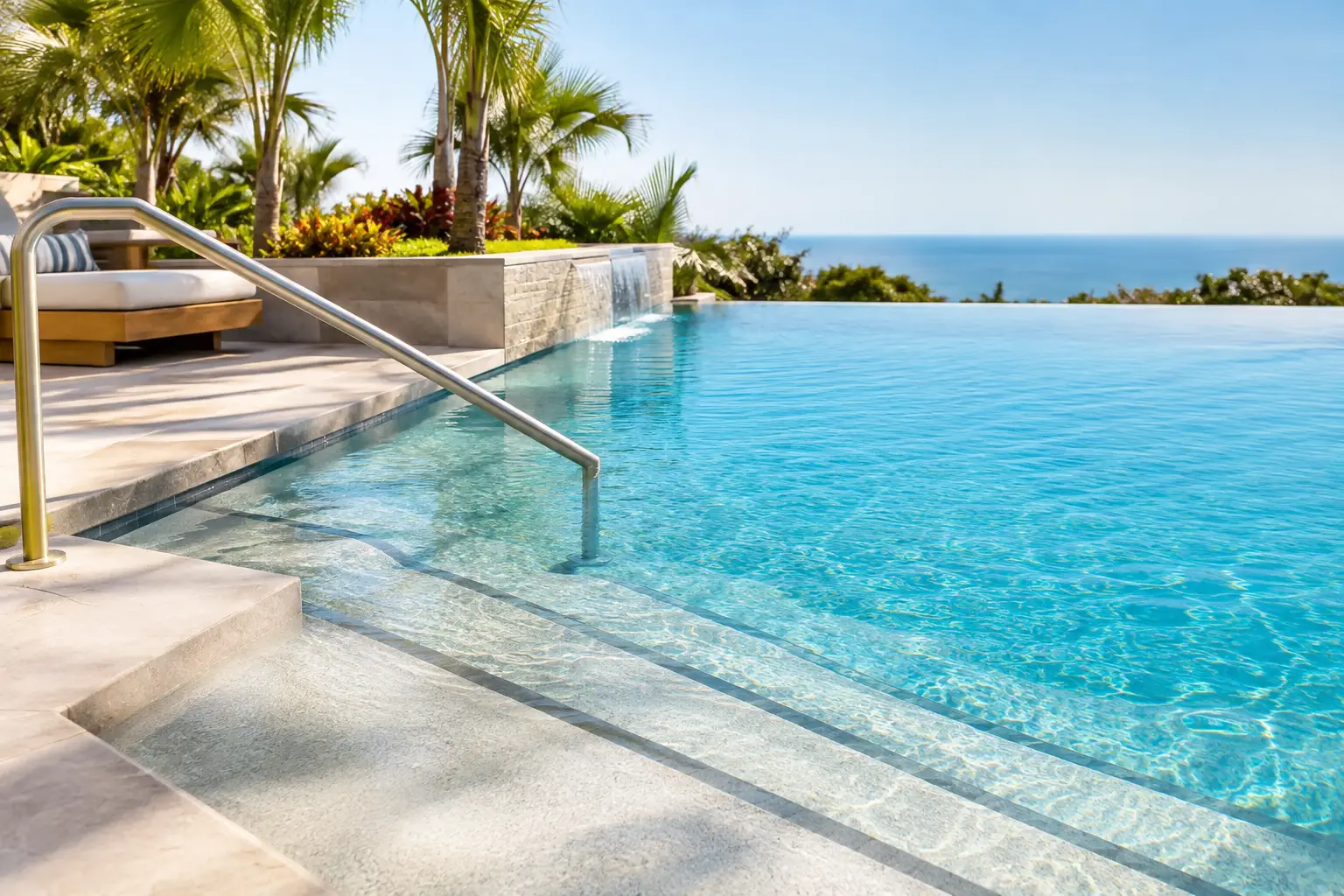
11,000 PSI Foundations by Beyond Backyard Living - Custom Pool
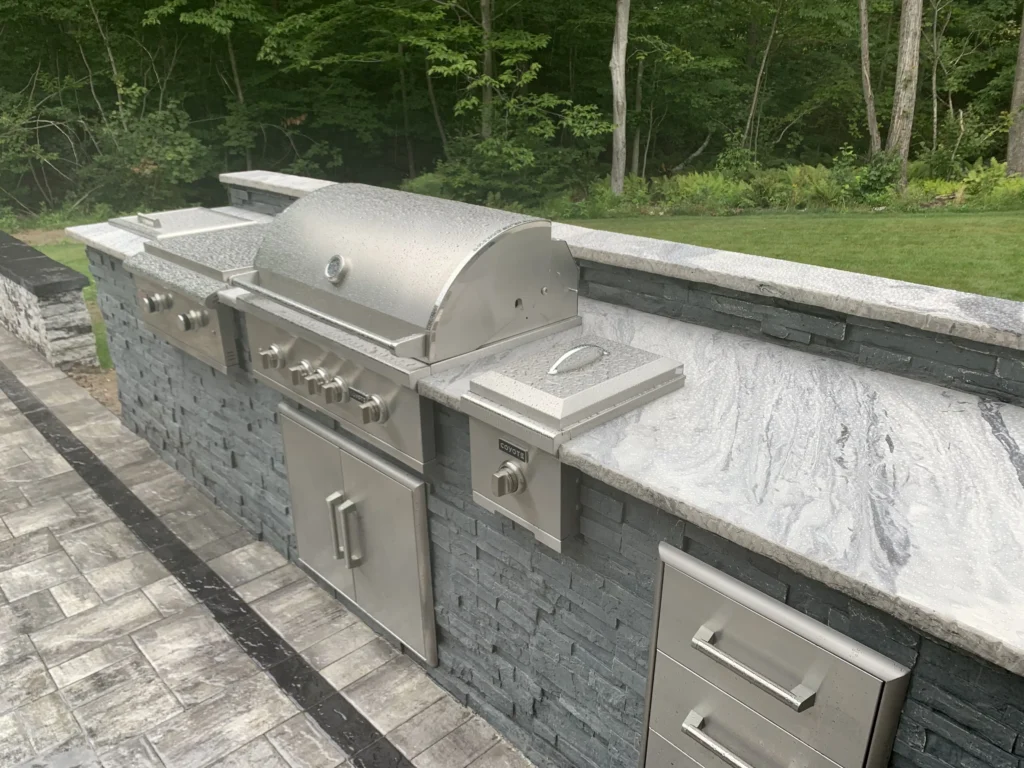
Tampa’s sandy soil presents unique challenges for construction, particularly for outdoor kitchens. The instability of sandy soil can lead to foundation settling and water drainage issues, making it essential to use high-strength concrete to mitigate these risks. Understanding the soil’s characteristics is vital for ensuring a stable foundation that can support outdoor structures.
What Are the Structural Risks of Building on Tampa's Sandy Soil?
Building on sandy soil can pose several structural risks. One significant concern is foundation settling, which occurs when the soil beneath the foundation shifts or compresses. This can lead to uneven surfaces and structural damage over time. Additionally, water drainage issues can exacerbate these problems, as sandy soil does not retain moisture well, leading to potential erosion around the foundation.
Which Engineering Techniques Mitigate Sandy Soil Instability?
To address the challenges of sandy soil, several engineering techniques can be employed. Soil compaction methods enhance the stability of the ground before construction begins, ensuring a solid base for the foundation. The use of pilings can also provide additional support, transferring the weight of the structure deeper into the ground where the soil is more stable. These techniques are essential for creating a durable foundation for outdoor kitchens in Tampa.
What Are the Best Practices for Constructing Outdoor Kitchen Bases with High-Strength Concrete?
When constructing outdoor kitchen bases, following best practices is crucial for ensuring longevity and stability. Proper site preparation, effective curing techniques, and thoughtful design considerations all play a role in the success of the project.
How Does Proper Concrete Curing Enhance Longevity in Humid Climates?
Proper curing of concrete is vital, especially in humid climates like Tampa. Curing allows the concrete to hydrate fully, which enhances its strength and durability. In humid conditions, maintaining the right moisture levels during the curing process is essential to prevent surface cracking and ensure the concrete achieves its maximum potential strength.
Which Custom Design Considerations Optimize Outdoor Kitchen Durability?
Custom design considerations can significantly impact the durability of outdoor kitchens. Selecting high-quality materials that can withstand the local climate is essential. Additionally, optimizing the layout to facilitate proper drainage can prevent water accumulation around the foundation, further enhancing the longevity of the structure.
Why Should Discerning Tampa Homeowners Choose Beyond Backyard Living for Custom Outdoor Kitchens?
Beyond Backyard Living specializes in creating custom outdoor living spaces tailored to the unique needs of Tampa homeowners. Their focus on durable, high-quality materials ensures that outdoor kitchens are built to last, even in challenging environmental conditions.
How Does Expert Craftsmanship Elevate Outdoor Kitchen Foundations?
Expert craftsmanship is crucial in elevating the quality of outdoor kitchen foundations. Skilled labor ensures that every aspect of the construction process is executed with precision, from site preparation to the final finishing touches. This attention to detail results in a foundation that not only meets but exceeds industry standards.
What Benefits Arise from Scheduling a Personalized Consultation?
Scheduling a personalized consultation with Beyond Backyard Living offers several benefits. Homeowners receive tailored solutions that consider their specific needs and preferences. Additionally, consultations help establish a clear budget and timeline, ensuring that the project runs smoothly from start to finish.
With our annual maintenance program, along with Blaze components, we can offer a lifetime warranty on most of the kitchen.
Coastal Flooding Appliance Protection and Recovery Service
Our kitchens are designed and built for the coast, and in the event you are expecting flooding, Beyond Backyard Living offers a specialized service to safeguard your outdoor kitchen appliances. Our team will come out to carefully pull your appliances before the flood arrives. After the event, we will return to pressure wash and reinstall all components, ensuring your kitchen is clean, functional, and ready to use without delay. This proactive approach helps protect your investment from water damage and reduces restoration costs.
Contrasting BBL's 11,000 PSI Monolithic Concrete with Industry-Standard Thin Aluminum Frames
When comparing construction methods, BBL’s 11,000 PSI monolithic concrete stands out against industry-standard thin aluminum frames. The durability differences between these materials are significant, particularly in the context of Florida’s climate.
How Does Aluminum Corrosion Occur in Salt Air?
Aluminum is susceptible to corrosion, especially in coastal areas where salt air is prevalent. This corrosion can weaken the structural integrity of aluminum frames over time, leading to costly repairs or replacements. In contrast, 11,000 PSI concrete offers superior resistance to environmental factors, making it a more reliable choice for outdoor kitchens.
What Are the Risks of Hardie Board Moisture Absorption and Delamination?
Hardie board, while popular for its aesthetic appeal, poses risks related to moisture absorption and delamination. In humid climates, moisture can penetrate the board, leading to swelling and eventual structural failure. This risk is significantly reduced with the use of high-strength concrete, which provides a solid, moisture-resistant foundation.
Why Do These Inferior Methods Fail Within 3-5 Years in Florida?
Many inferior construction methods, such as using thin aluminum frames or Hardie board, often fail within 3-5 years in Florida due to their inability to withstand the harsh environmental conditions. The combination of humidity, salt air, and temperature fluctuations can lead to rapid deterioration, making high-strength concrete the superior choice for long-lasting outdoor kitchens.
The BBL Monolithic Pour Protocol
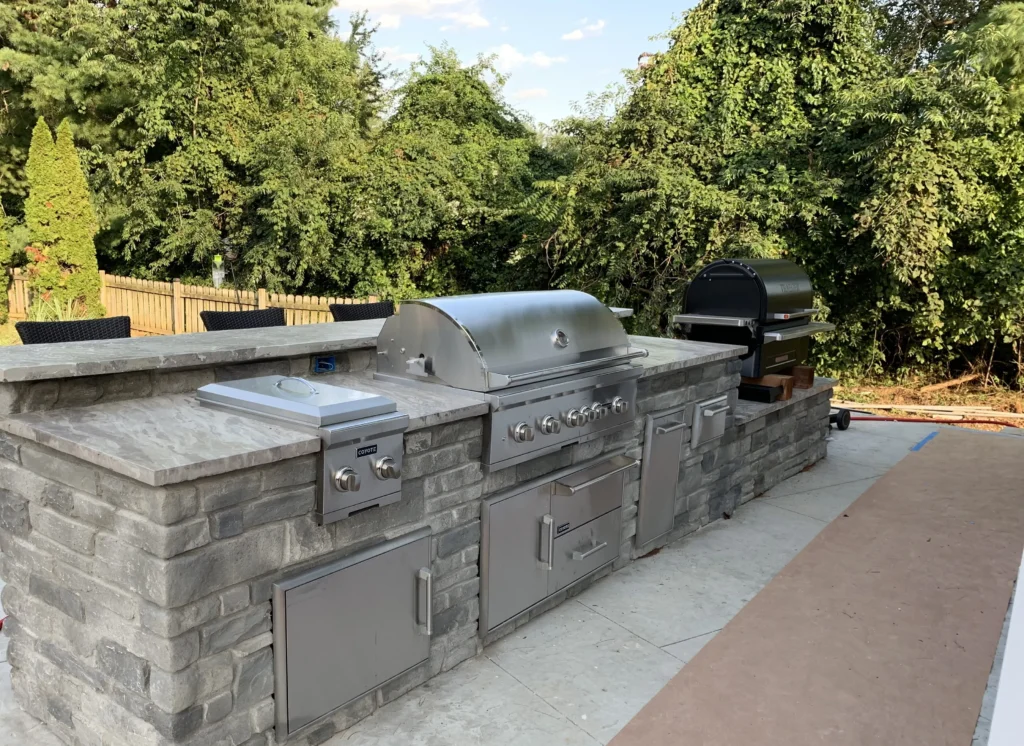
The BBL monolithic pour protocol is designed to ensure the highest quality in concrete construction. This method emphasizes thorough site preparation, reinforcement integration, and strict curing timelines to achieve optimal strength.
How Is Site Preparation Conducted for Sandy Substrates?
Site preparation for sandy substrates involves several critical steps. First, soil testing is conducted to assess the stability and composition of the ground. Next, compaction methods are employed to create a solid base for the concrete pour. This preparation is essential for preventing future settling and ensuring a durable foundation.
How Is Reinforcement Integrated into the Pour?
In place of traditional steel rebar, Beyond Backyard Living employs high-performance fiber reinforcement within the 11,000 PSI concrete mix. These engineered fibers are uniformly distributed throughout the concrete matrix to enhance its tensile strength, reduce cracking, and improve durability. Fiber reinforcement provides superior crack control and structural integrity by mitigating micro-crack propagation, particularly beneficial in high-load applications like outdoor kitchen foundations.
What Are the Curing Timelines for Optimal Strength?
Curing timelines are crucial for achieving optimal strength in concrete. Typically, a curing period of 14 to 28 days is recommended, during which the concrete must be kept moist to facilitate proper hydration. This process is essential for ensuring that the concrete reaches its full strength potential. This is done offsite, in our warehouse.
How Is Quality Assurance Testing Implemented?
Quality assurance testing is implemented throughout the construction process to ensure that all materials and methods meet industry standards. This includes testing the concrete mix for strength and durability, as well as inspecting the site preparation and reinforcement integration. These measures guarantee that the final product is of the highest quality.
CHEMICAL COMPOSITION OF THE 11,000 PSI MIX
At Beyond Backyard Living, the exceptional performance of our 11,000 PSI concrete is rooted in a meticulously engineered proprietary mix design that achieves engineered excellence and lifetime value for outdoor kitchen foundations. This mix not only meets but exceeds demanding structural requirements through the precise combination of advanced materials and controlled chemistry.
Portland Cement Type III (High Early Strength): Our mix utilizes Type III Portland cement, known for its rapid strength development. This facilitates a faster curing process while contributing to the overall high compressive strength essential for enduring Tampa’s dynamic outdoor environments.
Silica Fume (Microsilica) Additives: The inclusion of silica fume acts as a pozzolanic material that fills micro-voids within the concrete matrix. This significantly increases density and reduces permeability, enhancing durability by limiting pathways for moisture and deleterious substances.
Fly Ash: We incorporate Class F fly ash to improve workability and promote long-term strength gain. Fly ash reduces heat of hydration and improves concrete cohesiveness, integral to achieving a homogenous mix with reduced shrinkage risk.
Superplasticizers: To maintain workability without increasing water content, superplasticizers are employed. These chemical admixtures allow the concrete to flow easily during placement while preserving the low water-to-cement ratio that is critical for strength.
Water-to-Cement Ratio: A defining characteristic of our 11,000 PSI mix is a water-to-cement (w/c) ratio maintained below 0.30, in stark contrast to typical mixes ranging from 0.45 to 0.60. This low w/c ratio minimizes porosity and yields a dense, less permeable concrete matrix that contributes directly to enhanced compressive strength and durability.
Together, these carefully selected components harmonize to create a concrete mix that exemplifies the pinnacle of structural integrity and endurance — foundational to Beyond Backyard Living’s commitment to premium craftsmanship and engineered excellence.
HYDROSTATIC PRESSURE RESISTANCE IN SANDY SOILS
Tampa’s sandy soils present a distinct engineering challenge due to their high permeability, which allows groundwater to flow freely beneath foundations. This leads to hydrostatic pressure exerted against foundation walls and bases, which can compromise structural integrity if not properly addressed.
Standard concrete mixes, generally rated at 3,000 to 4,000 PSI, develop micro-pores during curing that allow water infiltration over time. This moisture penetration can cause freeze-thaw damage despite Florida’s relatively mild winters, as even minor temperature fluctuations lead to expansion and contraction cycles within the concrete. Additionally, water ingress promotes efflorescence and accelerates corrosion of embedded reinforcements, jeopardizing long-term durability.
Beyond Backyard Living’s 11,000 PSI concrete is engineered with a dense microstructure resulting in permeability coefficients 10 to 20 times lower than those of standard concrete. This superior imperviousness effectively blocks the migration of water through the foundation, mitigating hydrostatic forces and preventing the typical degradation modes encountered in Tampa’s sandy environments. Such resistance significantly prolongs the foundation’s lifespan and maintains the pristine structural performance expected in premium outdoor kitchens.
EXPANDED MONOLITHIC POUR VS. ALUMINUM FRAMING COMPARISON
For discerning homeowners investing in outdoor kitchens, understanding the material distinctions between BBL’s monolithic 11,000 PSI concrete construction and industry-standard thin aluminum framing is crucial. Below is a comprehensive comparison of critical performance factors:
| Performance Aspect | BBL 11,000 PSI Monolithic Concrete | Industry-Standard Thin Aluminum Frames |
|---|---|---|
| Thermal Expansion Coefficient | Low expansion minimizes stress; solid monolithic structure prevents joint loosening. | Expands roughly twice as much as concrete; leads to fastener loosening and panel separation. |
| Load-Bearing Capacity | Supports heavy granite/quartz countertops (exceeding 20 lbs/sq ft) without sagging due to compressive strength. | Cannot reliably support heavy surfaces; prone to sagging under typical kitchen weights. |
| Corrosion Resistance | Inert chemical composition; virtually immune to galvanic or salt air corrosion. | Susceptible to galvanic corrosion, especially in coastal salt air environments. |
| Fire Resistance | Maintains structural integrity well above 1,500°F. | Melts at approximately 1,220°F; vulnerable to fire damage. |
| Longevity and Warranty | Lifetime structural guarantee reflecting engineered durability. | Warranties typically limited to 5–10 years; rapid degradation common thereafter. |
REINFORCEMENT
Reinforcement engineering is fundamental to the structural excellence of BBL’s monolithic concrete bases. Instead of traditional steel rebar, BBL incorporates high-performance fiber reinforcement directly into the 11,000 PSI concrete mix. This fiber reinforcement provides comprehensive tensile strength and crack control throughout the concrete matrix, improving durability and resistance to tensile stresses.
The uniform distribution of synthetic or steel fibers enhances the composite action of the concrete, reducing the risk of microcracking and settlement-related failures. This approach is particularly advantageous in Tampa’s coastal environment, where corrosion of traditional steel reinforcement could compromise longevity. Fiber reinforcement eliminates corrosion concerns while delivering optimal structural support.
Unlike aluminum framing, which relies entirely on the frame for both tension and compression loads, BBL’s fiber-reinforced concrete system leverages the compressive strength of the concrete and the tensile benefits of fiber integration. This synergy creates a resilient foundation capable of enduring the varied mechanical stresses imposed by Florida’s climate and the weight of premium outdoor kitchen components.
EXPANDED FAQ
How Does Sandy Soil Affect Concrete Curing in Tampa?
Sandy soil can impact concrete curing by affecting moisture retention. In areas with sandy soil, it is essential to monitor moisture levels closely during the curing process to prevent premature drying, which can lead to surface cracking.
Can 11,000 PSI Concrete Withstand Hurricane-Force Winds?
Yes, 11,000 PSI concrete is designed to withstand significant forces, including hurricane-force winds. Its high compressive strength and durability make it an ideal choice for structures in hurricane-prone areas like Tampa.
What Is the Lifespan of a BBL Monolithic Concrete Base?
A BBL monolithic concrete base can last for decades with proper maintenance. Factors such as environmental conditions and construction quality play a role in determining its lifespan, but high-strength concrete is built to endure.
How Does 11,000 PSI Compare to Standard 3,000 PSI Concrete?
11,000 PSI concrete significantly outperforms standard 3,000 PSI concrete in terms of strength and durability. While 3,000 PSI concrete may be suitable for light applications, it lacks the resilience needed for outdoor kitchens exposed to the elements.
Why Does Monolithic Construction Matter for Outdoor Kitchens?
Monolithic construction is crucial for outdoor kitchens as it provides a solid, continuous foundation that minimizes the risk of settling and structural failure. This method ensures that the kitchen remains stable and functional for years to come.
Can 11,000 PSI Concrete Crack?
While 11,000 PSI concrete is exceptionally strong, it is not impervious to cracking. To manage this, Beyond Backyard Living implements controlled joints and monolithic construction techniques that reduce stress concentration points. This engineered approach minimizes random cracking and enhances the structural longevity of the foundation.
How Does BBL's Concrete Compare to Precast Concrete Modules?
Precast concrete modules contain joints and seams that can become points of failure over time, particularly under the stresses of foundation settling and temperature fluctuations. In contrast, BBL pours 11,000 PSI concrete on-site using monolithic techniques, creating a seamless, integrated structure that offers superior durability and reduces risk of structural failure.
What Maintenance Does an 11,000 PSI Concrete Base Require?
BBL’s 11,000 PSI concrete bases require virtually no structural maintenance. For optimal longevity and appearance, sealing the surface every 5 to 7 years is recommended to enhance moisture resistance and surface protection. Structural integrity is designed to last a lifetime, providing homeowners with peace of mind regarding their investment.