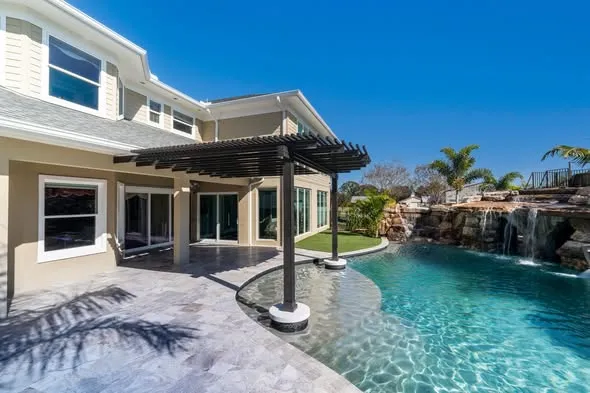
By Terrance Schabilion, Beyond Backyard Living – Custom Pool Builder Spring Hill FL
When it comes to choosing the right materials for “pool decks and patios” in Florida, the debate between travertine and porcelain pavers is significant. Both options offer distinct advantages and each is suited for different needs and preferences, particularly concerning durability, heat resistance, and slip safety. Understanding these characteristics helps homeowners build stunning outdoor spaces that are functional as much as they are beautiful. Florida’s unique climate poses challenges like high temperatures and humidity, making the right choice all the more crucial for long-lasting outdoor installations.
This article will explore the essential comparisons between travertine and porcelain pavers regarding their durability, heat resistance, and slip-reduction properties. We will discuss the suitability of these materials for outdoor environments and the considerations to keep in mind while making your choice. Additionally, we will highlight the high-end, resort-grade transformations that can be achieved with expert installation by professionals like Beyond Backyard Living Creations.
Comparison of Travertine and Porcelain Pavers for Florida Pool Decks and Patios
When considering travertine vs porcelain pavers for Florida pool decks and patios, it’s vital to understand the fundamental characteristics of both materials. Travertine, a natural stone, brings an organic appeal to landscapes with its unique color variations and texture. On the other hand, “porcelain pavers”, made from ceramic, offer high durability and ease of maintenance.
Both options come with their benefits. Travertine provides a unique aesthetic and generally cooler surface temperatures, while porcelain pavers are known for their energy efficiency and resilience against moisture and chemicals. Each material can add value and beauty to outdoor spaces, yet their varied properties require homeowners to consider long-term implications and maintenance needs carefully.
Durability:
Durability is a crucial factor when selecting materials for pool decks. Both travertine and porcelain pavers showcase unique durability characteristics that can impact their performance over time.
Wear Resistance:
Wear resistance is one of the fundamental differences between travertine and porcelain pavers. Travertine is susceptible to acid etching, especially when exposed to harsh chemicals found in pool maintenance products. This makes it less ideal for high-chemical environments unless properly sealed. In contrast, porcelain pavers are highly resistant to moisture and wear, making it essential to have proper “paver drainage” for humid climates and poolside installations.
Lifespan:
When it comes to lifespan, porcelain pavers generally provide an impressive longevity of approximately 25 years due to their dense composition and resistance to damage. Conversely, travertine generally lasts around 10-30 years depending on factors such as installation quality and maintenance; improper sealing can significantly decrease its life expectancy and leave it vulnerable to mold and mildew within a short period.
| Material | Lifespan | Maintenance Needs |
|---|---|---|
| Travertine | 10-30 years | Regular sealing required |
| Porcelain | 25 years | Minimal maintenance needed |
This comparison depicts how porcelain pavers can be the more durable option, especially in terms of longevity, necessitating fewer maintenance interventions compared to travertine.
Heat Resistance:
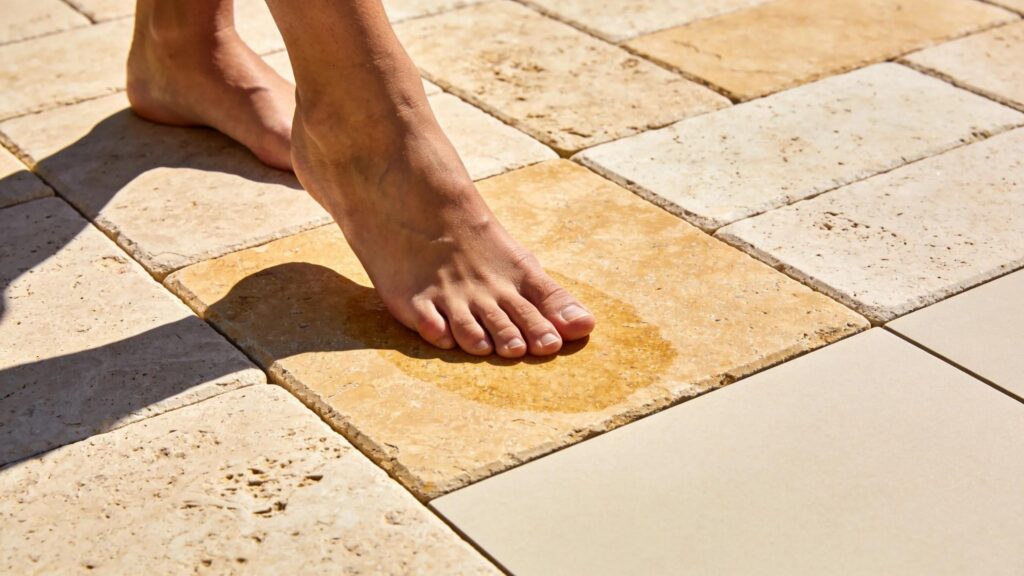
Heat resistance is a key concern for outdoor materials in Florida’s climate. The ability of a surface to remain cool underfoot is desirable, especially around pool areas.
Both travertine and porcelain pavers have characteristics that help them stand up to the heat. Travertine’s natural properties offer slight heat resistance, which helps keep the surface cooler than many other materials. Porcelain, however, maintains a better overall heat resistance due to its denser material structure, preventing excessive heat absorption even under direct sunlight.
Slip Safety:
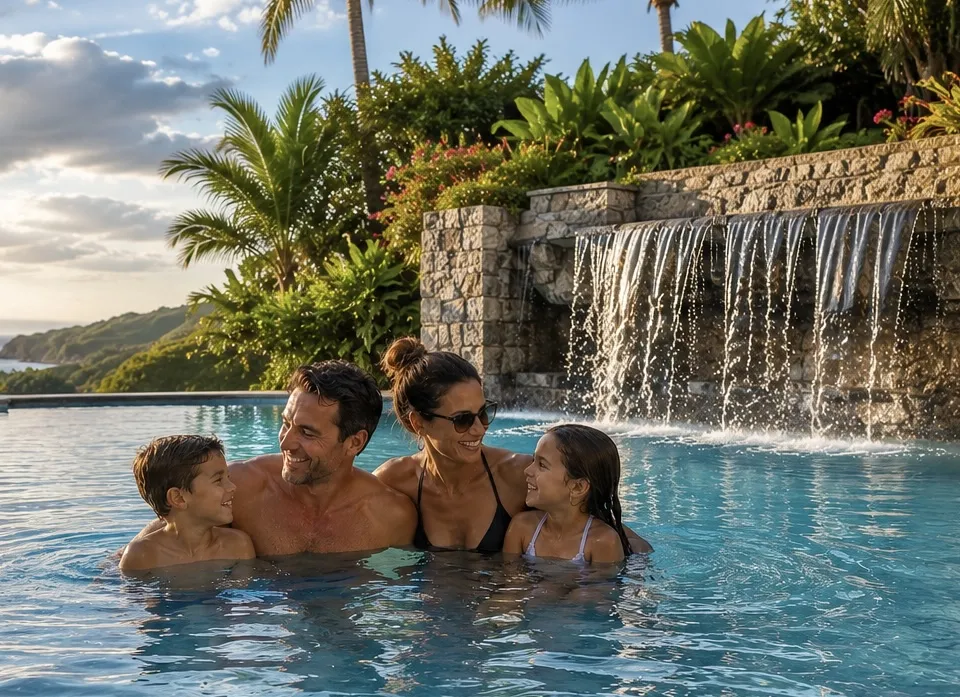
Safety is paramount, especially around pool areas where moisture can create hazardous conditions. The natural texture of travertine provides a slight advantage when it comes to slip resistance, making it a preferred option for many homeowners. However, porcelain pavers can also offer high slip resistance, particularly when textured surfaces are chosen.
Slip Resistance Scores and Safety Standards
Slip resistance is quantified through testing methods, with different ratings indicating a surface’s safety under wet conditions. For optimal safety around pools, pavers with a rating of R10 or R11 are recommended.
- Travertine: Naturally slip-resistant when dry, but may require regular maintenance to retain texture.
- Porcelain: Availability of textured finishes specifically designed to enhance grip, particularly beneficial for pool decks.
The incorporation of these materials into your outdoor design can ensure safety while simultaneously maintaining a stylish aesthetic.
Suitability for Outdoor Environments:
Both travertine and porcelain pavers have distinct environmental benefits in Florida’s harsh climate. Travertine provides a hot-summer surface that remains relatively cool, while porcelain is favored for its design consistency and superior moisture resistance. These features contribute significantly to their suitability for outdoor applications, such as pool decks and patios.
Choosing the right material depends on personal preference, required maintenance, and budget. Beyond Backyard Living Creations specializes in the luxurious options available for both materials, transforming outdoor areas into exquisite, functional living spaces. Their design expertise can guide you in making informed decisions that enhance the beauty and value of your property.
What impact do heat resistant pavers have on outdoor living experience?
The right heat-resistant pavers can enhance your outdoor experience by maintaining a comfortable surface temperature and prolonging your enjoyment of the patio or pool area, even during peak sun hours.
- Comfort: Heat-resistant pavers prevent burns and discomfort, allowing for more enjoyable outdoor gatherings.
- Lifestyle Enhancement: These materials contribute to an inviting atmosphere, encouraging longer outdoor enjoyment.
- Design Versatility: A variety of styles and color options ensure compatibility with diverse design preferences.
Incorporating high-quality pavers can significantly elevate the aesthetics and functionality of your outdoor spaces.
What custom luxury design features enhance pool decks with travertine or porcelain pavers?
Utilizing travertine or porcelain pavers in your pool deck design can offer a rich array of custom features, including:
- Borders and Inlays: Innovative design elements like contrasting borders can enhance the overall visual interest.
- Custom Mosaics: Custom mosaic patterns tailored from pavers can serve as stunning focal points in the design.
- Integrated Lighting: Thoughtful installation of integrated lighting enhances the safety and appeal of the space during the evening hours.
Contact Beyond Backyard Living Creations to explore unique designs that meet your aesthetic goals while ensuring safety and durability.
What role does the Beyond Base Elite System play in installation quality?
Expert installation can significantly impact the performance and longevity of travertine and porcelain pavers. The “Beyond Base Elite System” optimizes the installation process, providing a solid foundation that enhances the stability and durability of your patio or pool deck. Proper installation minimizes shifting and damage, allowing your investment to retain its beauty over time.
This proprietary system ensures that the pavers are laid with precision, reducing the likelihood of issues during their lifespan. Homeowners looking for reliable, beautiful outdoor transformations should consider working with professionals who utilize the best technologies in their installation practices.