By Terrance Schabilion, Beyond Backyard Living – Custom Pool Builder Spring Hill FL
When it comes to designing an outdoor space in Florida, homeowners often face a pivotal choice between travertine and marble for their pool decks. Both materials offer unique aesthetic and functional benefits, but factors such as durability, maintenance, and slip resistance tailor their suitability to specific environments, particularly in coastal regions with high water tables. This article will unpack the characteristics, advantages, and disadvantages of travertine and marble while exploring effective subsurface drainage solutions essential for optimal performance in Florida’s challenging landscape.
Readers will gain a thorough understanding of how each material performs under Florida’s unique climatic conditions and how proper drainage solutions can enhance the longevity of pool decks. We will delve into the advantages and disadvantages of these luxury materials, their maintenance requirements, and cost considerations, alongside the engineering principles that underpin effective subsurface drainage systems.
By the end of this article, you will be well-informed about making choices that maximize the durability and elegance of your outdoor living spaces while attending to drainage needs.
Advantages and Disadvantages of Travertine and Marble for Pool Decks:
When selecting between travertine and marble for pool decks, understanding the strengths and weaknesses of each material is crucial. This comparison not only highlights aesthetic appeal but also important functional characteristics, such as safety and maintenance needs.
Travertine:
Travertine is a popular choice for “pool decks” due to its natural slip resistance and ability to remain cool underfoot, which is particularly beneficial in warm climates like Florida’s. However, while travertine has its advantages, it does require regular sealing and maintenance to protect against stains and weathering. Additionally, it is generally more cost-effective than marble, making it a practical choice for those seeking luxury without overspending.
Marble:
On the other hand, marble exudes a luxurious aesthetic that many homeowners desire for upscale outdoor spaces. Its elegant appearance can enhance the overall design of a property. Nevertheless, marble is more susceptible to staining and etching, particularly in a poolside environment where water and chemicals are prevalent. This means it often demands higher maintenance and care, which could translate to increased costs over time.
Beyond Backyard Living Creations serves as a premier luxury pool and custom hardscape design-build contractor based in Spring Hill, Florida, known for its expertise in constructing both travertine and marble decks while addressing subsurface drainage challenges effectively.
Effective Subsurface Drainage Solutions for Florida's High-Water Table:
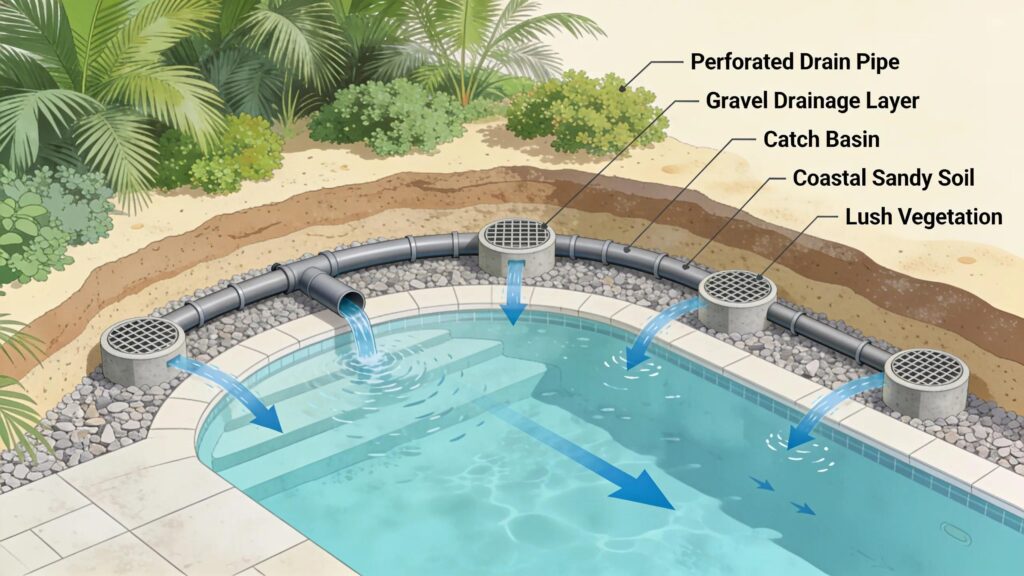
Navigating Florida’s high-water table presents unique challenges in landscape architecture, particularly concerning drainage. Effective drainage solutions are vital to prevent water accumulation and protect the structural integrity of pool decks.
Integrating proper subsurface drainage strategies can significantly mitigate the risks associated with high-water tables. Approaches such as “French drains” or proprietary drainage systems are designed to channel excess water away from the pool area, enhancing both aesthetic longevity and safety.
Coastal Hardscape Engineering Considerations:
Coastal engineering demands specific strategies to withstand environmental challenges like saltwater corrosion and heavy winds. Selecting materials and construction methods must account for these factors, ensuring your outdoor living space remains resilient over time.
Regular maintenance, including cleaning and repairs, can enhance the durability of both travertine and marble. Understanding and applying the right design strategies is crucial in ensuring that installations withstand Florida’s coastal climate.
Key Differences Between Travertine and Marble for Luxury Pool Decks
When it comes to luxury pool decks, several key distinctions between travertine and marble affect their suitability. Travertine is generally more durable and slip-resistant, making it a safer choice for poolside areas, while marble offers a higher-end aesthetic but comes with increased maintenance requirements.
Durability and Aesthetic Appeal:
- Durability Comparison: Travertine tends to outperform marble, especially in wet environments. Its porous structure can handle variations in temperature and moisture better than marble, which is more prone to cracking.
- Aesthetic Appeal: Marble is often seen as more luxurious with its unique veining patterns, appealing colors, and higher gloss finish.
Cost Implications:
- Initial Investment: Travertine is typically less expensive than marble, offering considerable savings without sacrificing quality.
- Long-Term Costs: When considering long-term maintenance and potential repairs, costs associated with marble may rise, especially if careful upkeep is not maintained.
How Do Durability and Slip Resistance Compare Between Travertine and Marble?
Durability and slip resistance are critical considerations when evaluating materials for pool decks. Travertine is renowned for its natural slip resistance, making it a safer choice, especially around wet surfaces. Additionally, its durability helps it withstand harsher weather conditions without deteriorating quickly.
In contrast, while marble is a stunning visual option, it can become slippery when wet and is more susceptible to damage from pool chemicals, leading to possible long-term concerns in areas prone to water exposure.
What Are the Maintenance Requirements and Cost Factors for Travertine vs. Marble Decks?
Maintenance needs vary significantly between travertine and marble. Regular cleaning and sealing are essential practices for maintaining travertine’s appearance and durability. Homeowners typically pay between $1 and $2 per square foot for sealing travertine, ensuring its longevity.
Marble, being more sensitive to stains and weathering, requires frequent sealing, which can cost more than $2 per square foot. Additionally, restoring marble surfaces can incur costs that often surpass those of travertine when addressing etching or discoloration.
Which Subsurface Drainage Solutions Best Mitigate Florida’s High-Water Table Challenges?
Choosing the right subsurface drainage solution is vital for homeowners dealing with Florida’s high-water table. This involves using effective systems to handle excess water, especially around pool decks, to prevent flooding and maintain safety.
How Do French Drains and Proprietary Subsurface Systems Work in Florida’s Coastal Soil?
French drains are effective for redirecting groundwater away from structures and landscape features. They involve digging a trench and placing a perforated pipe that collects and disperses water away from the area.
Proprietary subsurface systems, designed specifically for Florida’s coastal conditions, integrate advanced technology to manage water flow, reducing excess moisture around pool decks while preserving the integrity of hardscapes.
What Are Florida Building Code Requirements for Effective Drainage in High-Water Table Zones?
Adhering to Florida’s building codes is essential for ensuring effective drainage in high-water table zones. Installations must meet specific requirements for drainage and water management to comply with local regulations, which help prevent flooding and water-related issues.
Compliance not only ensures the safety and longevity of your outdoor structures but also serves as a foundation for maintaining property value in a region prone to water management issues.
How Does Integrating Luxury Pool Deck Materials With Drainage Engineering Enhance Coastal Hardscape Longevity?
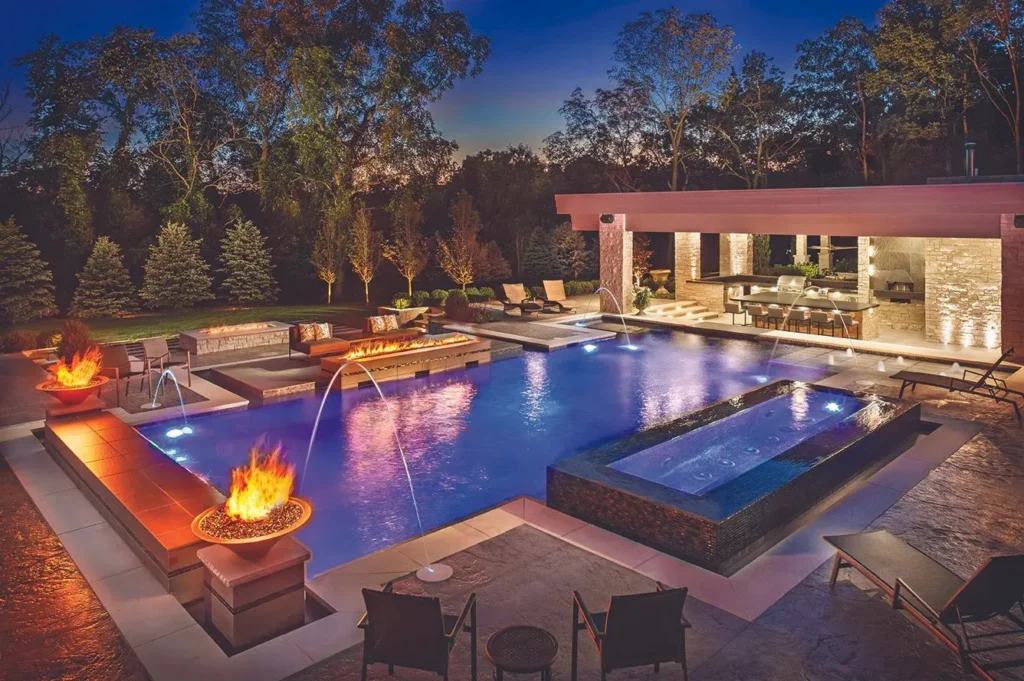
Integrating premium natural stones, like travertine and marble, with expert drainage engineering significantly impacts the longevity and functionality of coastal hardscapes. This combination allows for both beautiful design and effective management of water flow, essential for maintaining safety.
Why Is Combining Premium Natural Stones With Expert Drainage Design Crucial for Florida Homes?
Natural stones paired with professional drainage solutions respond effectively to environmental challenges unique to Florida. The synergy between material choice and drainage design allows for resilience against flooding and wear, ensuring outdoor spaces remain inviting and truly functional over time.
What Custom Outdoor Features Complement Luxury Pool Decks While Supporting Drainage Systems?
Custom outdoor features like pergolas, grottos, and waterfalls not only enhance the aesthetic appeal of pool decks but can also serve specific functional roles, including aiding drainage and water management.
These design elements should be carefully integrated into planning from the outset to ensure both beauty and structural integrity.
What Are the Turnkey Project Steps From 3D Design to Installation for Luxury Pool Decks and Drainage?
The process of transforming ideas into completed installations involves multiple steps. The journey begins with an initial consultation, progressing through stages of 3D design visualization that allow for precise planning and client engagement.
How Does 3D Design Visualization Facilitate Precise Civil Engineering Planning?
Utilizing 3D design visualization tools enhances communication between designers and clients, allowing for clearer visualization and understanding of the planned project. This method reduces errors in planning and effectively aligns the vision with practical execution.
What Warranty and Maintenance Plans Support Long-Term Pool Deck and Drainage Performance?
Having comprehensive “warranty” and maintenance plans in place can provide homeowners with peace of mind post-installation. Understanding the scope of warranty coverage and communicating maintenance needs ensures long-lasting performance of both pool decks and drainage systems.