By Terrance Schabilion, Custom Pool Builder Spring Hill FL
When choosing materials for pool decks in Florida, the climate’s impact on heat absorption and durability is crucial. Pool owners often face the decision between travertine and concrete pavers, each offering unique advantages. In this article, we’ll delve into the heat resistance and durability of these materials, along with installation considerations to help you make an informed choice. The Florida sun can create intense heat in outdoor areas, making the selection of the right paver essential for comfort and longevity. Additionally, understanding the maintenance requirements and aesthetic appeal of both options will guide your decision-making process. By examining these elements, you’ll be well-equipped to choose the best pavers for your luxury outdoor space.
Heat Resistance:
Heat resistance is a critical factor in selecting pool deck materials for Florida’s warm climate. The intense sun exposure can significantly impact the comfort of walking on these surfaces, especially around a pool area. Travertine pavers tend to have superior heat resistance compared to concrete pavers. The natural stone structure of travertine allows it to retain less heat, resulting in a cooler surface, which is especially beneficial for barefoot walking in poolside settings. Concrete, while popular and durable, can absorb heat and become uncomfortable to the touch during hot days.
What are the heat resistance differences between travertine and concrete pavers in Florida?
Travertine has a unique porous surface that helps dissipate heat more effectively than concrete. Studies indicate that travertine can remain significantly cooler than concrete pavers, making it a preferred choice for areas exposed to direct sunlight. This is particularly important for pool decks, where comfort and safety should be prioritized, ensuring that feet do not get burnt on hot surfaces.
How does Florida's climate affect pool deck paver heat retention?
The Florida climate, known for its high humidity and persistent heat, exacerbates the issue of heat retention. Pavers that absorb high temperatures may lead to discomfort, making travertine a more favorable option for residential and commercial pool decks. Besides heat absorption, the cooling features of travertine contribute significantly to the overall user experience around pools.
Why are travertine pavers preferred for heat resistance around pools?
Travertine pavers are often the material of choice in high-end installations around pools due to their ability to remain cooler underfoot. This quality not only enhances comfort but can also translate to a safer environment for children and pets. The luxurious appearance of travertine adds aesthetic value while providing practical benefits in terms of heat resistance.
Durability:
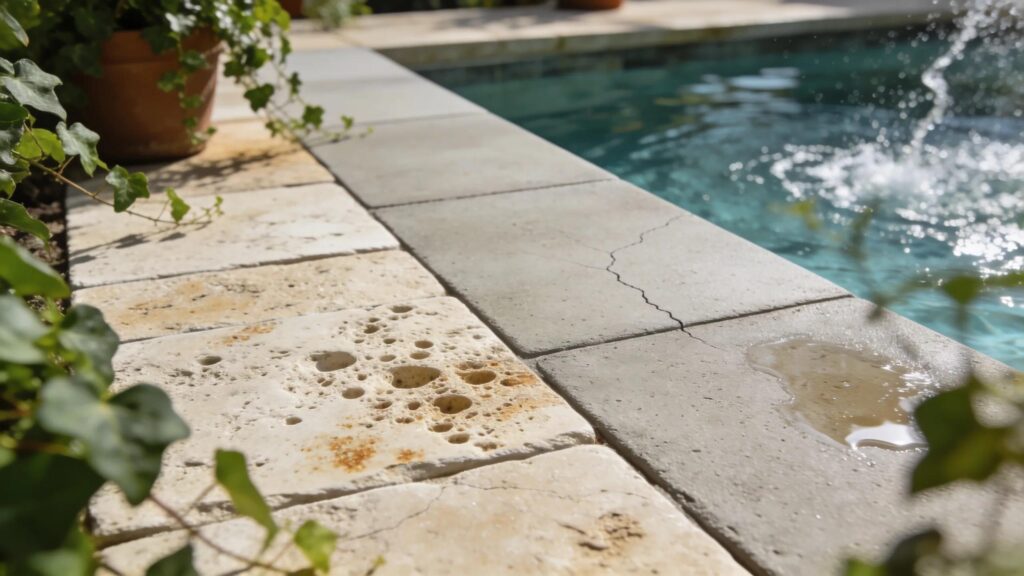
When considering paver options for pool decks, durability is paramount. Florida’s climate, which includes intense heat, humidity, and occasional storm events, necessitates pavers that can withstand such conditions. Travertine exhibits excellent durability due to its natural stone structure, making it less prone to cracking and chipping as compared to concrete pavers. Additionally, travertine is resistant to fading, which can impact the long-term appearance of pool decks.
Research into aggregate materials reveals that natural stone options often provide superior wear resistance in outdoor environments compared to standard concrete alternatives.
Durability Comparison: Travertine vs. Concrete Aggregate Performance
On the other hand, limestone and travertine-based pervious concrete samples were more durable against wear.
The effects of aggregate and fiber characteristics on the properties of pervious concrete, BF Ozel, 2022
How do travertine and concrete pavers compare in durability for Florida pool decks?
Concrete pavers can also be durable; however, they may require more maintenance over time. They are prone to cracking under extreme weather conditions, particularly if improperly installed or if the subgrade is inadequate. Conversely, travertine’s inherent characteristics offer a natural resilience that can outperform concrete over time, particularly in a challenging climate like Florida’s.
What factors influence the longevity of travertine pavers in outdoor Florida settings?
The longevity of travertine pavers is influenced by several factors, including proper installation and regular maintenance. Ensuring a solid subgrade and using quality sealants can significantly extend the lifespan of travertine. The installation of quality pool deck paver systems plays a crucial role here. Learn more about advanced installation systems that significantly extend the lifespan of pavers.
Which concrete paver properties enhance durability in Florida’s climate?
Concrete pavers that are designed with high-quality aggregates and advanced curing techniques can also provide significant durability. Features such as reinforced concrete mixes and surface treatments enhance the longevity of concrete pavers, making them a viable option when installed correctly for pool areas. Adequate drainage systems are important to complement these pavers, as proper water management helps prevent erosion or shifting. Explore effective drainage solutions crucial for Florida pool deck longevity.
Installation Considerations:
The installation of pool deck pavers is critical to their performance and longevity. Both travertine and concrete pavers require specific techniques to ensure they are laid correctly. Travertine pavers, known for their aesthetic appeal, require a solid, leveled base for proper drainage and weight distribution.
What are the key features of pool deck paver installation systems in Florida?
High-quality installation systems for pool decks often incorporate specialized base materials that provide stability and drainage. In Florida, the Beyond Base Elite System enhances the foundational stability of both travertine and concrete pavers, ensuring they remain secure over time.
How does the Beyond Base Elite System improve foundational stability?
The Beyond Base Elite System utilizes advanced engineering that offers superior weight distribution across the paver surface, reducing the risk of shifting and settling. This system is designed specifically for high-end installations, contributing to a flawless finish and durability.
What drainage solutions are essential for Florida pool deck longevity?
Effective drainage solutions are crucial for the longevity of pool deck pavers. Proper grading and the installation of adequate drainage systems help redirect water away from the pool area, preventing water accumulation that could lead to shifting or structural issues.
Maintenance Requirements:
Maintaining pool deck pavers is essential to ensure they last for many years. Different materials have varying maintenance needs, and understanding these requirements can help homeowners make informed choices.
What are the recommended cleaning methods for each paver type?
For travertine, it is recommended to use a gentle cleanser that does not strip the natural sealant, applied with a soft brush. This method ensures the natural finish is preserved while cleaning effectively. In contrast, concrete pavers may require pressure washing to remove embedded dirt and debris, followed by sealing to protect against stains and fading.
What is the frequency of sealing and upkeep?
Travertine pavers typically need to be sealed every 1-2 years, depending on foot traffic and exposure to the elements. Concrete pavers, on the other hand, may need sealing more often, especially after pressure washing, to maintain their appearance and performance. For continued protection, consider an annual protection plan to ensure lasting durability.
What are the signs that maintenance is needed?
Signs that maintenance is needed include visible staining, discoloration, or the presence of loose pavers. For travertine, the loss of sealant gloss or increased dirt accumulation may indicate the need for a thorough cleaning and resealing.
Aesthetic Appeal:
The visual appeal of pool deck pavers plays a significant role in enhancing outdoor spaces. Homeowners often prioritize aesthetics while ensuring materials remain functional in high-traffic areas like pool decks.
What color and design options are available with travertine and concrete?
Travertine pavers are available in a variety of natural stone colors and textures, ranging from creamy beige to rich browns, offering a timeless look that complements diverse architectural styles. Concrete pavers, on the other hand, provide the flexibility of color and pattern customization, allowing homeowners to create unique designs that reflect their personal tastes.
How do aesthetic choices impact property value?
Investing in aesthetically pleasing materials like travertine can elevate property values, as they set apart luxury properties in competitive markets. Properly designed outdoor spaces create inviting environments that appeal to potential buyers, enhancing overall interest.
What are user preferences in visual appeal?
Users often prefer the classic and elegant appearance of travertine, while others might favor the modern versatility offered by concrete. Ultimately, the choice hinges on personal preference, desired ambiance, and overall design goals for the outdoor space. For extensive options and inspiration, explore all types of paver solutions.
| Material | Advantage | Maintenance Requirement |
|---|---|---|
| Travertine | Superior heat resistance | Seal every 1-2 years |
| Concrete | Customizability in design | More frequent sealing needed |
This table summarizes the strengths and maintenance needs of travertine and concrete pavers, aiding in decision-making for luxury pool deck installations.
| Installation Type | Required Tools | Common Pitfalls |
|---|---|---|
| Travertine | Leveling tools | Incorrect base preparation |
| Concrete | Concrete mixer | Not allowing adequate curing |
Understanding the tools and potential pitfalls can enhance the installation process and ensure a successful outcome. Properly installed pool decks offer beauty and functionality.
Choosing between travertine and concrete pavers involves weighing the unique benefits and considerations of each material. The natural heat resistance of travertine makes it a popular choice in Florida’s hot climate, while concrete offers versatility and a myriad of design options. Integrating high-quality installation systems and understanding maintenance requirements will further ensure the longevity and aesthetic appeal of your outdoor spaces. Furthermore, ensure your choice aligns with long-term value, consider the lifetime settlement warranty for peace of mind.