A pool should feel like the natural center of your backyard, whether the afternoon calls for quiet floating, family cannonballs, or dinner guests lingering beside the water after sunset. That is why the choice between saltwater versus chlorine pools deserves more thought than a quick comparison of upfront prices. Both systems sanitize the water effectively. The better fit comes down to the experience you want, the maintenance you are comfortable managing, and how the pool will live within the larger design of your outdoor retreat.
For many homeowners, a saltwater system delivers the softer, resort-inspired feel they imagine. For others, a traditional chlorine pool offers the direct control and straightforward chemistry that makes ownership feel simpler. The right answer is rarely one-size-fits-all.
Saltwater Versus Chlorine Pools: The Key Difference
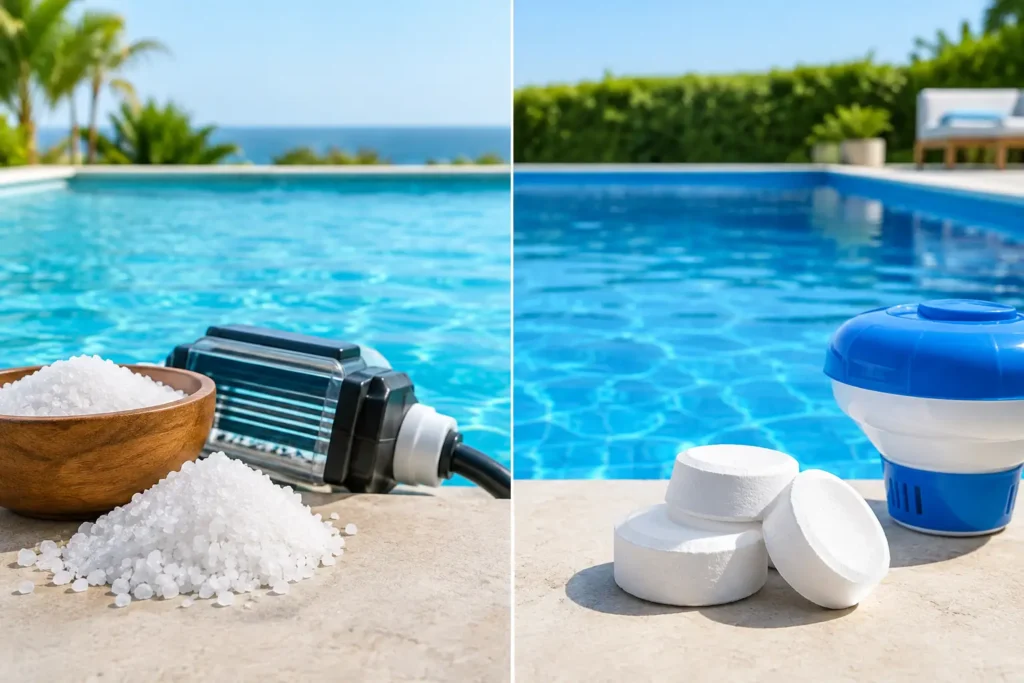
The most common misconception is that saltwater pools do not use chlorine. They do. A saltwater pool uses a salt chlorine generator, often called a salt cell, to convert dissolved salt into chlorine. That chlorine sanitizes the water just as it does in a conventional pool, but it is generated gradually and continuously rather than being added primarily as tablets, liquid, or granular products.
A traditional chlorine pool relies on manually added chlorine to maintain the proper sanitation level. The pool still requires regular testing and balancing, but the owner or service professional directly adjusts chlorine as needed.
In practical terms, both options can produce clear, clean, inviting water. The difference is in how the chlorine gets there and what that means for water feel, ongoing care, equipment, and long-term planning.
The Saltwater Experience: Softer Water, Automated Chlorine
A well-balanced saltwater pool is often favored for its gentler feel. The water can feel silkier on the skin, and many swimmers report less of the sharp chlorine odor associated with heavily treated pools. It can also be more comfortable for frequent swimmers, especially in a household where the pool is part of everyday life through a long Sunbelt season.
Because the salt cell creates chlorine steadily, sanitation levels tend to be more consistent. That can reduce the peaks and valleys that occur when chlorine is added only once or twice a week. It does not mean the pool runs itself, however. Saltwater systems still need water testing, pH management, seasonal adjustments, filter cleaning, and occasional shock treatment.
Saltwater pools usually cost more to install because of the generator and related equipment. The cell also has a finite life span and will eventually need replacement. Depending on use, water chemistry, and maintenance habits, that replacement can become a meaningful long-term expense.
There is also a design consideration that matters in a custom outdoor environment: salt can be hard on certain materials if details are overlooked. Premium porcelain, natural stone, coping, metal fixtures, waterline tile, and adjacent hardscape should be selected and installed with the pool system in mind. Proper material choices, drainage, sealing where appropriate, and craftsmanship help protect the finished space from avoidable wear.
When Saltwater Makes Sense
Saltwater is often an excellent choice for homeowners who want a polished, low-touch swimming experience and expect the pool to see frequent use. It fits beautifully with a resort-style design where the water is not merely an amenity but a daily invitation to step outside and relax.
It is especially appealing if you value automation and are willing to invest in quality equipment from the start. A saltwater system can make pool care feel less hands-on, but it rewards attentive monitoring rather than neglect.
Traditional Chlorine Pools: Direct, Flexible, and Familiar
A traditional chlorine pool generally has a lower initial equipment cost. It does not require a salt cell, and its operating principles are familiar to virtually every pool service professional. If a water test shows chlorine is low, it can be raised quickly and precisely with the appropriate product.
That direct control can be useful after a heavy weekend of entertaining, a major rainstorm, or a stretch of intense summer heat. Chlorine demand changes with bather load, sunlight, organic debris, and water temperature. Conventional systems allow quick adjustments without relying on a generator’s production capacity.
The trade-off is more regular chemical handling. Chlorine must be added consistently, stored safely, and managed carefully. When chemistry falls out of balance, swimmers may notice stronger odor, dry skin, irritated eyes, or dull-looking water. Those problems are not inevitable with a chlorine pool – they are typically signs that the water needs attention.
A traditional chlorine system can be a smart fit for homeowners who prefer a straightforward setup, want to minimize upfront costs, or plan to rely on weekly professional service. It is also practical for pools with unusual usage patterns, such as a second home that is quiet for long stretches and busy during holidays.
Chlorine Does Not Have to Mean Harsh Water
The familiar smell many people call “chlorine” is often caused by chloramines, which form when chlorine binds with contaminants in the water. A properly maintained chlorine pool should not smell overpowering or leave swimmers feeling as though they have spent the day in a public facility.
Good circulation, effective filtration, balanced pH, and routine sanitation make a substantial difference. The system matters, but attentive care is what creates water that looks brilliant and feels inviting.
Comparing Cost Beyond the Initial Installation
The saltwater versus chlorine pools decision should be evaluated over years, not only at installation. A chlorine pool often costs less to equip at the beginning, while a saltwater pool typically requires a higher initial investment for its generator. Over time, chemical costs, electricity use, service needs, and replacement parts can narrow or shift that gap.
Saltwater owners may purchase fewer routine chlorine products, but they should budget for salt cell replacement and periodic inspections. Chlorine pool owners may spend more on sanitizer and the labor involved in regular chemical additions, especially if they maintain the pool themselves.
Neither system is automatically the lower-cost choice in every setting. A shaded pool behaves differently from one that receives full afternoon sun. A pool used by two adults has different demands than one hosting a full house of kids, friends, and weekend gatherings. Your pool professional can estimate operating expectations based on the pool size, equipment plan, and intended lifestyle.
Design Details That Affect the Right Choice
The pool’s sanitization system should support the entire backyard composition. If your vision includes a raised spa spilling into the pool, a sun shelf with in-water loungers, fire features, a waterfall, or a fully equipped outdoor kitchen nearby, equipment planning needs to happen early. Beautiful results come from coordinating the hidden mechanics with the visible details.
For saltwater pools, the conversation should include finish materials and nearby metals. Not every stone, tile, coping material, or architectural detail performs the same way around salt exposure. This does not limit creativity. It simply calls for knowledgeable selections and disciplined installation.
For conventional chlorine pools, equipment access and chemical storage deserve equal attention. Products should be kept securely away from heat, moisture, and entertaining areas. A thoughtfully designed equipment zone keeps the operational side of the pool discreet while preserving the refined atmosphere of the backyard.
Beyond Backyard Living approaches these choices as part of the full experience, not as an isolated equipment decision. The water, hardscape, shade structures, cooking areas, lighting, and gathering spaces should all work together as one destination.
Which Pool System Fits Your Backyard Lifestyle?
Choose saltwater if your priority is a softer water feel, steady chlorine generation, and an elevated, low-touch ownership experience. Be prepared for a higher initial equipment investment, ongoing water-balance checks, and eventual salt cell replacement.
Choose traditional chlorine if you want lower upfront equipment costs, immediate chemical control, and a familiar maintenance model. It can be an excellent system for an actively managed pool and can deliver exceptionally comfortable water when chemistry is properly maintained.
The best decision is not about declaring one system superior. It is about matching the system to how you live. Think about who will swim, how often you host, whether you want to manage care personally or use professional service, and which material palette will bring your dream escape to life.
A beautiful pool begins with clear water, but it becomes unforgettable when every choice supports the moments you want to create around it – slow mornings on the patio, laughter from the spa, and a backyard that makes it easy to gather long after the sun goes down.