A beautifully designed resort style backyard waterfall changes the way a backyard feels before anyone takes a seat. The sound softens traffic and neighborhood noise. Moving water catches the light. Stone, planting, and gathering spaces suddenly feel connected by a single idea: this is a place made for slowing down, hosting well, and staying outside a little longer.
The difference between a water feature that feels like an add-on and one that feels like a private resort is not simply its size. It is the way the waterfall belongs to the architecture, the pool or patio, the views from inside the home, and the life you want to live outdoors.
Start With the Experience, Not the Waterfall
Before selecting stone or deciding how high the falls should be, consider the moments the space should support. A waterfall beside a pool may create a lively focal point for family afternoons. A quieter spillway near a covered patio can set the tone for dinners that stretch into the evening. A dramatic rock waterfall visible from the kitchen or primary suite can make the backyard feel finished every day of the year.
This is why the best designs begin with a complete outdoor plan. The waterfall has a job beyond looking beautiful. It may screen an unwanted view, create privacy, establish a destination at the far end of the yard, or become the visual bridge between an elevated patio and a lower pool terrace.
For homeowners who entertain often, placement matters as much as appearance. Guests should be able to hear the water without needing to raise their voices. The feature should enhance the view from seating areas rather than block sightlines across the yard. When it is thoughtfully positioned, a waterfall becomes part of the hospitality of the space.
What Makes a Resort Style Backyard Waterfall Feel Authentic
Luxury outdoor spaces feel effortless because the design decisions work together. A resort style backyard waterfall typically combines natural material, intentional scale, layered landscape lighting, and enough surrounding space for the feature to breathe.
Scale Creates Presence
A waterfall that is too small for its setting can disappear against a large pool, broad patio, or two-story home. One that is oversized may overwhelm the rest of the backyard. The right proportion depends on the size of the property, the elevation changes available, and the role the water feature plays in the overall design.
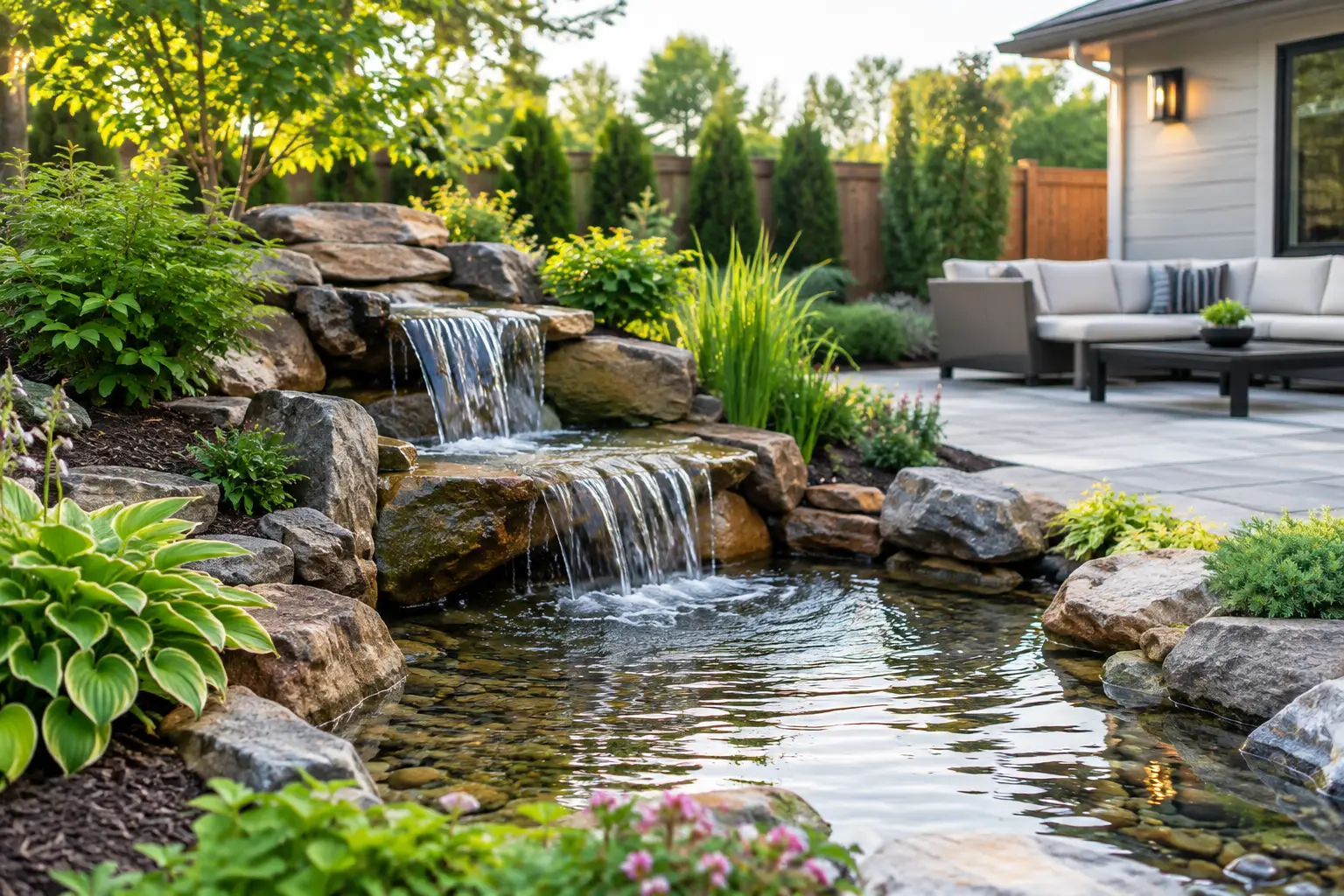
A compact courtyard may call for a refined sheet waterfall, a sculptural wall scupper, or a raised basin with a clean, architectural edge. A larger backyard may have room for natural boulders, multiple cascades, and a planted hillside that makes the water appear to emerge from the landscape itself. Neither approach is automatically better. The most compelling choice is the one that fits the home and supports the intended atmosphere.
Sound Should Be Designed, Too
Waterfall sound is one of the most overlooked design details. A high, energetic drop creates a brighter and more pronounced sound. Wide, shallow flows tend to create a calmer wash. Several smaller cascades can add texture without turning the patio into a loud environment.
For a property close to a busy road, a stronger water sound can offer welcome acoustic relief. For an intimate lounge beside the home, a softer flow may be more comfortable for conversation. Pump selection, water volume, drop height, and the stone surfaces beneath the falls all affect the final sound. This is a design decision worth making early, not after construction is complete.
Materials Need a Shared Language
The most successful waterfalls do not look imported from another property. Their stone color, coping, tile, pavers, and nearby architectural details feel related. A contemporary home may pair best with linear stone, porcelain, smooth concrete, and a crisp water edge. A more organic setting may invite weathered boulders, natural flagstone, textured planting, and irregular cascades.
That does not mean every surface should match exactly. Contrast gives a luxury landscape depth. The goal is coordination: warm-toned stone that complements the patio, pool tile that catches the same undertones, and planting that softens hardscape without hiding craftsmanship.
Build the Waterfall Into the Backyard’s Main Destinations
A waterfall is most memorable when it participates in the rest of the outdoor environment. Rather than placing it in a leftover corner, connect it to the spaces where people naturally gather.
Beside or Within a Custom Pool
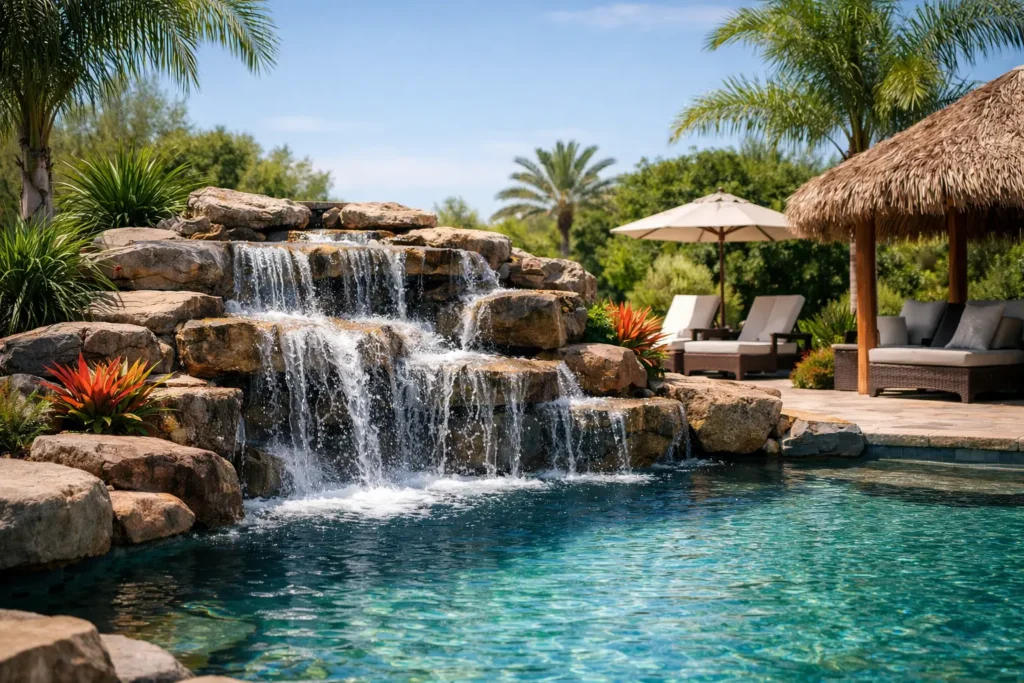
Pool waterfalls are a classic choice because they bring movement to an otherwise still water surface. They can be formed from natural rock, built into a raised spa wall, integrated with a tanning ledge, or designed as a clean cascade from a formal wall. A grotto-style feature can be playful for families, while a stepped stone waterfall adds a more natural, estate-like presence.
The trade-off is maintenance access and visibility. Dense rockwork can look spectacular, but mechanical equipment and plumbing still need to be serviceable. A skilled design-build team plans the beauty and the behind-the-scenes systems together, preserving the finished look without making future care difficult.
Along a Patio or Outdoor Kitchen
Not every resort experience needs a pool. A freestanding waterfall wall near an outdoor kitchen or dining terrace can create an elegant backdrop for entertaining. It offers movement and sound while establishing a sense of enclosure, especially on more open lots.
In this setting, the feature should not compete with the cooking and dining zones. It may work best as a visual anchor behind a lounge area, near a fireplace, or at the end of a walkway that draws guests farther into the landscape. Evening lighting can transform this kind of waterfall into a focal point long after sunset.
At a Change in Elevation
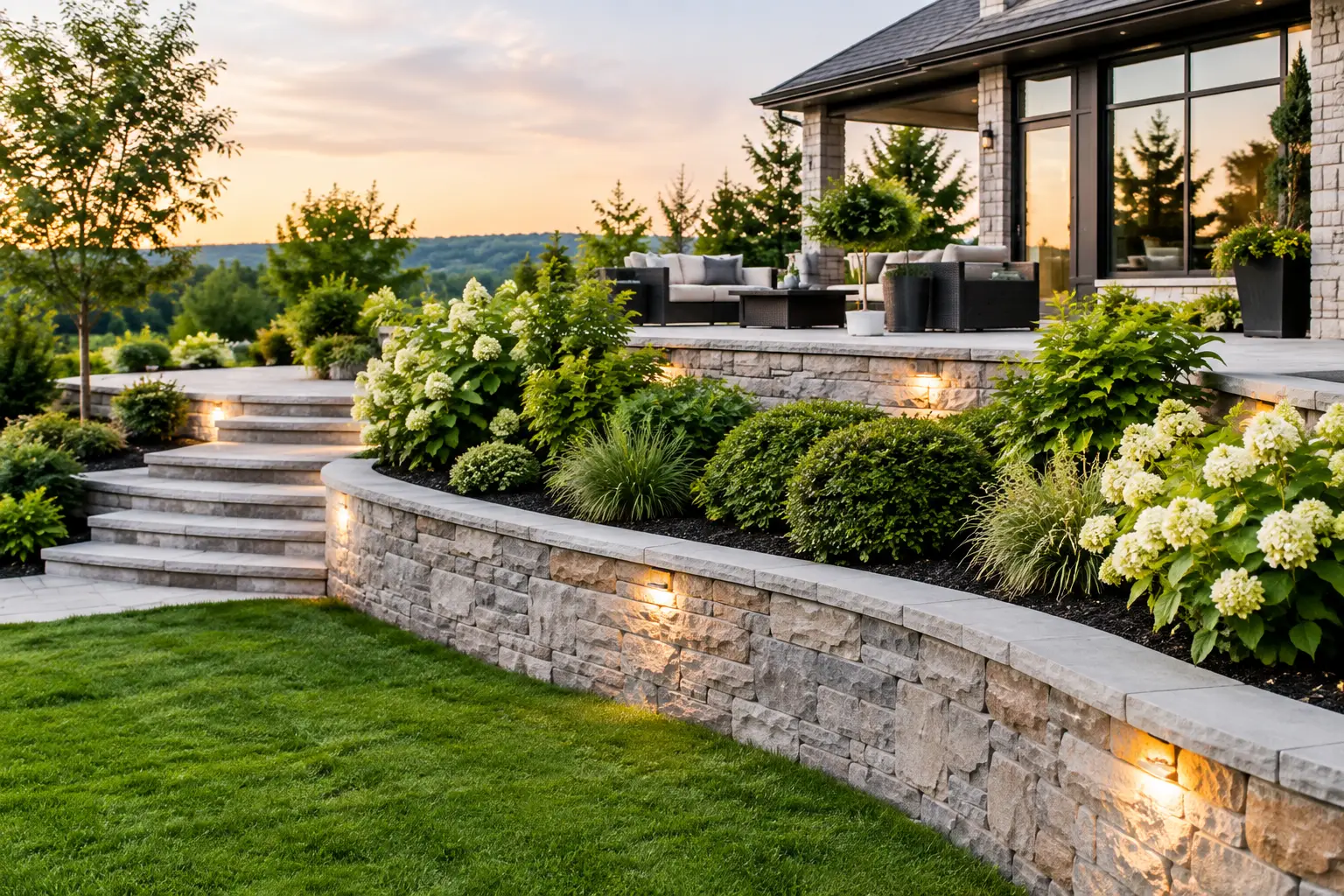
Sloped properties offer a natural opportunity for waterfalls. Instead of treating a grade change as a problem to hide, it can become the source of a dramatic cascade between retaining walls, terraces, or a pool level and a garden below.
The engineering must be right. Drainage, wall construction, water management, and soil stabilization affect performance as much as the visible stone. Yet when these elements are planned as one composition, the result can feel as though the land was shaped for the feature from the beginning.
Planting Turns Stone and Water Into a Retreat
A waterfall without planting can feel unfinished, no matter how exceptional the stonework is. Layered greenery gives the feature softness, seasonal color, and a sense of privacy. In Sunbelt landscapes, designers often work with heat-tolerant ornamental grasses, palms, flowering shrubs, evergreen screening, and sculptural accent plants to create depth around the water.
Plant selections should suit the amount of splash, sun exposure, and maintenance preference. Some homeowners want a lush, tropical look with bold foliage and color. Others prefer a restrained palette that lets the stonework and architecture lead. Both can feel resort-inspired when the planting is layered rather than scattered.
Avoid placing every plant too close to the waterfall. A little open space allows the stone, water movement, and lighting to remain visible. The best compositions alternate lushness with moments of visual calm.
Lighting Extends the Experience Past Sunset
After dark, water features need more than a single bright fixture. The most inviting designs use layers of light: subtle illumination beneath falling water, gentle grazing across stone texture, path lighting for safety, and warm ambient light around nearby seating.
Color-changing pool lights can bring a festive mood for gatherings, but warm white lighting usually provides the most timeless result for everyday use. The goal is not to flood the backyard with light. It is to make the water shimmer, reveal depth in the landscape, and create a reason to step outside after dinner.
Plan for Performance and Long-Term Care
A premium waterfall should feel relaxing, not demanding. Proper circulation, filtration, plumbing, and equipment sizing are essential to keeping water clear and the feature operating as intended. Depending on the design, regular care may include removing leaves, monitoring water levels, cleaning filters, and checking the pump system.
Material choices also affect upkeep. Natural stone develops character over time but may need periodic cleaning. Smooth, contemporary water walls can offer a cleaner visual profile, though mineral buildup may be more visible. In regions with hard water, thoughtful water treatment and accessible service points make a meaningful difference.
This is where an integrated design-build process pays off. The team designing the waterfall should understand how it will be built, illuminated, drained, and maintained. Beautiful concepts deserve equally thoughtful execution.
Make the Investment Feel Personal
There is no single formula for a luxury waterfall. Some homeowners want the drama of a multi-tiered pool cascade. Others want an understated water wall that makes a patio feel more private and composed. The right investment is the one that adds value to the way your family gathers, relaxes, and enjoys the home.
At Beyond Backyard Living, the design conversation starts with that lifestyle vision, then shapes every material, feature, and detail around it. A well-composed waterfall does more than elevate the view. It gives your backyard its own rhythm – one that invites family and friends to linger, celebrate, and make the space part of everyday life.