A patio can either sit behind the house like an afterthought, or it can set the tone for the way you live outdoors. The best paver patio design ideas do more than fill space. They shape how guests arrive, where conversations happen, how dinner moves outside, and how your backyard feels at sunset.
For homeowners investing in a higher-end outdoor environment, patio design is rarely just about choosing a paver color. It is about creating a setting that feels intentional from every angle – polished enough for entertaining, comfortable enough for daily use, and tailored to the architecture of the home. That is where thoughtful design makes the difference.
What makes paver patio design ideas worth planning carefully
Pavers offer a level of flexibility poured concrete simply cannot match. They can define a refined dining terrace, frame a resort-style pool deck, connect multiple destinations across the yard, or support a complete outdoor kitchen and fire feature composition. They also bring texture, pattern, and scale into the design in a way that feels custom rather than generic.
That said, the most successful patios are not built from materials alone. Proportion, elevation, traffic flow, and the relationship between hardscape and landscape all matter. A beautiful paver selection can still feel flat if the layout ignores how the space will actually be used.
12 paver patio design ideas for a more elevated backyard
1. Create outdoor rooms instead of one oversized slab
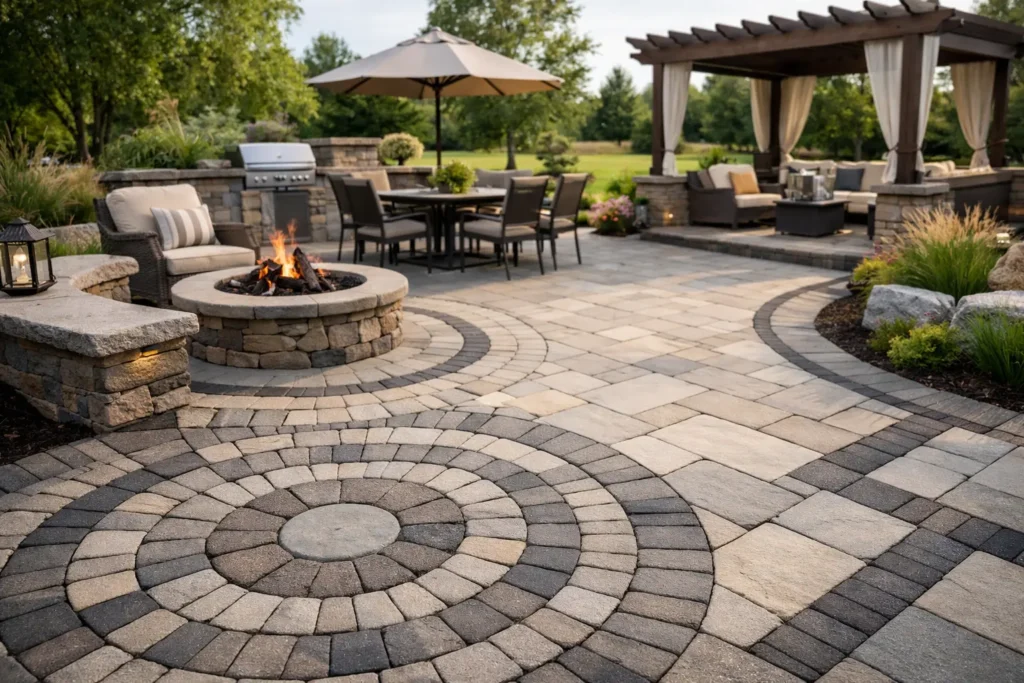
One large patio can seem practical on paper, but it often leaves the space feeling exposed and undefined. Breaking the layout into connected zones usually creates a more comfortable result. A dining terrace near the home, a lounge area under a pergola, and a fire pit circle a few steps away feels far more intentional.
This approach also gives the backyard a sense of movement. Each space has a purpose, and the transitions between them make the entire design feel curated.
2. Use contrasting borders to frame the patio
A border is a small detail with a strong visual payoff. It can sharpen the perimeter of the patio, echo architectural lines from the house, and make the field pavers look more tailored.
Contrast can be subtle or dramatic. A warm main paver with a charcoal border feels elegant and grounded, while a tone-on-tone combination creates definition without drawing too much attention. The right choice depends on the style of the home and how prominent you want the patio itself to feel.
3. Let the pattern do some of the design work
Pattern changes the personality of a patio quickly. Running bond can feel clean and contemporary. Herringbone tends to feel more classic and energetic. Modular patterns often suit larger spaces and higher-end homes because they create visual rhythm without looking busy.
The trade-off is scale. A pattern that looks sophisticated on a broad entertaining terrace may feel too active in a compact courtyard. Pattern should support the space, not overpower it.
4. Build around a focal point
The strongest patios usually have a reason for the eye to settle. That focal point might be a fireplace, a water feature, a pool edge, a custom pergola, or even a statement dining table beneath a pavilion ceiling.
Without a focal point, even expensive materials can feel scattered. With one, the entire patio starts to feel composed. It gives the design a center of gravity and helps every surrounding element make more sense.
Paver patio design ideas that improve how the space functions
5. Add built-in seating where people naturally gather
Freestanding furniture has flexibility, but built-in seat walls bring structure. They define the edge of a patio, create extra seating for larger gatherings, and often help a space feel more complete.
This is especially useful around fire features or patios with grade changes. A seat wall can solve a retaining need while also improving hospitality. That kind of layered function is what makes a backyard feel professionally designed.
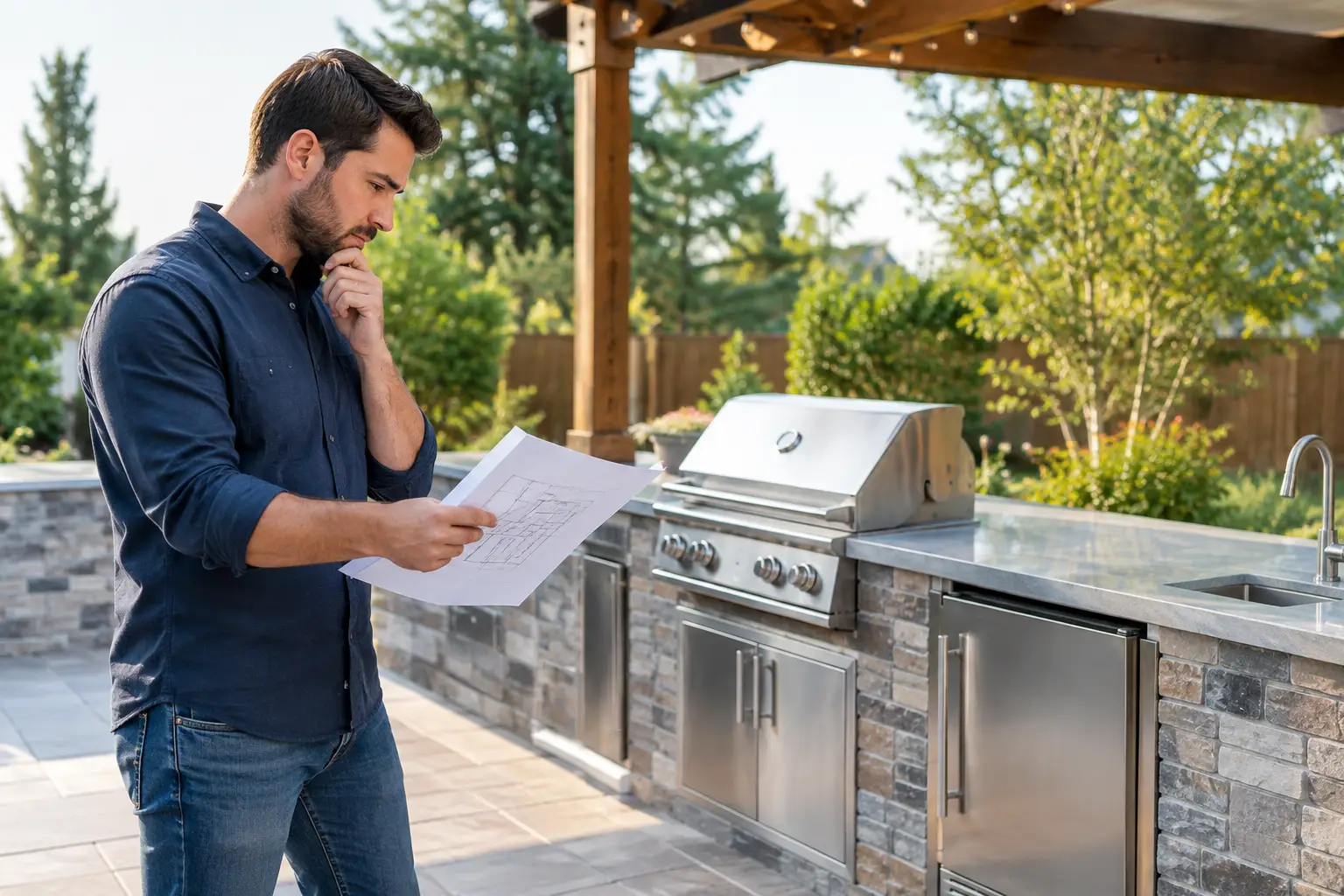
6. Blend the patio with an outdoor kitchen
If outdoor cooking is part of the vision, the patio should support it from the beginning. Too often, homeowners add a grill island later and realize the layout no longer feels balanced.
A better approach is to plan cooking, prep, dining, and circulation together. That may mean widening one section of the patio, changing the orientation of the dining area, or using paver bands to subtly define the kitchen zone. The result feels integrated instead of added on.
7. Design for shade from day one
In the Sunbelt, a patio that looks beautiful at noon but feels unbearable by 2 p.m. will not get used the way homeowners hope. Shade is not a luxury add-on. It is often essential to comfort.
That can come from a pergola, pavilion, large umbrellas, or strategic tree placement. The right answer depends on sun exposure, budget, and whether the patio is intended for lounging, dining, or both. Permanent structures create the strongest visual presence, but even softer shade solutions should be considered early so the patio layout supports them.
8. Use steps and elevation changes to add drama
Not every backyard should be flattened into a single plane. Subtle changes in elevation can create a more dynamic experience and help large spaces feel more tailored.
A raised lounge terrace, a few broad steps to a pool deck, or a sunken fire pit area can make the yard feel custom and expansive. Of course, level changes have to be handled carefully for safety and flow, especially in homes with frequent entertaining or multigenerational use. But when done well, grade becomes part of the design story.
Design ideas that make a patio feel more custom
9. Soften the edges with planting beds and low walls
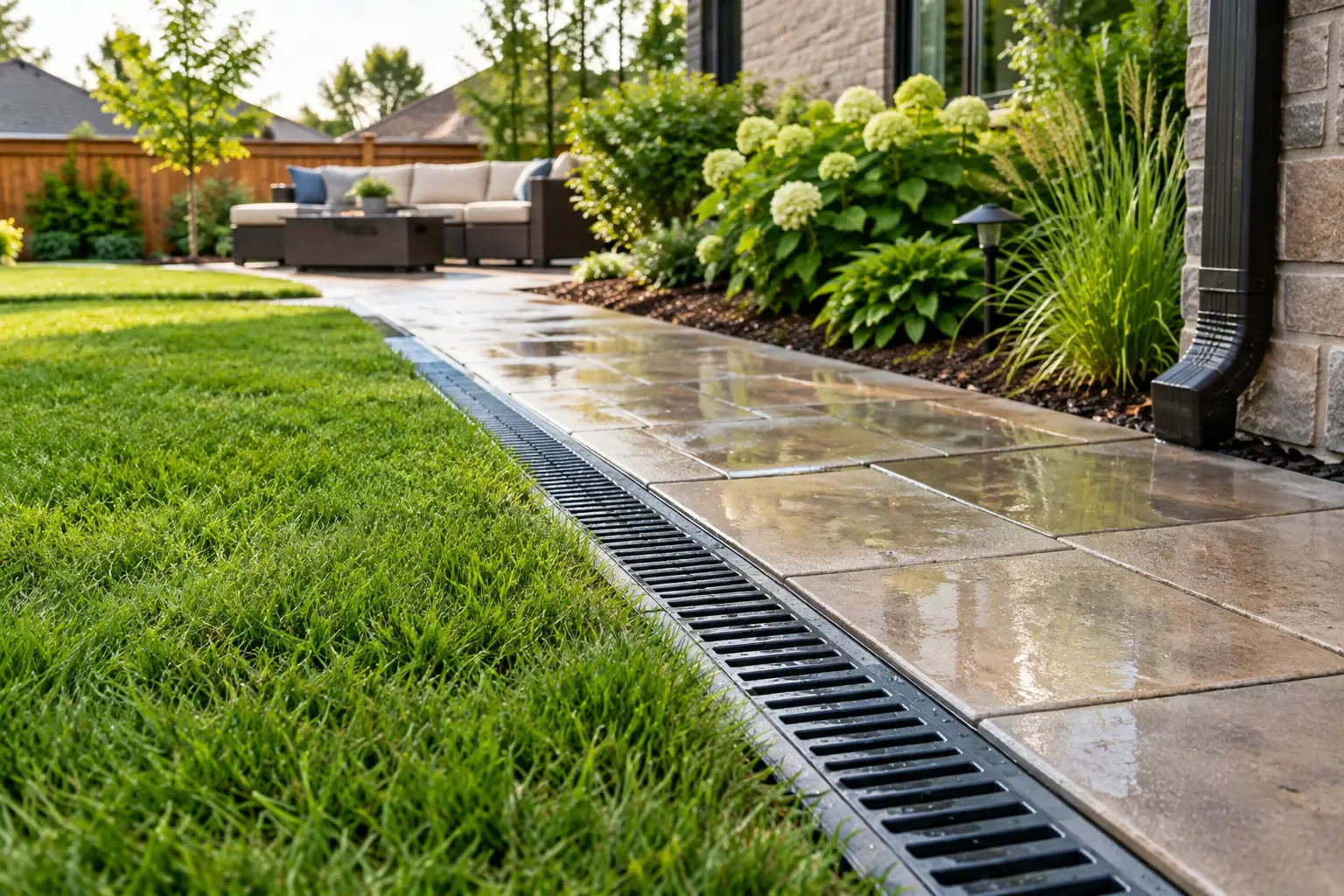
A paver patio should not feel dropped into the yard. It should feel anchored by the landscape around it. Layered planting beds, ornamental grasses, low evergreen structure, and seasonal color can soften hard edges and give the patio a finished look.
Low garden walls can help as well. They create a graceful transition between patio and planting, especially in larger backyards where wide-open hardscape can feel too exposed without framing.
10. Coordinate pavers with the home, not just the backyard
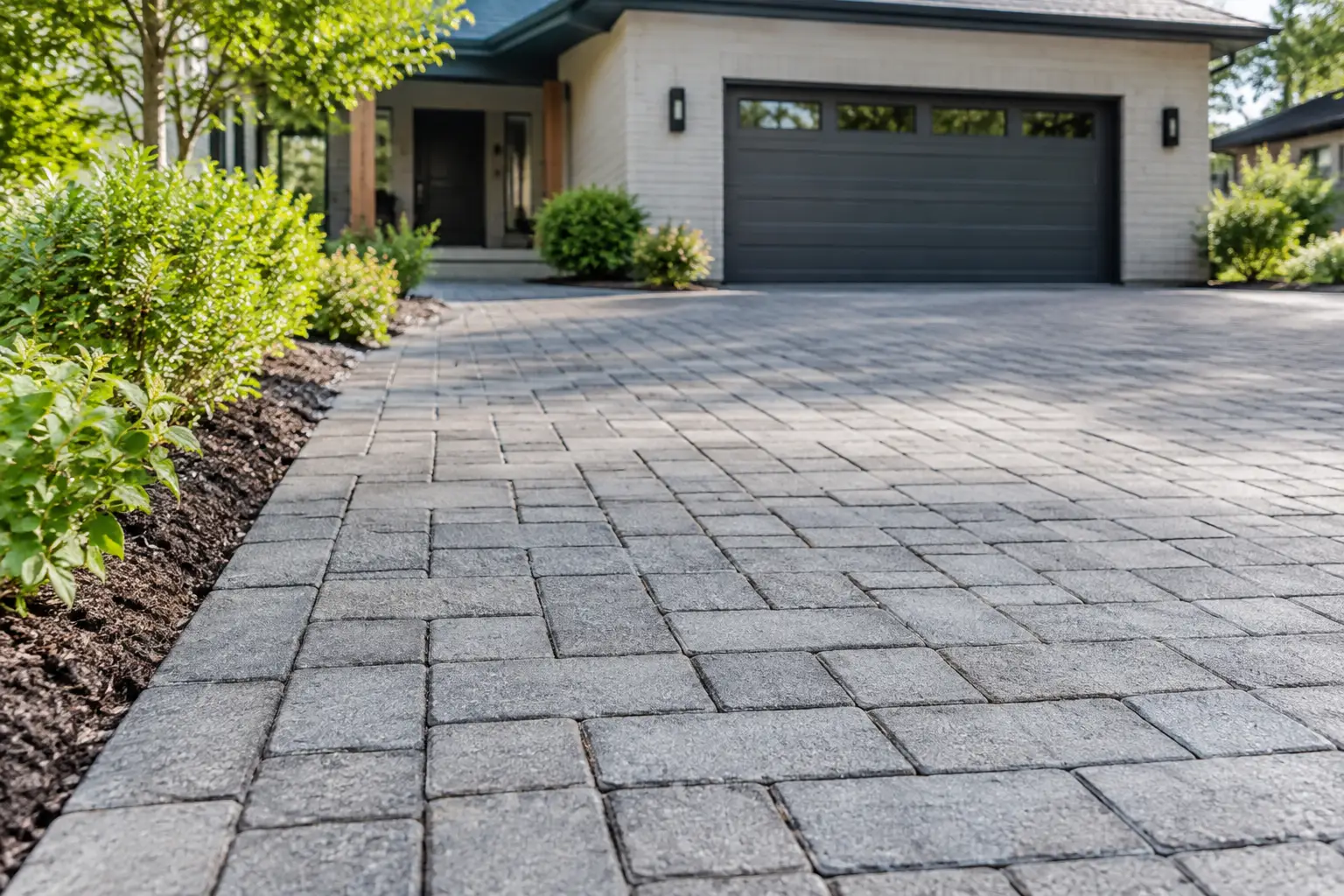
One of the most overlooked paver patio design ideas is also one of the most important: choose materials that relate to the home itself. The paver tone, texture, and edge profile should feel connected to the house architecture, trim colors, and surrounding hardscape.
A sleek modern home may call for larger-format pavers in restrained tones. A more traditional home may benefit from a textured surface and richer variation. Matching everything perfectly is not the goal. Harmony is.
11. Extend the patio into connected walkways
A patio feels more luxurious when it is part of a full outdoor composition rather than an isolated platform. Walkways that lead to the side yard, pool area, garden destination, or front approach can tie the property together beautifully.
This is also practical. Guests should not have to cut across turf to reach the fire pit or outdoor bar. When paths are designed into the experience, the backyard feels easier to use and far more polished.
12. Add lighting that highlights the hardscape at night
Some patios look excellent during the day and disappear after dark. That is a missed opportunity, especially for homeowners who love evening entertaining.
Integrated lighting in seat walls, step risers, columns, and nearby landscape beds can completely change the mood of the space. It adds safety, yes, but it also makes the patio feel warm, layered, and ready for guests long after sunset. A well-lit hardscape has a quiet kind of luxury.
How to choose the right patio direction for your home
The right patio concept depends on how you want the space to live. If your weekends center on dinner parties and long family meals, the layout should prioritize shade, dining space, and easy kitchen access. If your ideal evening involves cocktails by a fire feature, the lounge zone may deserve the most prominent location and best views.
Budget matters too, but so does sequencing. Some homeowners prefer to phase the project, starting with the primary patio and planning for a pavilion, outdoor kitchen, or pool integration later. That can work well, as long as the original layout is designed with the full vision in mind. Otherwise, future additions can feel forced.
This is where professional planning becomes valuable. A patio is rarely just a patio in a luxury backyard. It is the foundation for everything around it. At Beyond Backyard Living, that larger perspective is what turns separate features into one cohesive outdoor experience.
The best patio is not simply the one with the most expensive pavers or the largest footprint. It is the one that fits your home, supports your lifestyle, and makes the backyard feel like a place people naturally want to stay a little longer.