A great outdoor kitchen case study is not really about the grill. It is about the moment the host steps outside with a tray of marinated vegetables, guests settle into the shade with a drink, and no one has to disappear indoors while dinner is being prepared. The cooking space becomes part of the gathering instead of a separate station at the edge of the patio.
The representative project below reflects a challenge we see often in Sunbelt homes: a generous backyard with a pool, a patio, and plenty of potential, but no clear center for entertaining. The homeowners wanted a setting that felt as polished as the inside of their home, while standing up to heat, splashes, busy weekends, and a full guest list.
The Vision: A Backyard That Hosts Beautifully
The homeowners had already invested in a pool and hardscape, but their outdoor entertaining routine still felt fragmented. Food was prepped inside, drinks were carried across the yard, and the grill sat exposed on a small pad with little room for company. The patio had square footage, yet it lacked the rhythm that makes people want to linger.
Their goal was not to add an appliance and call it an outdoor kitchen. They wanted an open-air hospitality space: a place for weeknight family dinners, game-day gatherings, pool parties, and relaxed evenings with neighbors. The design needed to feel intentional from every viewpoint, including the home, the pool deck, and the seating area.
That distinction shaped every decision. A luxury outdoor kitchen should not compete with the rest of the yard. It should organize it, creating a natural connection between cooking, dining, conversation, and relaxation.
Outdoor Kitchen Case Study: Designing the Layout
The first move was to establish zones rather than build one long run of cabinetry against a wall. The kitchen was positioned close enough to the home for convenient service connections, but far enough from the back door to create its own destination. This protected the flow of the indoor living areas while allowing the backyard to feel larger and more purposeful.
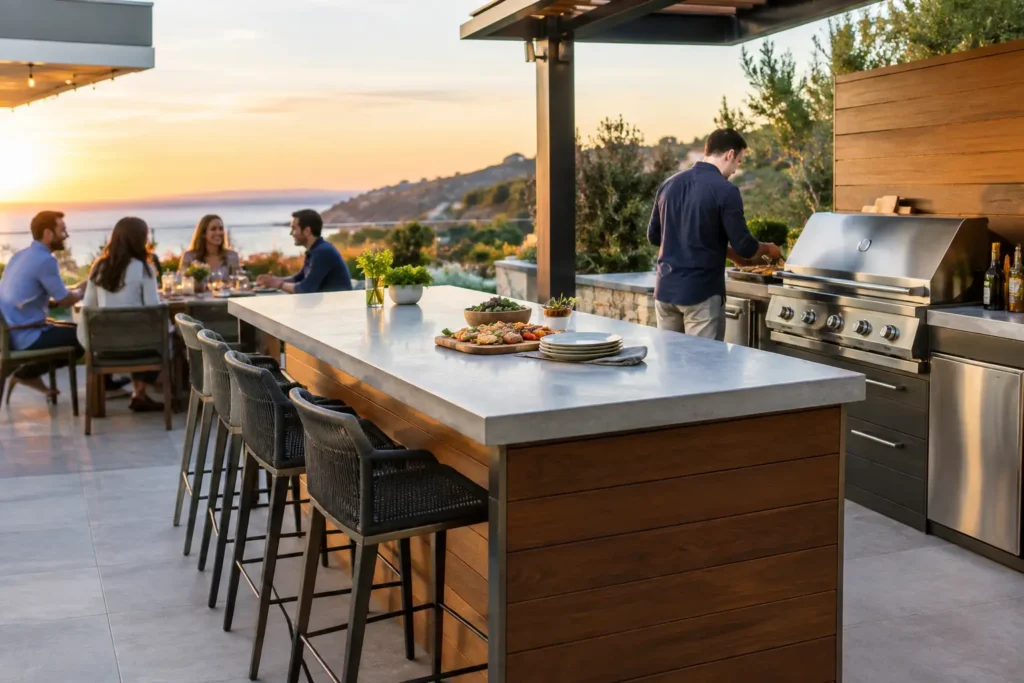
A substantial grilling island became the anchor. It included room for a premium grill, insulated storage, a refrigerator, concealed trash, and a generous counter for prep work. A second island faced the pool and served as a bar-height gathering point. That simple orientation mattered: the cook could stay engaged with guests instead of standing with their back to the party.
A dining terrace sat adjacent to the kitchen, rather than directly in its traffic path. This gave servers and guests room to move without crossing behind the grill. Beyond it, a softer lounge zone near the water provided a place to relax after dinner. Each space had a different purpose, but the materials and sightlines made them feel like one composed environment.
The lesson is practical. Bigger is not always better. A kitchen that is oversized for the patio can choke circulation and leave seating feeling like an afterthought. Conversely, a compact kitchen with too little landing space turns cooking into a balancing act. The right scale depends on how many people the household typically hosts, how often they cook outdoors, and whether the space will support catered events or mostly family meals.
Building for the climate, not just the photo
In a warm climate, shade is part of the kitchen plan. This project used an architectural overhead structure to soften the afternoon sun and define the cooking and dining area without closing it off. The placement was carefully considered so smoke could disperse and the outdoor room could still enjoy breezes and views across the yard.
Durable finishes were equally important. The cabinetry, countertop, hardware, and appliance components were selected for outdoor exposure, with materials that could handle UV rays, humidity, cooking heat, and regular cleaning. A beautiful finish that fades, stains, or corrodes quickly is not a luxury result.
The countertop selection required a little restraint. A dramatic material can create visual impact, but highly textured or deeply grooved surfaces are harder to keep clean around food preparation. Here, the homeowners chose a refined, low-maintenance surface that complemented the pool coping and patio without trying to match every element exactly. Cohesion is more sophisticated than repetition.
The Details That Changed How the Space Feels
The kitchen’s most successful features were not all obvious at first glance. A deep sink made outdoor cleanup easier. Refrigerated storage meant cold drinks stayed outside instead of filling the indoor kitchen. Ample drawers kept grilling tools, towels, and serving pieces within reach. Dedicated counter space on both sides of the grill gave the cook room to work confidently.
Lighting transformed the project after sunset. Task lighting illuminated the grill and prep surface, while warmer architectural lighting highlighted the stonework, pathways, and surrounding planting beds. The goal was not to make the backyard bright. It was to make it inviting, safe, and layered.
The team also planned utilities early. Gas, electrical service, water, drainage, ventilation, and appliance clearances are rarely the glamorous part of an outdoor kitchen, but they determine how well it performs over time. Addressing them during design helped avoid awkward surface-mounted solutions and protected the clean, custom appearance the homeowners wanted.
A pizza oven was considered during planning, then intentionally left out. The family loved the idea, but realized they would use a grill, refrigerator, sink, and bar seating far more often. That is a worthwhile reminder for any homeowner: the best outdoor kitchen includes the features you will use repeatedly, not every feature that looks exciting in a photo.
A Cohesive Backyard Needs More Than a Kitchen
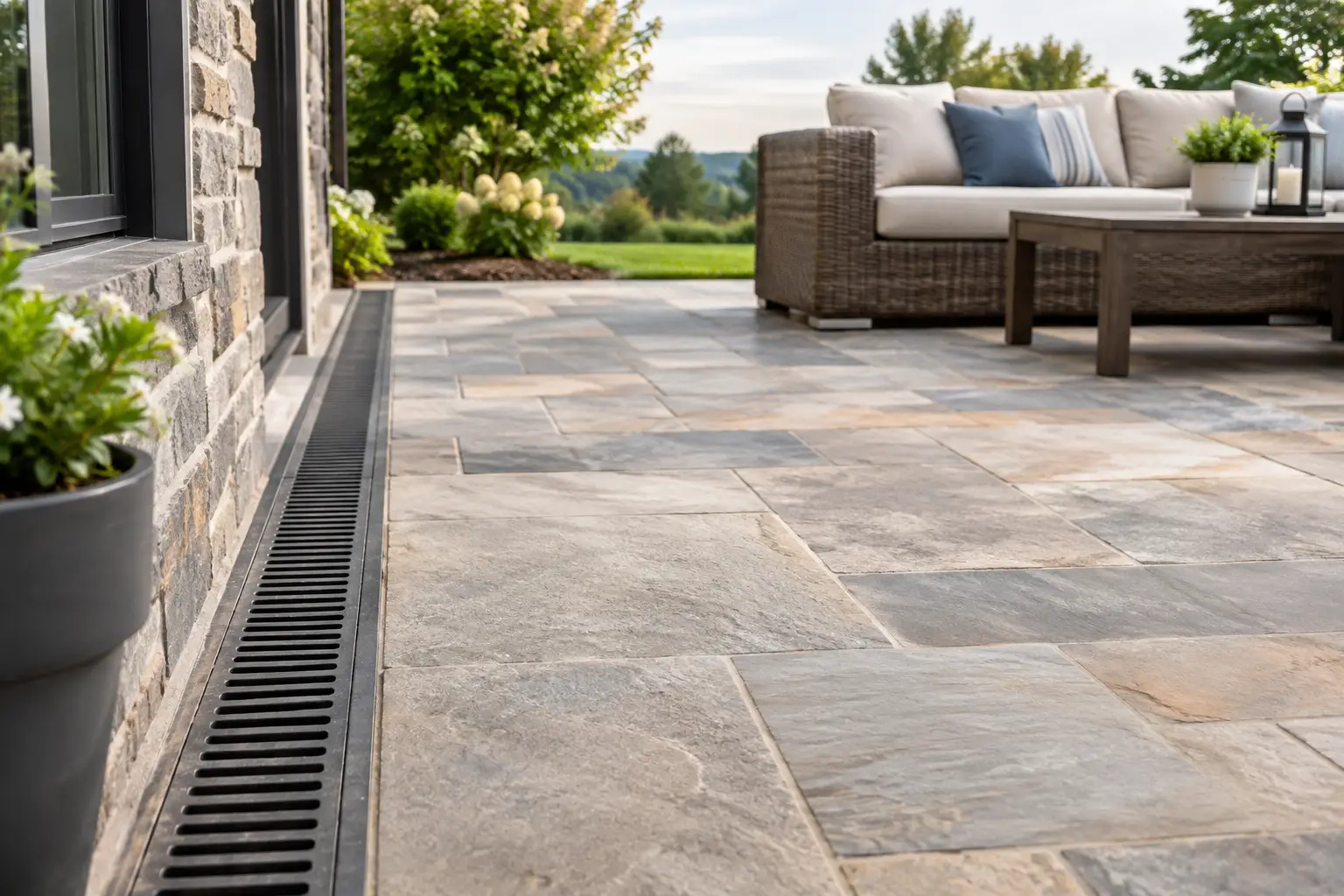
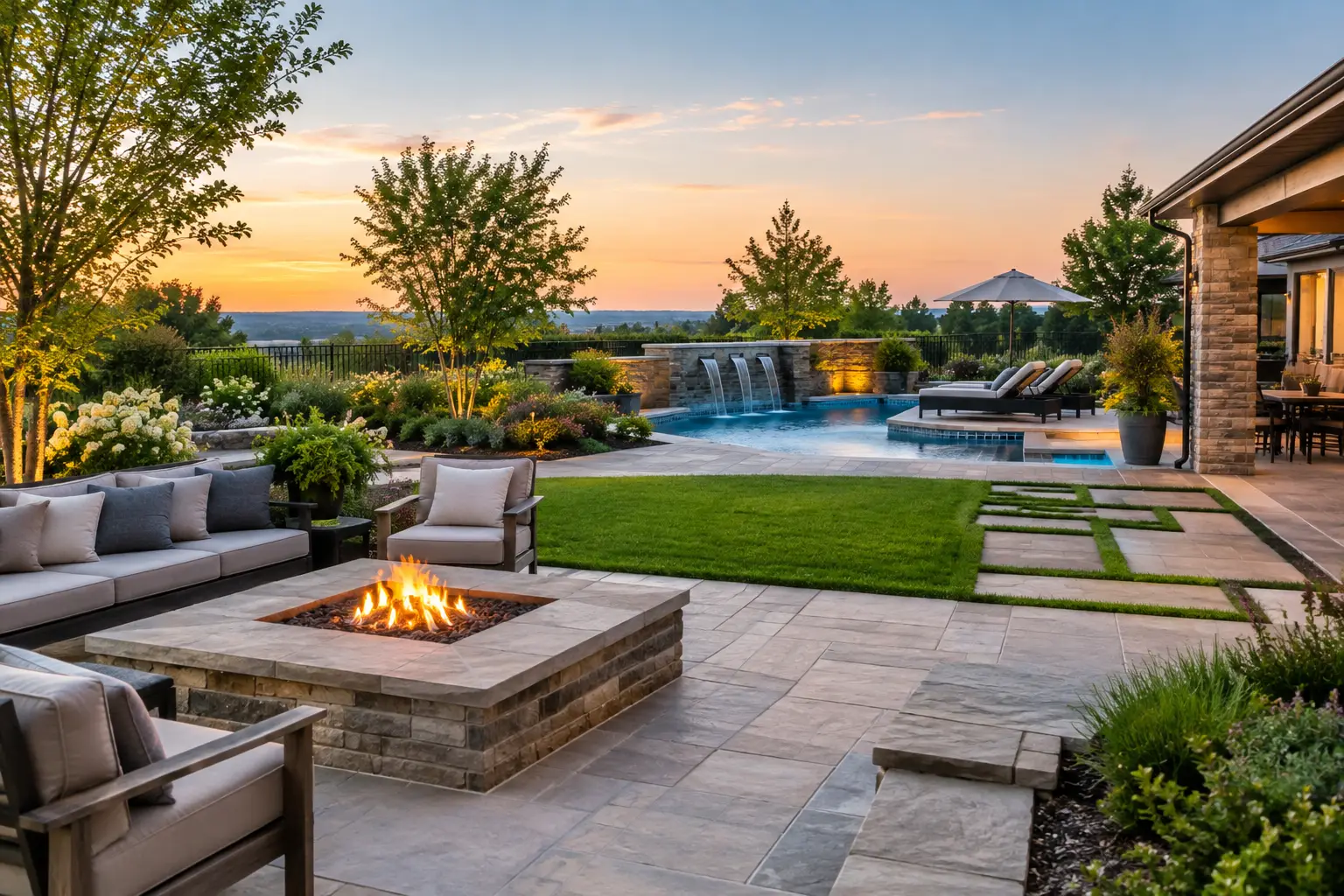
An outdoor kitchen has its greatest impact when it belongs to a complete exterior vision. In this project, the kitchen stone echoed the architecture of the home, while complementary pavers tied it to the pool terrace. Layered plantings softened the hardscape and offered privacy without blocking the view. The result felt established, not installed.
That level of coordination is especially valuable when a backyard includes several elements such as a pool, fire feature, pergola, retaining wall, or pavilion. Designing each piece separately can create a collection of expensive additions that never quite relate to one another. A full-service design-build approach considers grades, circulation, materials, utilities, and focal points as one experience from the start.
For the homeowners, the transformation was measured less by the number of appliances than by how often they used their backyard. Casual dinners moved outside. The family spent more time around the pool because food and drinks were close at hand. When friends visited, the host was no longer split between the kitchen indoors and the conversation outdoors.
What Homeowners Can Learn From This Project
The strongest outdoor kitchens begin with lifestyle questions, not product selections. How do you entertain? Do you prefer a seated dinner, a buffet-style gathering, or a casual poolside afternoon? Will the kitchen be used year-round? Do you need shade, privacy, a fire feature, or a nearby dining area to make the space truly work?
Budget should follow that conversation. Utility work, custom masonry, premium appliances, shade structures, and integrated lighting all influence investment, and priorities vary from project to project. It can be wiser to build a thoughtfully scaled kitchen with high-quality core features than to stretch the budget across too many accessories.
At Beyond Backyard Living, the design conversation starts with the life you want to live outside. That makes room for the details that matter most: a view from the grill, a counter where guests naturally gather, a finish that belongs with your home, and a plan that makes hosting feel easy.
Your backyard does not need to imitate a resort to feel like one. It needs to reflect the way your favorite people gather, eat, unwind, and stay a little longer than they planned.