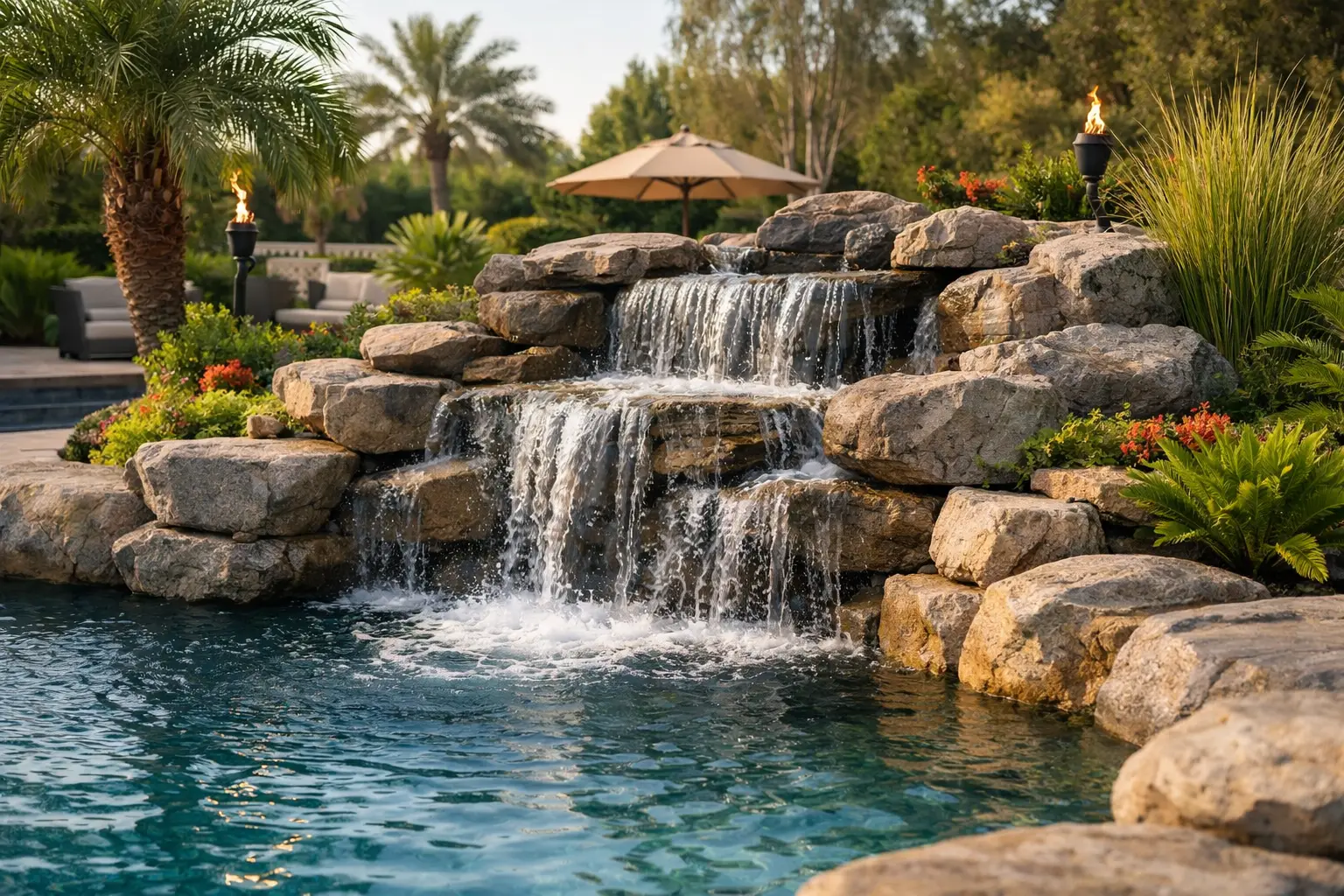
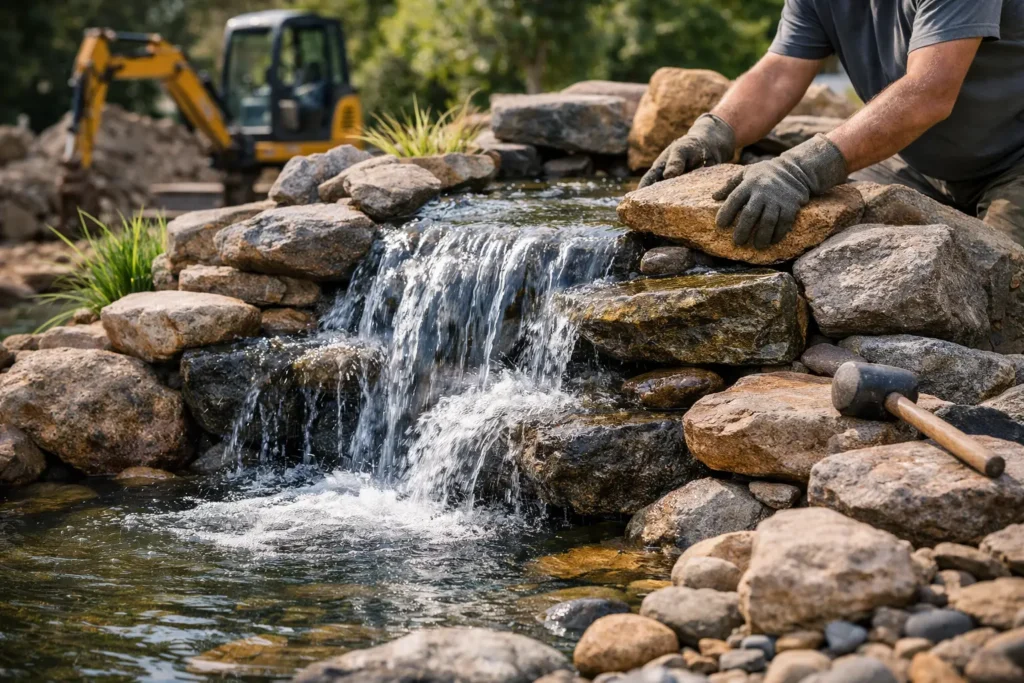
A waterfall should never feel like an accessory dropped into the corner of a backyard. The best ones seem to belong there – as if the land, stone, water, and surrounding plantings had always been part of the same scene. A skilled natural rock waterfall builder creates that sense of place through thoughtful grading, carefully selected materials, and water movement designed for the way you live outdoors.
For homeowners planning a resort-style backyard, a natural stone waterfall can become the feature that gives the entire space a focal point. It brings a calming soundtrack to a patio, adds movement beyond the pool’s edge, and creates a memorable backdrop for evenings around the fire or long weekends with family. But achieving a natural look is more involved than stacking boulders around a pump.
What Makes a Rock Waterfall Look Natural?
Nature is rarely symmetrical, and that is one reason manufactured-looking waterfalls often miss the mark. Realistic water features use variation in stone size, changing elevations, tucked-away spill points, and planting pockets that soften the edges. Water should appear to find its own course over the stone rather than pour from a single obvious source.
A well-designed feature also needs visual scale. Small stones scattered across a large pool deck can feel lost. Oversized boulders in a compact courtyard may overwhelm the seating area and leave little room for circulation. The waterfall must relate to the architecture of the home, the footprint of the pool or patio, and the distance from which it will be viewed.
Color and texture matter just as much. The right stone can echo the warm tones of a paver terrace, complement the texture of a stucco home, or provide a handsome contrast against clean-lined contemporary materials. Rather than selecting rock in isolation, a cohesive design considers every finish in the outdoor environment.
A Natural Rock Waterfall Builder Starts With the Setting
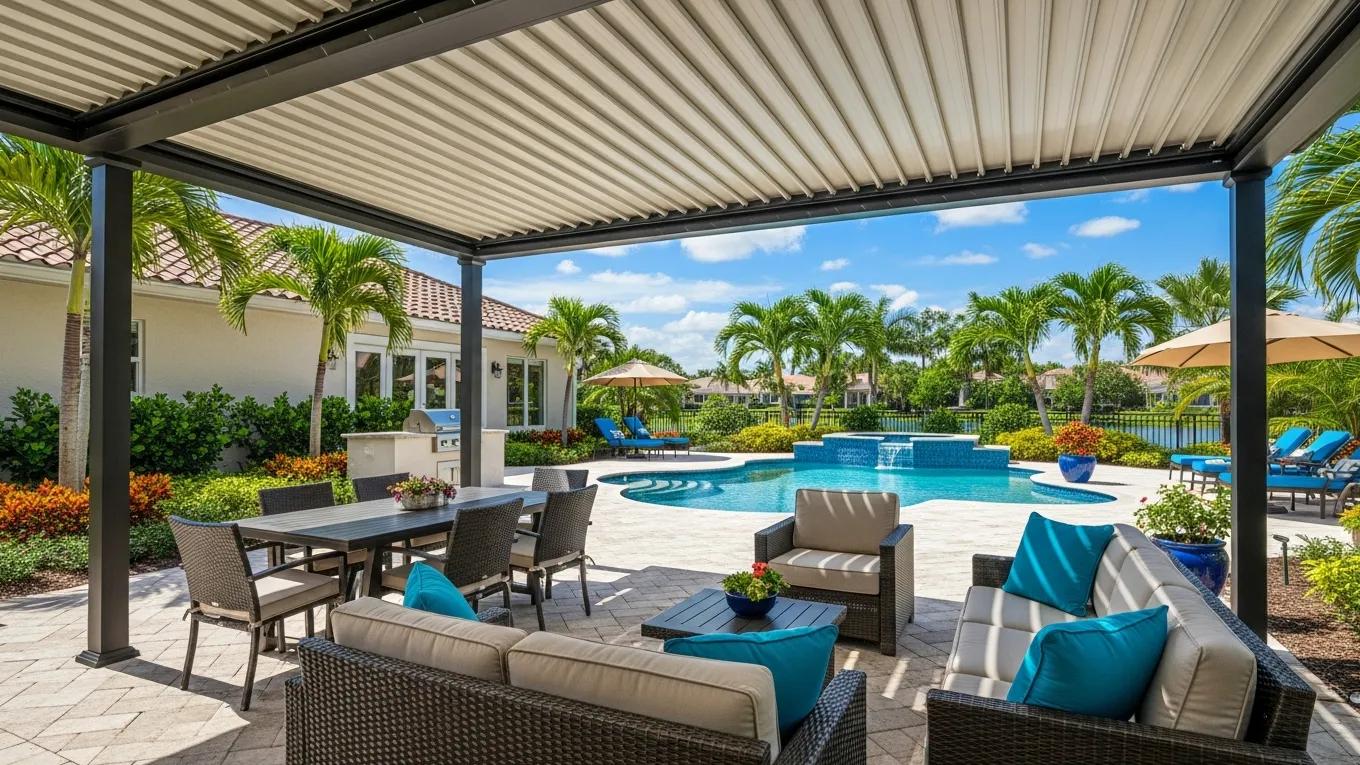
The most successful water features are planned before the backyard is fully built, not added as an afterthought. This gives the design team the freedom to shape elevations, conceal equipment, establish drainage, and coordinate the waterfall with the pool, kitchen, pavilion, walkways, and planting plan.
The first question is not simply how tall the waterfall should be. It is where the experience should happen. Some homeowners want to hear a gentle stream from a covered patio while they enjoy morning coffee. Others want a dramatic cascade that becomes the visual centerpiece of a poolside gathering area. A private courtyard may call for a quieter wall feature with a narrow run of water, while a larger property can support a more immersive boulder composition with multiple falls.
Site conditions guide the decision. Existing slope can create a convincing starting point for a hillside waterfall, but even a flat yard can support a beautiful feature when grading is intentionally shaped. The goal is to make the transition from finished landscape to stone outcropping feel believable. That may mean feathering the rockwork into a planted bed, creating a berm behind the falls, or extending stone into nearby retaining walls and pathways.
Sound Is Part of the Design
Waterfall sound is often underestimated until a feature is running. A gentle sheet of water has a different character than water dropping several feet into a deep basin. The width of the spillway, the texture of the stone beneath it, water volume, and the landing area all influence what you hear.
A low, continuous flow can mask distant traffic and provide a peaceful layer of sound near a lounge area. A more energetic cascade brings theater and excitement to a pool environment, especially when children and guests will be swimming nearby. Neither approach is automatically better. It depends on whether the waterfall is meant to support quiet retreat, lively entertaining, or both.
An experienced designer can also account for where sound travels. A feature placed close to a bedroom window, property line, or intimate dining area may need a softer flow than one situated at the far end of a spacious yard. The ideal water feature feels present without competing with conversation.
The Construction Behind Lasting Beauty
Natural-looking stonework requires serious structure beneath the surface. Large boulders need stable, prepared bases so they do not settle or shift over time. Water must be directed over carefully formed ledges and into a properly designed basin or pool. Plumbing, pumps, filters, valves, and access points need to be planned for performance and future service without disrupting the view.
This is where craftsmanship changes the outcome. Each significant stone should be positioned with purpose, accounting for its face, grain, size, weight, and relationship to the next stone. The best compositions combine broad anchor boulders with smaller transition stones that eliminate visible gaps and create more believable water paths.
Waterproofing and drainage are equally essential. Water that escapes behind the feature can create erosion, settling, or unwanted wet areas in the landscape. A professional installation manages water where it is intended to go while protecting nearby hardscapes, foundations, and planting beds.
Lighting deserves attention during construction as well. Subtle underwater fixtures can illuminate the movement of water after sunset, while low landscape lighting reveals stone texture and makes pathways around the feature safer. The effect should feel warm and dimensional, not like a stage set.
Pool Waterfalls and Standalone Water Features
A pool waterfall can turn a custom pool into a true destination. It may rise from a natural rock grotto, spill from a retaining wall, or appear to emerge from a planted slope beyond the waterline. The integration must be deliberate so the feature complements the pool’s architecture rather than making it feel crowded.
For properties without a pool, a recirculating pondless waterfall offers a compelling alternative. Water disappears into a concealed underground reservoir and recirculates through the feature, creating the sound and visual appeal of a stream without an open pond. This can be an excellent choice near an entry, beside a patio, or within a smaller garden where a pool is not part of the plan.
There are trade-offs. A dramatic pool waterfall can provide a stronger visual statement and invite interaction, but it requires coordination with pool construction and water chemistry. A pondless feature can be more flexible in placement and may feel especially peaceful, though it still needs access for equipment and thoughtful planning around stone scale and drainage.
Designing the Surroundings, Not Just the Falls
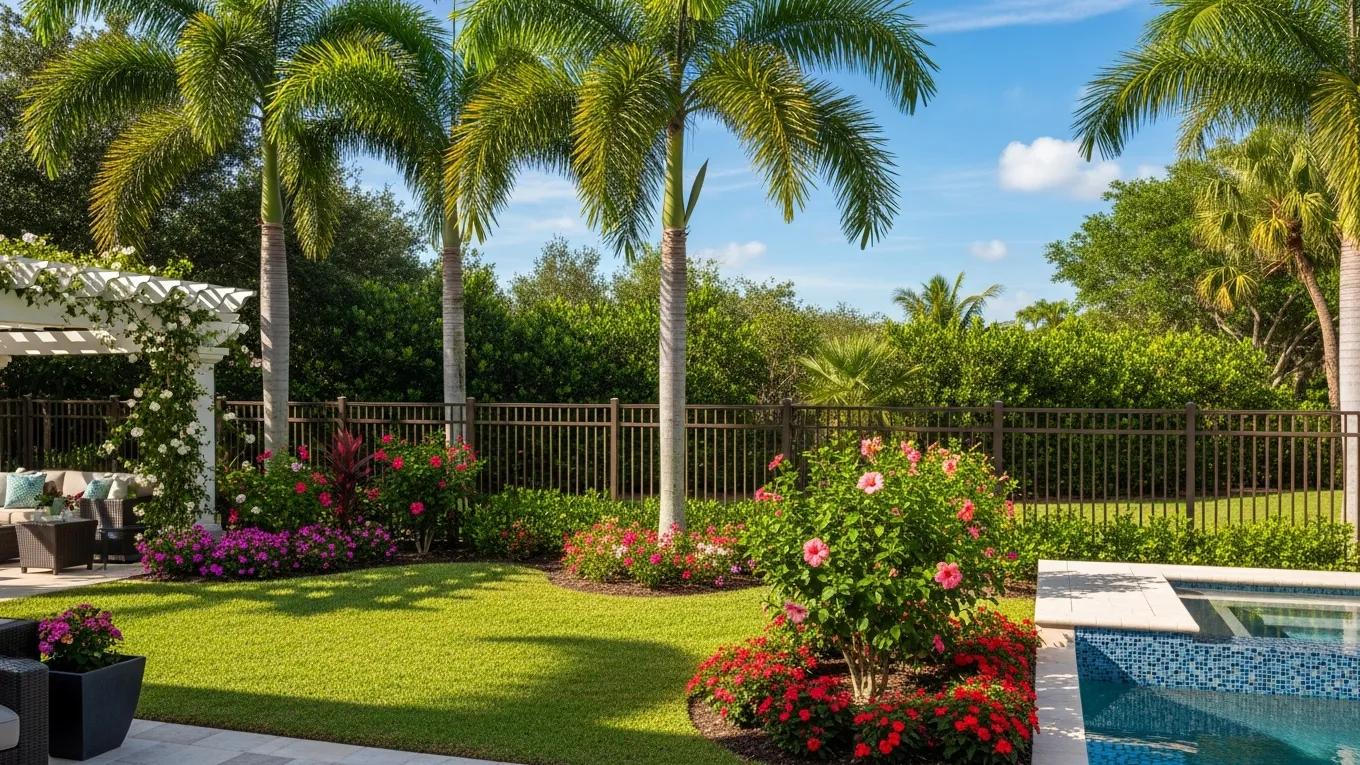
A waterfall becomes more convincing when its surroundings support the story. Ornamental grasses can move in the breeze beside stone ledges. Layered shrubs can soften a berm and screen the origin point of the feature. Native or climate-appropriate plantings help the landscape feel established while keeping maintenance realistic for a Sunbelt property.
The view from inside the home also matters. A waterfall framed by a kitchen window, great room doors, or a primary suite can make the backyard feel alive throughout the day. From the patio, the same feature may serve as a visual anchor behind an outdoor kitchen, fire pit, or dining area.
This is why a full-property approach delivers a more polished result than treating each feature separately. At Beyond Backyard Living, waterfall design is considered alongside the spaces where families cook, gather, swim, relax, and make memories. The stonework is not simply installed in the landscape. It is composed as part of a complete outdoor experience.
Budget Decisions That Shape the Result
The cost of a natural rock waterfall is influenced by more than its height. Rock type and quantity, site access, excavation, equipment, plumbing complexity, lighting, drainage, and integration with a pool all affect the investment. A challenging backyard with limited access may require additional labor and equipment to move large stone safely into place.
If priorities need to be balanced, protect the essentials first: structural preparation, quality circulation equipment, professional waterproofing, and the primary stone composition. Features such as additional lighting zones, expanded planting, or secondary spillways can sometimes be phased. What should not be compromised is the construction beneath the beauty. A waterfall that performs reliably gives you far more value than one that looks impressive only on installation day.
A design consultation is the right place to clarify how the feature will be used, what visual style fits the home, and where the investment will have the greatest impact. Bring inspiration, but remain open to site-specific recommendations. The most beautiful waterfall is not a copy of a photo. It is one designed for your landscape, your architecture, and the moments you want to create there.
When you can picture guests pausing at the sound of falling water, children gathering near the pool, and quiet evenings spent outdoors after the sun goes down, you have found the real purpose of the feature. Start with that feeling, then let the stone, water, and craftsmanship bring it to life.