A beautiful backyard rarely happens because a few features were added one at a time. The spaces that feel effortless – where the patio, pool, planting beds, lighting, and gathering areas all belong together – are almost always the result of thoughtful landscape design and installation from the start. When the plan is cohesive, the finished space does more than raise curb appeal. It changes how you live at home.
For homeowners investing in a premium outdoor environment, that difference matters. You are not choosing shrubs, stone, and structures as separate purchases. You are shaping the setting for dinner parties, quiet mornings, family weekends, and the kind of hospitality people remember. Great outdoor spaces feel polished because every detail was considered in relation to the whole.
What landscape design and installation really means
Many homeowners think of landscaping as plants in the front yard or a new bed border around the house. In reality, landscape design and installation is the process of creating an outdoor environment that balances beauty, function, architecture, and lifestyle. It includes the visual layout, the flow between spaces, material choices, grading, drainage, lighting, planting design, and the construction required to bring everything to life.
That is why the best projects begin with a bigger conversation. How do you want to entertain? Where does the sun hit in late afternoon? Do you want a resort-style pool scene, a shaded retreat, an outdoor kitchen that supports real cooking, or a front entry experience with stronger curb appeal? These questions shape the plan far more than choosing pavers or palm varieties in isolation.
A well-designed property also accounts for what most people do not notice right away. Drainage must work. Elevation changes need to be resolved gracefully. Materials should complement the home rather than compete with it. Plantings need to suit the region, light exposure, and maintenance expectations. The visual result may feel relaxed, but the planning behind it is precise.
Why a unified plan creates a better result
There is a reason piecemeal projects often look piecemeal. A homeowner adds a patio one year, a fire pit the next, maybe a retaining wall later, and then tries to fit planting around everything afterward. Each individual element may be attractive, yet the property can still feel disconnected.
A unified landscape design and installation plan solves that problem before construction begins. It establishes how people will move through the property, where views should open up, which features deserve emphasis, and how hardscape and softscape should support each other. A walkway is no longer just a walkway. It becomes part of the arrival experience. A pergola is no longer just shade. It becomes an architectural anchor that gives the backyard structure and presence.
This integrated approach often protects your investment as well. Building in the right sequence reduces rework, prevents conflicts between trades, and keeps practical systems like irrigation, drainage, and lighting aligned with the final vision. It is easier to build something exceptional when the entire environment has been designed to work together.
The design phase sets the tone for everything
Luxury outdoor spaces do not start with installation crews. They start with clarity. The design phase is where goals become visible and where smart decisions save time, money, and frustration later.
This stage should explore both aesthetics and use. Some homeowners want a backyard centered on entertainment, with generous patios, a full outdoor kitchen, layered lighting, and easy circulation for guests. Others want a more private retreat, with water features, lush screening, a spa, and intimate seating areas. Many want both, which is where experienced design becomes especially valuable.
Good design also respects the house. The most compelling outdoor spaces feel like a natural extension of the architecture, not an unrelated set of add-ons in the yard. Stone tones, paver scale, structural lines, and planting style all need to support that relationship. A Mediterranean-inspired home calls for different choices than a clean-lined contemporary residence or a traditional Southern property.
When the plan is right, it gives you confidence. You can see how the spaces connect, understand how the budget is being allocated, and move into installation with fewer unknowns. That confidence is part of the luxury experience.
What homeowners should expect during installation
Installation is where vision meets execution, and this is often where the difference between average and exceptional becomes obvious. Premium results depend on craftsmanship, project coordination, and an eye for detail that goes beyond simply getting the job done.
Site preparation matters more than most people realize. Grading, drainage correction, base work for hardscapes, and structural preparation for walls, kitchens, pavilions, or water features all create the foundation for long-term performance. If these elements are rushed or handled inconsistently, even beautiful materials can fail to deliver the finish and longevity you expected.
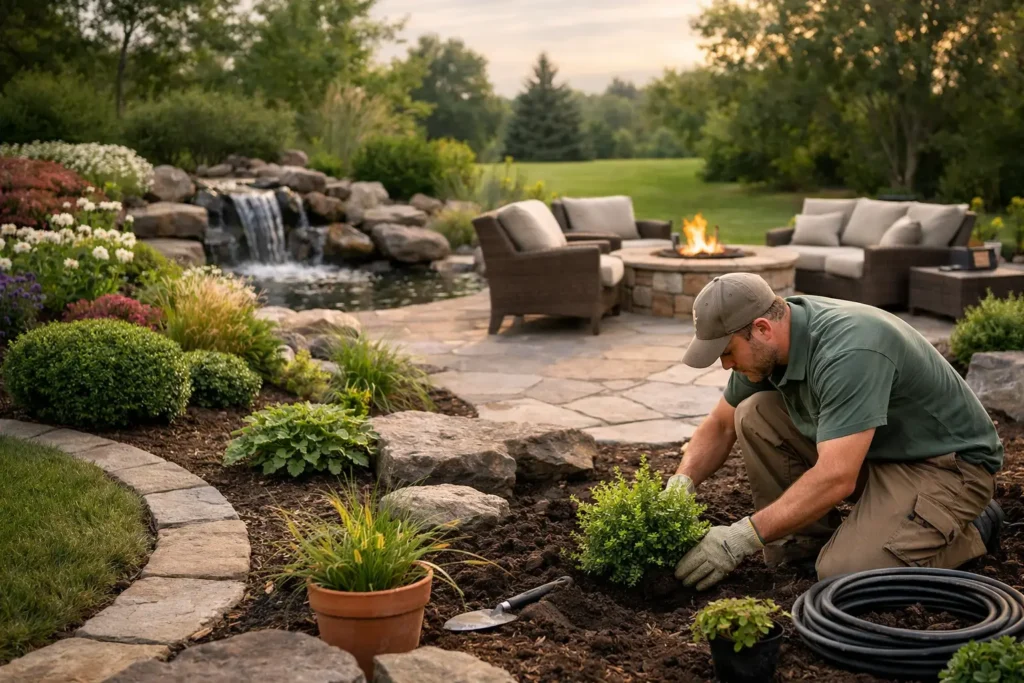
Material installation should feel intentional at every level. Paver patterns need clean alignment. Natural stone should be selected and placed with variation and balance in mind. Planting beds should be composed for texture, maturity, and seasonal presence, not just filled to complete the job. Lighting should highlight architecture, improve safety, and extend the usefulness of the space after sunset.
There is also a sequencing advantage when one team manages the broader project. Pools, patios, retaining walls, landscape planting, irrigation, and outdoor living features all affect each other. Coordinating them under one clear vision reduces gaps, preserves design integrity, and creates a smoother experience for the homeowner.
The features that elevate outdoor living
Not every property needs every feature, and that is exactly the point. High-end landscape design is not about checking boxes. It is about selecting the right mix of elements for the way you want to live.
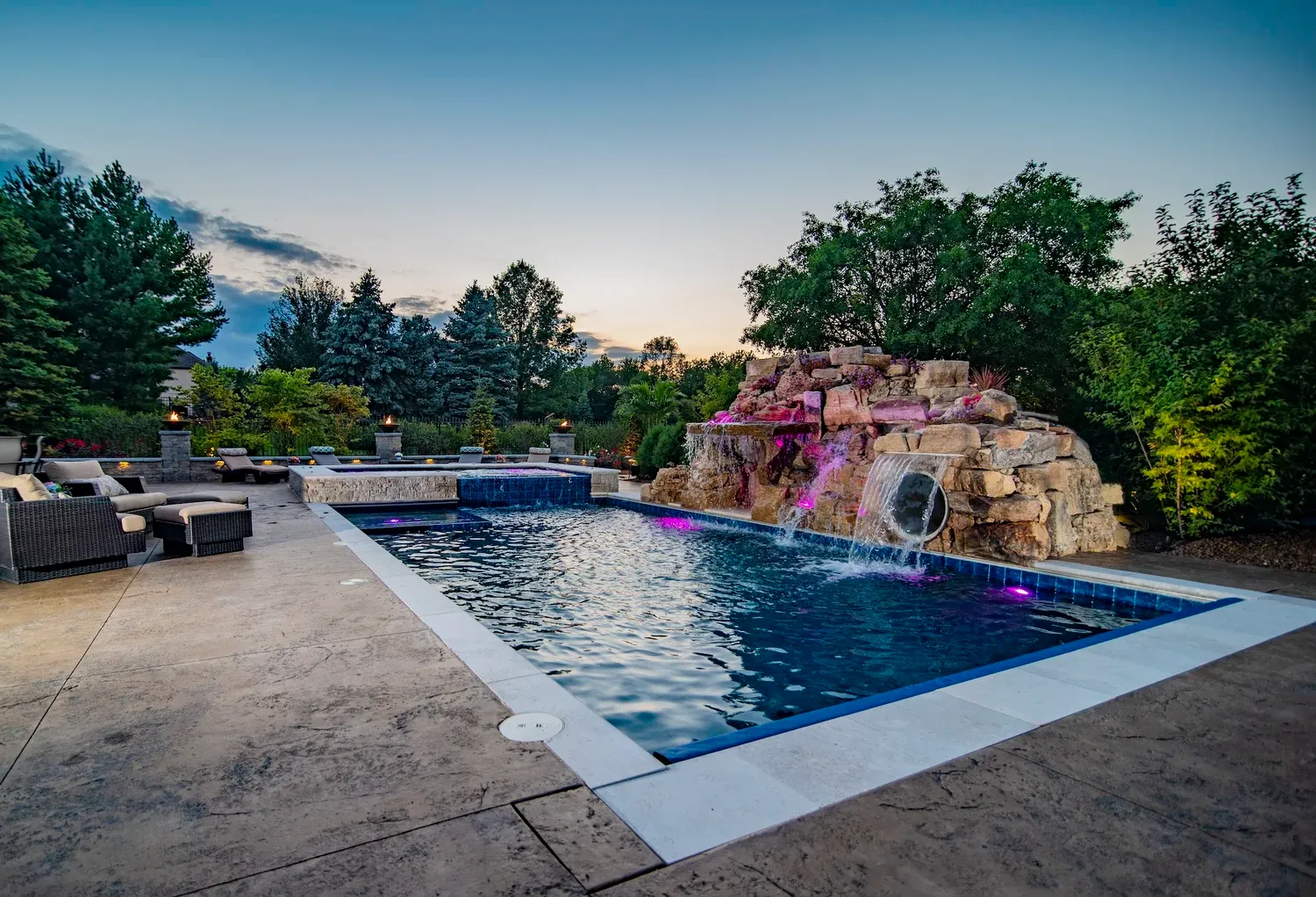
For some homes, the centerpiece is a custom pool framed by elegant hardscaping and layered planting. For others, it is a richly detailed patio with a fireplace, dining space, and outdoor kitchen that makes hosting feel natural. A sloped property may benefit from retaining walls that add both function and architectural definition. A large backyard may call for a pavilion, putting green, or sport court to create zones with purpose.
Planting design remains essential even in feature-rich spaces. Greenery softens stone, cools the visual temperature of hardscape, and creates privacy where it matters most. The right plant palette can make a new project feel established and welcoming rather than newly built. In warm-climate regions, that often means choosing materials and plantings that handle heat well while still delivering texture, color, and year-round structure.
The best feature set is the one that supports your habits. If you love to cook outside, invest there. If evenings with family matter most, prioritize comfort, lighting, and fire elements. If curb appeal is part of the goal, the front approach deserves as much design attention as the backyard.
Budget, timing, and the value of doing it right
Homeowners considering a major outdoor transformation usually ask the same practical questions: How much should we invest, how long will it take, and what drives the final price? The honest answer is that it depends on scope, site conditions, material selection, and the level of customization.
A property with significant grading needs, structural walls, a pool, custom masonry, and architectural shade features will require a different investment than a project focused on a patio expansion, lighting, planting, and a fire feature. Custom work costs more because it should. It reflects design time, skilled labor, higher-quality materials, and the coordination required to deliver a cohesive result.
Timing also varies. Design, revisions, material procurement, permitting where needed, and phased construction all influence the schedule. Homeowners are usually best served by planning ahead rather than waiting until the season they hope to enjoy the space. The projects that feel calm and well-executed are often the ones that were approached with enough lead time to make thoughtful choices.
Doing it right the first time tends to be the better value. A well-built outdoor space adds daily enjoyment, supports entertaining, strengthens curb appeal, and can increase the long-term desirability of the home. It also saves you from paying twice to correct decisions that were rushed or disconnected.
Choosing the right partner for landscape design and installation
A premium project deserves more than a company that installs features. It deserves a partner that can interpret your goals, shape them into a cohesive concept, and execute the work with consistency from the first sketch to the final planting. That is especially important when the project includes multiple components that need to feel unified rather than assembled.
Look for a team that asks deeper questions, not just surface-level ones. They should be interested in how you want the space to feel, how you plan to use it, what level of maintenance fits your lifestyle, and what architectural language already exists on the property. They should also be able to guide you through trade-offs. A stunning material that retains too much heat in summer may not be the best fit around a pool. A dramatic water feature may be worth it for some homeowners and unnecessary for others.
At its best, this process is exciting. You are not simply improving a yard. You are creating a setting for the life you want to enjoy at home. For homeowners ready to invest in craftsmanship, comfort, and a more complete outdoor experience, thoughtful design is where that transformation begins – and careful installation is what makes it lasting.
The most memorable outdoor spaces are the ones that feel as though they could never have been any other way. That is the quiet power of a well-planned property: it welcomes people in, supports the way you live, and makes home feel like the destination.