A water feature should do more than occupy a corner of the yard. The right composition can soften pool noise, create a focal point from the kitchen windows, establish privacy at a patio edge, and give guests something memorable to gather around after sunset. Knowing how to integrate water features begins with treating water as part of the entire outdoor environment, not as a decorative add-on installed after everything else is finished.
For a high-end backyard, that distinction changes everything. The best water features feel inevitable: their stone matches the terrace, their sound suits the setting, and their scale belongs to the architecture of the home. Whether the vision includes a quiet fountain courtyard, a dramatic pool waterfall, or a stream beside a fire feature, thoughtful planning turns moving water into part of the experience of being outdoors.
Start With the Way You Want to Live Outside
Before selecting a spillway, fountain, or waterfall, consider what the backyard needs to accomplish. A family that hosts large weekend gatherings may want a broad water wall that adds energy and visual drama behind an outdoor kitchen or pool. Homeowners creating a private retreat may prefer the gentler sound of a bubbling urn near a covered patio or bedroom garden.
The viewing angle matters as much as the feature itself. Water should reward the places you use most: the dining terrace, lounge area, pool deck, kitchen windows, or a quiet pair of chairs beneath a pergola. A beautiful feature hidden behind dense planting may still add ambiance, but it will not provide the same visual impact as one placed on a strong sightline.
Think about sound with equal care. Flowing water can mask traffic, neighboring activity, and pool equipment, but a waterfall that is too loud near a conversation area can make entertaining less comfortable. The desired effect depends on the setting. A more energetic cascade works well beside an active pool, while a low, consistent sheet of water is often better near a dining area or outdoor fireplace.
Choose a Water Feature That Fits the Architecture
A water feature should look designed for the property, not delivered from another landscape. Contemporary homes often pair beautifully with clean-lined water walls, raised reflecting basins, and narrow scuppers that send precise streams into a pool. Traditional or naturalistic homes may call for hand-selected boulders, layered stone, and planting that makes a waterfall feel established in the landscape.
Material continuity is one of the most effective ways to create that sense of belonging. If the patio uses warm-toned pavers, the coping, veneer, or capstone around the water feature can echo those colors. If the home has limestone details or painted masonry, carrying a related texture into the fountain surround creates a more polished result.
This does not mean every surface must match exactly. Too much repetition can make a backyard feel flat. The goal is a coordinated material palette, with enough contrast to give water its own presence. Smooth tile against textured stone, for example, can make a pool spillway or fountain basin feel especially intentional.
Pool Waterfalls and Raised Spas
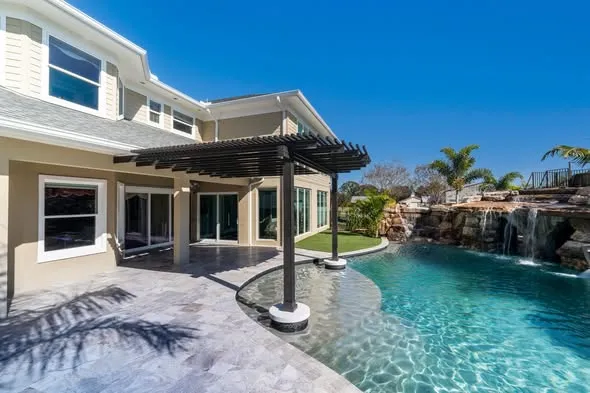
When a custom pool is part of the project, water features can become the natural bridge between the pool, patio, and architecture. A raised spa with a tiled spillway adds movement and visual elevation while creating a warm place to relax. Sheer descents and scuppers provide a more modern expression, particularly when they are integrated into a retaining wall, cabana wall, or the pool’s raised bond beam.
The trade-off is complexity. Every spillway, pump, and additional water line should be planned with the pool system from the start. Retrofitting is possible, but integrating these elements during design generally produces cleaner proportions, better equipment access, and a more cohesive finish.
Standalone Fountains, Water Walls, and Ponds
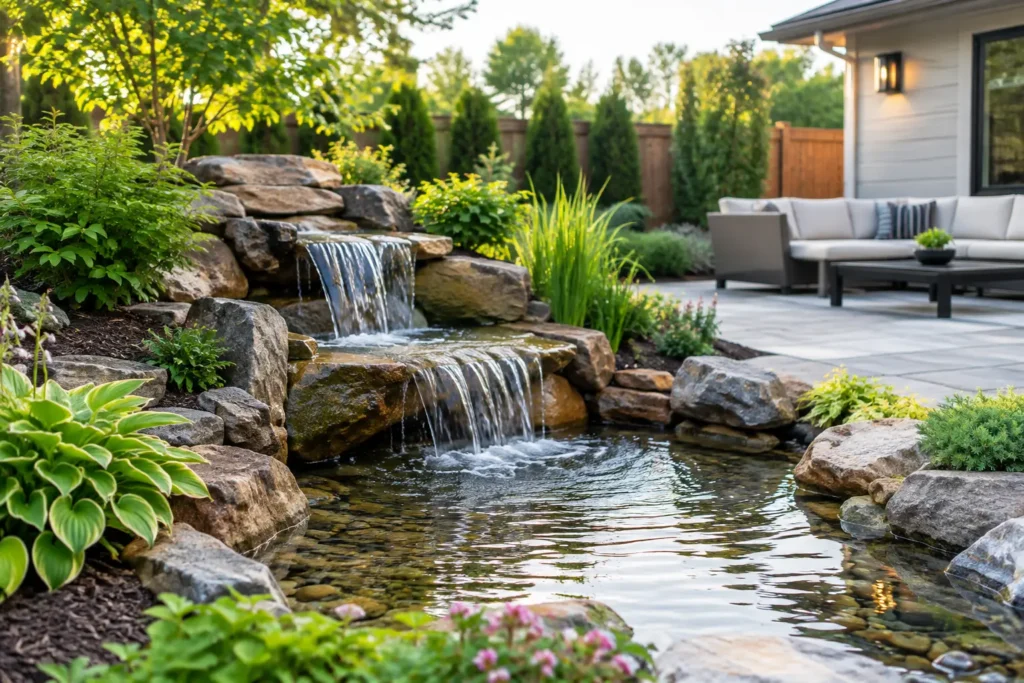
A standalone feature is often the right answer when a pool is not part of the plan or when the goal is to enhance a front entry, side courtyard, or garden destination. A fountain can give a small patio a feeling of enclosure. A water wall can create privacy along a property line while offering a striking backdrop for a lounge. A pondless waterfall can bring a natural, immersive quality to a larger landscape without requiring an open pond.
Pondless systems are especially appealing for homeowners who want the movement and sound of a stream but prefer a simpler safety and maintenance profile. Water disappears into a concealed reservoir, recirculates through the system, and returns over stone. The feature still needs professional construction and periodic care, but it avoids the visual and practical demands of a traditional fish pond.
Plan Water, Power, Drainage, and Access Early
Luxury is often felt in what you do not see: concealed plumbing, quiet equipment, thoughtfully placed drains, and easy access for service. These details are why water features belong in the master plan rather than on a last-minute wish list.
A professional design should account for the water source, recirculation equipment, electrical requirements, drainage patterns, and the route for future maintenance. Equipment should be accessible without becoming a visual distraction or interrupting the best gathering areas. In Sunbelt climates, evaporation, mineral content, and intense sun also affect how a system performs and what finishes will hold up over time.
Drainage deserves special attention. Splash, rain, and pool overflow need a controlled path away from the home and away from areas where standing water could damage hardscapes or planting beds. If the property has slopes or retaining walls, water movement across the entire site should be considered before construction begins.
Municipal requirements and neighborhood guidelines may also influence placement, electrical work, water use, and setbacks. Addressing those factors during design protects the project from costly revisions later.
Layer Water Into the Backyard’s Social Spaces
The most successful outdoor environments give each zone a purpose while keeping the whole property connected. Water can help create those transitions. A fountain near an entry slows the arrival experience. A narrow rill beside a walkway leads guests toward the patio. A waterfall behind the pool provides a destination view from the outdoor kitchen and dining area.
Consider how the feature behaves when people are actually using the space. A dramatic waterfall directly behind seating may look impressive in photographs but can overwhelm conversation. Conversely, a subtle bubbler that is barely visible from the main patio may not deliver the atmosphere you hoped for. Scale, elevation, and the distance between water and seating all shape the result.
Fire and water can be particularly compelling together, provided the design keeps their roles distinct and safe. Fire bowls at the pool edge, a fireplace reflected in a still basin, or a fire feature near a water wall can extend the backyard’s appeal into the evening. The composition should feel calm and balanced, not crowded with competing focal points.
Use Lighting to Make Water Worth Seeing at Night
Without lighting, a water feature may disappear precisely when entertaining moves outdoors. Carefully placed illumination reveals the shimmer, movement, and texture of the water after dark. Underwater lights can make a pool spillway glow, while uplighting can emphasize a stone waterfall or the planting around a fountain.
Avoid treating lighting as an afterthought. Bright fixtures aimed directly at seating can create glare, and too many colors can make a refined backyard feel more like a theme park. Warm, layered lighting is usually the better choice for a resort-style setting. It should help guests move confidently through the space while preserving the mood created by the water.
Automated controls are worth considering for larger projects. Being able to activate pumps, landscape lighting, pool features, and fire elements through coordinated settings makes the outdoor environment easier to enjoy. It also allows the backyard to shift from a quiet weekday evening to a fully illuminated gathering space without a complicated routine.
Design for the Maintenance You Will Actually Want
Every water feature requires care, but the level of care varies widely. A formal fountain with a clean basin may be straightforward to maintain, while a naturalistic stream with abundant stone and planting can require more attention to debris, water quality, and seasonal adjustments. Pool-integrated features often benefit from shared equipment and water treatment, though they still add moving parts to the system.
Ask practical questions before finalizing the design. How will leaves be removed? Where is the pump located? What happens during a power outage? How easily can filters, lights, and valves be reached? The right feature is not necessarily the biggest one. It is the one that delivers the atmosphere you want without creating a maintenance burden that takes away from the pleasure of the space.
Quality construction also matters here. Proper waterproofing, correctly sized pumps, well-built basins, and durable finishes are not glamorous decisions, but they protect the beauty of the investment long after installation day.
How to Integrate Water Features With a Complete Vision
The clearest path to a refined result is to plan the water feature alongside the patio, pool, planting, shade structures, cooking area, and lighting. This gives the design team freedom to establish sightlines, conceal equipment, coordinate materials, and make every element feel connected. It can also prevent the common mistake of using valuable patio space to fit a feature that should have shaped the layout from the beginning.
At Beyond Backyard Living, the conversation starts with the life you want to create outside: slow mornings by the pool, lively dinners under a pavilion, or a private evening retreat framed by the sound of moving water. From there, the feature can be designed not simply to look beautiful, but to make the entire backyard feel more welcoming, complete, and unmistakably yours.
A well-placed water feature changes the rhythm of a property. It gives the eye a destination, gives the landscape a voice, and gives every gathering a setting people will remember.