A beautifully designed pool can lose some of its magic when pumps, filters, heaters, pipes, and control panels sit in full view. Learning how to hide pool equipment is not about pretending it does not exist. It is about giving the mechanical side of your pool a purposeful place in the overall landscape, so your eye lands on water, stonework, fire features, and gathering spaces instead of utility hardware.
The best solutions feel as though they were part of the original plan. They preserve access for service, protect the equipment from unnecessary exposure, and support the architecture of the home and backyard. Done well, equipment screening becomes another layer of craftsmanship in a resort-style outdoor environment.
Start With Access, Airflow, and Local Requirements
Before choosing a screen material or planting a single shrub, consider what the equipment needs to do its job. Pool pumps, filters, heaters, automation systems, and electrical components need clear service access. Some equipment also needs substantial airflow and manufacturer-required clearance around it, particularly gas heaters and heat pumps.
A screen that is too tight may trap heat, restrict ventilation, amplify mechanical noise, or make routine maintenance frustrating. That can turn a beautiful detail into an expensive problem. The right approach depends on the equipment type, its location, local building requirements, and the preferences of the pool professional who will service it.
Plan for a gate, removable panel, or generously sized opening rather than assuming technicians can work around a permanent enclosure. If replacement equipment will someday need to be brought in, the access route matters just as much as the enclosure itself. A luxury backyard should be easy to enjoy and easy to care for.
How to Hide Pool Equipment With a Purpose-Built Screen
A custom screen is often the most direct way to conceal pool equipment while maintaining a polished look. Unlike a basic pre-made fence panel, a purpose-built screen can match the home’s exterior finishes, echo the geometry of a patio, and account for the exact service clearances around the equipment.
Slatted wood and composite screens
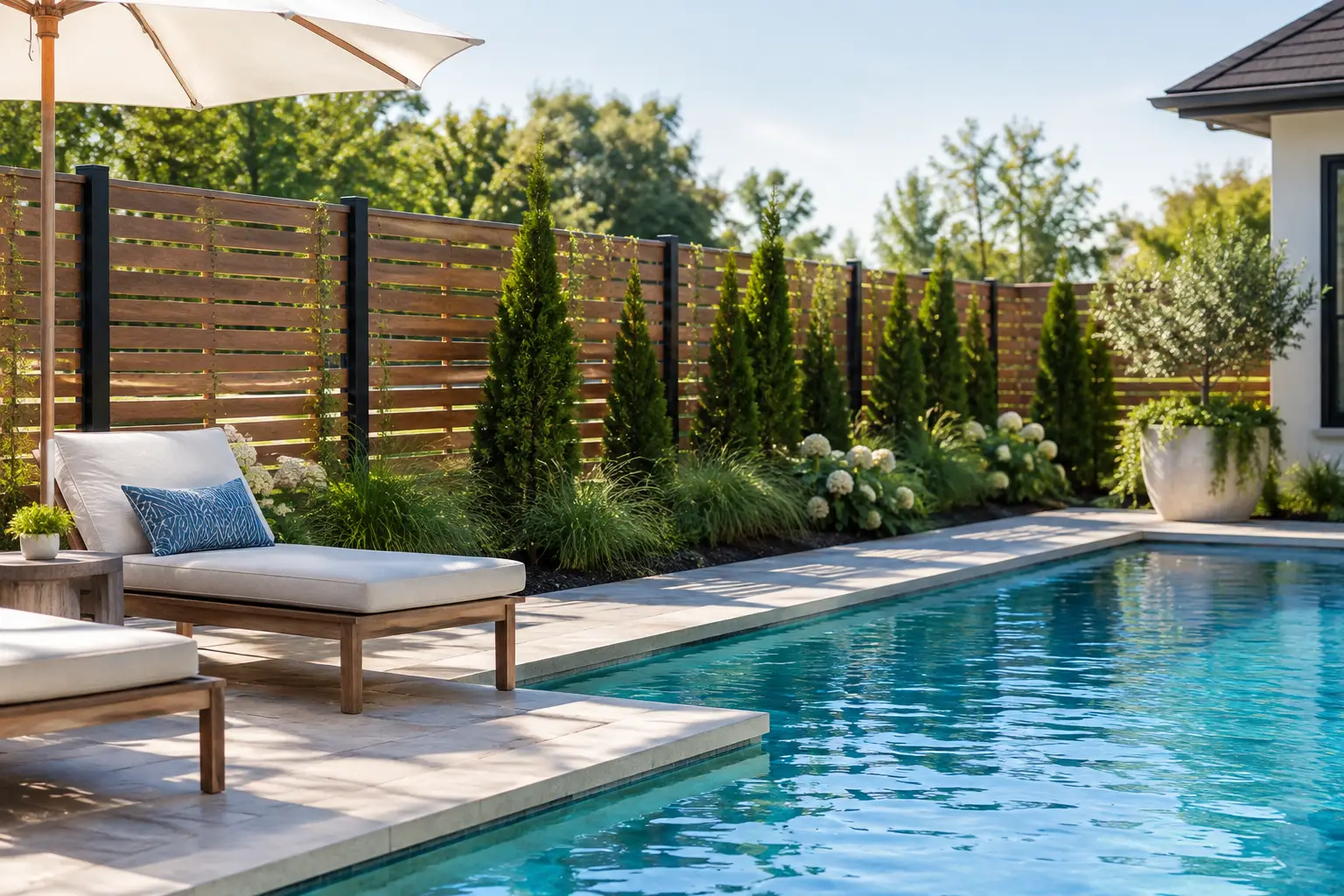
Horizontal slats create a clean, architectural effect that works especially well with contemporary homes, modern pool designs, and linear hardscapes. Spacing between slats allows air movement while softening the view from nearby seating areas. Wood brings warmth, while high-quality composite materials can offer a lower-maintenance alternative in demanding climates.
The trade-off is visibility. Wider spacing improves ventilation but reveals more of what is behind it. A designer can balance the opening size, screen depth, and viewing angles so the equipment disappears from the patio or pool lounge without becoming sealed off.
Masonry and stucco walls
When the goal is a more substantial, enduring presence, a low masonry wall or stucco-finished enclosure can make equipment feel integrated into the property rather than added afterward. Stone veneer can relate to retaining walls, a fireplace, or an outdoor kitchen. Smooth stucco may suit a clean-lined desert or coastal landscape.
These walls are particularly effective when the equipment pad sits near a property edge, where the screen can also improve privacy or define a transition between outdoor rooms. Ventilation openings, service doors, and appropriate setbacks should be designed into the wall from the beginning, not treated as afterthoughts.
Metal panels for a sharper architectural statement
Decorative metal panels can bring a more tailored look to a pool equipment area. Laser-cut designs, dark powder-coated finishes, and framed steel details work well in homes with modern architecture or bold exterior accents. They can also cast attractive shadows across a planting bed or adjacent wall.
Metal is durable, but it can absorb heat in sunny climates. Placement and finish selection matter, especially around equipment that already generates warmth. It is often most successful as part of a ventilated screen system rather than a fully enclosed box.
Use Planting to Soften the View, Not Block the Work
Layered planting can make a pool equipment area visually recede into the landscape. Evergreen shrubs, ornamental grasses, small trees, and textured groundcovers give the eye something more inviting to rest on. The objective is not to create a dense, overgrown thicket. It is to build a living frame that complements the pool and keeps the utility zone from feeling exposed.
Choose plant material based on mature size, maintenance needs, sun exposure, and debris. Plants that shed heavily can create extra cleanup around pumps and filters. Aggressive roots may be a poor choice near underground plumbing. Thorny selections may make service access uncomfortable.
For many high-end backyards, the strongest composition combines a structured screen with planting in front of it. The screen provides reliable coverage year-round, while the landscape softens its edges and adds depth. A layered bed of low flowering plants, mid-height grasses, and taller evergreen shrubs can turn an equipment zone into a deliberate garden moment.
Let the Equipment Enclosure Do More Than One Job
The most elegant way to conceal mechanics is often to incorporate them into a larger backyard feature. Instead of treating the pool pad as an isolated problem, make its enclosure useful to the way your family gathers, cooks, relaxes, and entertains.
A screen wall can become the backdrop for a built-in bench, a sculptural planter, or a water feature. A masonry enclosure can continue into a privacy wall that supports an outdoor shower or frames a lounge area. Near an outdoor kitchen, the same materials can create visual continuity between the cooking space and the pool equipment zone.
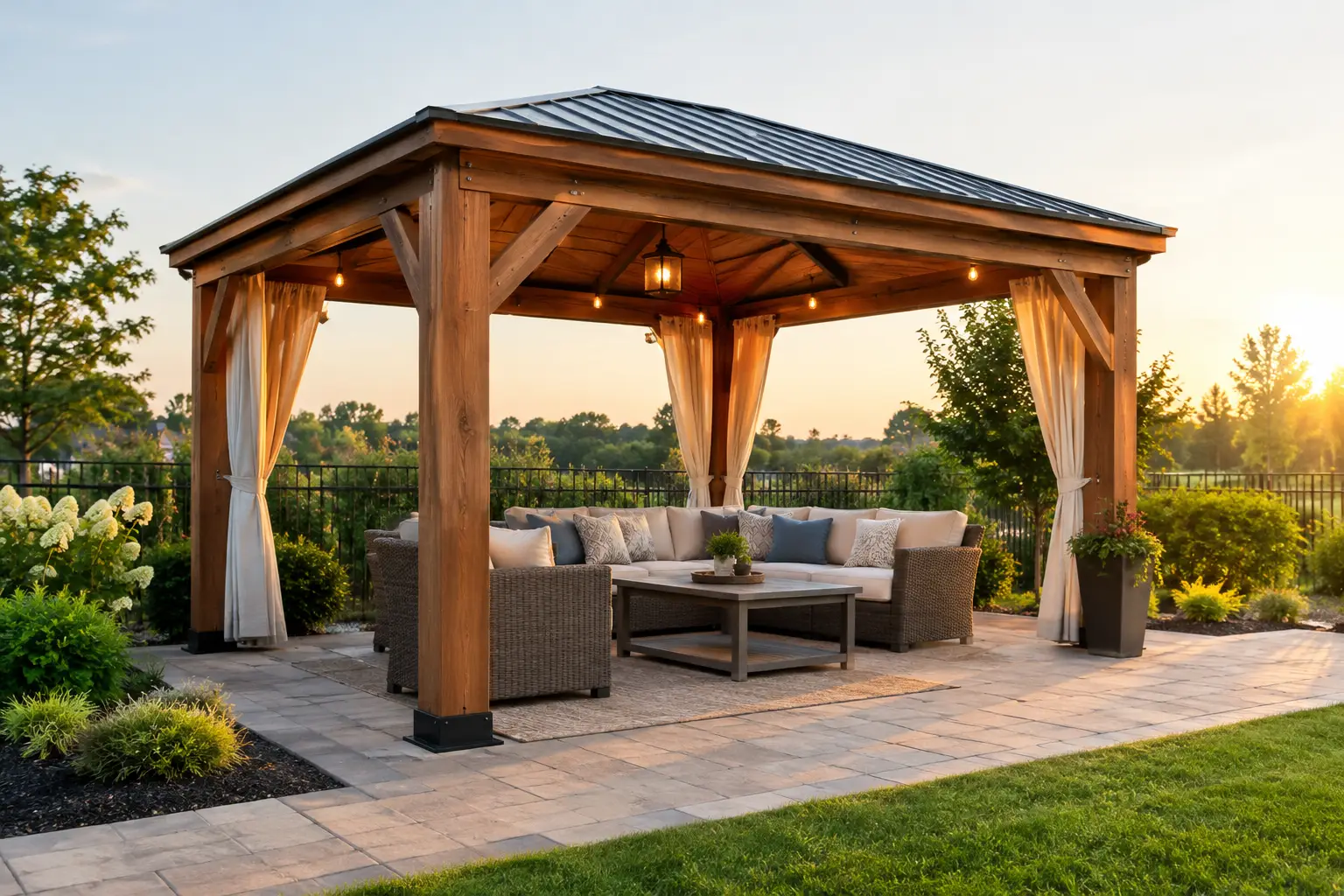
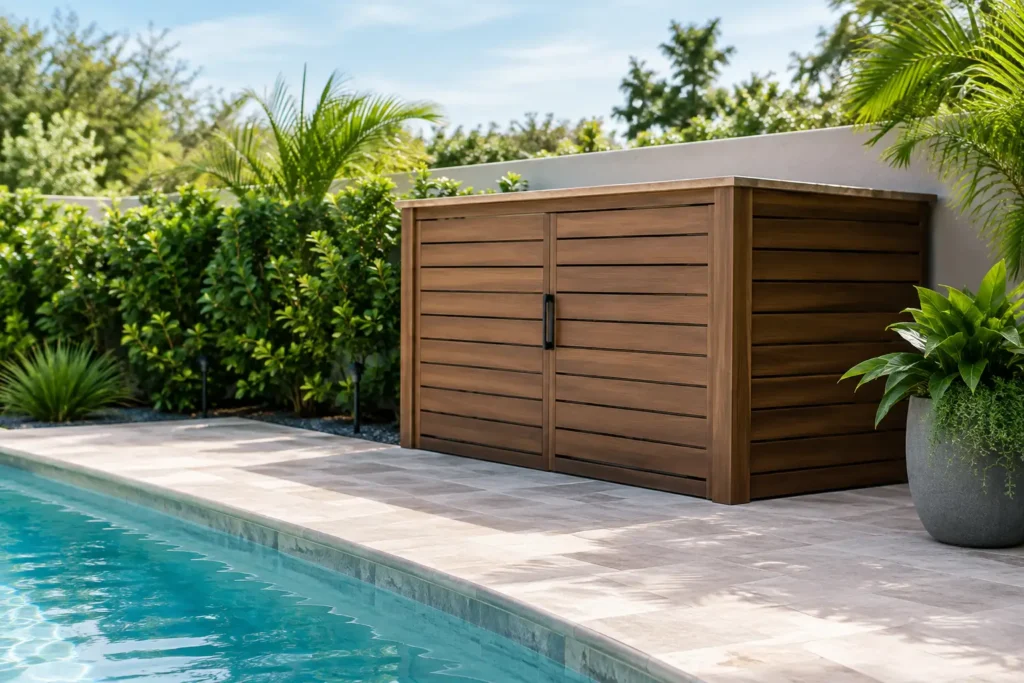
In some properties, equipment can be located behind a pavilion, tucked beside a detached cabana, or incorporated into a storage structure designed to hold pool accessories and landscape tools. This requires careful early planning, but it is one of the best ways to create a backyard where every element appears intentional.
Consider Sightlines From the Places You Use Most
Not every view deserves the same level of screening. Stand at the back door, in the primary outdoor seating area, at the dining table, and from inside the home looking out toward the pool. Those are the sightlines that deserve the most attention.
A screen may only need to be five or six feet high to block the equipment from a nearby patio, while a taller wall could feel heavy and unnecessary. Conversely, equipment located on a raised lot or visible from a second-story window may need a more layered approach using both structure and planting.
Also consider sound. Modern equipment can be relatively quiet, but the steady hum of a pump can still affect the atmosphere around a fire pit or bedroom window. A thoughtfully designed enclosure may help direct sound away from key living areas, though it should never compromise ventilation or maintenance access just to reduce noise.
Avoid the Common Shortcuts
Temporary lattice, a few undersized shrubs, or a narrow fence installed directly against equipment may solve the visual issue for a season, but they rarely deliver a lasting result. They can warp, become overgrown, impede repairs, or look disconnected from the rest of the landscape.
Another common mistake is matching the screen only to the fence line rather than to the home and hardscape. Pool equipment screens are often visible from the patio, which means they should relate to the materials guests see up close: pavers, coping, stone, stucco, cabinetry, and architectural trim.
Finally, do not let aesthetics override the practical requirements of the system. The best screen is one that looks effortless because it was designed around clearances, airflow, drainage, safety, and future service from the start.
Design the Concealment Alongside the Pool
If a new pool or full backyard transformation is on the horizon, decide where equipment will live during the earliest design conversations. Its location can influence the shape of patios, planting beds, retaining walls, utility routes, and entertaining spaces. Moving equipment late in the project can create added cost and limit the design options.
At Beyond Backyard Living, the most memorable outdoor environments are planned as complete compositions, where the pool, landscape, hardscape, and architectural features support one another. A well-designed equipment enclosure may not be the feature that earns the first compliment, but it protects the visual calm that makes every other feature shine.
Your pool equipment has a necessary role behind the scenes. Give it a home that performs beautifully, preserves the views you invested in, and lets your backyard feel like the escape it was designed to become.