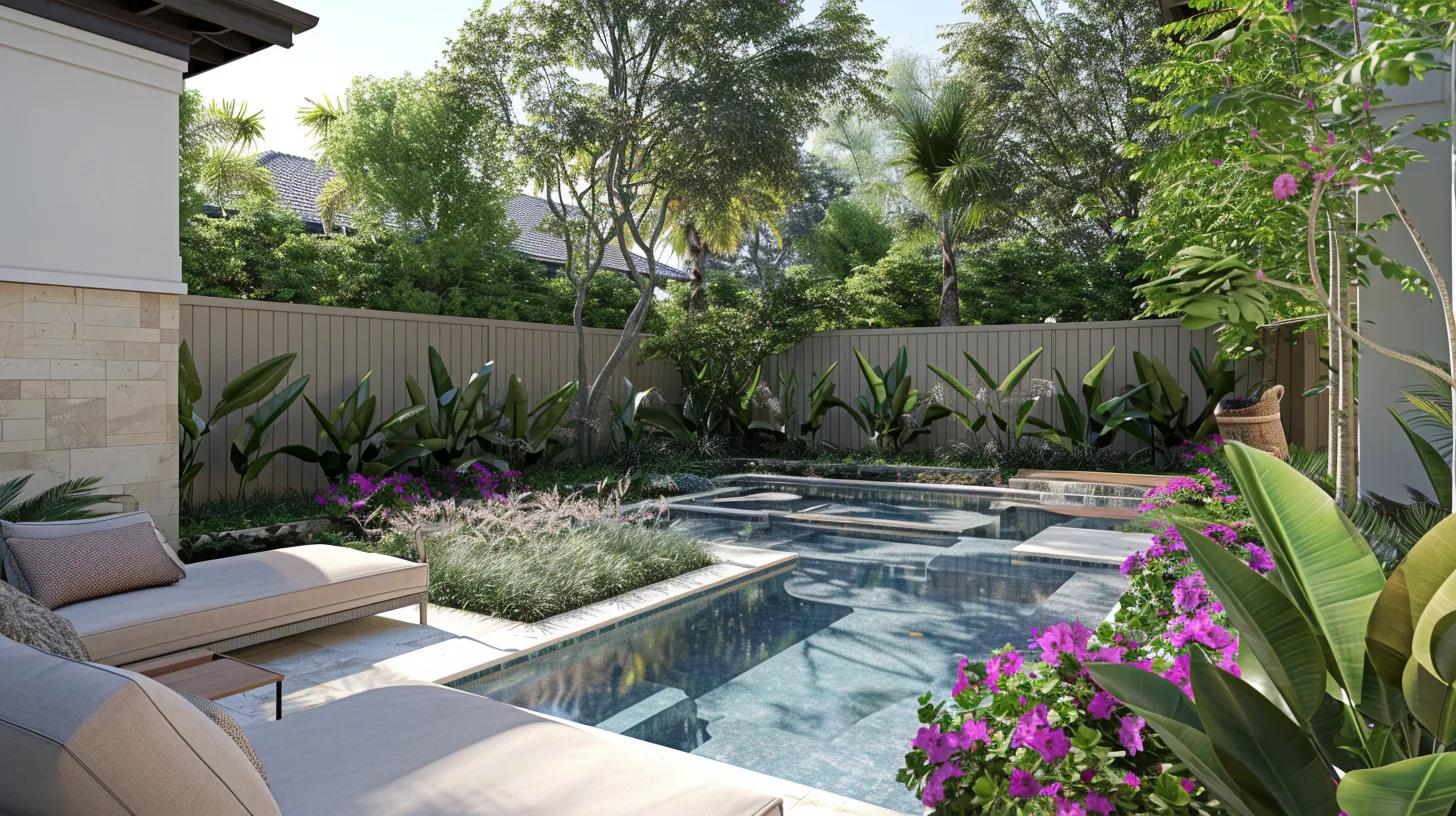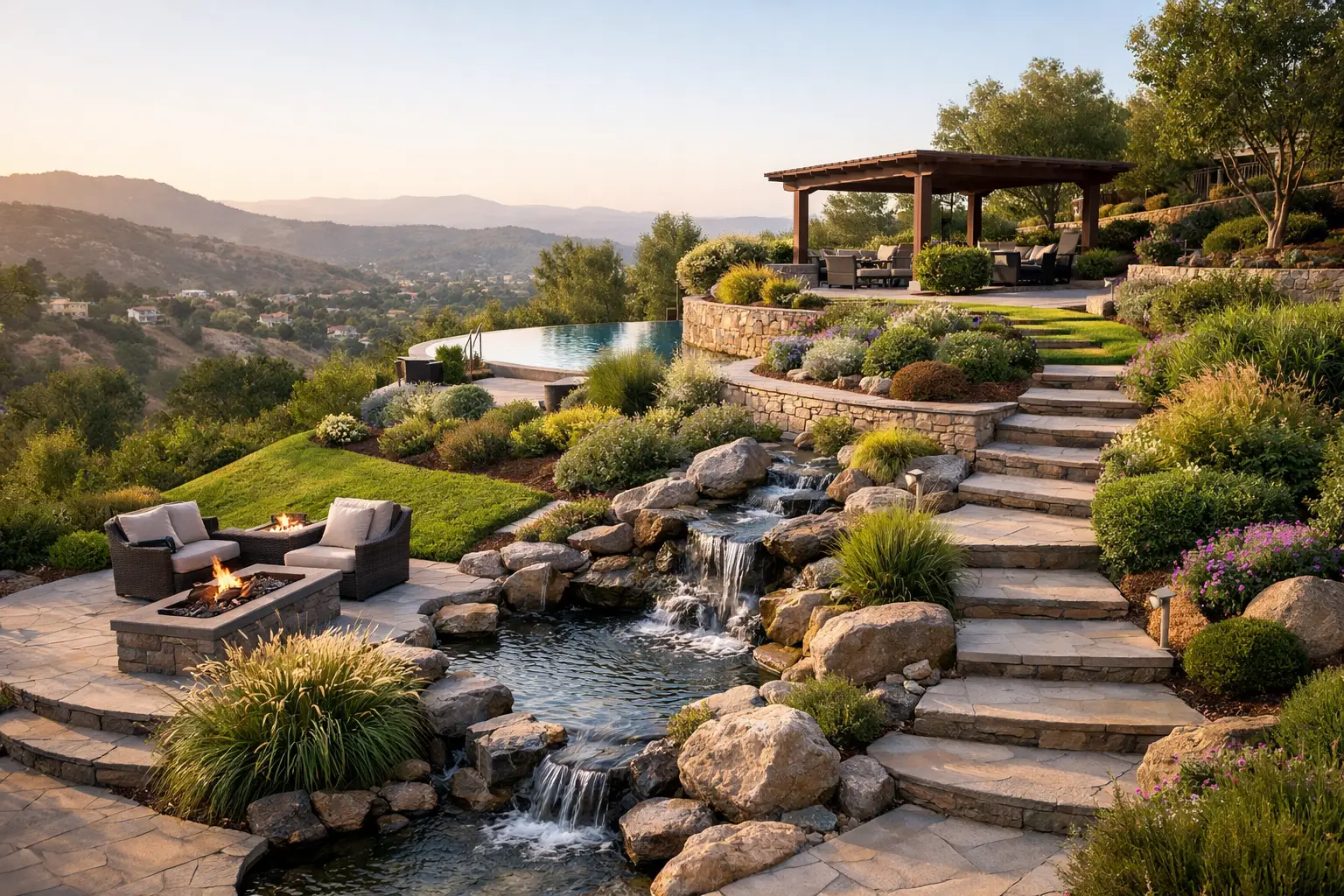
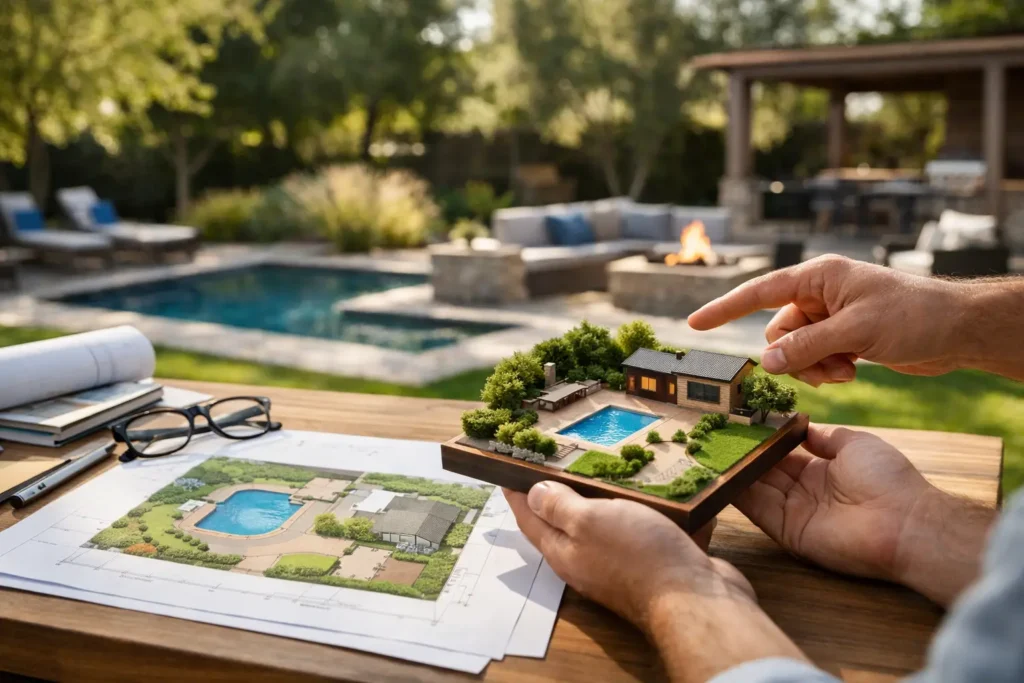
A beautiful backyard rarely comes from adding features one at a time. The pool goes in first, then the patio feels too small, then the grill station ends up too far from the house, and suddenly the space works hard without ever feeling finished. A true guide to backyard masterplans starts with a different idea: design the entire experience before a single shovel hits the ground.
For homeowners investing in a premium outdoor space, that shift matters. A masterplan is not just a sketch of where things go. It is the framework that helps your property feel cohesive, refined, and easy to live in. It considers how you entertain, where people naturally gather, how the sun moves across the yard, and what will still make sense five or ten years from now.
What a backyard masterplan really does
The best backyards feel effortless because the thinking behind them is anything but casual. A masterplan organizes the property as one complete environment rather than a collection of separate projects. That means the pool, pavilion, fire feature, planting, lighting, drainage, and circulation all support each other.
When this is done well, the result is visual harmony, but the practical payoff is just as important. You avoid expensive rework, awkward transitions, and the common problem of building something impressive that never becomes comfortable. A well-planned space should look polished on day one and function beautifully on an ordinary Tuesday night.
That is especially true for larger investments. If you are considering custom hardscaping, outdoor cooking, water features, architectural shade, or recreation areas, the relationships between those elements matter as much as the features themselves. Luxury outdoors is not about adding more. It is about creating balance.
A guide to backyard masterplans begins with lifestyle
Before materials, before plant palettes, before debating a pavilion versus a pergola, there is a more useful question: how do you want the space to feel when people are actually using it?
Some families want a resort-style atmosphere with a pool, tanning ledge, shaded lounge area, and evening fire feature. Others want a backyard built around hospitality, with an outdoor kitchen, generous dining space, layered lighting, and room for guests to move easily. Some want both. The point is that every strong masterplan starts with the rhythm of real life, not a shopping list of amenities.
That is where many backyards go off course. Homeowners often fall in love with individual ideas from photos, but photos rarely show the hidden planning decisions that make those spaces work. The best design process asks what kind of hosting you do, how many people you gather with, whether children or grandkids need room to play, how much privacy you want, and whether your outdoor living season is centered on daytime lounging, evening entertaining, or both.
These details shape everything that follows. A family that hosts large weekend gatherings will need stronger circulation and more purposeful seating zones than a couple designing a quiet private retreat. A homeowner who cooks outdoors several nights a week should think differently about utility access, prep space, and weather protection than someone who wants a simple grill island for occasional parties.
The key layers of a strong masterplan
A backyard masterplan works best when it is built in layers. The first layer is movement. People should be able to move comfortably from the house to the main gathering spaces without squeezing through bottlenecks or cutting across functional areas. Good circulation is one of those details people feel immediately, even if they never consciously name it.
The second layer is zoning. In a luxury backyard, each area should have a purpose while still feeling connected to the whole. Dining, lounging, swimming, cooking, sunning, and recreation all need enough room to function without competing for space. The more active the yard, the more important those transitions become.
The third layer is scale. This is where many do-it-yourself layouts fall apart. A patio can look generous on paper and still feel crowded once furniture, traffic paths, and door swings are factored in. Fire features need enough surrounding room to invite conversation. Outdoor kitchens need landing areas, storage, and safe spacing around heat. Pools need visual breathing room and practical deck space, not just enough room to exist.
Then there is the architectural layer. Pergolas, pavilions, retaining walls, fireplaces, columns, and grade changes add shape and presence to the environment. These features help a backyard feel designed rather than simply installed. They also define spaces in a more elegant way than trying to solve every need with furniture alone.
Finally, there is the sensory layer. Water movement, lighting, planting, texture, shade, and privacy all influence how the space feels. This is where a backyard begins to shift from functional to memorable.
Why phased projects still need one plan
Not every homeowner wants to complete everything at once, and that is perfectly reasonable. In many cases, phased construction is the smart move. The problem is not phasing. The problem is building in phases without a unifying plan.
A masterplan allows you to prioritize what matters now while protecting the long-term vision. You might begin with a pool and surrounding patio, then add an outdoor kitchen and pavilion later. Or you may start with grading, drainage, retaining walls, and core hardscape so the property is properly prepared for future amenities. Either approach can work if the final picture is already clear.
Without that clarity, phase one often creates limitations for phase two. Utility lines end up in the wrong place. Walkways feel like afterthoughts. Materials do not match. Sightlines become cluttered. What looked efficient at first can become more expensive and less elegant over time.
This is one reason homeowners drawn to custom outdoor environments often prefer a design-build approach. When the design vision and installation strategy are aligned from the beginning, the finished result tends to feel more intentional.
Budget, value, and where to spend wisely
A premium backyard should feel indulgent, but the smartest investments are usually the ones that improve both daily use and long-term cohesion. Foundational work such as grading, drainage, circulation, retaining, utility planning, and well-proportioned hardscape may not be the most glamorous part of the project, yet it often has the biggest impact on quality.
That does not mean signature features are secondary. A custom pool, statement fireplace, outdoor kitchen, or dramatic water feature can absolutely define the experience. But standout elements have more power when the supporting framework is right. An extraordinary feature placed in a poorly planned layout still feels compromised.
This is where trade-offs matter. If budget requires choices, it is often better to build fewer elements well than to squeeze in every wish-list item at a lower level. A spacious patio with excellent materials, thoughtful lighting, and a beautifully integrated fire feature may deliver more real enjoyment than a yard packed with amenities that all feel undersized.
Common mistakes masterplanning helps you avoid
The most expensive backyard mistakes are rarely about taste. They are about sequence and proportion. A patio that is too small for entertaining, a pool deck with little shade, a kitchen placed too far from the social center, or a fire pit located where smoke disrupts seating can all weaken the experience.
Privacy is another issue that deserves more attention early. Many homeowners focus first on what they want to build, then later realize neighboring views, second-story windows, or street exposure change how comfortable the space feels. Privacy planning should happen from the start through layout, structures, walls, and planting.
There is also the matter of seasonality. In Sunbelt climates, outdoor living can stretch through much of the year, but heat, glare, and afternoon sun still shape how spaces are used. Shade structures, orientation, and material selection are not decorative decisions. They directly affect comfort.
How to know your backyard plan is working
A strong plan usually feels right before it is built because it answers practical questions clearly. Where do guests arrive and gather? Where do food and drinks move? Where do kids play while adults relax? Where do you get sun, and where can you escape it? What does the view look like from inside the house at night?
If those answers are fuzzy, the design likely needs more refinement. A great masterplan should make the property feel larger, calmer, and more purposeful. It should support quiet mornings, lively dinners, and everything in between.
For homeowners who want a backyard that feels elevated rather than pieced together, this is the difference-maker. The most compelling outdoor spaces are not built around isolated features. They are built around a vision, then executed with craftsmanship and discipline. That is how ordinary square footage becomes a place people remember.
Beyond Backyard Living approaches these projects with that bigger picture in mind, because the goal is never just to add improvements. It is to shape an outdoor setting that feels like it truly belongs to your home and to the life you want to live there.
If you are planning a major transformation, give the whole property permission to be designed as one complete experience. The backyard you want is usually not a single feature away. It is a smart plan away.