A fire feature changes the way a backyard is used after sunset. It turns the edge of a patio into the seat everyone wants, gives an outdoor kitchen a natural gathering point, and makes a cool evening feel like an occasion. But the decision between gas versus wood firepits reaches beyond flame preference. It affects your patio layout, maintenance routine, entertaining style, and the character of the finished space.
For a high-end backyard, the better choice is rarely the one with the longest feature list. It is the one that belongs naturally in the way you live outdoors.
Gas Versus Wood Firepits: Start With the Experience
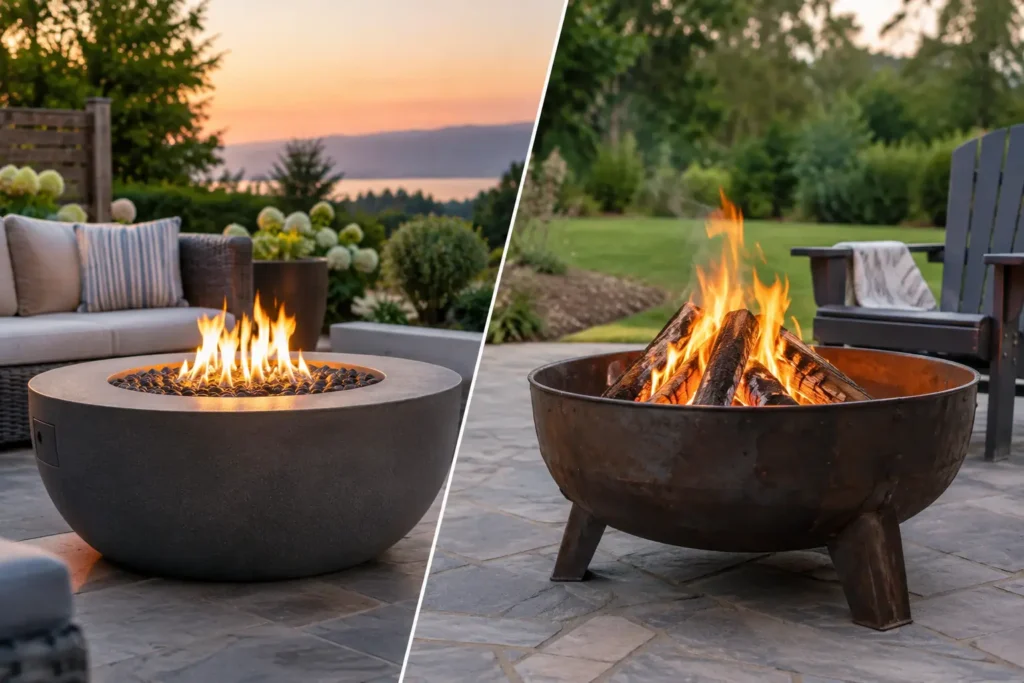
Wood firepits create a familiar, elemental ritual. There is wood to stack, a flame to build, the soft crackle of burning logs, and the unmistakable scent of a campfire. For homeowners who picture late nights with s’mores, stories, and a little more spontaneity, that sensory experience is the point. A wood-burning firepit feels relaxed, nostalgic, and wonderfully unpolished in the best way.
Gas firepits offer a different kind of luxury: immediate atmosphere. With a key, switch, or electronic ignition, the fire is ready when your guests arrive. The flame is consistent, the seating area stays cleaner, and the evening can end without waiting for embers to burn down. It is particularly well suited to homeowners who entertain often, want a refined resort-style setting, or prefer to enjoy a fire for a short weeknight gathering as easily as a long weekend dinner.
Neither experience is inherently better. A wood firepit invites people to participate in the fire. A gas firepit lets people settle into the moment around it.
The Design Difference Is Bigger Than the Burner
The fuel source shapes what a firepit can become within the overall landscape design. A gas fire feature can be tailored to feel architectural and intentional, whether it is a low square gathering table, a linear fire feature alongside a pool, or a custom masonry firepit anchoring a paver terrace. Clean-burning gas allows for a more controlled flame presentation with fire glass, lava rock, ceramic logs, or a combination selected to complement the surrounding materials.
This flexibility makes gas especially compelling when the backyard includes multiple polished features. A firepit can echo the stone on retaining walls, the finish of an outdoor kitchen, or the color palette of a pavilion ceiling. It can be centered within a conversation area without adding a visible wood-storage zone or ash-management station. The result feels composed from every angle, including the view from inside the home.
Wood firepits can be equally beautiful, but they need more room to breathe. A properly planned design considers spark clearance, seating distance, smoke movement, and a convenient place to store dry firewood. In a larger property, a wood-burning firepit may become a destination at the edge of the yard, set into a naturalistic landscape or a separate gravel-and-stone lounge. That sense of destination can be a major advantage. It gives the backyard another layer of discovery.
For more formal patios, pool decks, and tightly integrated outdoor living areas, gas often delivers the cleaner visual line. For expansive grounds and homeowners who want a more rustic fireside ritual, wood can create a setting with memorable personality.
Convenience and Maintenance: What Happens After Guests Leave?
A beautiful fire feature should fit your real schedule, not just your vision board. This is where gas has a clear practical edge.
With a natural gas firepit, there are no logs to purchase, haul, stack, or protect from weather. There is no ash to remove and no lingering smoke on clothing or outdoor cushions. Propane can provide similar convenience where a natural gas connection is not practical, although the tank needs to be refilled or exchanged and concealed thoughtfully within the design.
Gas systems still require professional installation and periodic attention. Burners, ignition components, media, and gas connections should be inspected and maintained according to the manufacturer’s guidance. A quality cover helps protect the feature from debris and weather. These tasks are generally straightforward, but they should be part of the ownership plan.
Wood firepits ask more of the homeowner. Ash needs to be removed only after it is fully cool, firewood must stay dry, and the firepit should be cleaned regularly to preserve its appearance and airflow. Depending on the wood and wind direction, smoke can drift toward guests, open windows, a pool area, or neighboring properties. Some homeowners consider that part of the charm. Others discover that it limits how often they use the feature.
If your idea of a perfect Thursday night is stepping outside, lighting the fire, and relaxing within minutes, gas is likely the more natural fit. If tending a fire is part of how you unwind, wood may be worth the added effort.
Safety, Local Rules, and Smart Placement
Every fire feature needs intentional placement, materials, and installation. This is not an area for guesswork, especially in Sunbelt communities where outdoor rooms are used year-round and local requirements can vary widely.
Wood-burning firepits require particular attention to clearance from structures, overhead elements, trees, and combustible surfaces. Conditions such as drought, high winds, and seasonal burn restrictions can also affect when a wood fire can be used. Smoke considerations matter just as much in neighborhoods with close lot lines.
Gas firepits eliminate flying sparks and reduce smoke, but they are still open-flame features. They require properly sized gas lines, approved components, correct ventilation where applicable, and shutoff access. If the firepit is part of a covered patio or pavilion plan, the design must account for ceiling height, ventilation, and the specific fire feature being installed.
The best time to address these details is early in the design process. A professionally planned outdoor environment can position the fire feature where it feels inviting while respecting circulation paths, pool safety, cooking zones, views, and local code requirements. Good design makes the responsible choice look effortless.
Cost: Look Beyond the Initial Firepit Price
The upfront cost of a firepit depends heavily on scale, materials, site conditions, and the complexity of installation. A basic wood-burning bowl may cost less at the beginning, while a custom gas firepit with masonry, a burner system, ignition, and a new gas connection represents a larger investment.
Yet the project budget should be viewed in the context of the complete outdoor space. A fire feature is not simply an object on a patio. It may require excavation, a stable base, hardscape integration, gas or electrical work, drainage planning, custom coping, and coordinated seating. When those elements are designed together, the firepit looks like it was always meant to be there.
Operating costs also vary. Natural gas can be a convenient long-term fuel source, while propane pricing and refill frequency depend on how often the feature is used. Wood costs fluctuate by type, availability, and whether you season and store it yourself. More significantly, consider the cost of friction. A feature that is easier to use may become a feature your family enjoys far more often.
When a Hybrid Backyard Makes Sense
Some of the most successful properties do not force one fire experience to do everything. A gas firepit near the main patio can support cocktail hour, poolside conversation, and impromptu evenings outdoors. A separate wood-burning firepit, placed farther into the landscape, can create a more casual setting for weekends and family traditions.
This approach works best on properties with enough space to give each zone its own purpose. It also allows the formal entertaining area to remain polished while preserving a place for the crackle and ritual of a true wood fire. The key is not adding features simply because there is room. Each one should earn its place in the way the backyard flows and feels.
Choose the Fire Feature You Will Use Most
Choose gas if you value on-demand ambiance, a clean patio, consistent flames, and a fire feature that integrates elegantly with a pool, outdoor kitchen, or covered living area. Choose wood if the scent, sound, and hands-on ritual of building a fire are central to the experience you want to create.
At Beyond Backyard Living, the most compelling firepit projects begin with a wider question: where do you want people to gather, linger, and make memories? Let that answer guide the flame, the materials, and the setting around it. A thoughtfully designed fire feature does more than warm the patio. It gives your backyard a reason to stay open a little later.