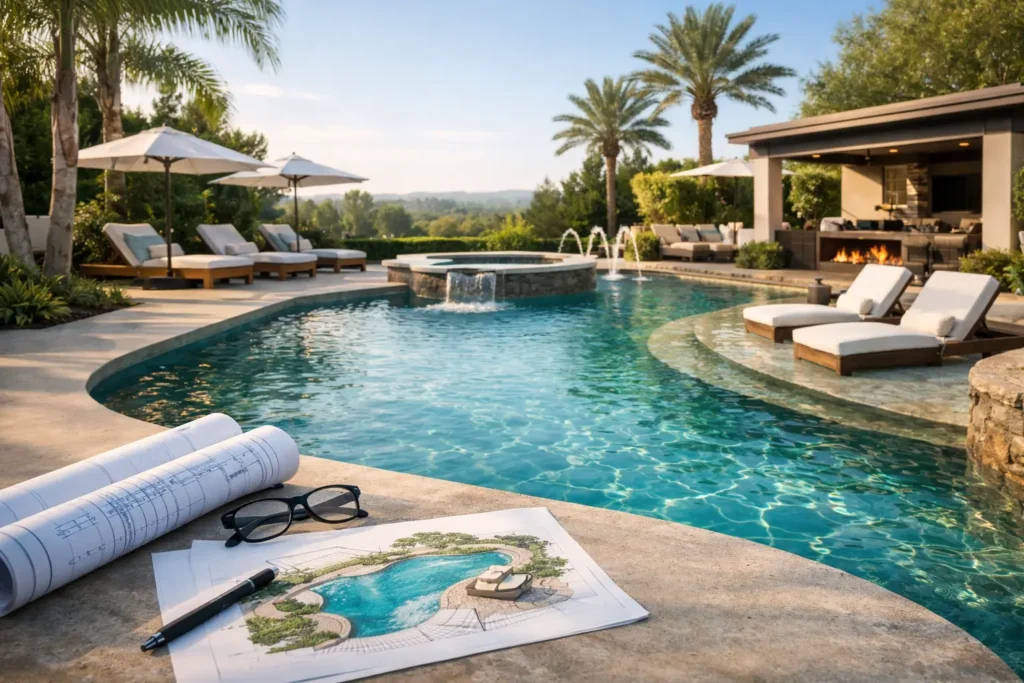
A beautiful pool rarely starts with the pool itself. It starts with a decision about how you want your backyard to feel on a Saturday afternoon, during a family holiday, or when friends stay long after dinner because no one wants to go inside.
That is why a custom pool planning guide matters. The best pools are not dropped into a yard as standalone features. They are composed as part of a larger outdoor experience, with the water, hardscape, lighting, architecture, and gathering spaces all working together.
What a custom pool planning guide should solve first
Before shape, tile, or tanning ledges enter the conversation, the first question is simpler and more revealing – how will you actually live in the space? Some homeowners want a calm retreat with clean lines, quiet water, and room for loungers. Others want a social setting built around entertaining, outdoor dining, a fire feature, and a pool that becomes the visual centerpiece of the property.
Those two goals can lead to very different designs, even on the same lot. A pool designed for active family use may prioritize shallow areas, open deck space, and direct sightlines from the house. A pool meant for evening entertaining may lean into dramatic lighting, integrated seating, and strong connections to a covered patio or outdoor kitchen.
This is where many projects either gain clarity or drift off course. If every choice is made separately, the result can feel fragmented. If the lifestyle vision is clear from the beginning, the pool becomes part of a complete environment instead of a collection of expensive features.
Start with the property, not the wish list
A strong custom pool planning guide always begins with the realities of the site. Property lines, drainage, grade changes, sun exposure, privacy, existing structures, and access for construction all affect what is possible and what will feel natural once built.
A backyard with a slope may be ideal for a dramatic negative edge effect, retaining walls, or tiered entertaining zones. A flatter lot may support a broader deck, larger open lawn transitions, or a long geometric pool that extends the architecture of the home. If neighboring homes overlook the yard, privacy design becomes just as important as the waterline tile.
Sun and shade deserve more attention than most homeowners expect. A tanning shelf that receives brutal afternoon sun in July may look appealing in renderings but feel less inviting in real life. Likewise, a lounge area that never gets direct light may miss the mark if your goal is a resort-style atmosphere. The right design balances comfort across the day, not just appearance from one angle.
Shape, scale, and placement set the entire mood
Pool design is often discussed in terms of style, but placement is just as influential as shape. A pool positioned too far from the home can disconnect the backyard experience. Too close, and it may limit circulation, crowd a patio, or dominate the architecture in a way that feels forced.
The most successful layouts create flow. You step outside and understand where to gather, where to relax, where to dry off, where to eat, and where the eye should land. That sense of order is what gives a backyard a finished, high-end feel.
Geometric pools often pair well with modern or transitional homes because they reinforce structure and symmetry. Freeform pools can feel softer and more organic, especially when paired with lush planting, natural stone, and water features. Neither is inherently better. It depends on the home, the setting, and the type of atmosphere you want to create.
Scale matters just as much. A larger pool is not automatically more luxurious. If it consumes the entire yard, leaving little room for outdoor living, the space can feel less usable. In many premium backyards, the most elegant solution is a well-proportioned pool supported by generous entertaining areas and thoughtful transitions.
Plan the pool with the full outdoor living space in mind
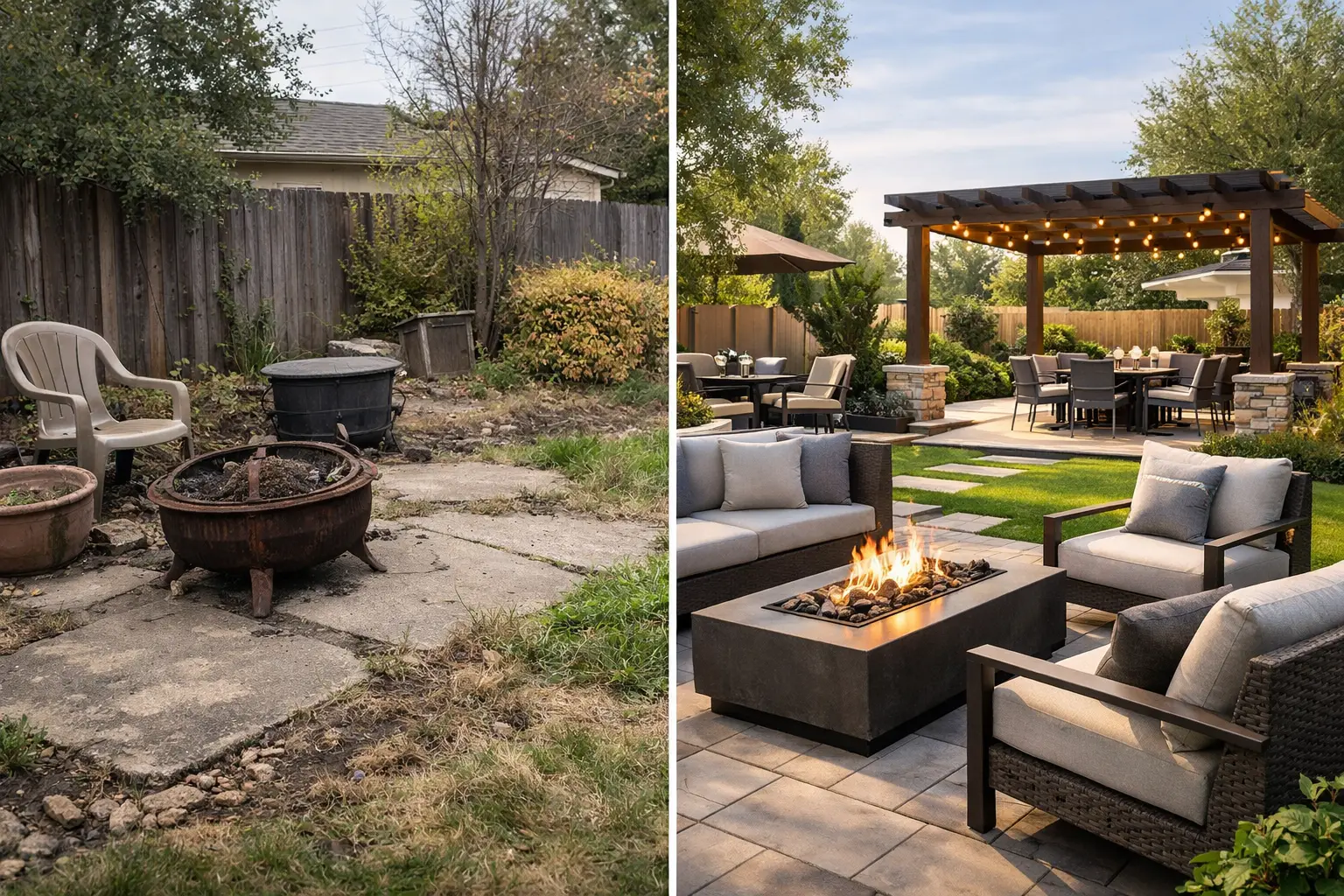
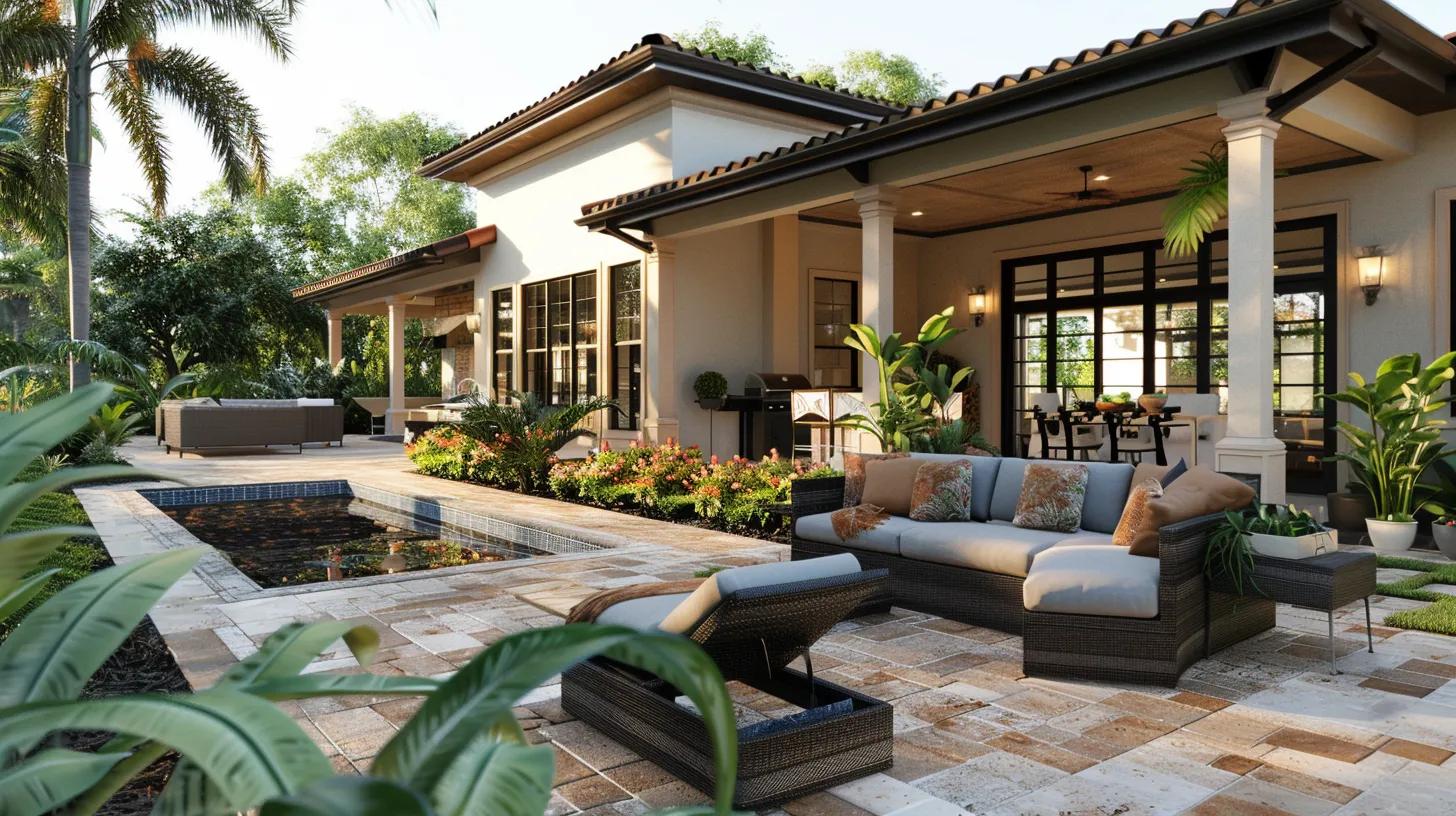
This is where premium projects separate themselves. A pool should not be planned in isolation from the patio, pavilion, kitchen, fire feature, or landscape design. The strongest results come from treating the backyard as one composition.
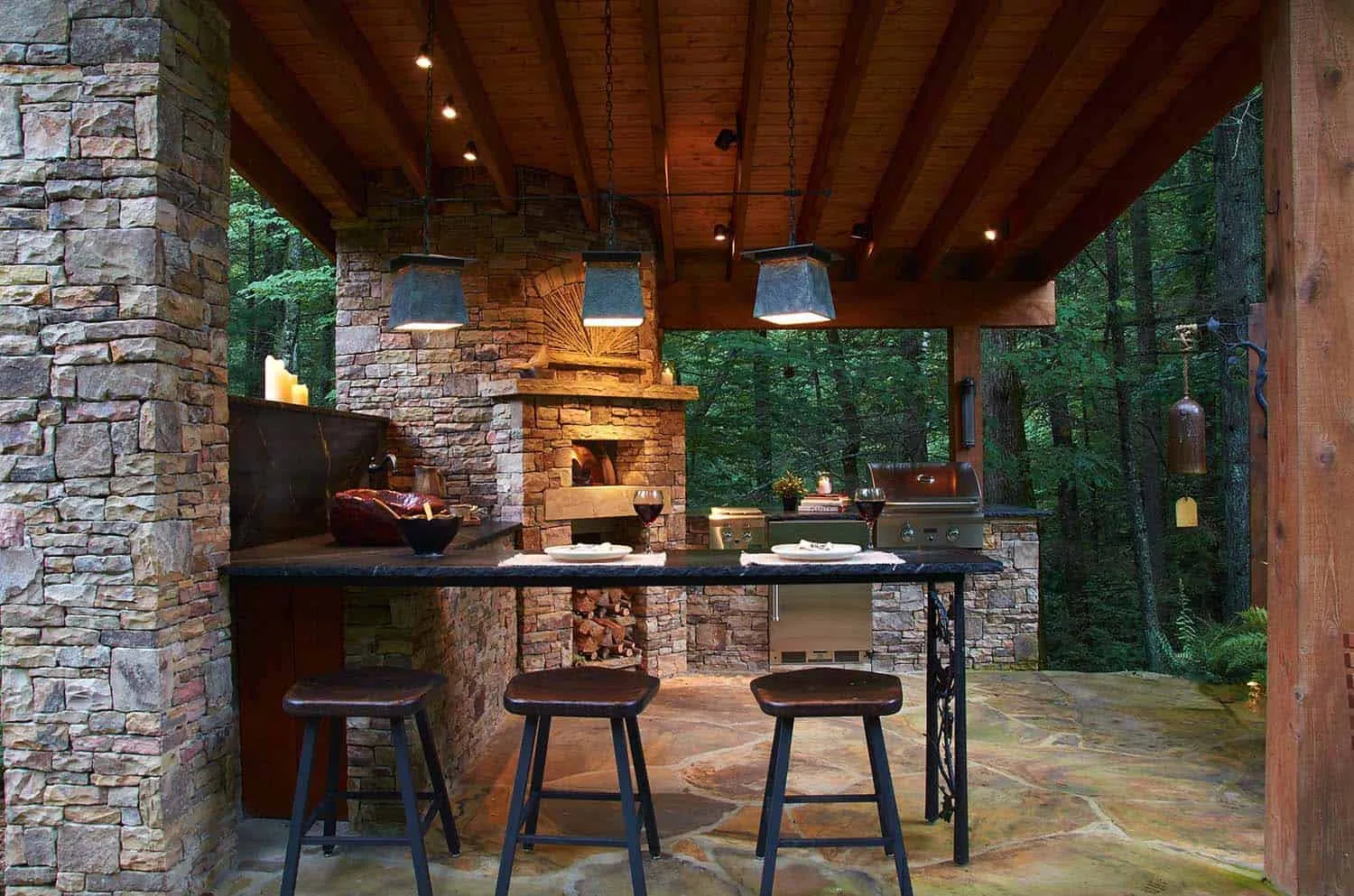
If you love to entertain, your seating areas should relate naturally to the pool rather than sitting off to the side as an afterthought. If outdoor cooking is part of the vision, the kitchen needs convenient access without creating congestion along the pool edge. If the goal is family use, there should be clear movement between the house, changing or storage areas, and the water.
Materials also need to be coordinated early. Coping, decking, retaining walls, steps, columns, and adjacent architectural features should feel connected in color, texture, and style. When materials are selected piece by piece, the space can look busy or disjointed. When they are curated together, the backyard feels tailored.
For homeowners pursuing a complete transformation, this integrated approach usually saves frustration later. It is easier to design the right relationships upfront than to retrofit patios, drainage, lighting, or structures after the pool is already in place.
Features that add value and features that only add cost
Luxury does not come from checking every option box. It comes from choosing features that support the way you want to experience the space.
A tanning ledge can be perfect for families with small children, casual lounging, or adding resort character. Built-in benches create social seating and make larger pools feel more welcoming. Spillover spas are attractive and useful, especially if you want year-round enjoyment. Waterfalls, deck jets, and fire bowls can add drama, but only when they match the home and the mood of the project.
The trade-off is that every added feature affects budget, circulation, maintenance, and visual simplicity. Too many focal points competing at once can dilute the design. A cleaner concept with a few strong elements often feels more elevated than a pool crowded with extras.
Technology is another area where intention matters. Automation for lighting, heating, sanitation, and water features can make ownership easier and more enjoyable. But not every upgrade is worth the same investment for every homeowner. A thoughtful planning process helps distinguish between what will truly improve daily use and what may sound exciting during selection meetings but deliver little long-term value.
Budgeting with clarity instead of guesswork
One of the biggest misconceptions in pool planning is that budget is mainly about pool size. In reality, the surrounding environment often carries just as much weight. Excavation conditions, retaining walls, drainage solutions, decking, premium finishes, lighting, fencing, planting, and accessory structures can significantly influence the final investment.
That is not a reason to scale back the vision too quickly. It is a reason to plan with honesty from the start. A custom pool is rarely just a vessel of water. It is part of a larger build that shapes how the entire backyard functions and feels.
For many homeowners, the best approach is to establish priorities in tiers. Decide what must be included for the project to feel complete, what would be valuable if budget allows, and what could be reserved for a future phase. This keeps the design grounded while protecting the overall quality of the finished space.
An experienced design-build team can be especially valuable here because they can align design ideas with realistic construction scope early, before the project drifts into avoidable redesigns.
Timeline, approvals, and the decisions that prevent delays
Great outdoor spaces take planning. Permitting, HOA approvals, engineering, material lead times, and weather can all affect the schedule. So can delayed decisions on finishes, equipment, or layout changes after construction begins.
The smoothest projects are usually the ones where homeowners commit to the vision early and work through details before breaking ground. That does not mean rushing. It means making informed decisions in sequence so the project can move with confidence.
This is another reason a detailed custom pool planning guide is so valuable. It keeps attention on the questions that matter before they become costly field changes. It also helps homeowners understand that quality craftsmanship and refined detailing are not rushed processes.
If you are planning for a specific season or event, start earlier than you think you need to. The best design and construction calendars tend to fill well in advance, especially for high-end projects that involve more than a simple pool install.
Design for the feeling you want to come home to
The most memorable backyards do more than photograph well. They welcome people in, support the rhythms of real life, and make home feel like somewhere you want to stay a little longer.
A truly useful custom pool planning guide does not push you toward the biggest pool or the trendiest feature. It helps you make sharper decisions about atmosphere, function, beauty, and flow. That is where a luxury backyard begins – not with more, but with a design that feels unmistakably like yours.
If you approach the process with a clear lifestyle vision and a commitment to cohesive design, the result is not just a pool. It is the backdrop for slow mornings, lively evenings, and the kind of hospitality that changes how your home is enjoyed.