A pergola can do far more than cast a little shade. The right structure gives your backyard architecture, defines how people gather, and turns an open patio into a space that feels intentional. If you are collecting custom pergola design ideas, the goal is not simply to choose a pretty overhead feature. It is to create a setting that fits your home, your climate, and the way you want to live outside.
In high-end outdoor design, a pergola works best when it feels integrated rather than added on. It should relate to the lines of the home, the materials underfoot, the nearby kitchen or pool, and the experience you want guests to have when they step into the space. That is where custom design changes everything.
Why custom pergola design ideas matter
Stock pergolas can be appealing on paper because they seem quick and straightforward. But once you place a standard structure in a distinctive backyard, the limitations show up fast. The scale may feel off. The posts may interrupt furniture placement. The finish may compete with the house instead of complementing it.
Custom design gives you control over proportion, material, shade level, and how the pergola connects to the larger environment. That matters if your backyard is more than a single patio. If you have a pool, outdoor kitchen, fire feature, multiple seating areas, or a layered landscape plan, the pergola should support that larger vision.
A well-designed pergola also solves practical problems. In the Sunbelt, sun exposure is not a minor detail. A structure that looks beautiful at 10 a.m. but leaves the dining table overheated by dinner is not doing its job. Custom planning lets you account for sun angles, breezes, privacy, and seasonal use.
Custom pergola design ideas for a more tailored backyard
1. Frame an outdoor living room
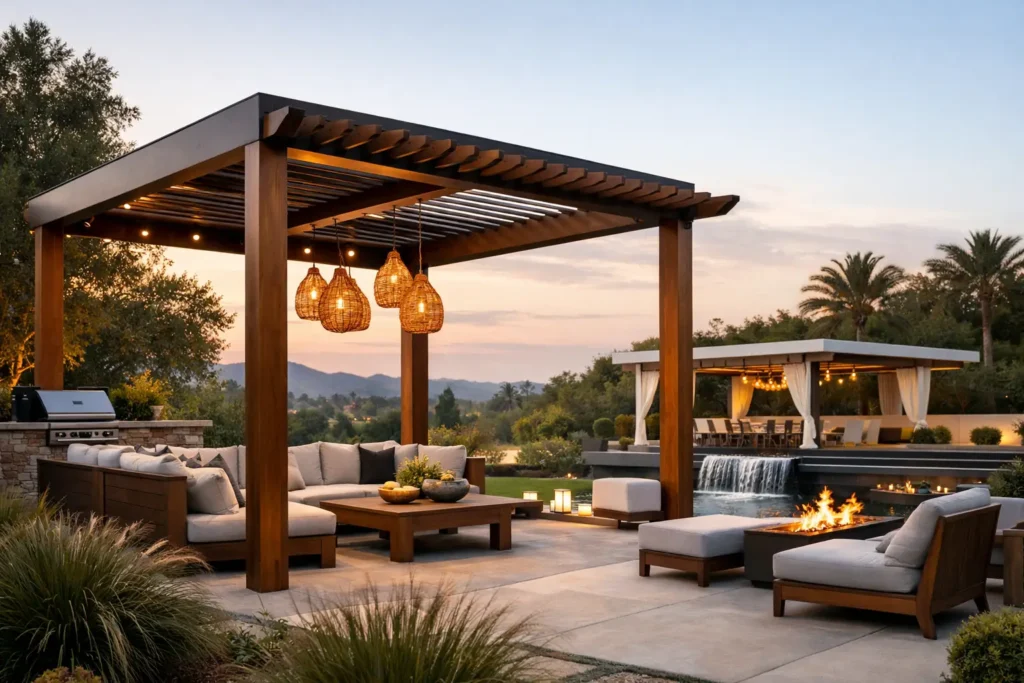
One of the strongest uses for a pergola is to create a true outdoor living room. Instead of floating furniture on a broad patio, the pergola gives the arrangement a ceiling plane and a sense of enclosure. That simple move makes the space feel finished.
This works especially well with deep seating, a fireplace or fire pit nearby, and layered lighting overhead. In a luxury setting, the pergola should be sized around the furniture plan rather than the other way around. That means enough room for circulation, side tables, and comfortable spacing, not a structure squeezed into whatever area is left.
2. Extend the architecture of the home
The most successful custom pergola design ideas often borrow details from the house itself. Rooflines, column styles, trim profiles, stone accents, and paint tones can all influence the final look. A pergola attached to the home should feel like a natural extension, not a separate kit assembled after the fact.
For a modern home, that may mean clean beams and a restrained color palette. For a more traditional property, it may call for substantial columns, stained wood, or masonry bases that tie into the existing exterior. The exact direction depends on the house, but the principle stays the same: continuity creates elegance.
3. Create a destination over an outdoor kitchen
An outdoor kitchen deserves more than open sky, especially in warm climates where direct sun can make cooking and dining less comfortable. A pergola above or adjacent to the kitchen zone helps define it as a destination and improves usability throughout the day.
This is where customization matters most. You may want louvers for adjustable shade, a higher clearance for ventilation, integrated lighting for evening prep, or a layout that keeps the grill area open while shading the dining side. There is no one-size-fits-all answer because cooking, seating, and circulation patterns vary from project to project.
4. Use mixed materials for a more refined look
Wood has warmth. Metal has crispness. Stone has permanence. Some of the most compelling pergola designs combine these qualities instead of relying on a single material throughout.
A stained timber pergola with steel accents can feel both inviting and architectural. A painted structure with stone-wrapped columns can anchor a large patio and connect beautifully to retaining walls, fireplaces, or pool coping. Mixed materials usually cost more than a simple build, but they also create depth and a custom character that standard options rarely achieve.
5. Add privacy without closing the space in
Privacy is often part of the conversation, especially in neighborhoods where homes sit close together or where pools and patios face neighboring windows. A pergola can help, but not always in the way homeowners expect. Overhead beams alone do not create much screening.
That is why custom pergola design ideas often include drapery panels, decorative screens, horizontal slat walls, or strategic landscaping around the structure. The trade-off is balance. Too much enclosure and the space can feel heavy or block breezes. Too little and it may not deliver the retreat you want. Good design finds the middle ground.
What separates a luxury pergola from a basic one
Luxury is not about making a pergola larger for the sake of it. It comes from precision. The post placement feels intentional. The proportions fit the patio. The finish complements the home. The lighting is subtle but effective. The structure supports the experience instead of competing for attention.
It also comes from integration. A pergola is rarely the star on its own. It becomes powerful when it is part of a complete outdoor environment with pavers, planting, cooking areas, water features, and seating zones all working together. That is when a backyard starts to feel less like a collection of additions and more like a private resort.
6. Build around a poolside lounge
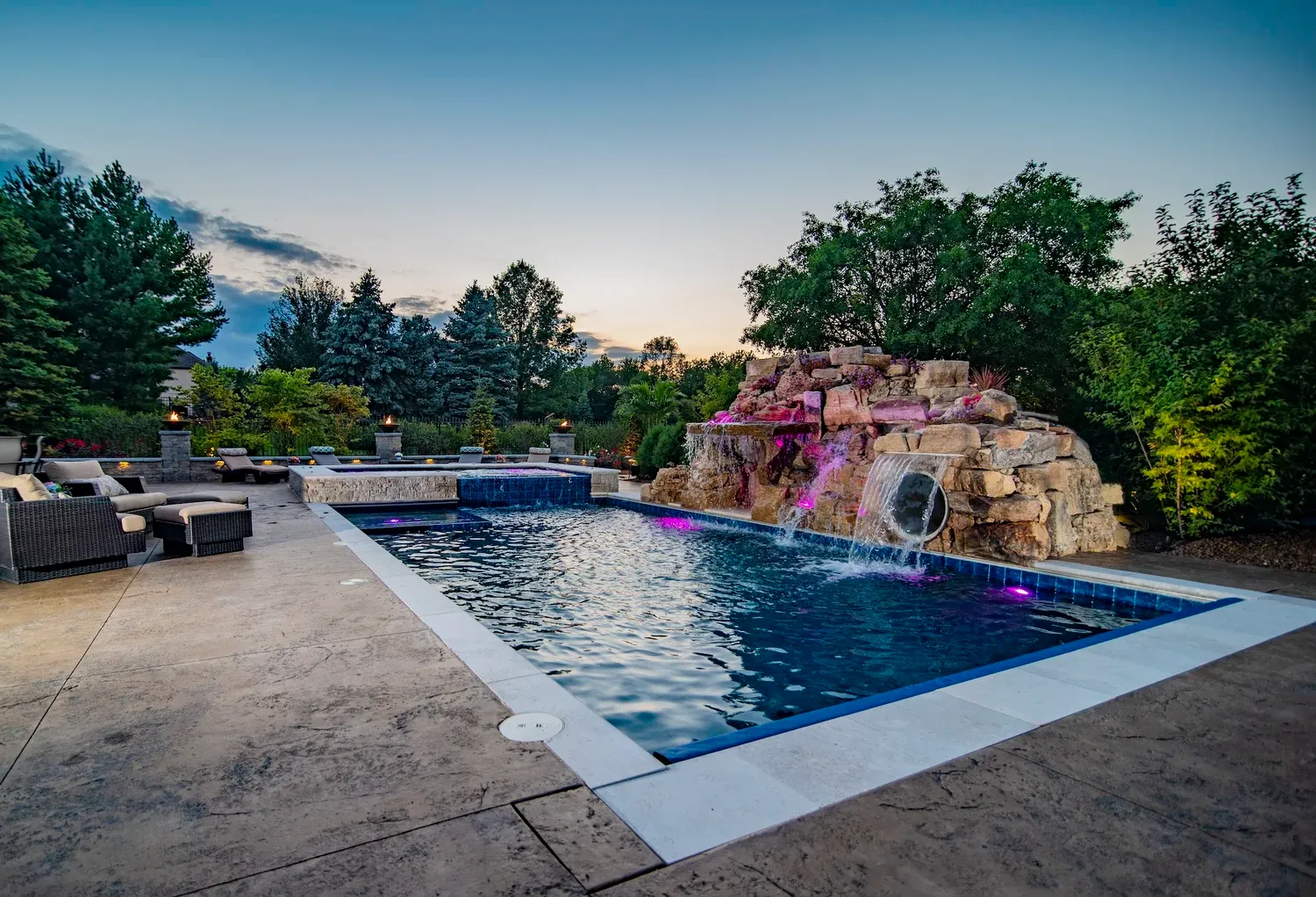
A pergola beside a pool brings relief from direct sun while giving the water’s edge a more polished, hospitality-inspired feel. This can be as simple as a shaded chaise lounge area or as ambitious as a full poolside pavilion-style retreat with fans, lighting, and a beverage station nearby.
The design choice depends on how you use the pool. If the space is primarily for family afternoons, comfort and durability may lead the conversation. If entertaining is a major priority, the pergola may need stronger visual presence and a direct relationship to the main patio, bar, or fire feature.
7. Incorporate lighting from the start
Lighting should never be an afterthought. A pergola is one of the best opportunities in the backyard to create atmosphere after sunset, but only if electrical planning happens early. Recessed fixtures, pendants, sconces on nearby columns, and subtle accent lighting can all shape the mood.
The right approach depends on whether the pergola covers dining, lounging, or circulation space. Dining areas need warm, practical light. Lounge spaces benefit from softer layering. A dramatic fixture can look beautiful, but it should fit the scale of the structure and hold up to the outdoor environment.
8. Think beyond partial shade
Many homeowners picture a pergola as a slatted roof and stop there. But custom structures can offer a wider range of coverage. Retractable canopies, insulated roof sections, motorized louvers, and climbing greenery all change how the pergola performs.
This is one of the clearest it-depends decisions in the design process. More coverage brings more comfort and weather protection, but it can also change the look and cost of the structure. In some cases, a lighter, more open pergola preserves the airy feel of the patio. In others, stronger shade control is worth every dollar.
9. Design for the full backyard, not one corner
A pergola should not be planned in isolation. It affects views from the house, movement across the yard, and how adjacent spaces are used. If it is too small, it can feel undersized against a large patio or pool. If it is too dominant, it can overwhelm the landscape.
This is where a full-service design-build approach makes a meaningful difference. When the pergola is considered alongside hardscaping, planting, elevation changes, and entertainment features, the result feels cohesive from every angle. That is how a beautiful structure becomes part of a larger lifestyle transformation rather than a standalone upgrade.
How to choose the right pergola concept for your home
Start with use, not style. Do you want shaded dining, poolside lounging, an outdoor living room, or a visual anchor for the entire patio? Once the purpose is clear, the design decisions become more focused.
Then consider scale, sun exposure, and the character of the home. A pergola that looks perfect in a photo may not make sense on your property. Ceiling height, beam spacing, post size, and material selection all need to respond to the house and site conditions. This is especially true in premium outdoor projects, where every element is expected to feel composed and lasting.
If you are planning a broader backyard investment, treat the pergola as part of the master plan from day one. At Beyond Backyard Living, that kind of thinking is often what turns a nice backyard into one that truly hosts, restores, and impresses.
The best pergola is not the one with the most features. It is the one that makes your outdoor space feel complete every time you walk outside.