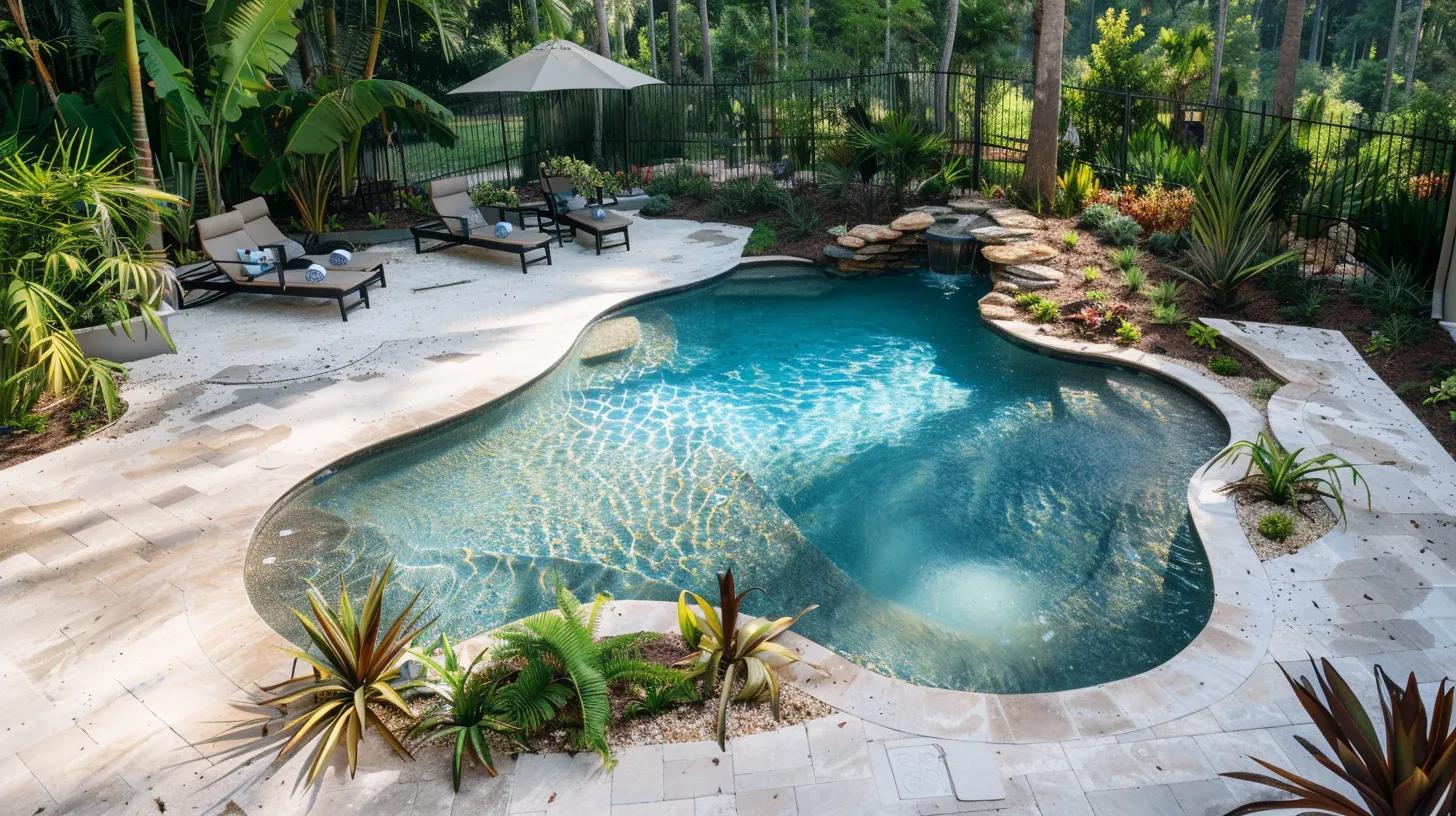
A pool can be beautifully shaped, finished in shimmering tile, and surrounded by a stunning patio – but if the coping feels too hot, stains easily, or looks disconnected from the rest of the space, the entire design loses polish. Choosing the best materials for pool coping is not just a construction detail. It is a design decision that affects comfort, safety, maintenance, and the overall character of your backyard retreat.
For homeowners investing in a custom outdoor environment, coping should feel intentional. It frames the waterline, defines the pool’s edge, and creates the transition between pool and patio. In a high-end backyard, that edge matters more than people expect.
What makes the best materials for pool coping?
The right choice depends on how you want the space to look and live. Some materials stay cooler underfoot, which matters in hot Sunbelt summers. Others offer a more tailored, architectural appearance. Some are prized for natural variation and texture, while others appeal because they are budget-conscious and easy to shape around curves, spas, and tanning ledges.
Good pool coping should handle constant sun exposure, water splash, pool chemicals, and changing temperatures without becoming slippery or visually tired. It should also complement the decking, home style, and the way you plan to use the space. A family pool built for frequent entertaining may benefit from a different coping material than a quiet geometric pool designed as a sleek visual centerpiece.
Travertine: the luxury favorite
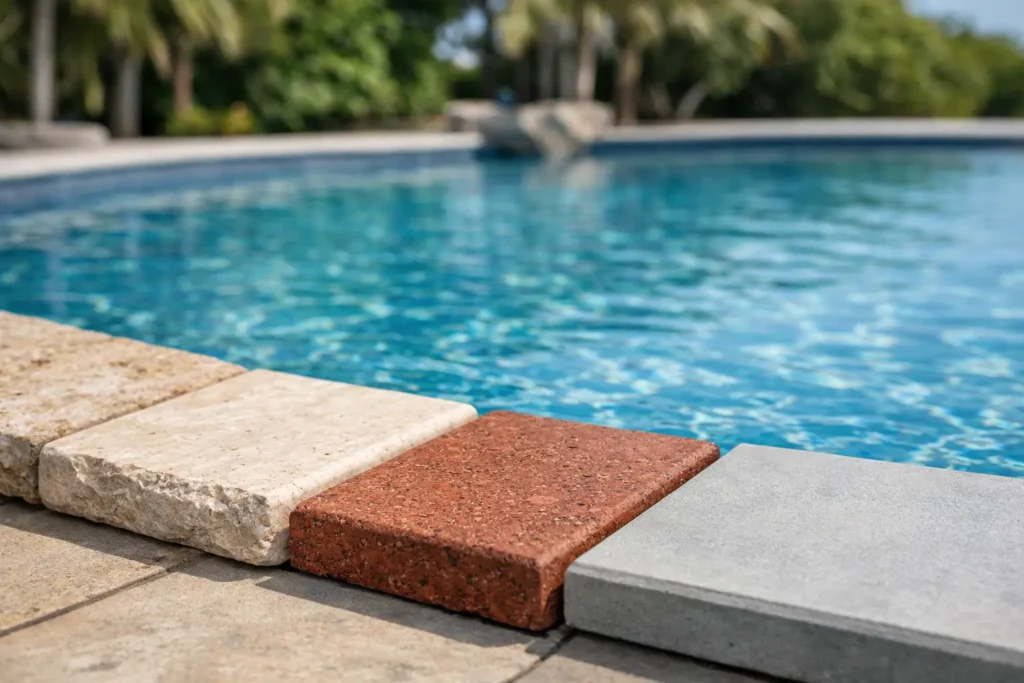
Travertine remains one of the most requested pool coping materials for upscale residential projects, and for good reason. It has a refined, natural look that feels at home in resort-style backyards, Mediterranean-inspired homes, and clean contemporary landscapes alike. Its soft movement and muted tones make it easy to pair with pavers, natural stone patios, and outdoor living features.
From a performance standpoint, travertine is especially appealing in warm climates because it tends to stay cooler under direct sun than many denser materials. That makes a real difference when people are moving barefoot between the pool, spa, and lounging areas.
The trade-off is that travertine is a natural stone, so variation is part of the appeal. Some homeowners love that organic character. Others want a more uniform look. It also benefits from proper sealing and thoughtful installation to help protect the finish and maintain its appearance over time. In the right design, though, travertine offers a level of elegance that is hard to replicate.
Limestone: soft, sophisticated, and understated
Limestone creates a quieter luxury. Its appearance is often smoother and more understated than travertine, which makes it a strong fit for homes with a more tailored architectural style. If you want a pool edge that feels calm, light, and polished rather than rustic or heavily textured, limestone is worth serious consideration.
It is comfortable visually and physically, with a soft color palette that can brighten the pool perimeter and make the water color stand out. That said, limestone can be more sensitive than some other stones depending on the variety selected and the environment around the pool. Not every limestone performs the same way, so material selection matters.
For homeowners who care deeply about cohesive design, limestone can be exceptional when it is used not just on the coping but across adjacent terraces, steps, and gathering spaces. The result feels composed rather than pieced together.
Bluestone: rich character with a more dramatic look
Bluestone brings depth and presence. Its cooler tones and natural cleft texture can create a strong visual frame around the water, especially in settings where the landscape leans classic, rustic-elegant, or Northeastern in style. It is less common in bright resort-inspired palettes, but in the right project, it is striking.
One of bluestone’s strengths is its distinctive character. It feels substantial and architectural, and it pairs well with substantial masonry, fire features, and outdoor rooms. For homeowners who want their pool to feel grounded and timeless rather than airy and tropical, bluestone can be a strong candidate.
The consideration is heat retention and texture. Depending on color and finish, some bluestone can get warmer in full sun than lighter stones. It can also present more natural variation than homeowners expect. If consistency is a high priority, that should be part of the discussion early.
Precast concrete coping: clean lines and design flexibility
If your vision leans modern or highly customized, precast concrete coping deserves attention. It offers crisp profiles, consistent sizing, and a more controlled appearance than most natural stone products. That can be ideal for geometric pools, knife-edge details, and projects where the coping needs to support a very specific design language.
Concrete coping can also be shaped and finished in ways that support custom detailing. You can create a sleek, understated perimeter or a bolder edge depending on the scale of the pool and surrounding hardscape. For many luxury projects, that precision is a major advantage.
Its performance depends heavily on quality, mix design, installation, and climate conditions. Poorly executed concrete can crack, discolor, or age unevenly. Well-crafted concrete coping, on the other hand, can look sophisticated and intentional for years. This is one of those materials where craftsmanship matters just as much as the material itself.
Poured-in-place concrete: practical, but less elevated
Poured-in-place concrete coping is common because it is cost-effective and adaptable. It can work well for straightforward pool builds, especially when budget is a major driver. It also offers flexibility around curves and custom shapes.
For a more elevated backyard, though, it may not always deliver the same level of finish as natural stone or precast coping. Over time, it can show wear, minor cracking, or aesthetic inconsistency, particularly if the surrounding outdoor space is designed to feel high-end and highly curated.
That does not mean it is the wrong choice. In some projects, especially when paired with the right decking and color palette, it can look clean and attractive. But if your goal is a truly custom, luxury outdoor environment, homeowners often find themselves gravitating toward materials with more texture, richness, or architectural detail.
Brick: classic, warm, and traditional
Brick coping has an unmistakable charm. It works especially well on traditional homes, historic properties, and outdoor spaces designed to feel warm and familiar. Tumbled brick can soften the pool edge and create a sense of age and permanence that newer materials sometimes miss.
Still, brick is usually a style-specific choice. It can feel perfect in the right setting and out of place in others. It also tends to offer a more traditional look than many Sunbelt homeowners want if they are aiming for a bright, resort-style escape with broad entertaining areas and a more contemporary finish.
Functionally, brick can perform well, but the joints and texture require attention. It is less often the first choice for homeowners seeking the clean, expansive feel associated with modern luxury pool design.
How to choose the right coping for your backyard
The best materials for pool coping are not chosen in isolation. They should be selected as part of the full outdoor composition. The color of the home, the patio material, the shape of the pool, the amount of direct sun, and the level of maintenance you are comfortable with all play a role.
If barefoot comfort is high on your list, lighter natural stones such as travertine often rise to the top. If design precision matters most, precast concrete may make more sense. If you want old-world character, brick or bluestone could be the better fit. If you are balancing aesthetics with value, concrete may still deserve a place in the conversation.
This is also where professional design guidance becomes valuable. A coping sample can look beautiful on its own and still feel wrong once it meets the pool tile, deck pattern, and architecture of the home. The most successful backyards are not built from isolated material decisions. They are composed with purpose.
The material matters, but the finish matters too
Edge profile, texture, thickness, and installation quality all influence the final result. A beautiful stone can underperform if the wrong finish is selected for a slippery area. A premium material can lose impact if the coping profile feels bulky or dated next to a sleek pool design.
At Beyond Backyard Living, that is why material selection is approached as part of the larger experience of the space. The pool edge should feel as considered as the outdoor kitchen, the fire feature, and the patio where everyone gathers at sunset.
A well-chosen coping material does more than protect the pool shell. It sets the tone for the entire backyard. When it feels cool underfoot, complements the architecture, and ties the water to the surrounding living spaces, the whole environment feels finished in the way luxury outdoor design should.