Some backyards have plenty of square footage but still feel unfinished. The missing piece is often structure – a defined place to gather, dine, cook, or unwind. That is why smart backyard pavilion ideas can change the entire experience of an outdoor space, turning open yard into a destination.
A well-designed pavilion does more than provide shade. It creates presence. It gives your patio a focal point, anchors furniture, frames views, and makes the backyard feel intentionally composed rather than pieced together over time. For homeowners investing in a premium outdoor environment, the pavilion is often where beauty and lifestyle meet.
Backyard pavilion ideas that shape the whole space
The best pavilion designs are not picked from a catalog and dropped into the yard. They are tailored to how you live, how you entertain, and what already exists around the home. Roofline, materials, traffic flow, sun exposure, and nearby features all matter.
If your goal is a backyard that feels elevated and cohesive, these pavilion concepts are a strong place to start.
1. The outdoor dining pavilion
If your favorite gatherings revolve around meals, a dining pavilion can become the social center of the property. This layout usually includes a generous dining table, layered lighting, and enough circulation space for guests to move comfortably around chairs without feeling cramped.
The difference between a basic covered patio and a refined dining pavilion is proportion. You want enough height for openness, enough width to avoid crowding, and finishes that connect with the architecture of the home. Stone columns, stained wood ceilings, decorative beams, and integrated lighting can make the space feel more like an outdoor room than a shelter.
2. The outdoor kitchen pavilion
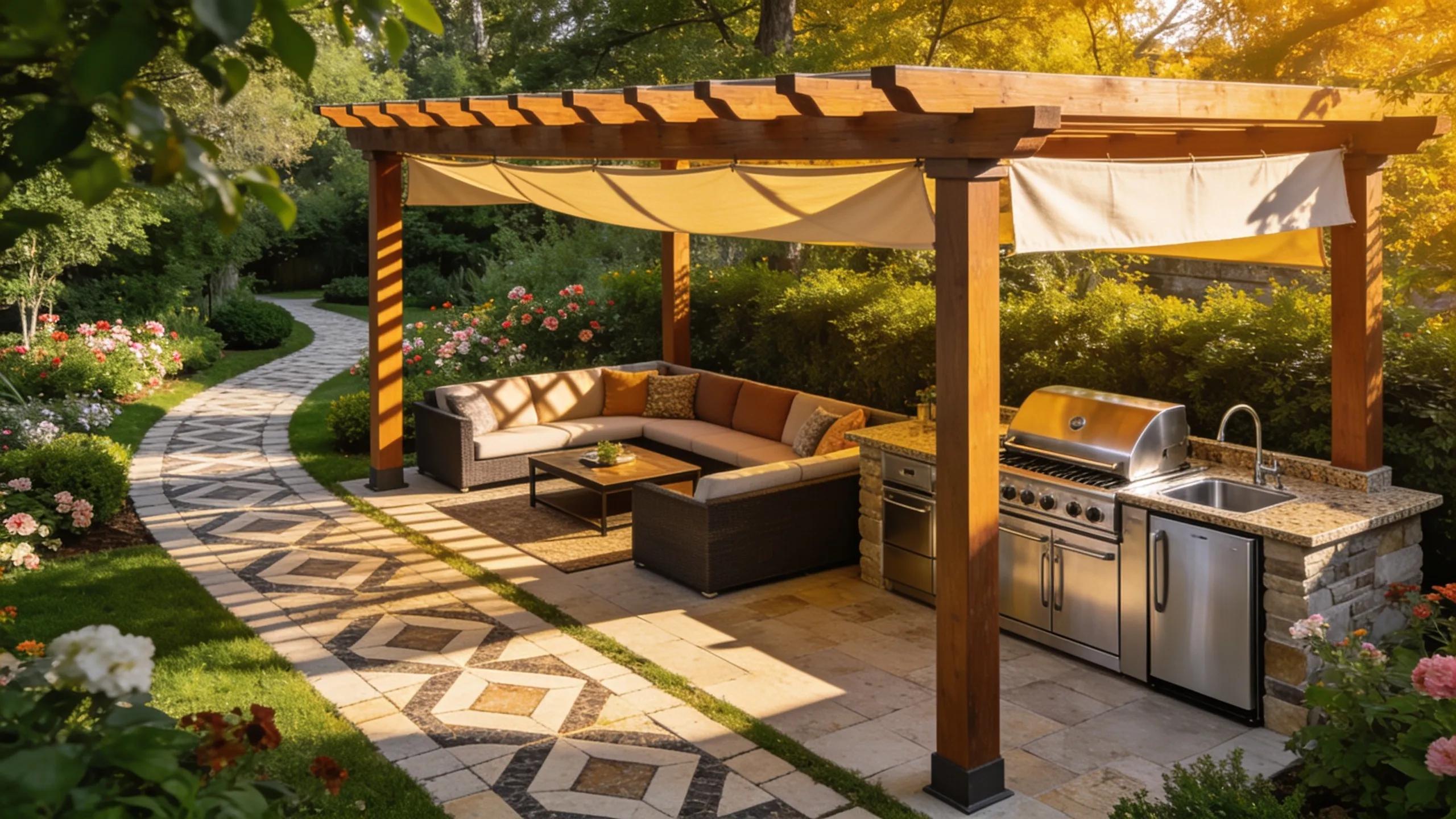
For homeowners who love to host, covering the kitchen area is one of the most practical backyard pavilion ideas. It protects the cooking zone from harsh sun, gives the chef a more comfortable place to work, and creates a natural hub for conversation.
This kind of pavilion works especially well when the structure is designed around the appliances instead of the other way around. Grill placement, venting needs, countertop runs, bar seating, refrigeration, and storage all affect the footprint. It also helps to think about what happens just outside the pavilion. If guests are gathering nearby, the transition to a lounge or dining terrace should feel easy.
3. The poolside resort pavilion
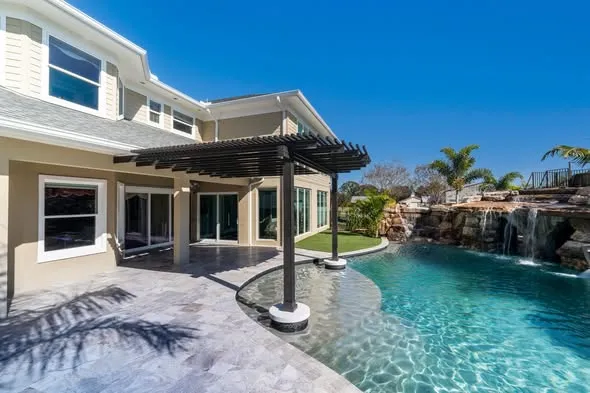
A pavilion near the pool instantly changes the atmosphere from recreational to resort-inspired. It can serve as a shaded lounge, a place to dry off, a retreat between swims, or a polished backdrop that gives the pool area architectural weight.
This concept is especially effective in sunny climates, where afternoon shade can make the difference between a pool area that looks beautiful and one that gets used often. Comfortable sectionals, ceiling fans, soft lighting, and outdoor drapery can give the pavilion a hospitality feel. If space allows, adding a small bar or refreshment station makes the experience even better.
4. The fireplace pavilion
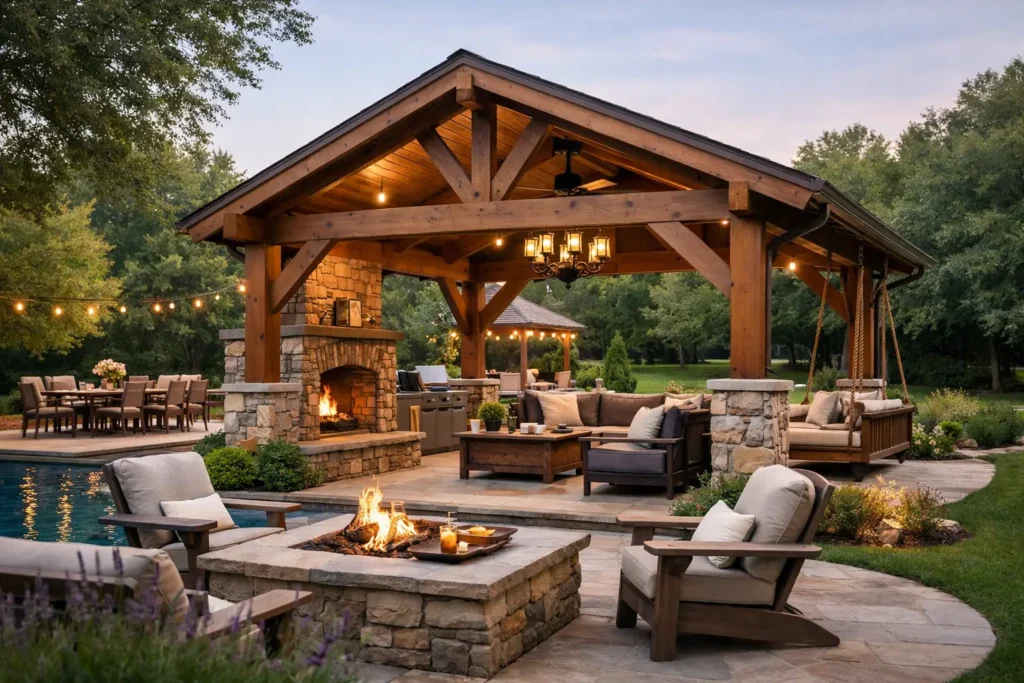
When the goal is year-round use, a pavilion with a fireplace is hard to beat. It brings warmth, visual drama, and a natural focal point that draws people in after dark. The result feels intimate without sacrificing openness.
A fireplace pavilion tends to work best when seating is arranged for conversation rather than television-style viewing, although both can be combined. Material selection matters here. A substantial stone fireplace can feel timeless and grounded, while a cleaner surround with wood detailing may feel more tailored and contemporary. It depends on the architecture of the home and the overall mood you want the backyard to carry.
5. The pavilion that extends the house
Some of the strongest backyard pavilion ideas are the ones that make the outdoor space feel like a true extension of the home. That usually means aligning the pavilion with interior sightlines, matching roof pitches, and repeating key materials so the transition feels intentional.
This approach is especially appealing when the pavilion sits just off the back of the house and connects to a main patio. Instead of reading as a standalone backyard feature, it becomes part of the home’s larger living experience. The payoff is not just visual. It also tends to improve flow during gatherings, making indoor and outdoor entertaining feel connected.
6. The detached escape pavilion
Not every pavilion should hug the house. A detached pavilion can create a sense of destination, especially on larger properties where the backyard has room to unfold in layers. Set farther into the landscape, it can overlook a pool, face a water feature, or frame a quiet garden view.
This type of placement changes how people move through the yard. Instead of staying close to the patio door, guests are invited deeper into the property. A detached pavilion can feel more private, more immersive, and more like a retreat. It does require thoughtful planning for access, lighting, and utilities, but the end result can be exceptional.
7. The multi-zone entertainment pavilion
For homeowners who entertain often, one-dimensional spaces tend to show their limits quickly. A pavilion that supports multiple functions at once can make the backyard feel more generous and far more useful.
This might mean a lounge area under one side of the roof, bar seating on another edge, and a dining zone nearby. The key is to avoid making everything feel crowded. A larger pavilion with clear zoning, ceiling detail, and deliberate furniture layout can keep the space refined rather than busy. This is where custom design matters most, because scale and balance are everything.
What makes pavilion design feel high end
Luxury is rarely about adding more. It is about making every choice feel resolved. A pavilion earns its presence when it belongs to the home, supports the way you live, and adds visual confidence to the overall backyard.
Materials should match the level of the property
If the home features stone, brick, warm wood tones, or crisp architectural lines, the pavilion should respond to those cues. Premium spaces feel curated because finishes repeat thoughtfully across the property. A random mix of materials can make even an expensive pavilion feel disconnected.
Ceilings are often overlooked, but they carry a lot of visual weight. Tongue-and-groove wood, beam detailing, integrated lighting, and fans can make the structure feel finished from every angle. Columns matter too. Their thickness, shape, and finish influence whether the pavilion feels substantial or undersized.
Comfort should be built in, not added later
The best pavilion spaces are comfortable at noon, at sunset, and when a gathering lasts longer than expected. That means thinking beyond the roof. Fans, lighting, heating elements, speaker placement, and shade orientation all affect how often the space gets used.
This is also where climate matters. In the Sunbelt, air movement and sun control are major design considerations. A pavilion that looks beautiful on paper but traps heat or blocks the wrong view will never live up to its potential.
Scale can make or break the result
One of the most common mistakes in pavilion planning is building too small. Homeowners often focus on the structure itself and underestimate how much room furniture, circulation, and surrounding features will require.
A pavilion should not just fit the function. It should allow the function to feel relaxed. That might mean extra depth behind dining chairs, room for guests to pass through comfortably, or enough roof coverage that the edge of the space is still usable in light rain. Generous scale tends to feel more luxurious because it supports the experience rather than restricting it.
How to choose the right pavilion idea for your yard
Start with the role the pavilion needs to play. Is it there to support cooking, create shade by the pool, anchor a fire feature, or give the backyard a more finished architectural centerpiece? The answer shapes everything from placement to size to utility needs.
Then consider how the pavilion fits into the broader master plan. This is where many projects either become cohesive or start to fragment. A pavilion should relate to patios, walkways, retaining walls, landscaping, and other destination features around it. When all of those pieces are planned together, the backyard feels polished and effortless.
Budget matters, but so does sequencing. In some cases, it makes sense to build the pavilion alongside a new patio, outdoor kitchen, or pool so the entire environment is designed as one experience. That usually leads to better flow and fewer compromises than treating the pavilion as an isolated add-on.
At Beyond Backyard Living, that full-property perspective is what turns a pavilion from a nice feature into part of a true outdoor lifestyle destination.
The most memorable backyard pavilion ideas do not chase trends. They create a place people naturally want to gather, linger, and return to – a space that feels every bit as inviting as the home itself.