Your front yard makes its impression before anyone reaches the door. It frames the architecture, sets the tone for the property, and gives every arrival – from a quiet evening at home to a full house of guests – a sense of occasion. A thoughtful front yard transformation does more than refresh planting beds. It turns the approach to your home into a composed, welcoming experience built around beauty, movement, and lasting craftsmanship.
For homeowners who have invested in interiors and outdoor living spaces, the front of the home deserves the same level of intention. The right combination of stonework, lighting, plantings, and architectural details can make an ordinary facade feel established, polished, and distinctly yours.
Start a Front Yard Transformation With the Arrival
The driveway, walkway, and entry should feel connected rather than like separate projects completed over time. A front yard is experienced in sequence: you pull in, step out, follow a path, and arrive at the front door. Designing for that sequence creates a far more elevated result than simply adding a few shrubs around the foundation.
A paver driveway can replace a broad expanse of plain concrete with texture, color, and a sense of permanence. Natural stone or high-quality pavers used for walkways can echo the materials on the home’s exterior, whether that means warm tones for a Mediterranean-inspired residence or clean, tailored lines for a contemporary property. Wider paths are especially effective for homes that host often, since guests can walk side by side rather than single file.
Curves can soften a formal facade, while straight, symmetrical walks reinforce a more classic architectural style. Neither approach is automatically better. The best choice depends on the home, the lot, and the atmosphere you want to create. What matters is that the route feels purposeful from curb to entry.
Give the Landscape an Architectural Role
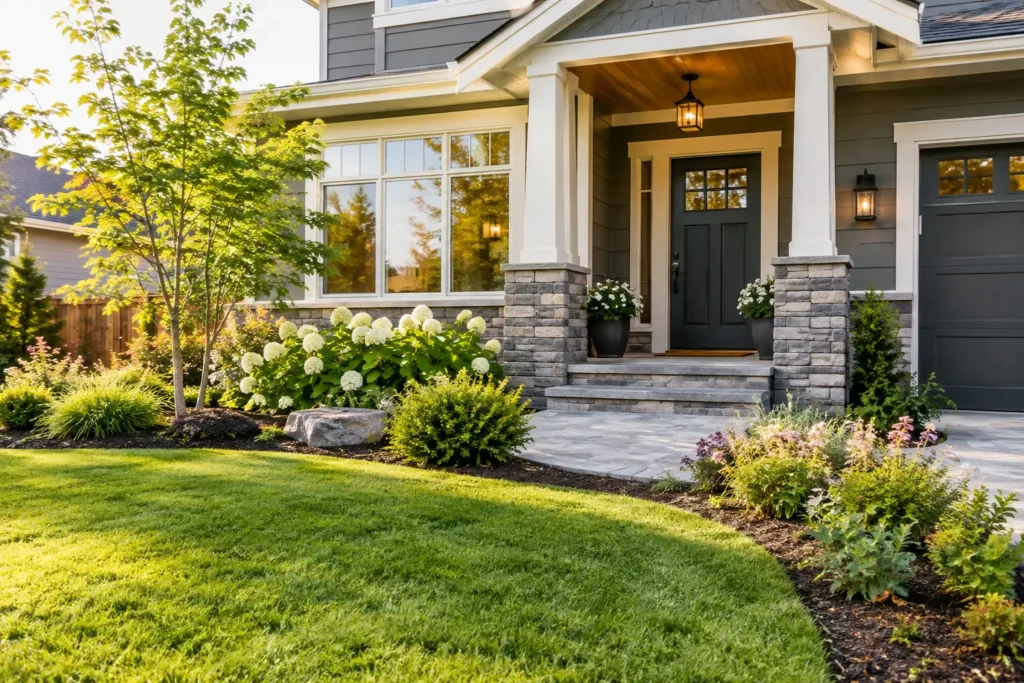
Luxury landscaping is not a collection of plants. It is a living composition that supports the scale of the house and creates visual interest through every season. Foundation plantings should frame the home without hiding its best features. Layered beds use a mix of canopy, structure, color, and ground-level texture to give the property depth.
Evergreens provide an organized backbone, while flowering shrubs, ornamental grasses, and seasonal color bring movement and personality. In Sunbelt climates, thoughtful plant selection also means choosing varieties that can handle heat, sun exposure, and changing water conditions without requiring constant replacement. A beautiful landscape should feel cared for, not high-maintenance by default.
Mature trees deserve special consideration during planning. They can offer valuable shade and presence, but their root zones, canopy spread, and long-term health need to be respected when adding hardscape or new planting beds. In some cases, preserving one exceptional tree is more valuable than adding a dozen smaller ornamental plants.
For a stronger first impression, think in focal points. A specimen tree, sculptural planter, water feature, or statement planting bed can draw the eye toward the entry. The goal is not to fill every inch of the yard. Open lawn, negative space, and clean edges give premium materials and plantings room to stand out.
Build Curb Appeal After Sunset
A remarkable property should not disappear when the sun goes down. Professional landscape lighting extends the beauty and usability of the front yard while making the home feel more welcoming at night.
The most successful lighting plans layer several effects. Soft path lighting clarifies where guests should walk. Uplighting can reveal the texture of stone, architectural columns, mature trees, or palms. Gentle washes of light across planting beds add depth without making the property feel overlit. At the entry, well-placed fixtures make house numbers, steps, and the front door easy to see.
Brightness is not the measure of quality. Excessive fixtures or poorly aimed beams can flatten the landscape and create glare. A tailored lighting plan uses restraint, directing attention toward the features that make the home unique. It also improves safety around changes in elevation, driveways, and walkways – an important practical return on a design-driven investment.
Add Features That Make the Entry Feel Personal
The front yard can be an introduction to the lifestyle found throughout the property. Details such as a low retaining wall, stone seat wall, gated courtyard, or bubbling water feature add dimension and invite people to slow down.
A retaining wall is often necessary for grading, but it can also become a defining design element. Finished in stone or complementary block, it can terrace a sloped yard, shape planting areas, and create a graceful transition between driveway and home. Integrating lighting or built-in planters turns a purely functional structure into a focal point.
Water features bring a welcome sense of movement to an entry. A modest bubbler or formal fountain may be better suited to the front yard than a dramatic waterfall, depending on the home’s architecture and neighborhood character. The key is scale. A feature should enhance the arrival without competing with the house itself.
For homes with a generous setback, a front courtyard can create a more intimate arrival zone. It may include a custom gate, layered plantings, a seating nook, or a small fire feature where appropriate. This is particularly compelling when the property lacks a defined front porch but has the space to create one outdoors.
Plan for the Details Below the Surface
The most beautiful front yard transformation begins with work that may never be seen. Proper drainage, grading, base preparation, and irrigation protect the investment long after the final plant is installed.
Water should move away from the home and through the property in a controlled way. This is especially important when adding patios, driveways, retaining walls, or larger planting beds that can change how water travels across the site. Skipping this planning can lead to settling pavers, erosion, standing water, and stressed landscaping – problems that are far more expensive to correct later.
Irrigation should be designed around plant needs rather than treated as a one-size-fits-all grid. Turf, shrubs, containers, and trees often require different coverage and schedules. Smart controls can make seasonal adjustments easier, but they do not replace a system designed correctly from the beginning.
Material selection deserves the same care. A driveway must withstand vehicle traffic, a walkway needs a stable base and comfortable surface, and wall materials should complement the residence while performing well in local conditions. Premium projects earn their longevity through this unseen craftsmanship as much as through the finished appearance.
Make the Investment Feel Cohesive
A front yard project can range from refined landscape updates to a complete reworking of the driveway, entry, elevation, and plantings. The scope depends on the condition of the existing site, the home’s architecture, and how much of a visual shift you want to make.
Phasing can be sensible when a full build is not the right move all at once. However, it works best when there is a master plan from the beginning. Installing a walkway now without understanding future drainage, lighting, driveway changes, or planting zones can limit options later. A complete design gives each phase a clear destination, even if construction happens in stages.
This is also why a design-build partner brings value. Rather than coordinating separate crews for landscape, stonework, irrigation, and lighting, homeowners can work from one cohesive vision. At Beyond Backyard Living, that approach brings design creativity and construction expertise together, so the front yard feels like a natural extension of the home rather than a collection of unrelated upgrades.
Design an Entrance Worth Coming Home To
The strongest front yards do not follow a trend for the sake of it. They reflect the way a family lives, the character of the home, and the feeling they want guests to carry with them from the curb to the front door. Whether your vision calls for a grand paver drive, a garden-forward approach, dramatic evening lighting, or a quieter and more tailored entry, every choice should contribute to one unmistakable sense of arrival.
Begin with the view from the street, then imagine the walk to your door. That short journey can become one of the most memorable parts of your home.