A beautiful patio should make you want to step outside barefoot with a morning coffee, welcome friends for dinner, or linger beside the pool after sunset. But are paver patios slippery when rain, splashing water, or humidity enter the picture? They can be, but a well-designed paver patio is often one of the more slip-resistant hardscape choices available.
The real answer depends on the paver finish, the way water moves through the space, the surrounding landscape, and how the patio is maintained. For homeowners creating a polished outdoor retreat, slipperiness is not a detail to leave to chance. It is something that should be considered from the first design conversation, especially around pools, outdoor kitchens, walkways, and gathering areas.
Are Paver Patios Slippery Compared With Other Surfaces?
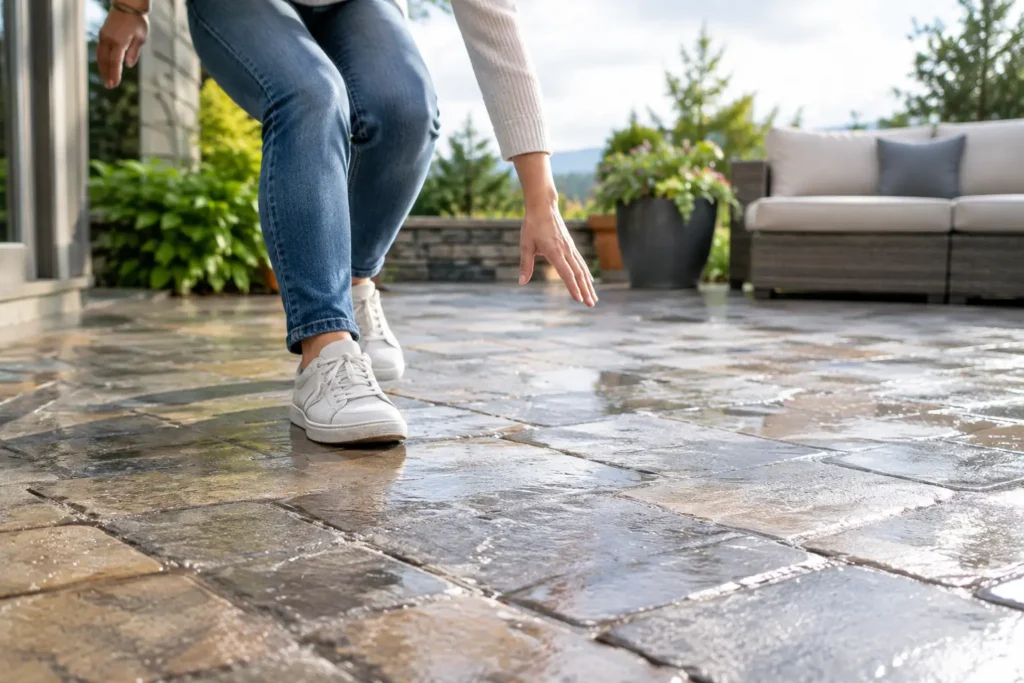
Pavers generally offer better footing than many smooth poured concrete surfaces, especially when they have a textured finish and properly designed joints. Unlike a large, continuous slab, pavers have individual edges and joint lines that can add subtle traction underfoot. That texture matters when a surface is wet.
Still, not all pavers perform the same way. A highly polished stone paver, a glossy sealer, or a dense paver with a very smooth face can become slicker when wet. By contrast, textured concrete pavers, tumbled pavers, and many natural stone options provide a more forgiving walking surface.
This is where a custom design approach pays off. The right material for a dry dining terrace may not be the right choice for a pool deck where children run in from the water. A luxury backyard should feel cohesive, but each zone should also perform for the way it will be used.
What Actually Makes a Paver Patio Slippery?
Water is usually part of the equation, but it is rarely the only cause. A patio that stays wet after a storm, receives little sun, or sits beneath mature trees can develop conditions that make even a naturally textured paver feel unsafe.
Surface Finish and Material Selection
The paver’s face is the first factor. Smooth, honed, or polished materials reflect light beautifully and can create a refined, contemporary look. Yet that same smoothness may reduce grip when the surface is wet. In high-traffic or splash-prone areas, a textured or cleft finish is typically the wiser investment.
Color can also influence maintenance. Very light pavers may show leaf stains and algae more readily, while very dark pavers can become hot under intense Sunbelt sun. The best selection balances appearance, comfort, traction, and the architecture of the home.
Algae, Mildew, and Organic Debris
Green algae and mildew are common culprits behind slippery patios. They thrive where moisture lingers, particularly on shaded sides of the home, near water features, beneath dense plantings, and in spaces that receive frequent irrigation overspray.
Fallen leaves, pollen, acorns, and decomposing plant material can also create a slick film. This does not mean homeowners should avoid lush landscaping around their patio. It means the planting plan, drainage strategy, and maintenance expectations should work together. A resort-style setting can be richly planted without allowing greenery to overtake the hardscape.
Poor Drainage
The most important safety feature is often one you barely notice: drainage. A patio should be graded so water moves away from the home and does not collect in low spots. When water pools, it encourages algae growth, leaves residue as it evaporates, and creates an immediate slip risk.
Pavers have an advantage here. Depending on the installation system, water can move across the surface to designated drainage areas or filter through permeable joints into a prepared base below. Either approach needs thoughtful engineering. A beautiful patio with improper slope will eventually show its weakness after a heavy rain.
The Wrong Sealer
Sealing can protect pavers from staining, simplify cleaning, and enrich color. It can also cause trouble if the product is too glossy or is applied too heavily. Some sealers create a wet-look finish that looks striking in photographs but may reduce traction, particularly around pools and water features.
If a paver patio is being sealed, choose a product designed for exterior hardscape use and discuss slip-resistant additives with the installer. These fine aggregates can improve traction without taking away from the finished appearance. Sealer should elevate the patio, not turn it into a surface you hesitate to cross after rain.
Designing a Safer Patio From the Start
The safest patio is not created by a single product. It comes from a series of design decisions that support each other. Material, slope, drainage, sun exposure, lighting, and intended use all deserve a place in the plan.
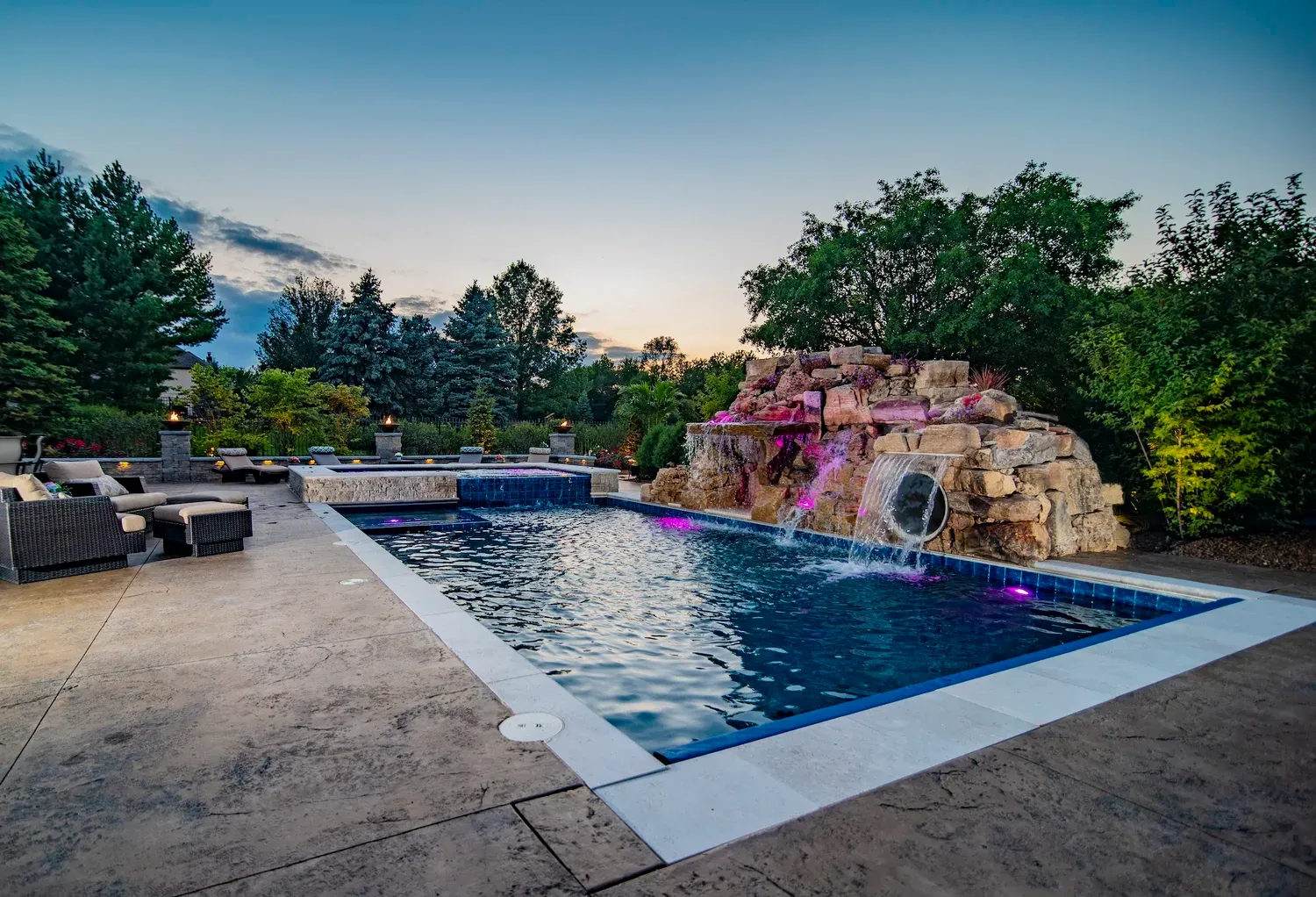
For a poolside terrace, select pavers with a naturally textured surface and a color that stays comfortable in direct sunlight. Avoid overly slick sealers, and plan for generous drainage around the pool coping, outdoor shower, and transition points where swimmers step onto the deck.
For an outdoor kitchen or dining patio, consider where spills are likely to happen. Grease, beverage spills, and moisture near a bar area call for materials that are easy to clean but still offer texture. A fire feature or pizza oven may benefit from a more substantial paver field that defines the gathering space and handles high foot traffic with confidence.
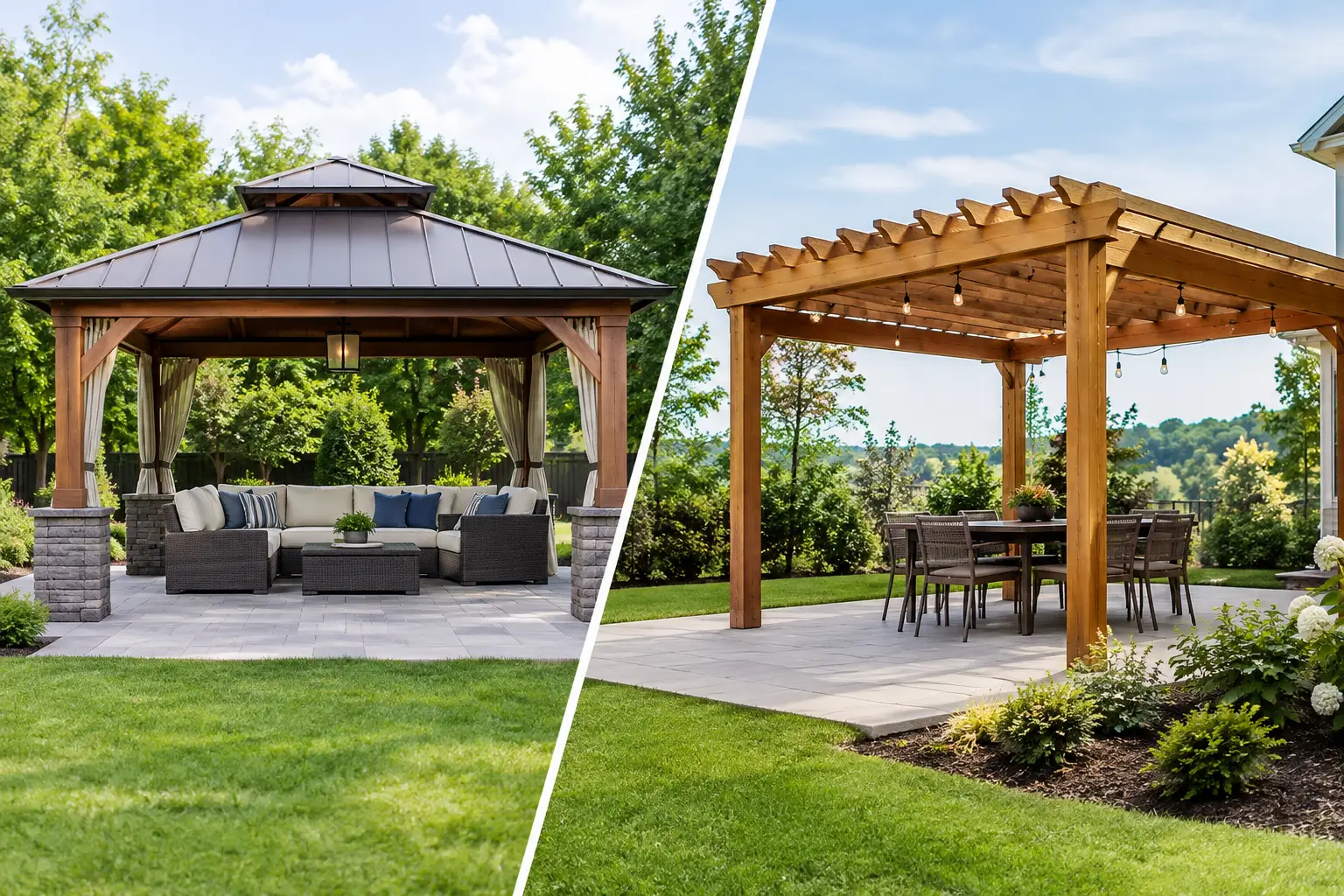
Transitions deserve attention as well. A patio that steps down to a lawn, connects to a pergola, or meets a driveway should have clear changes in elevation. Well-proportioned steps, properly placed lighting, and thoughtful edging make the space feel more intentional while helping guests move through it safely after dark.
How to Keep Paver Patios From Becoming Slick
Routine care is straightforward, but consistency matters. Sweep away leaves, mulch, and standing debris before they can trap moisture against the paver surface. After periods of heavy pollen or frequent rain, rinse the patio with a garden hose and use a gentle cleaner appropriate for the specific paver material.
If algae or mildew appears, address it early. Use a hardscape-safe cleaning solution and follow its directions carefully. Aggressive chemicals and improper pressure washing can damage some pavers, disturb joint sand, or leave uneven color. For extensive staining or recurring organic growth, professional cleaning may be the better choice.
Pay attention to the landscape around the patio, too. Adjust irrigation heads so they water planting beds rather than the hardscape. Trim vegetation that blocks all airflow and sunlight from a damp corner. Keep gutters and downspouts from discharging directly onto the patio. These small corrections often solve the underlying moisture problem instead of simply treating the symptom.
A Note on Pressure Washing
Pressure washing can refresh a paver patio, but it is not a cure-all. Used carelessly, it can remove joint sand, roughen the surface, and create openings where weeds and debris collect. If pressure washing is necessary, use an appropriate setting and plan to replenish polymeric sand where needed.
A professional can also identify whether recurring slickness is caused by surface buildup or a larger drainage concern. That distinction matters. Cleaning a patio that holds water may make it look better for a few weeks, but correcting the grade is what protects the space for years.
When a Paver Patio May Need an Upgrade
A patio that becomes slippery after every storm, shows persistent green growth, or has visible puddling needs more than routine cleaning. Uneven settling, clogged drainage routes, inappropriate sealer, and undersized downspout management can all contribute to the problem.
The good news is that pavers are inherently adaptable. Individual units can often be lifted, the base can be corrected, and the surface can be reinstalled without replacing an entire slab. That repairability is one reason pavers remain such a smart choice for high-end outdoor environments that are expected to look exceptional over time.
When planning a new patio or refreshing an existing one, think beyond the question of whether it might get slippery. Think about how it will host a summer dinner, frame a pool, connect the house to the landscape, and welcome people through every season. With the right pavers, proper drainage, and attentive craftsmanship, the patio becomes a confident foundation for the outdoor life you want to create.