By Terrance Schabilion, Beyond Backyard Living – Custom Pool Builder Spring Hill FL
Retaining walls and seating walls play a crucial role in enhancing outdoor living spaces, especially in Florida’s unique climate. This article explores the essential materials and construction strategies that make these structures both functional and aesthetically pleasing. Understanding the distinct benefits of concrete blocks and natural stone veneer, along with the importance of effective drainage solutions, will empower homeowners to make informed decisions about their outdoor projects. The trade-off between durability, style, and landscape integration is crucial in crafting luxurious outdoor experiences in spring and summer.
Through this comprehensive guide, we’ll delve into various materials used in Florida’s retaining and seating walls, the advantages of each choice, and effective drainage solutions that ensure longevity and stability. We will cover custom design options for seating walls and insights into how a professional design-build process can elevate your outdoor living experience.
What Are the Key Materials for Retaining and Seating Walls in Florida?
Retaining walls and seating walls in Florida utilize several key materials to achieve durability and visual appeal. The primary materials include concrete blocks and natural stone veneer, each providing distinct characteristics beneficial to Florida’s outdoor spaces.
| Material | Characteristics | Aesthetic Appeal |
|---|---|---|
| Concrete Block | Highly durable, cost-effective, fire-resistant | Versatile finishes, modern designs |
| Natural Stone Veneer | Timeless, low maintenance, environmentally friendly | Unique textures, luxury appeal |
This table highlights the primary materials and their advantages, enabling homeowners to choose wisely based on aesthetic preferences and construction needs.
Why Choose Concrete Blocks for Durable Retaining Walls?
Concrete blocks are a widely used material for retaining walls due to their numerous advantages in durability and design. They are:
- Cost-effective: Concrete blocks provide a budget-friendly option for creating long-lasting structures, helping to keep project costs manageable.
- Longevity in Humid Climates: These blocks resist moisture, making them ideal for Florida’s humid environment, which can compromise other materials.
- Suitability Against Hydrostatic Pressure: Concrete blocks can withstand the pressures from moisture-laden soils, preventing structural failures.
The durability of concrete blocks ensures that they remain a reliable choice for homeowners looking to invest in lasting outdoor features.
Advantages of Natural Stone Veneer in Outdoor Wall Design
Natural stone veneer brings a distinct charm to outdoor wall designs, making it a favored choice among homeowners. Its key advantages include:
- Timeless Aesthetic Appeal: Natural stone offers a classic look that seamlessly blends with Florida’s lush landscapes while enhancing property value.
- Durability and Low Maintenance: Unlike other materials, stone veneer requires minimal maintenance and can withstand harsh weather conditions, making it perfect for long-term outdoor use.
- High-End Integration into Landscapes: The unique colors and textures of natural stone allow for custom designs that enhance the beauty of gardens, patios, and outdoor living spaces.
These attributes make natural stone veneer an attractive option for those seeking to elevate their outdoor aesthetics.
How Do Drainage Solutions Enhance Retaining Wall Longevity in Florida?
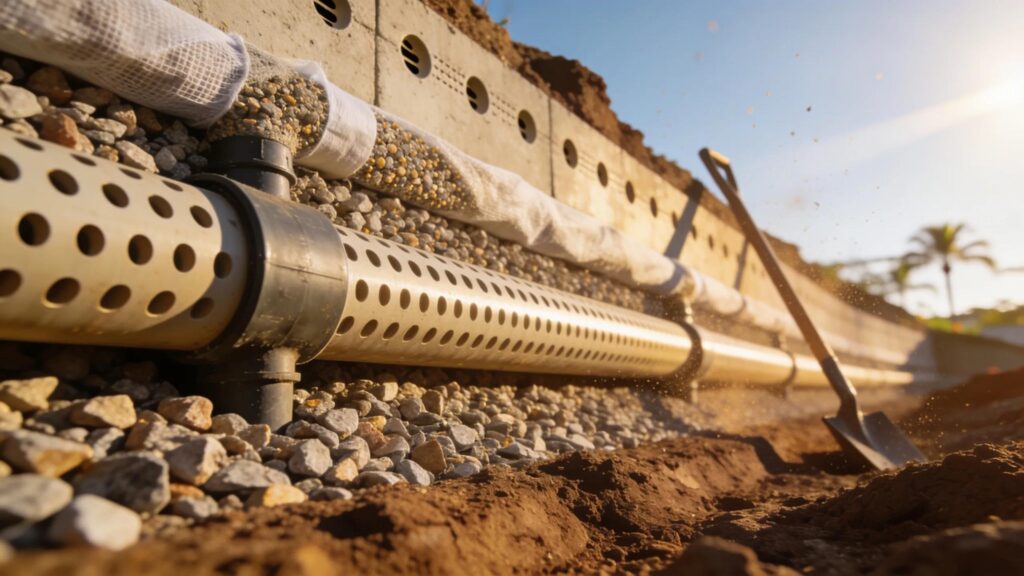
Proper drainage solutions are critical for maintaining the integrity and longevity of retaining walls in Florida. Effective drainage systems prevent water from accumulating behind walls, which can lead to pressure build-up and eventual structural failure.
- Prevention of Pressure Buildup: By allowing water to escape, drainage systems reduce hydrostatic pressure on walls.
- Types of Drainage Solutions: Methods include weeping systems, drains, and backfill materials, each designed to manage water flow effectively.
- Long-Term Benefits for Wall Stability: Ongoing maintenance of drainage systems can significantly extend the life of retaining walls, making them reliable features in any outdoor space.
Understanding the role of drainage in retaining wall construction is crucial for homeowners aiming for durability and stability.
What Are Effective Drainage Engineering Techniques for Florida Soils?
Effective drainage engineering techniques are essential for addressing the unique soil conditions in Florida. These techniques include:
- Understanding Local Soil Conditions: Assessing the type of soil helps in planning appropriate drainage solutions and choosing suitable building materials.
- Installation Techniques for Durability: Utilizing proper installation methods ensures that drainage systems function effectively over time.
- Maintenance Recommendations: Regular inspection and maintenance of drainage systems prevent blockages and ensure continuous water management.
Implementing these techniques allows for better water control, ensuring the longevity of retaining structures.
Proper backfill specifications are equally vital when managing local soil conditions to ensure long-term structural integrity.
Geogrid Retaining Wall Backfill and Drainage in Florida Soils
For pullout, sand and limerock were used for the backfill material, which meet the Florida Department of Transportation (FDOT) Material Specifications, with simulation of unsaturated and saturated conditions.
Strength and durability of backfill geogrids for retaining walls, DV Reddy, 2000
How Does Proper Drainage Prevent Structural Damage in Retaining Walls?
Proper drainage is instrumental in preventing structural damage to retaining walls. Key aspects include:
- Effects of Water Accumulation: Unmanaged water can lead to soil erosion and pressure on walls, risking collapse.
- Components of Effective Drainage Systems: Effective systems often include perforated pipes, gravel backfill, and drainage mats to optimize water escape.
- Material Considerations for Wall Stability: Choosing materials that allow for proper drainage ensures that the walls can withstand natural water flow and moisture levels.
Proper drainage not only protects the walls but also preserves the overall landscape integrity.
What Are Custom Seating Wall Designs for Resort-Style Outdoor Living?
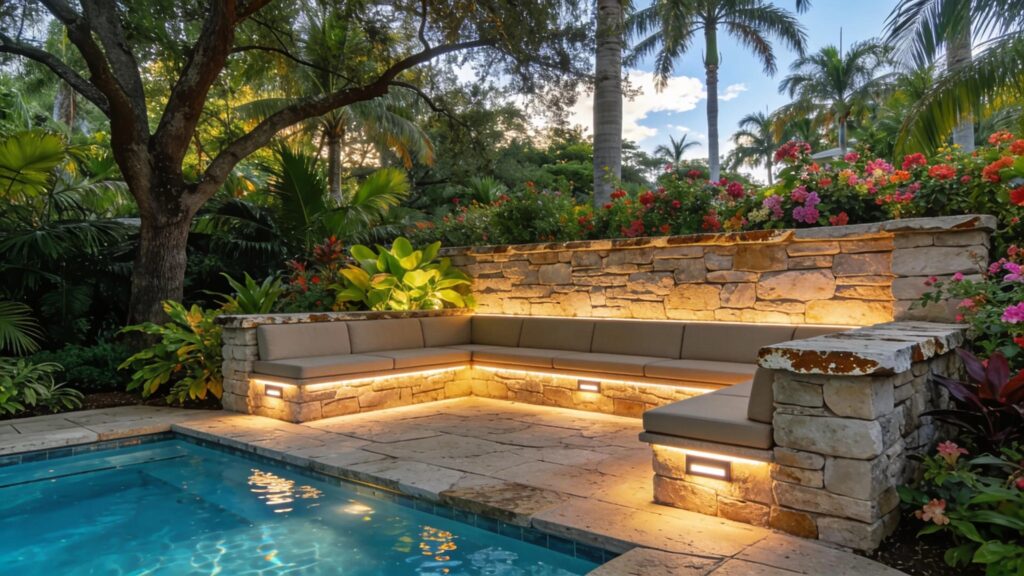
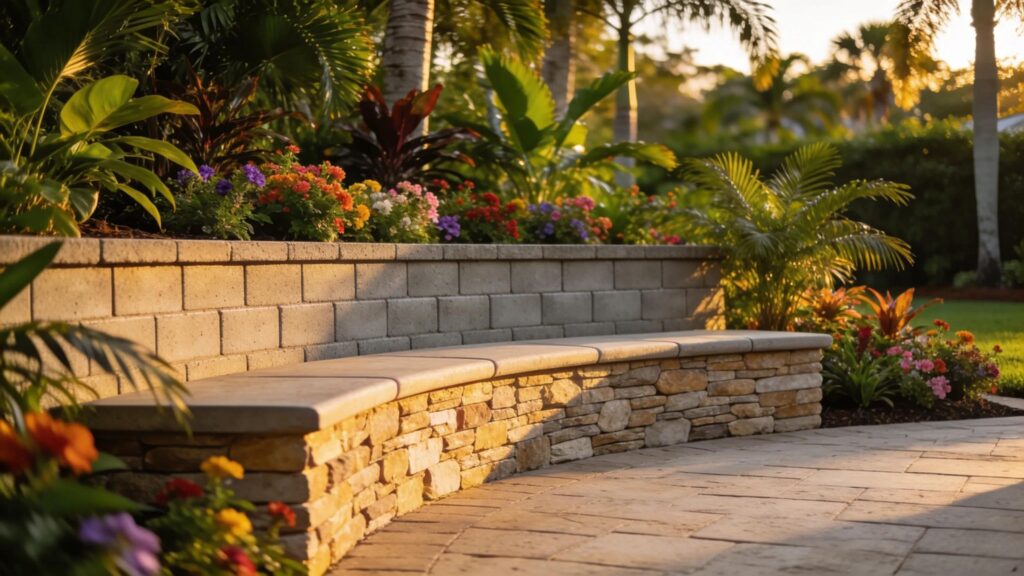
Custom seating walls are designed to enhance outdoor living by creating comfortable and visually appealing spaces. These designs typically feature:
- Design Options and Aesthetics: Homeowners can choose from various shapes, heights, and finishes that align with their personal style and outdoor theme.
- Material Choices for Longevity: Using durable materials such as stone veneer or concrete enhances the seating walls’ resilience to Florida’s elements.
- Integration with Outdoor Spaces: Custom seating walls can be seamlessly integrated with pools, gardens, and outdoor kitchens, making them a central feature for social gatherings.
Investing in custom seating walls transforms outdoor areas into luxurious, functional spaces perfect for entertaining.
Integrated Pool & Kitchen Seating Walls
The integration of seating walls with pools and outdoor kitchens provides functional benefits for homeowners. Considerations include:
- Design Considerations for Seamless Transitions: Careful planning ensures that seating walls blend naturally with existing outdoor features, avoiding abrupt changes in elevation.
- Aesthetic Benefits of Integration: Well-designed seating walls can enhance the overall look of pools and kitchens, creating a cohesive outdoor aesthetic.
- Functional Layouts for Bigger Gatherings: Seating walls create additional space for guests, enhancing the usability of outdoor areas during events.
Such thoughtful design fosters an inviting atmosphere, encouraging outdoor enjoyment.
What Design Trends Define Luxury Seating Walls in Spring Hill?
In Spring Hill, several design trends for luxury seating walls are becoming popular. These trends include:
- Current Materials and Aesthetics: High-end materials like natural stone and composite stones are favored for their beauty and longevity.
- Popular Designs Among Luxury Homeowners: Features such as integrated lighting, built-in planters, and customized shapes are prevalent in new designs.
- Functional Trends in Outdoor Design: The shift toward multifunctional spaces sees seating walls serving as both seating and decorative features.
Staying current with trends helps homeowners ensure their installations remain stylish and functional.
How Does a Turnkey Design-Build Process Ensure Quality Outdoor Wall Projects?
The turnkey design-build process enhances the quality of outdoor wall projects through streamlined management and expert execution. Advantages include:
- Benefits of Integrated Project Management: This approach simplifies communication and decision-making, leading to timely project completion.
- Quality Assurance During Construction: With a single point of contact, the risk of miscommunication and errors is reduced, ensuring high standards are maintained.
- Client Satisfaction Through Streamlined Communication: Regular updates and consultations keep homeowners engaged, fostering satisfaction with the final product.
Employing a turnkey approach helps in delivering results that exceed expectations.
What Role Does 3D Design Visualization Play in Custom Retaining Wall Projects?
3D design visualization plays a significant role in planning custom retaining wall projects. Key benefits include:
- Visual Representation of Design Concepts: Homeowners can see realistic models of their projects before construction, facilitating informed decision-making.
- Client Engagement and Feedback: Interactive design sessions allow for adjustments based on homeowner preferences, enhancing satisfaction.
- Impact on Project Accuracy and Satisfaction: High-quality visualizations help in reducing errors during construction, ensuring the final product matches expectations.
3D visualization dramatically improves the design process, allowing for creative and practical solutions.
How Are Engineering and Construction Coordinated for Flawless Wall Installation?
Engineering and construction coordination is crucial for the successful installation of retaining walls. This involves:
- Importance of Site Evaluation and Planning: Detailed site analysis ensures that the unique aspects of each site are addressed in the design and construction phases.
- Material Selection and Engineering Collaboration: Close collaboration between engineers and contractors ensures that the best materials are chosen for durability and aesthetics.
- Quality Control Throughout the Project: Regular inspections and adherence to standards are essential to prevent failures and ensure the longevity of the finished product.
Masterful coordination results in retaining walls that are not only functional but also enhance the overall landscape.