A waterfall can make the difference between a pool that looks beautiful and a backyard that feels like a true escape. The right pool waterfall contractor does more than stack stone near the waterline. They choreograph the sightlines from your patio, the sound heard from a lounge chair, the movement of water, and the materials that connect the feature to the rest of your outdoor environment.
For a premium residential project, this is not a detail to decide after the pool is finished. A waterfall affects pool engineering, plumbing, decking, planting, lighting, and how your family and guests experience the space after sunset. Choosing the right design-build partner early protects both the vision and the investment.
Start With the Experience You Want to Create
Before comparing contractors, picture how you want your backyard to feel. A broad sheet waterfall can bring a clean, contemporary rhythm to a geometric pool. A naturalistic cascade, built with large boulders and varied drops, can create the feeling of a secluded hillside swimming hole. A raised spa spillway offers a more tailored look, with a gentle curtain of water that brings movement without dominating the setting.
Sound deserves just as much attention as appearance. Some homeowners want enough water movement to soften neighborhood noise and make the pool area feel more private. Others want a quieter effect that preserves conversation around an outdoor kitchen or fireplace. The height of the falls, the width of each drop, the stone profile, and the pump selection all shape the final sound.
A skilled contractor will ask how you entertain, where you relax, and what you see from inside the home. Those answers should guide the design. A feature intended to be admired from a kitchen window needs a different composition than one designed as a dramatic backdrop for a sun shelf and poolside pavilion.
What a Pool Waterfall Contractor Should Handle
A waterfall may look effortless when complete, but it relies on many decisions below and behind the stone. The contractor should be able to explain how the feature will function, not simply show attractive photos of finished work.
The water source and return lines need to be sized correctly so the falls have the intended volume without compromising pool circulation. Pumps, valves, filtration, and controls should be selected with the larger pool system in mind. If the feature will run independently, the owner should understand what that means for energy use, automation, and maintenance.
Structural planning matters as well. Large boulders, raised walls, grottos, and elevated spillways carry real weight. The base, reinforcement, drainage, and waterproofing must be suited to the design and site conditions. In warm-climate regions, intense sun, heavy rain, settling soils, and stormwater management can all influence the right construction approach.
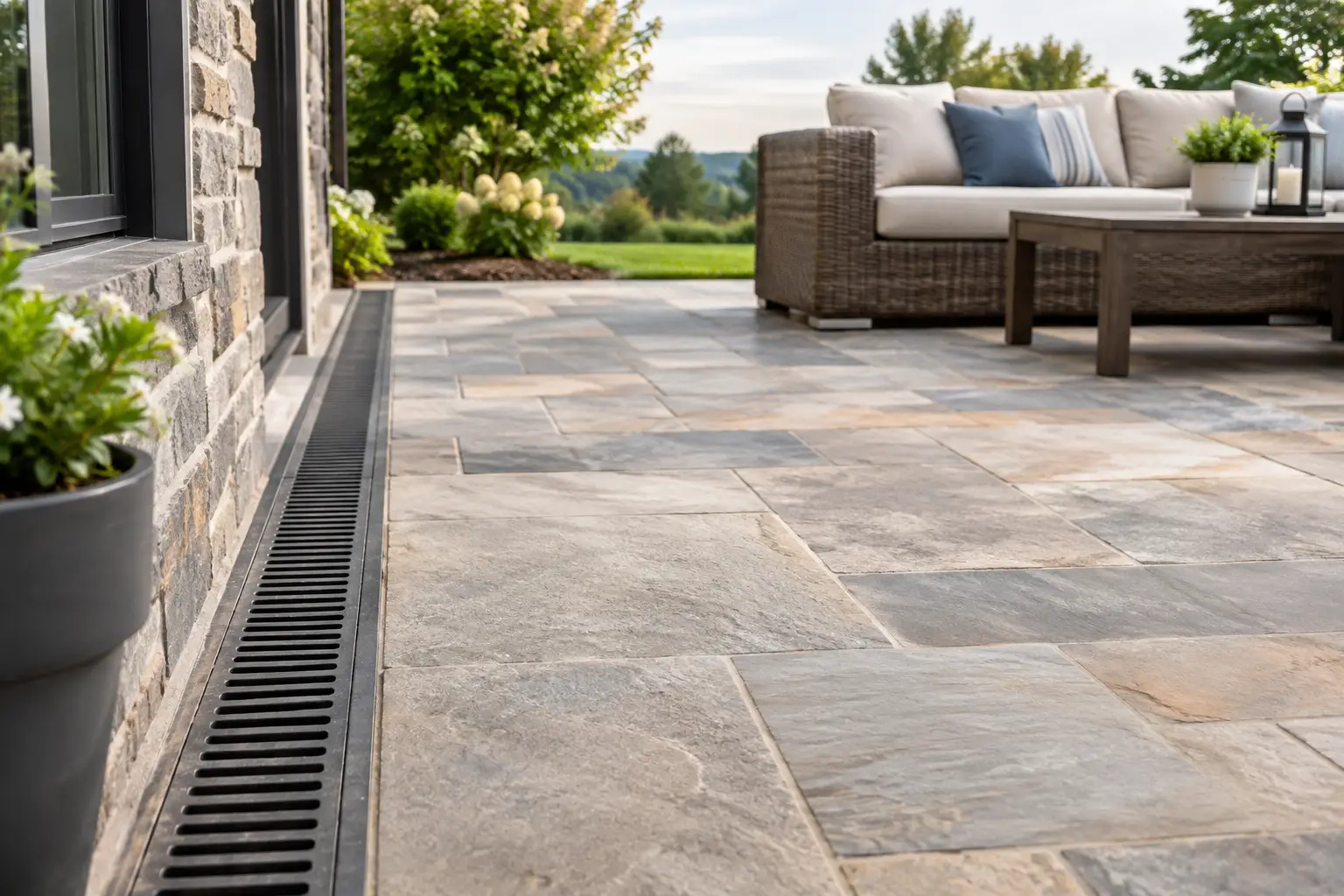
The best projects also account for the finish work surrounding the waterfall. Coping, tile, pavers, planting beds, and lighting should feel intentional rather than added around the feature. When one team designs the pool, hardscape, and landscape together, transitions tend to be cleaner and opportunities for a more memorable setting are easier to see.
Look Beyond the Portfolio Photo
A portfolio is a useful starting point, but beauty alone does not tell you whether a contractor can deliver a lasting water feature. Ask to see projects that resemble your preferred style and scale. Then look more closely at the details.
In naturalistic work, do the boulders look grounded and varied, or do they appear placed on top of one another? Is the water emerging naturally from concealed points, or is visible equipment interrupting the composition? In contemporary work, are the lines crisp, the spillways even, and the finishes consistent? These details reveal the level of craftsmanship behind the photograph.
It is also worthwhile to ask how old the featured projects are. A waterfall should continue to look and perform well after seasons of use, not only on installation day. A confident contractor can discuss material sourcing, waterproofing practices, equipment access, and the care required to preserve the feature.
Ask the Questions That Protect Your Investment
The consultation should feel like a design conversation, not a quick estimate based on a square-foot number. Your contractor should be curious about your property, your priorities, and the way the new space will be used.
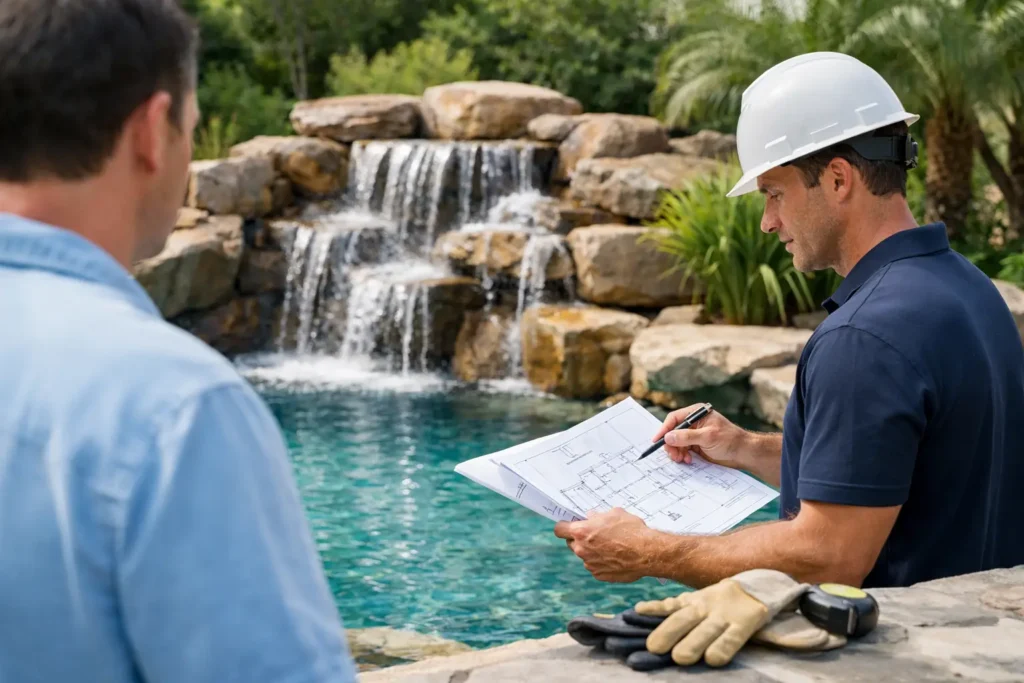
Ask who is responsible for the overall design and whether the pool, waterfall, hardscape, and landscape are coordinated under one plan. Clarify how the team handles permits, site grading, drainage, and utility considerations. Find out whether you will receive drawings or renderings that help you understand the scale, materials, and views before construction begins.
You should also discuss access for future service. Pumps, valves, lights, and plumbing connections need to be reachable without dismantling stonework or disturbing finished patios. This practical detail is easy to overlook when the focus is on a dramatic visual result, yet it can prevent frustration years later.
Finally, ask for clarity around allowances and changes. Natural stone varies in color, size, and availability, and site conditions can reveal surprises once excavation begins. A professional team will explain where flexibility may be needed and how design decisions, upgrades, or unforeseen conditions are communicated and approved.
Understand the Budget Drivers
There is no single price for a custom pool waterfall because every design has different structural, material, and mechanical demands. A simple spillway integrated into a raised wall is generally a more controlled investment than a large, boulder-built cascade with multiple drops, planted pockets, custom lighting, and an adjoining spa or grotto.
The scale of the feature is only one part of the equation. Stone selection, site access, excavation, drainage work, equipment upgrades, automation, and labor-intensive setting all influence cost. A backyard with tight access may require more handling and planning than a wide-open lot, even if the final waterfall is modest in size.
It can be tempting to reduce cost by treating the waterfall as a later addition. Sometimes that works, especially with a straightforward wall spillway. But a major feature is usually more economical and more cohesive when planned with the original pool construction. The plumbing can be installed correctly, the decking can meet the stonework naturally, and the landscape can frame the falls from the beginning.
Design for Daylight, Evening, and Every Season
Waterfalls are living features. They change with the angle of the sun, the reflection of the pool surface, and the activity around them. A thoughtful design considers all three.
During the day, stone color and texture should complement the architecture of the home and the surrounding hardscape. In the evening, low-voltage lighting can reveal the movement of water, add depth to stone, and create a warm focal point without turning the backyard into a stage set. Underwater lights, tucked-away fixtures, and careful beam placement make a greater difference than simply adding more fixtures.
Landscaping completes the composition. Layered planting can soften a rock waterfall, create a sense of privacy, and introduce seasonal color. For a more architectural pool, sculptural plants and restrained planting beds may support a clean, resort-style look. The goal is not to cover the craftsmanship. It is to make the feature feel as though it belongs to the property.
Choose a Partner, Not Just an Installer
The right pool waterfall contractor brings technical discipline and artistic judgment to the same table. They can explain equipment without losing sight of the feeling you want to create. They know when a large waterfall will elevate a setting and when a quieter, more refined spillway will better serve the architecture and the way you live outdoors.
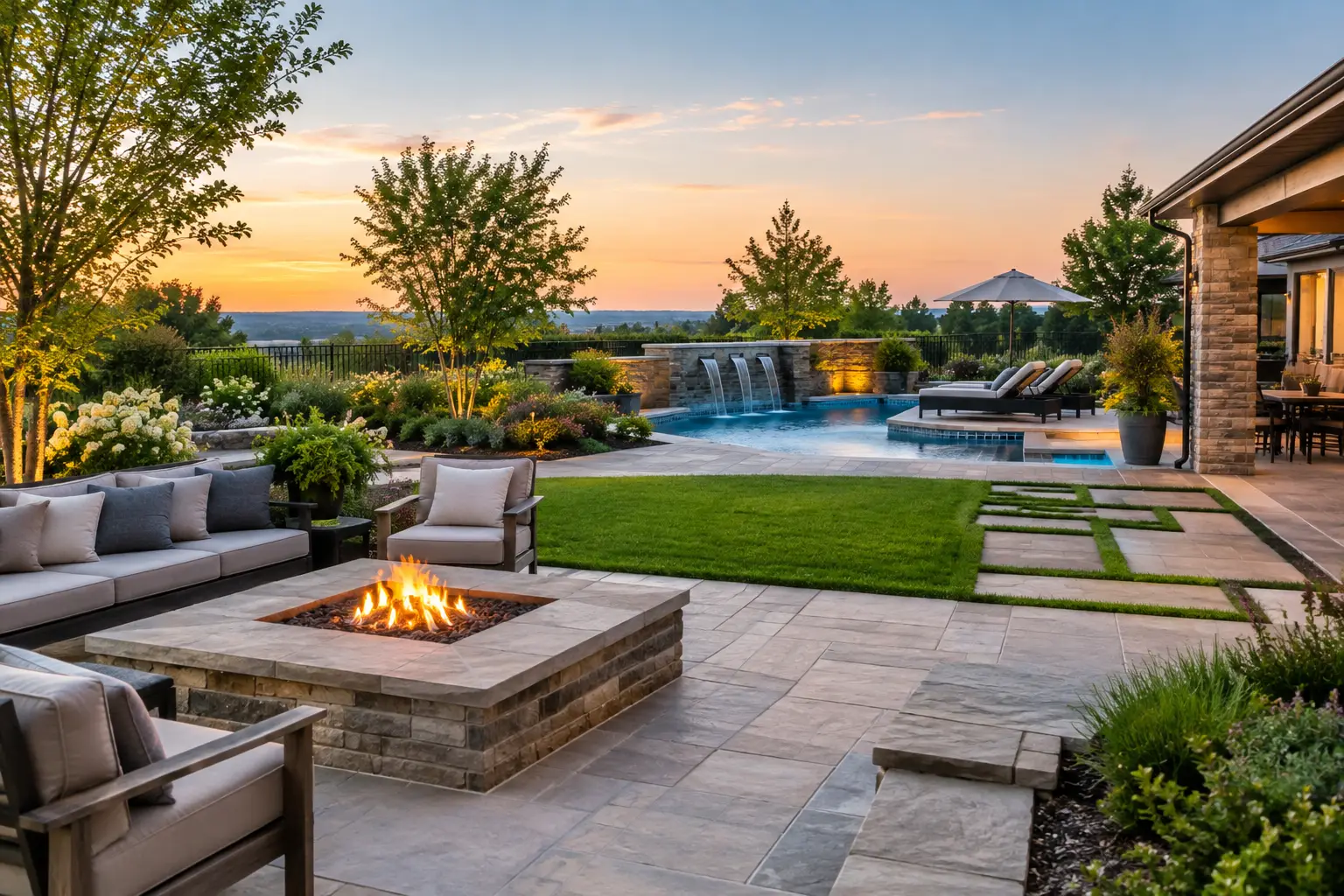
At Beyond Backyard Living, the strongest projects begin with a complete vision: water in motion beside inviting patios, tailored planting, fire features, cooking spaces, and places where guests naturally gather. When those elements are planned together, a waterfall becomes more than a pool upgrade. It becomes part of the atmosphere that turns an ordinary evening at home into an occasion worth sharing.
Bring inspiration to your consultation, but bring your routines too. The best design is the one that gives your family a place to linger, lets guests feel welcomed, and makes every view outside feel like an invitation to stay a little longer.