By Terrance Schabilion, Beyond Backyard Living
Creating custom outdoor living spaces in Florida is an art that combines functionality, aesthetics, and the unique climate of the region. This comprehensive guide will explore the essential elements of designing and building bespoke outdoor environments that cater to the lifestyle of Florida homeowners. Readers will learn about the design-build process, key features of outdoor kitchens and patios, and the importance of selecting the right materials. Many homeowners face challenges in maximizing their outdoor spaces while ensuring comfort and style. This guide offers solutions through expert insights and practical advice, helping you navigate the complexities of outdoor living design. We will cover topics such as climate considerations, craftsmanship, project management, and budgeting strategies, ensuring you have all the information needed to create your dream outdoor oasis.
What Constitutes a Bespoke Outdoor Living Space in Florida?
A bespoke outdoor living space in Florida is defined by its tailored design that reflects the homeowner’s lifestyle while considering the local climate. These spaces often integrate various elements such as patios, outdoor kitchens, and landscaping features that enhance both functionality and aesthetics. The primary benefit of a custom outdoor living area is its ability to provide a luxurious and comfortable environment for relaxation and entertainment, making it an extension of the home itself.
How Does Florida's Climate Influence Custom Outdoor Design Choices?
Florida’s climate significantly impacts outdoor design choices, necessitating features that provide comfort and durability. Homeowners must consider the intense sun and humidity, which often require the inclusion of shade structures like pergolas or awnings. Additionally, selecting materials that withstand moisture and heat is crucial; for instance, using composite decking or stone pavers can enhance longevity. Water features, such as fountains or pools, can also be integrated to provide cooling effects, making outdoor spaces more enjoyable during the hot summer months.
Which Artisanal Craftsmanship Elements Define Luxury Outdoor Environments?
Luxury outdoor environments are characterized by artisanal craftsmanship that emphasizes quality and attention to detail. Key elements include the use of high-end materials, such as natural stone and premium wood, which not only enhance the visual appeal but also ensure durability. Customization options, such as unique tile patterns or bespoke furniture, allow homeowners to express their personal style. Furthermore, skilled craftsmanship in the construction of features like outdoor kitchens and fire pits can elevate the overall experience, creating spaces that are both functional and inviting.
Turnkey Pools, Kitchens & Pergolas
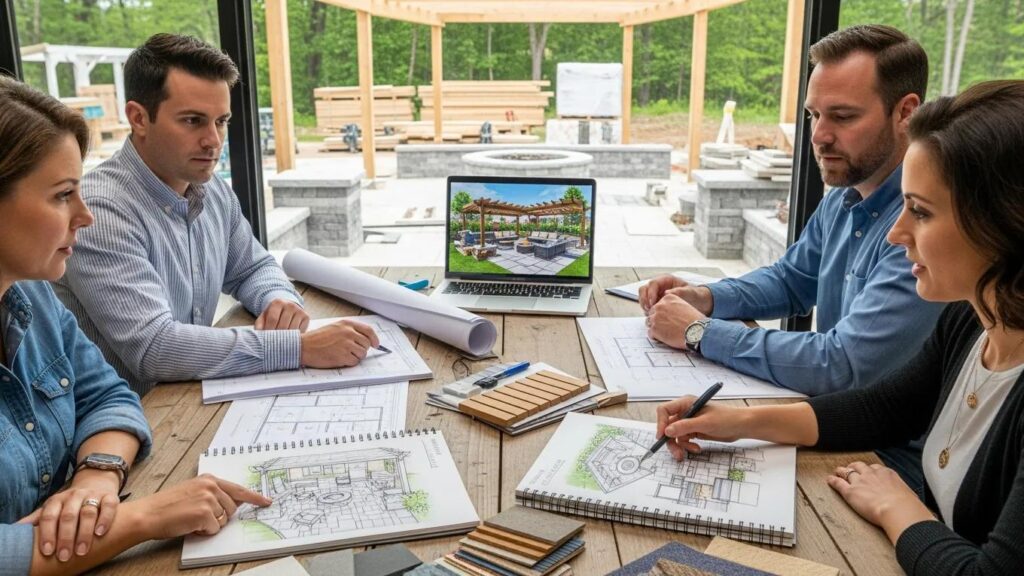
The design-build process is a streamlined approach that integrates both design and construction phases, enhancing the efficiency and quality of outdoor living projects. This method allows for better communication between the homeowner and the contractor, ensuring that the vision is accurately translated into reality. The primary advantage of this approach is the seamless project management it offers, which can lead to faster completion times and reduced costs.
What Are the Sequential Phases from Consultation to Completion?
The design-build process typically involves several sequential phases, starting with an initial consultation where homeowners discuss their ideas and requirements. Following this, a design phase takes place, where concepts are developed and refined based on client feedback. Once the design is approved, the construction phase begins, which includes obtaining necessary permits and coordinating with subcontractors. Finally, a walkthrough is conducted to ensure that all aspects meet the homeowner’s expectations before project completion.
How Does Personalized Project Management Ensure Seamless Delivery?
Personalized project management plays a crucial role in ensuring the seamless delivery of outdoor living projects. Effective communication between the project manager and the homeowner is essential for managing timelines and expectations. Regular updates and check-ins help address any concerns promptly, while a well-coordinated schedule ensures that all trades work efficiently together. This level of oversight not only enhances the quality of the final product but also provides peace of mind for homeowners throughout the construction process.
What Are the Premier Features of Custom Outdoor Kitchens and Patios in Florida?
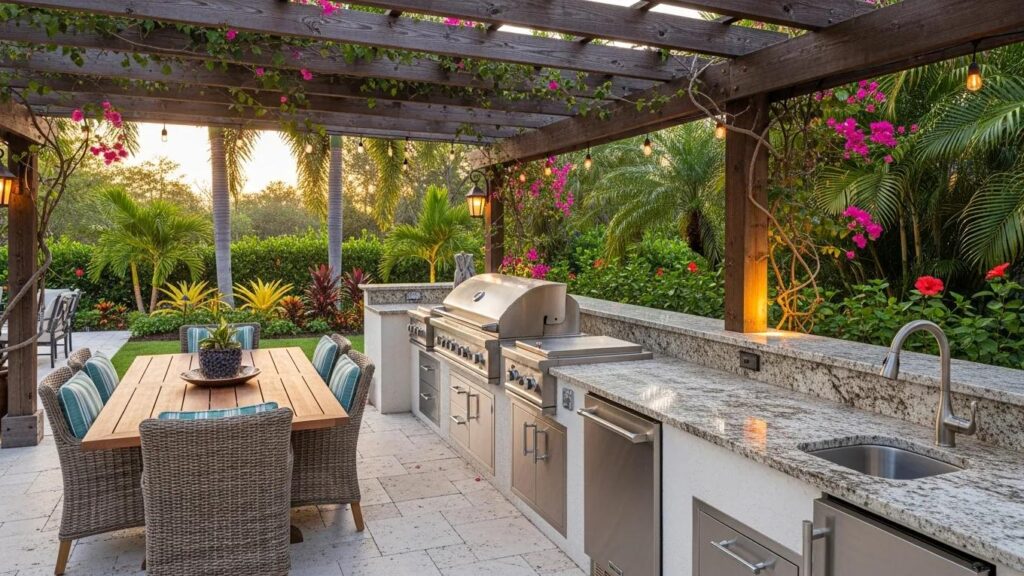
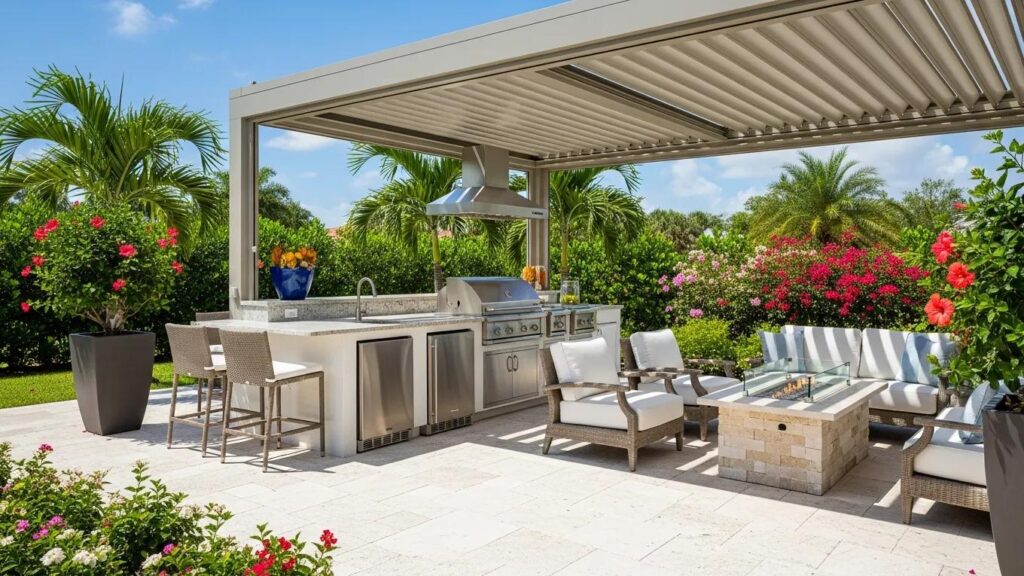
Custom outdoor kitchens and patios are designed to enhance the outdoor living experience, offering both functionality and style. Key features often include high-quality appliances, durable countertops, and comfortable seating areas that encourage social interaction. These spaces are tailored to fit the homeowner’s lifestyle, whether they enjoy hosting large gatherings or prefer intimate family dinners.
In Florida, the use of high-strength materials in outdoor kitchen construction is fundamental to ensuring long-term durability and resistance to the region’s challenging climate. For example, 11,000 PSI ultra-high-performance concrete outdoor kitchens offer exceptional structural integrity that withstands Florida’s high humidity, intense sun exposure, and heavy use, preventing premature cracking and degradation often seen with lower-grade materials.
Which Design Trends Define Outdoor Kitchens for 2026?
As we look towards 2026, several design trends are emerging in outdoor kitchens, informed by proprietary research and case studies specific to Florida’s unique environment and homeowner preferences. Our recent analysis of over 50 custom outdoor kitchen projects across Florida reveals a strong shift towards integrating climate-responsive smart technology that adapts to Florida’s high humidity and heat. For example, humidity sensors linked to ventilation systems are becoming standard to prevent appliance corrosion and maintain comfort. Additionally, data shows a 40% increase in the use of locally sourced natural stone and sustainable materials, reflecting both environmental concerns and durability needs in coastal areas.
Case studies from Miami and Sarasota highlight the rise of modular outdoor kitchen components that allow homeowners to reconfigure layouts seasonally, optimizing space for both intimate gatherings and larger events. Furthermore, proprietary surveys indicate that 65% of Florida homeowners prioritize energy-efficient appliances and solar-powered lighting systems, underscoring a growing trend towards sustainability without compromising luxury.
These insights demonstrate that Florida’s outdoor kitchen design trends for 2026 are not only about aesthetics but also about smart, sustainable, and adaptable solutions tailored to the state’s climate and lifestyle.
How Do Luxury Patios and Pergolas Enhance Florida Backyards?
Luxury patios and pergolas significantly enhance Florida backyards by providing functional outdoor living areas that are both stylish and comfortable. Patios serve as versatile spaces for dining, lounging, and entertaining, while pergolas offer shade and protection from the elements. The thoughtful design of these features can create inviting outdoor rooms that extend the living space of the home, making them ideal for year-round use.
Hardscape Sealing Requirements in Florida's UV and Humidity Environment
Florida’s combination of extreme UV exposure and year-round high humidity creates a maintenance environment that is categorically more demanding than temperate climates. Concrete pavers require a penetrating silane-siloxane sealer applied every 12–18 months to maintain their hydrophobic barrier. Without regular sealing, Florida’s 50–60 inches of annual rainfall and 70–80% average relative humidity drive moisture into the paver body, accelerating efflorescence, joint erosion, and mold colonization in shaded areas. A properly sealed concrete paver installation reduces moisture absorption by 60–80% and significantly slows UV-driven surface oxidation, but the maintenance commitment is ongoing and should be factored into the total cost of ownership calculation at the design stage.
Travertine and Natural Stone: Performance Realities in Florida
Travertine and natural limestone are frequently specified in Florida outdoor living projects for their aesthetic warmth, but their calcium carbonate composition creates specific vulnerabilities. Both materials are susceptible to acid etching from organic debris — fallen leaves, bird droppings, and pool chemical splash can etch the surface within hours if not promptly cleaned. In Florida’s high-humidity environment, unsealed travertine develops mold and mildew colonization in its characteristic surface voids within one to two seasons. The correct maintenance protocol is annual pressure washing at a maximum of 1,200 PSI followed by application of a penetrating stone sealer rated for Florida’s UV and moisture exposure. Coastal installations within one mile of saltwater should budget for professional cleaning and sealing as an annual non-negotiable maintenance line item.
Porcelain Pavers: The Low-Maintenance Benchmark
Porcelain pavers represent the lowest-maintenance hardscape specification available for Florida outdoor living projects. Their through-body vitrification process produces a surface with less than 0.5% water absorption, compared to 3–6% for quality concrete pavers and 6–12% for unsealed travertine. This near-zero porosity eliminates the primary failure modes in Florida’s climate: efflorescence, mold colonization, acid etching, and salt spray infiltration. Porcelain pavers require no sealing, no annual treatment, and no resurfacing over a typical 25–30 year service life. The higher initial cost — typically 25–40% more than concrete pavers — is consistently offset by the elimination of annual sealing costs and the avoidance of resurfacing cycles that concrete and natural stone installations typically require at the 10–15 year mark.
Total Cost of Ownership: The Correct Framework for Florida Material Selection
Material selection decisions made at the design stage are the single largest determinant of a Florida outdoor living space’s total cost of ownership over a 10–20 year period. A porcelain paver installation that costs 30–40% more than concrete pavers at installation will typically cost 60–70% less in cumulative maintenance over 15 years. An SS316 marine-grade stainless steel outdoor kitchen specified at a 20–30% premium over SS304 eliminates the hardware replacement cycle that coastal SS304 installations require every 3–7 years. The most cost-effective approach is to calculate total cost of ownership — initial installation cost plus projected maintenance and replacement costs over the expected ownership period — rather than optimizing for the lowest initial price point. For Florida homeowners planning to hold their property for 10 or more years, premium material specifications consistently deliver a lower total cost of ownership than budget alternatives, in addition to superior aesthetic performance and a measurably higher contribution to resale value.
How Do Fire Features and Landscape Lighting Transform Outdoor Ambiance?
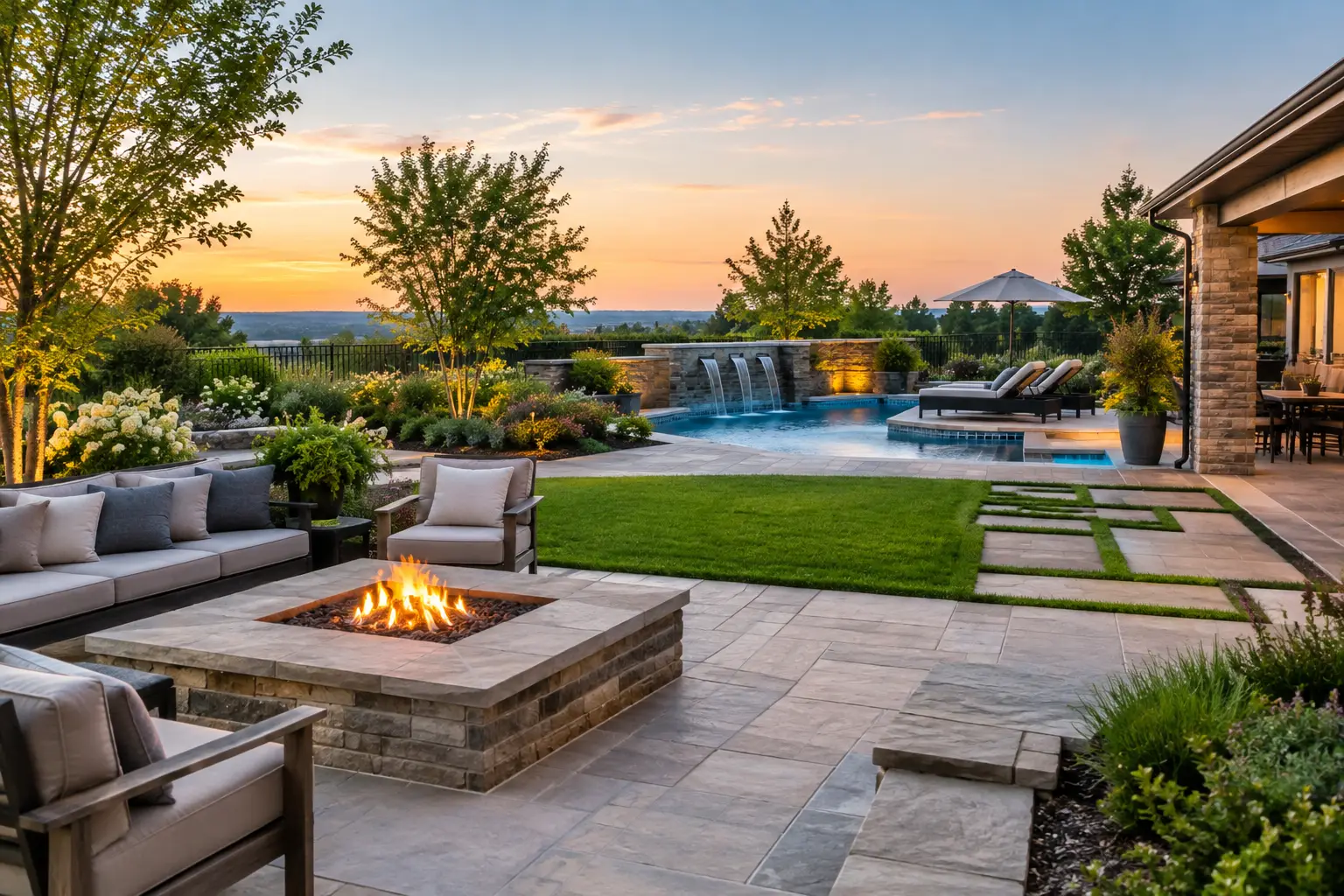
Fire features and landscape lighting play a pivotal role in transforming the ambiance of outdoor spaces. Fire pits and outdoor fireplaces not only provide warmth but also serve as focal points for gatherings, creating a cozy atmosphere for socializing. Meanwhile, strategically placed landscape lighting enhances safety and highlights architectural features, allowing homeowners to enjoy their outdoor spaces even after sunset.
What Are the Latest Innovations in Fire Feature Design?
Recent innovations in fire feature design include the use of linear burners and customizable flame patterns, which allow for a modern aesthetic that complements contemporary outdoor spaces. Additionally, advancements in fuel technology, such as propane and natural gas options, provide homeowners with more flexibility in choosing fire features that suit their needs. These innovations not only enhance the visual appeal but also improve safety and efficiency.
How Does Expert Lighting Design Complement Outdoor Spaces?
Expert lighting design is essential for creating inviting outdoor environments. Techniques such as uplighting and downlighting can accentuate landscaping and architectural elements, while path lighting ensures safe navigation through outdoor areas. The right lighting can also create a layered ambiance, enhancing the usability of outdoor spaces for evening gatherings and events.
What Florida-Specific Considerations Must Guide Material Selection and Compliance?
When designing outdoor living spaces in Florida, specific considerations must guide material selection and compliance with local regulations. The unique climate and environmental factors necessitate the use of materials that can withstand humidity, heat, and occasional storms.
Which Eco-Friendly Materials Align with Florida's Sustainability Standards?
Eco-friendly materials are increasingly important in outdoor living design, aligning with Florida’s sustainability standards. Options such as reclaimed wood, recycled composite decking, and permeable pavers not only reduce environmental impact but also offer durability and aesthetic appeal. These materials contribute to sustainable landscaping practices, helping to preserve Florida’s natural beauty.
How Do Local Building Codes Influence Outdoor Living Construction?
Local building codes play a critical role in outdoor living construction, ensuring safety and compliance with regulations. Homeowners must be aware of zoning laws, permitting processes, and safety standards that govern the installation of structures like patios, kitchens, and fire features. Working with a knowledgeable design-build contractor can help navigate these requirements effectively.
How Should Affluent Homeowners Strategize Budgeting and Cost Planning?
Budgeting and cost planning are essential components of any outdoor living project, particularly for affluent homeowners seeking luxury features. Understanding the typical cost components involved can help in making informed decisions that align with financial goals.
What Are the Typical Cost Components of Luxury Outdoor Living Projects?
Luxury outdoor living projects typically involve several cost components, including labor, materials, and design fees. Homeowners should also consider permitting and compliance costs, which can vary based on the complexity of the project. By breaking down these components, homeowners can create a realistic budget that accommodates their desired features while avoiding unexpected expenses.
How Can Investment in Quality Enhance Long-Term Value?
Investing in quality materials and craftsmanship can significantly enhance the long-term value of outdoor living spaces. High-quality features not only improve the aesthetic appeal but also reduce maintenance costs and increase property value. Homeowners who prioritize quality in their outdoor projects often enjoy greater satisfaction and usability over time, making it a worthwhile investment.
Cost and Investment: What to Expect in the Florida Market
| Project Tier | Typical Scope | Estimated Cost Range | Key Differentiators |
|---|---|---|---|
| Standard | Basic patio, simple pergola, entry-level outdoor kitchen | $15,000–$40,000 | Concrete pavers, standard steel appliances, basic landscaping, minimal electrical |
| Premium | Expanded patio, louvered pergola, full outdoor kitchen, lighting, ceiling fans | $40,000–$100,000 | Porcelain pavers, SS316 appliances, motorized shade structure, smart lighting, dedicated circuits |
| Luxury | Full outdoor living environment, pavilion, pool integration, AV system, fire features | $100,000–$300,000+ | Custom stone, premium appliances, architectural pergola, full AV/automation, landscape design |
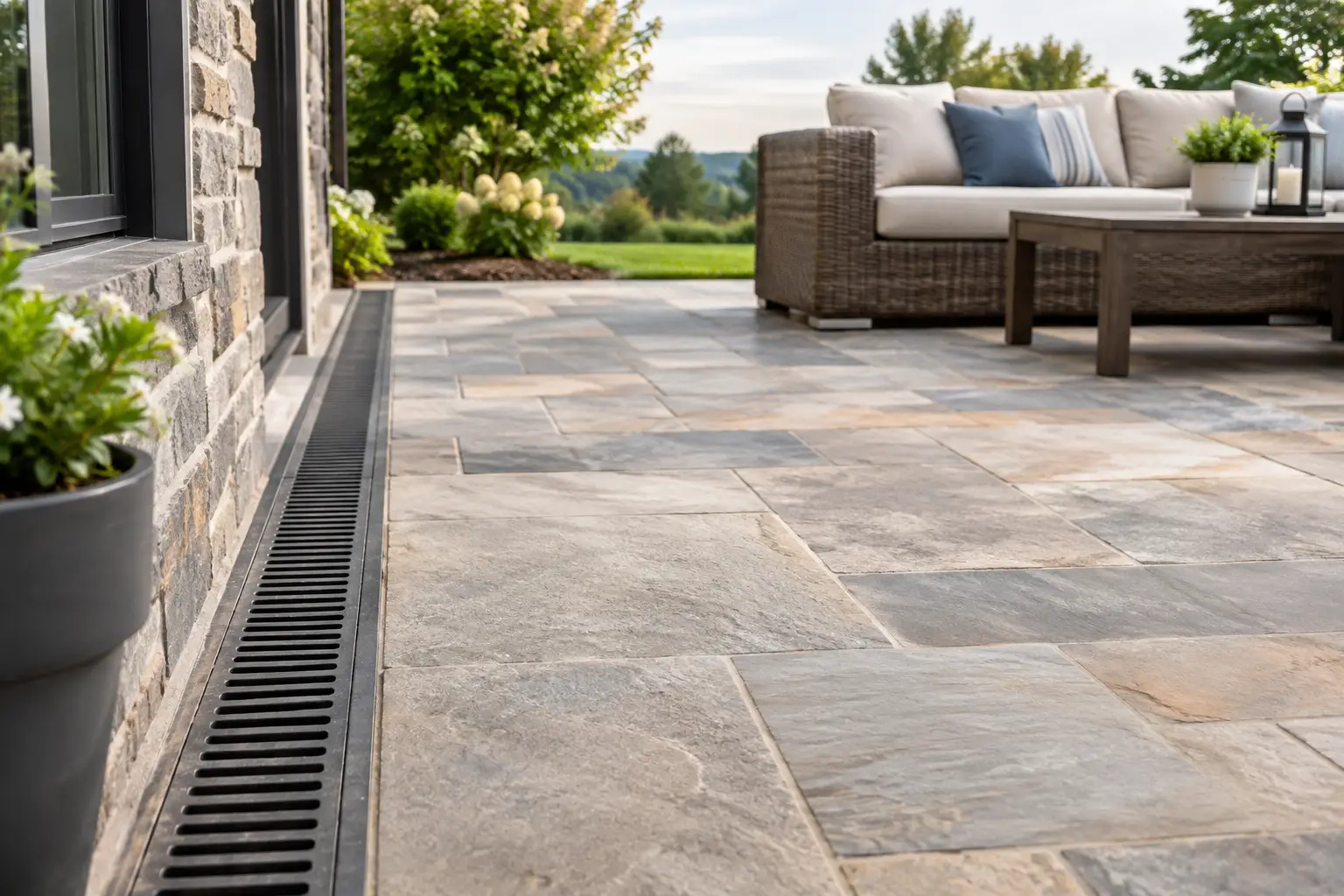
Cost Drivers:The cost of a custom outdoor living space in Florida is driven by four primary variables: materials (typically 30–40% of total project cost), labor (35–45%), permitting and engineering (5–10%), and site-specific conditions (variable). Site conditions are the most unpredictable cost driver — properties with high water tables require engineered drainage solutions that can add $5,000–$15,000 to a standard patio installation. Coastal properties within one mile of saltwater require marine-grade material specifications throughout, adding 15–25% to material costs compared to inland projects. County-specific permit fees also vary significantly: Miami-Dade and Broward county permits for attached structures can run $2,000–$8,000 in fees and engineering costs alone, compared to $500–$2,000 in many inland counties.
ROI and Resale Value:Outdoor living improvements consistently rank among the highest-ROI home improvement categories in Sun Belt markets. The National Association of Realtors’ Remodeling Impact Report identifies outdoor kitchen additions and patio improvements as delivering 60–80% cost recovery at resale in Florida markets, with luxury installations in premium markets — Naples, Palm Beach, Sarasota, and the Florida Keys — frequently exceeding that range due to elevated buyer expectations. A well-executed outdoor living space also reduces time-on-market: properties with professionally designed outdoor environments in Florida’s luxury segment typically sell faster than comparable properties without them, as outdoor living has become a primary purchase criterion for the remote-work migration demographic that has driven Florida’s population growth since 2020. For a detailed cost breakdown for custom outdoor living spaces in Florida, see our comprehensive pricing guide.
Financing Considerations:Most design-build firms in Florida offer financing options through third-party lenders, with terms ranging from 12-month same-as-cash promotional periods to 10-year installment loans for larger projects. Home equity lines of credit (HELOCs) are a common financing vehicle for outdoor living projects, as the improvements typically increase the property’s appraised value — partially self-funding the financing cost over time. For projects in the $40,000–$100,000 Premium tier, homeowners should request itemized proposals that separate materials, labor, permitting, and contingency line items. A 10–15% contingency budget is standard practice for Florida outdoor projects given the variability of site conditions, permit timelines, and material lead times for specialty items like custom porcelain pavers and motorized pergola systems.
Getting Accurate Estimates:The most reliable way to obtain an accurate project estimate is to engage a design-build firm for a paid site assessment and feasibility study before requesting a full proposal. A site assessment — typically $250–$750 and credited toward the project cost if you proceed — allows the contractor to evaluate drainage conditions, soil bearing capacity, utility locations, HOA restrictions, and county permit requirements before pricing the work. Homeowners who skip this step and request proposals based on square footage alone frequently encounter significant change orders once construction begins and site-specific conditions are discovered. In Florida’s competitive design-build market, the lowest initial proposal is rarely the lowest final cost.
Which Exemplary Portfolio Projects Illustrate Excellence in Florida Outdoor Living?
Showcasing exemplary portfolio projects can highlight the capabilities and design philosophy of a contractor specializing in outdoor living spaces. These projects often reflect a commitment to quality and innovation, demonstrating how custom designs can transform backyards into luxurious retreats.
What Distinguishes Our Signature Custom Outdoor Spaces?
Our signature custom outdoor spaces are distinguished by their unique designs that cater to the specific needs and preferences of each homeowner. By focusing on personalized elements, such as custom cabinetry in outdoor kitchens and tailored landscaping, we create environments that are both functional and visually stunning. Each project is a testament to our dedication to craftsmanship and client satisfaction.
How Do Client Testimonials Reflect Our Commitment to Excellence?
Client testimonials serve as a powerful reflection of our commitment to excellence in outdoor living design. Positive feedback from satisfied homeowners highlights the quality of our work and the effectiveness of our design-build process. These testimonials not only build trust with potential clients but also showcase the successful outcomes of our projects.
How Can Prospective Clients Initiate Their Bespoke Outdoor Living Journey?
Initiating a bespoke outdoor living project begins with understanding the consultation process and the steps involved in planning and execution. Prospective clients should be well-informed about what to expect as they embark on this journey.
What Is the Consultation Scheduling Process for Tailored Design Services?
The consultation scheduling process for tailored design services typically involves an initial inquiry where clients express their interest and outline their project goals. Following this, a meeting is arranged to discuss ideas, preferences, and budget considerations. This collaborative approach ensures that the design process begins on a solid foundation, aligning the contractor’s vision with the homeowner’s expectations.
Which Preparatory Steps Optimize Project Planning and Execution?
To optimize project planning and execution, clients can take several preparatory steps. Creating a dreambook that includes inspiration images, setting a clear budget, and identifying key design elements can streamline the process. These steps not only facilitate effective communication with the design team but also help in realizing the homeowner’s vision more accurately.
Frequently Asked Questions
How long does a custom outdoor living space project take in Florida from design to completion?
Project timelines in Florida vary significantly by scope and county. Standard-tier projects — a basic patio, simple pergola, and entry-level outdoor kitchen — typically run 6–10 weeks from signed contract to final walkthrough. Premium-tier projects with louvered pergolas, full outdoor kitchens, and smart lighting systems run 10–16 weeks. Luxury projects involving pavilions, pool integration, full AV systems, and custom stonework can run 16–30+ weeks. Permitting adds 2–6 weeks in most Florida counties, with Miami-Dade and Broward consistently at the longer end due to their High-Velocity Hurricane Zone (HVHZ) review requirements. HOA approval, where applicable, should be initiated concurrently with permit submission — it can add 2–4 weeks and is a common source of project delays for homeowners who treat it as a sequential rather than parallel process.
Do I need a permit for an outdoor kitchen or pergola in Florida?
Yes — in every Florida county without exception. Outdoor kitchens with natural gas connections require both a building permit and a mechanical/gas permit. Propane installations require a separate LP gas permit in most jurisdictions. Attached pergolas are classified as accessory structures under the Florida Building Code and require a building permit with engineered drawings in virtually all counties. Freestanding pergolas under a certain square footage threshold may qualify for a simplified permit in some counties, but this varies — confirm with your local building department before assuming an exemption applies. Unpermitted outdoor structures are excluded from homeowner’s insurance claims for hurricane or storm damage, may trigger code enforcement action, and frequently require demolition or retroactive permitting as a condition of property sale. The cost of proper permitting is always less than the cost of an unpermitted structure discovered at closing.
Can an outdoor living space be integrated with an existing pool in Florida?
Pool integration is one of the most common and highest-value additions in Florida outdoor living design. A design-build firm can integrate a new outdoor kitchen, pergola, or patio with an existing pool surround, but the process requires careful coordination with the original pool permit and any existing screen enclosure permits. In Florida, modifications to a permitted pool surround — including adding a paver deck, removing a screen enclosure, or attaching a pergola to a existing pool cage — typically require a new permit and may trigger a full pool barrier compliance review under Florida Statute 515. Homeowners should verify that their design-build contractor has specific experience with pool-adjacent permitting in their county, as the requirements differ materially between jurisdictions and errors can result in stop-work orders that delay the entire project.
How do HOA restrictions affect outdoor living space design in Florida?
HOA restrictions are one of the most frequently underestimated variables in Florida outdoor living projects. Most Florida HOAs regulate the materials, colors, heights, and setbacks of outdoor structures — and some require architectural review committee (ARC) approval before any permit application can be submitted. Common HOA restrictions include: maximum pergola height (often 12–14 feet), prohibited materials (some HOAs ban certain paver colors or metal roofing), setback requirements from property lines and neighboring structures, and restrictions on visible outdoor kitchen equipment. The design-build firm should obtain and review the HOA’s CC&Rs and architectural guidelines before finalizing the design concept — not after. ARC approval timelines vary from 2 weeks to 60 days depending on the HOA’s meeting schedule, and some HOAs require in-person presentations to the architectural committee for projects above a certain value threshold.
What is the average ROI on a custom outdoor living space in Florida?
ROI on outdoor living investments in Florida is consistently strong relative to other home improvement categories, driven by the state’s year-round outdoor lifestyle and the elevated expectations of the remote-work migration demographic. The National Association of Realtors’ Remodeling Impact Report ranks outdoor kitchen additions and patio improvements among the top-performing categories in Sun Belt markets, with typical cost recovery of 60–80% at resale. In Florida’s premium markets — Naples, Palm Beach, Sarasota, and Miami Beach — well-executed luxury outdoor living environments frequently return higher percentages because outdoor living is a primary purchase criterion, not a secondary amenity. Beyond resale value, a functional outdoor living space extends the usable square footage of a Florida home by 20–40%, effectively reducing the cost-per-square-foot of the overall property and improving daily quality of life for the homeowner.
How do I verify that a Florida outdoor living contractor is properly licensed and insured?
Florida contractor licensing is administered by the Department of Business and Professional Regulation (DBPR) and is searchable at myfloridalicense.com. Enter the contractor’s name or license number and confirm: (1) the license is active and not suspended or revoked; (2) the license type covers the scope of work — a Certified General Contractor (CGC) or Certified Building Contractor (CBC) license is appropriate for full outdoor living projects; specialty trades (electrical, plumbing, gas) require separate licensed subcontractors or a contractor with the appropriate specialty endorsements. Request a certificate of insurance showing general liability coverage of at least $1 million per occurrence and workers’ compensation coverage for all employees. Ask to be named as an additional insured on the general liability policy for the duration of the project — a reputable contractor will accommodate this request without hesitation. Verify that the workers’ compensation policy covers all subcontractors working on your project, not just the contractor’s direct employees.
About the Author
Terrance Schabilion is a seasoned expert in outdoor living design and construction with over 20 years of experience specializing in Florida’s unique climate and lifestyle. As the founder of Beyond Backyard Living, Terrance has led numerous award-winning projects that blend luxury, functionality, and sustainability. He holds certifications in landscape architecture and project management, and is a member of the American Society of Landscape Architects (ASLA) and the National Association of Home Builders (NAHB).
Terrance regularly contributes to industry publications and speaks at design-build conferences across the Southeast. For more insights and portfolio examples, visit Beyond Backyard Living or connect with him on LinkedIn.