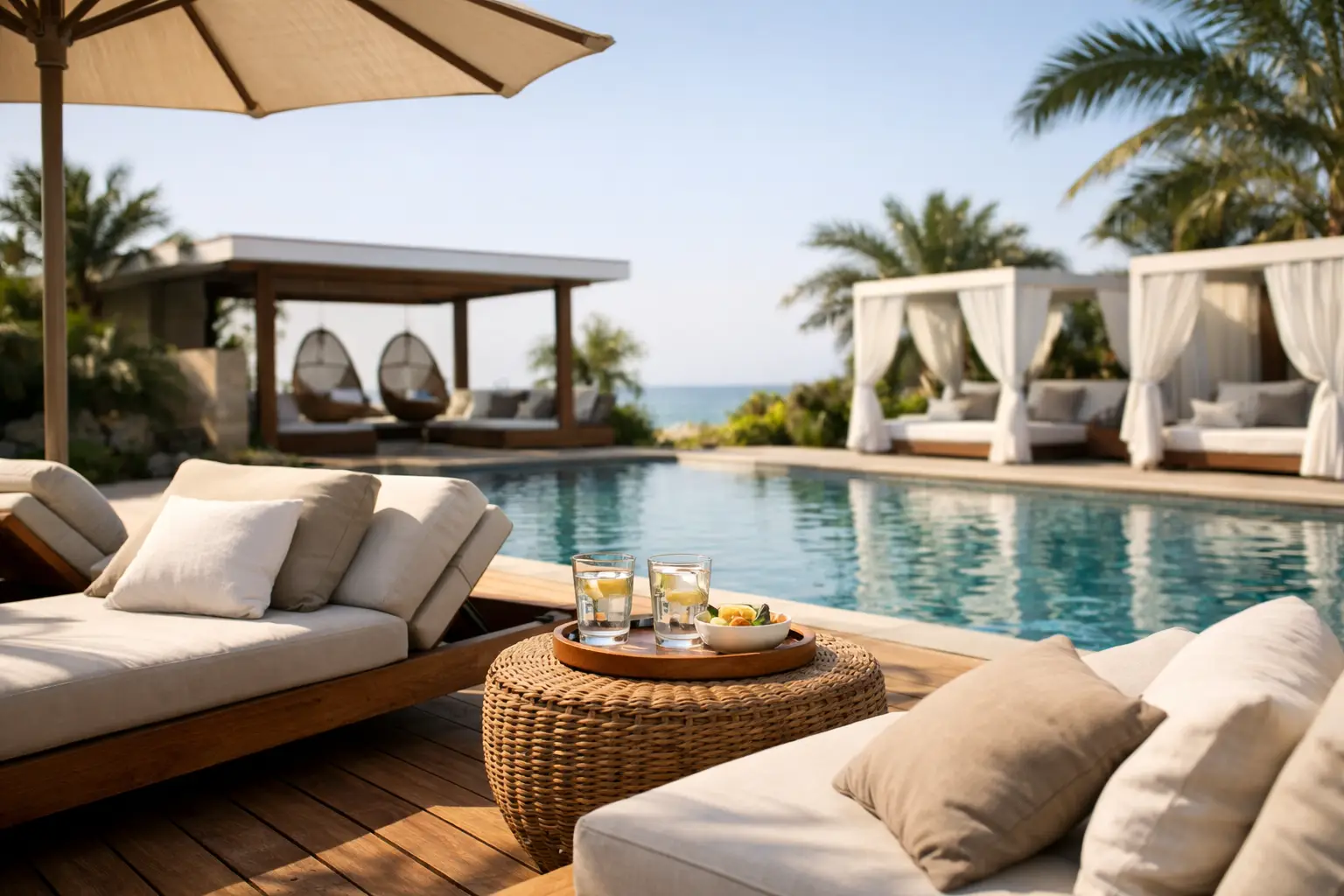
The pool may be the visual centerpiece of a backyard, but the lounge is where people actually settle in: coffee before the day begins, towels and sunscreen after a swim, dinner that stretches past sunset. Knowing how to design poolside lounge areas means designing for those unhurried moments, not simply arranging a few chaises on a patch of patio. The best spaces feel generous, composed, and effortless because every element has been considered before the first paver is set.
Start With the Experience, Not the Furniture
A beautiful poolside lounge begins with an honest picture of how your household hosts and relaxes. A family with young children may need clear sightlines to the water, room for towels, and an open transition from the house. Empty nesters may prioritize a quieter sun shelf, a fire feature, and comfortable seating for intimate evening gatherings. If weekend entertaining is the goal, the lounge should connect naturally to an outdoor kitchen, bar, or dining terrace rather than becoming an isolated destination.
Think in zones, but do not make the yard feel compartmentalized. A sun zone near the water gives swimmers a place to dry off and relax. A shaded conversation zone creates relief during the hottest hours. A hospitality zone, perhaps with a beverage station, grill, or pizza oven nearby, keeps hosts part of the party instead of moving back and forth to the indoor kitchen.
The goal is a sequence of spaces with distinct purposes and a shared visual language. The pool, patio, planting, structures, and furnishings should read as one designed environment.
Plan the Pool Deck for Movement and Breathing Room
One of the most common shortcomings in pool design is a deck that looks adequate on a plan but feels crowded once furniture arrives. A lounge chair needs space to recline. A side table needs a stable surface beside it. Guests need to walk behind occupied seating without stepping around wet towels or cutting through conversation areas.
As a practical starting point, allow roughly 6 to 8 feet of usable depth for a chaise lounge and its circulation space. Around dining tables and seating groups, leave enough room for chairs to pull out and people to pass comfortably. The exact dimensions depend on the furniture selected and the shape of the pool, but the principle remains the same: circulation should feel intuitive, never squeezed in as an afterthought.
Pay particular attention to the path from the home to the pool and from the pool to the restroom or changing area. These routes will see wet feet, active children, and guests carrying food or drinks. Keep them direct, slip-resistant, and free from tight corners. A well-planned route also protects the more refined lounge settings from becoming a walkway.
Create a Clear Focal Point
Every elevated poolside lounge benefits from a focal point that gives the space a sense of arrival. Depending on the property, that could be a sculptural fire bowl, a fireplace wall, a dramatic waterfall, a pavilion, or an uninterrupted view beyond the backyard.
A focal point should support the way the lounge is used. Fire features extend the season and pull people together after dark. A water feature adds sound and motion, though it should be placed carefully so it does not compete with conversation. If the home has a remarkable view, frame it with low-profile furnishings and thoughtfully placed plantings rather than blocking it with oversized structures.
Balance Sun, Shade, and Privacy
Sun is part of the appeal of a pool, especially in the Sunbelt. Too much unfiltered exposure, however, makes even the most luxurious patio difficult to use by midday. The answer is not necessarily to cover everything. The most inviting pool environments offer choice.
Reserve some open deck area for sun lovers, then layer in shade where people are likely to linger. A custom pergola can create architectural definition while allowing filtered light to pass through. A pavilion offers more substantial coverage for an outdoor lounge or dining setting. Retractable shades, umbrellas, and mature canopy trees can add flexibility in smaller areas or where a permanent structure is not the right fit.
Privacy deserves equal attention. Nearby homes, elevated lots, and open side yards can make a pool feel exposed. Instead of relying on a single wall of plants, use layered screening. Ornamental trees, evergreen hedges, feature walls, and tall grasses can create a more natural sense of enclosure. The best privacy strategy feels like a garden, not a barrier.
Choose Materials That Look Better With Real Life
Poolside materials need to perform under sun, splashing water, bare feet, chlorine, and frequent entertaining. They also need to belong with the architecture of the home. This is where a custom approach makes a visible difference.
Natural stone delivers enduring character and can be exceptional around a luxury pool, but its texture, color variation, heat retention, and maintenance requirements should be assessed for the specific application. Porcelain pavers offer clean lines, color consistency, and impressive durability, often with cooler and more slip-resistant options. Concrete pavers can bring warmth and flexibility in pattern, while poured concrete may suit a more contemporary, expansive design.
There is no universal best material. A pale finish may feel cooler underfoot but can show leaf debris and spills more readily. A richly textured stone can create a beautiful, organic look but may call for more attentive sealing or cleaning. The right choice balances appearance, safety, maintenance expectations, and the local climate.
Keep the palette disciplined. Two or three complementary hardscape materials are usually more effective than a collection of competing finishes. Repeat tones from the home’s exterior, roof, or interior gathering spaces to make the backyard feel intentionally connected to the property.
Furnish for Comfort, Then Design Around It
Furniture is not a finishing touch. It influences the size of the patio, the depth of shade structures, the location of fire features, and the way people circulate. Select the intended furniture early in the design process, even if final pieces are purchased later.
For a true lounge, combine more than one type of seating. Chaises offer the classic poolside experience, while deep club chairs or a tailored outdoor sectional make the space welcoming when no one is swimming. Add substantial side tables for drinks, books, and serving pieces. If there is room, a daybed or pair of oversized loungers can create a private resort moment without overwhelming the entire deck.
Invest in performance fabrics, quick-drying cushions, and frames designed for outdoor exposure. Outdoor furnishings should feel as comfortable as indoor pieces, but they must withstand the realities of heat, rain, and sunscreen. In a premium backyard, comfort is part of the craftsmanship.
Let Lighting Carry the Evening
A poolside lounge should become more inviting after sunset, not disappear into darkness. Layered lighting is more polished than a single bright fixture. Soft path lights improve safety along steps and edges. Low landscape lighting gives texture to planting beds and trees. Under-cap lighting on walls and gentle illumination near seating areas create atmosphere without glare.
Pool lighting can provide a beautiful ambient glow, especially when coordinated with a waterfall or fire feature. Avoid over-lighting the deck. Bright, exposed fixtures can flatten the mood and make guests feel as though they are sitting under floodlights. The goal is to see faces, steps, and serving surfaces while preserving the calm of the night sky.
Add Hospitality Details That Make Hosting Easy
The most memorable outdoor spaces anticipate small needs before they interrupt the moment. A built-in bench near the pool offers a spot for towels. Storage keeps cushions, games, and float accessories from collecting along the deck. A compact refrigerator or beverage station eliminates trips indoors. An outdoor shower can be both practical and visually striking when detailed with the same materials as the surrounding landscape.
For larger gatherings, consider where food will land, where trash and recycling will go, and where guests will set a plate or glass. These details may seem modest on their own, but together they determine whether a lounge feels effortless to use.
A poolside retreat should also have a seasonal plan. Fire features, overhead heaters, and wind protection can make cool evenings more enjoyable. Ceiling fans in a pavilion or covered lounge can add comfort when temperatures climb. Designing for more than one season makes the investment feel present throughout the year.
Design the Whole Backyard as One Escape
The most successful poolside lounge does not stop at the pool coping. It belongs to a larger outdoor composition shaped by views, architecture, planting, and the rhythm of daily life. When the pool, patio, landscape, shade, and entertaining features are planned together, the result feels less like a collection of upgrades and more like a private destination.
Beyond Backyard Living approaches these spaces as complete environments, with craftsmanship and hospitality guiding each decision. Whether the vision is a quiet courtyard pool or a full-scale entertainment retreat, the most valuable first step is to define the feeling you want guests and family to carry with them when they leave the water and settle into the lounge.