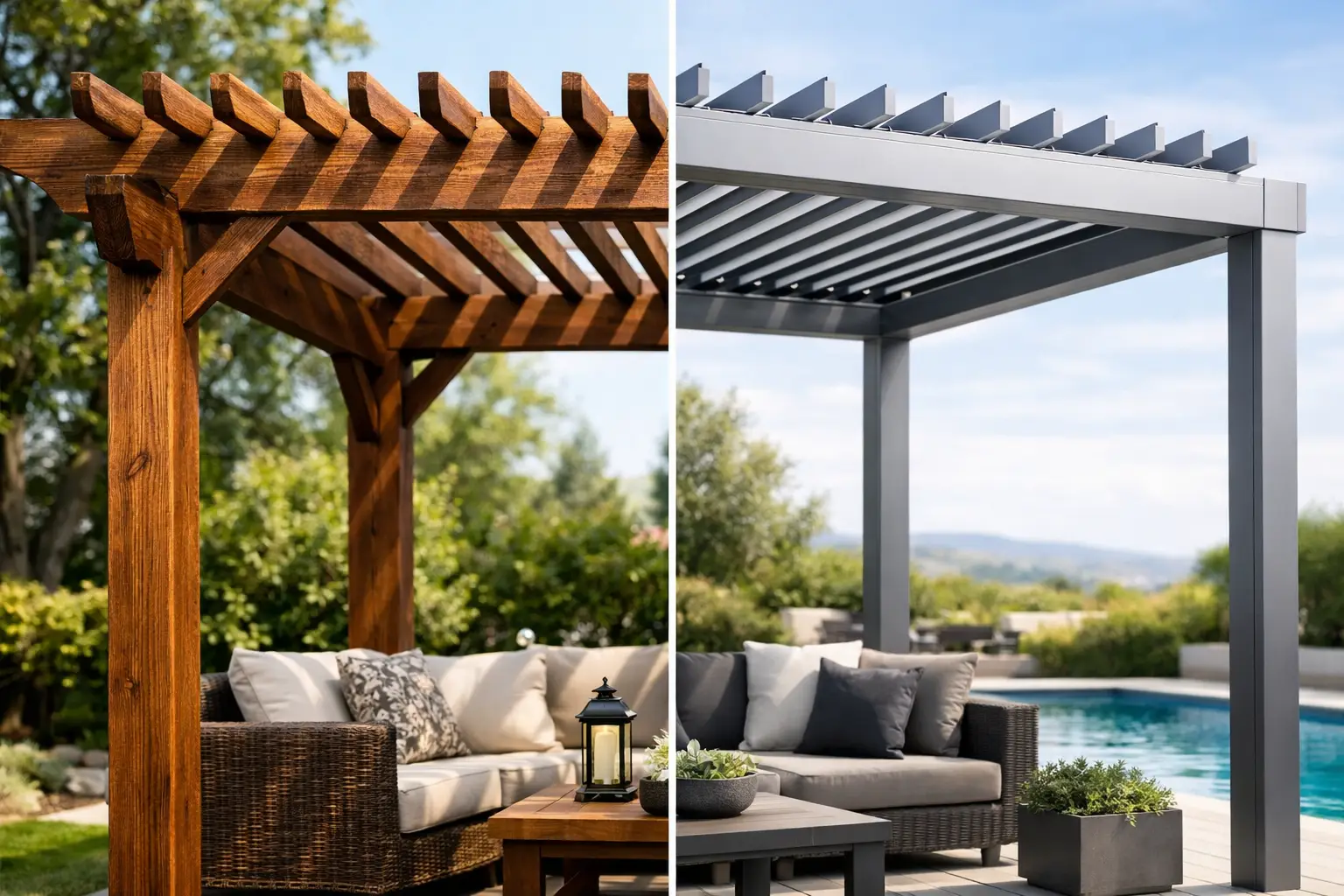
The choice between a wood pergola vs aluminum often comes down to one question: what kind of backyard experience are you trying to create? A pergola is not just overhead structure. It shapes how your patio feels at noon, how your poolscape photographs at sunset, and how guests settle into your outdoor space the moment they arrive.
For some homeowners, wood is the obvious answer because it brings warmth, character, and a crafted look that feels right at home in a lush, layered landscape. For others, aluminum delivers the cleaner lines and lower maintenance that make everyday enjoyment easier. The best decision is usually less about which material is better in general and more about which one supports the lifestyle, architecture, and long-term expectations for your property.
Wood pergola vs aluminum: the design difference
At a glance, the biggest difference is emotional. Wood feels natural, timeless, and richly architectural. It can soften a hardscape-heavy backyard, complement traditional or transitional homes, and make an outdoor room feel established rather than newly installed. Cedar and other premium woods carry texture, grain, and depth that many homeowners simply cannot replicate with manufactured materials.
Aluminum has a different appeal. It reads crisp, tailored, and contemporary. In the right setting, that can be a major advantage. If your home leans modern, your patio design is sleek, or you want a pergola to frame an outdoor kitchen or pool deck without visual heaviness, aluminum can look very refined.
This is where design context matters. A pergola does not stand alone. It sits next to pavers, plantings, fire features, lighting, and often the home itself. A beautiful pergola on its own can still feel out of place if it does not relate to the larger composition. That is why material selection works best when viewed as part of a complete outdoor environment, not as a single product decision.
Why wood still wins many luxury projects
Wood has a presence that feels bespoke. It suggests craftsmanship. It can be stained to bring out warmth, painted for a more tailored finish, or detailed with larger posts, decorative knee braces, custom rafters, and integrated lighting. In higher-end backyard design, those details matter because they turn a shade structure into a true architectural feature.
There is also a hospitality factor with wood. It tends to make seating areas feel inviting and grounded, especially when paired with stone, brick, lush planting beds, or a fireplace. If your goal is to create a backyard that feels like a private retreat for dinners, celebrations, and long evenings outdoors, wood often adds the depth homeowners are looking for.
The trade-off is maintenance. Even premium wood needs care over time. Depending on species, finish, and climate exposure, you may need to stain, seal, or repaint periodically. Sun, moisture, insects, and temperature shifts all affect longevity. In the Sunbelt, intense UV exposure and humidity can speed up wear if the pergola is not built and maintained properly.
That does not make wood a poor choice. It simply means wood rewards homeowners who value beauty enough to preserve it.
Where aluminum makes more sense
Aluminum appeals to homeowners who want a polished look with less hands-on upkeep. It resists rot, is not vulnerable to termites, and generally holds up well in harsh weather conditions. For busy families or second-home owners, that low-maintenance profile can be a major benefit.
It also performs well in spaces where function leads the design brief. If you want a clean-lined shade feature near a pool, a minimalist structure over a grilling area, or a pergola that complements modern exterior finishes, aluminum can feel intentionally understated.
Another advantage is consistency. Wood changes with age. Some people love that patina and variation. Aluminum tends to look more uniform year after year. If your priority is a neater, more controlled appearance with fewer maintenance demands, aluminum aligns well with that expectation.
Still, aluminum can feel less expressive in certain settings. In a richly landscaped backyard, especially one designed to feel warm and resort-like, it may not offer the same sense of texture or permanence as a substantial timber structure. Some powder-coated finishes imitate wood tones, but the look is different up close and in changing light.
Cost is not just about installation
Homeowners often ask which option is cheaper. The honest answer is that initial cost and lifetime cost are not the same thing.
A basic aluminum pergola can be cost-effective, especially if the design is straightforward and the finish is standard. Wood costs can vary widely based on species, size, detailing, and finish work. A custom wood pergola with oversized beams and artisan detailing will usually cost more than a simple aluminum structure.
Over time, though, wood may require more upkeep costs while aluminum usually asks less from you after installation. That said, the value conversation should include aesthetics and impact. If a wood pergola dramatically elevates the appearance of the entire backyard and makes the space feel custom to the home, many homeowners see that as money well spent.
This is especially true in larger outdoor transformations. When a pergola is anchoring a patio, framing a lounge, or tying together an outdoor kitchen and fire feature, its visual contribution is outsized. In those cases, choosing only by upfront material cost can be shortsighted.
Climate, exposure, and daily use
In warm, sunny regions, material performance deserves real attention. A pergola with no meaningful shade strategy may look beautiful in photos and still feel underwhelming in July. The material itself matters, but so do orientation, beam spacing, optional canopies, and whether the pergola is meant for filtered light or more substantial cover.
Wood can handle heat well when properly specified and finished, but it is more sensitive to moisture cycles and prolonged sun exposure. Aluminum handles those conditions differently and generally requires less maintenance in response. If your yard gets full sun all day, sits near a pool, or experiences periods of high humidity, aluminum may feel like the more practical option.
But practical is not always the same as right. A homeowner building a classic outdoor living space around natural stone, mature landscaping, and a warm architectural palette may still prefer wood because it completes the experience they want to live in every day.
Wood pergola vs aluminum for resale and curb appeal
Both materials can add appeal when the design is thoughtful and the construction quality is high. The bigger resale question is whether the pergola looks integrated with the home.
A wood pergola often creates stronger visual character. It can make a backyard feel more custom, especially when it echoes trim details, exterior colors, or other architectural elements. That sense of intention can be compelling to future buyers.
Aluminum can also support resale, particularly on contemporary homes where buyers expect cleaner profiles and easier ownership. If the pergola looks sleek, well-proportioned, and professionally incorporated into the outdoor plan, it can absolutely be an asset.
What hurts value is mismatch. An overly ornate wood pergola on a stark modern home can feel forced. A thin, utilitarian aluminum structure in a lush luxury setting can feel underdesigned. Material choice should reinforce the identity of the property, not compete with it.
The best pergola is the one that belongs
When homeowners compare wood pergola vs aluminum, they are often really deciding between two different visions of outdoor living. One leans warmer, more crafted, and more architectural. The other leans cleaner, easier, and more contemporary. Neither is automatically superior.
If you love natural materials, want a space that feels layered and inviting, and see your backyard as an extension of the home’s character, wood is often the stronger fit. If you prefer streamlined design, lower maintenance, and a more modern expression, aluminum may serve you better.
The smartest choice usually comes from looking beyond the pergola itself. Think about the entire setting – your home style, hardscape palette, planting design, entertaining habits, and how much maintenance you are truly comfortable with. A well-designed pergola should feel like it was always meant to be there.
That is where custom planning changes everything. A thoughtfully designed outdoor space does more than solve for shade. It creates atmosphere, shapes gathering, and gives your backyard the kind of presence people remember. If you are building toward that level of experience, the right pergola material will not just check a box. It will help define the whole escape.