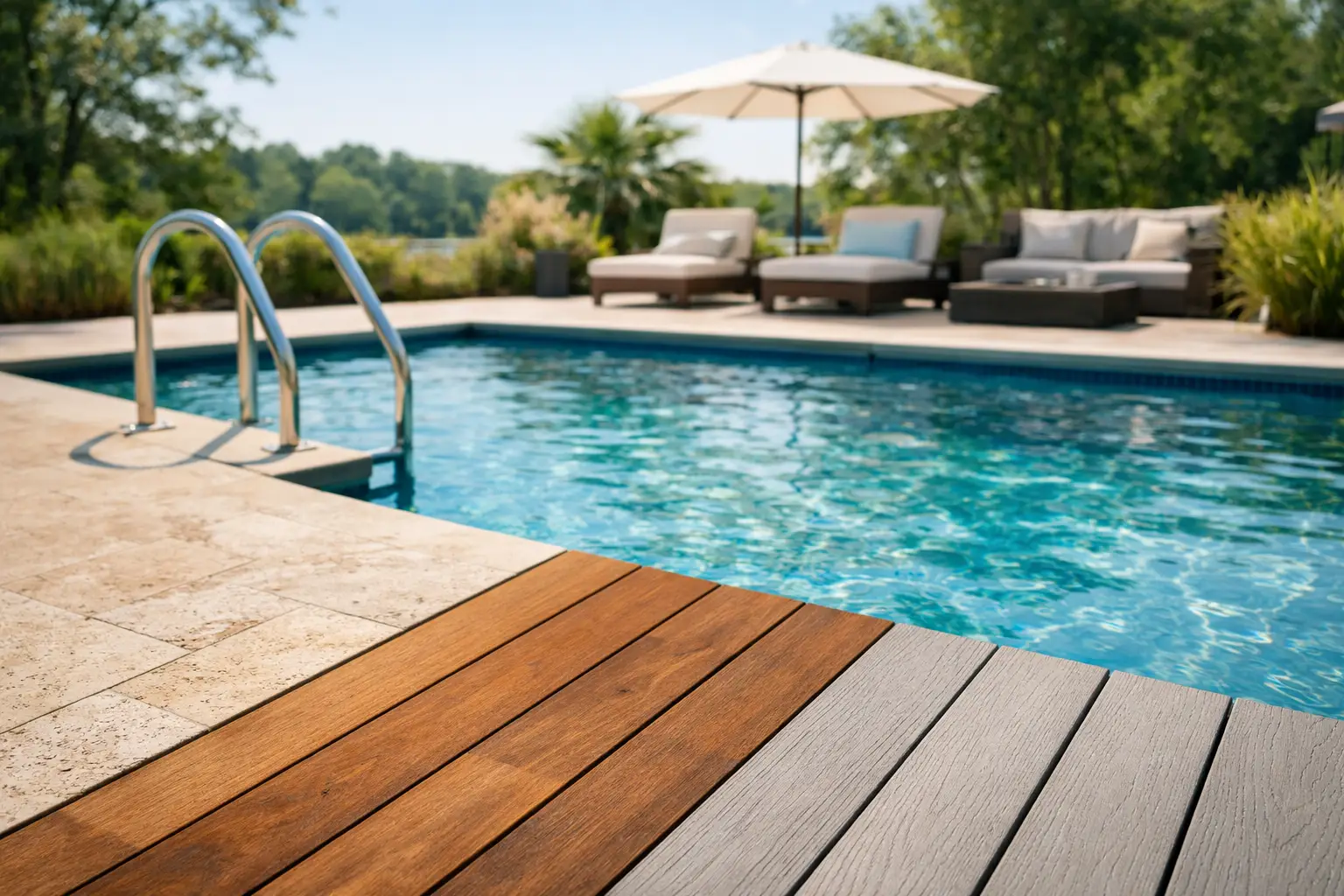
The moment your pool goes from a construction plan to a place where people actually gather, the decking starts doing a lot of the heavy lifting. It sets the tone, shapes traffic flow, affects safety under bare feet, and determines whether the space feels like a luxury retreat or a missed opportunity. If you are wondering how to choose pool decking, the answer is less about picking a surface and more about designing the experience around the water.
For a high-end backyard, pool decking should never feel like an afterthought. The right material has to look beautiful from the house, stay comfortable in the heat, handle splashing and sunscreen, and tie into the rest of the outdoor environment. That means your pool deck should work just as well beside a covered patio, outdoor kitchen, fire feature, or garden edge as it does next to the pool itself.
How to choose pool decking starts with how you live
Before comparing concrete, pavers, or natural stone, start with a simpler question: how do you want this space to feel? Some homeowners want a sleek, modern deck with clean lines and minimal joints. Others want a softer, resort-inspired look with texture, warmth, and room for lounging, dining, and entertaining.
Your answer matters because the best decking choice is rarely about one feature alone. A family with young children may prioritize slip resistance and cooler surfaces. A couple building a showpiece backyard for entertaining may care more about visual impact, integrated lighting, and the way the deck complements a pavilion or outdoor bar. Most projects land somewhere in between.
That is why strong pool design begins with the whole picture. Decking should support circulation, furniture placement, views, and transitions into nearby spaces. When all of that is considered early, the finished backyard feels intentional instead of pieced together.
The four priorities that matter most
A beautiful pool deck still has to perform. In most Sunbelt climates, that means balancing four things at once: heat, traction, durability, and appearance.
Heat is often the first surprise for homeowners. A surface may look stunning in a showroom and feel unbearable in direct summer sun. Lighter colors tend to stay cooler than darker ones, and some materials naturally retain less heat than others. If your pool gets full afternoon sun, this deserves real attention.
Traction is just as important. Around water, smooth can quickly become slippery. Texture helps, but too much texture can feel rough on bare feet or make furniture less stable. The goal is a surface with enough grip to feel secure without looking overly utilitarian.
Durability matters because pool decking faces constant stress. Water, chlorine or salt exposure, UV rays, furniture movement, and shifting temperatures all take a toll over time. Some materials wear gracefully. Others may crack, fade, or require more upkeep than expected.
Then there is appearance, which is where many decisions begin. The deck often covers more visual area than the pool itself, so its color, pattern, and edge details have a huge effect on the finished space. If you want a polished outdoor environment, the decking material has to complement your home architecture and the rest of the hardscape.
Comparing the most popular pool decking materials
Concrete remains one of the most common choices, and for good reason. It is versatile, cost-effective relative to premium materials, and can be finished in several ways. Brushed concrete offers a clean, practical surface with decent slip resistance. Stamped or decorative concrete can mimic stone or tile at a lower price point.
The trade-off is that concrete can crack over time, especially in larger expanses, and darker finishes may run hot. In upscale outdoor spaces, plain concrete can also feel visually flat unless the detailing is handled well. It works best when the design uses thoughtful scoring, color selection, and integration with surrounding features.
Pavers are a strong choice for homeowners who want flexibility and a more tailored look. They come in a wide range of colors, formats, and textures, and they tend to hold up well in freeze-thaw shifts and long-term settling because individual units can be repaired or replaced. For pool areas, that repairability is a real advantage.
Pavers also lend themselves beautifully to larger backyard compositions. If your pool deck will connect to walkways, patios, a grilling area, or a fire pit lounge, pavers can create continuity across the entire design. The main consideration is craftsmanship. A premium result depends heavily on proper base preparation, precise installation, and selecting a style that feels elevated rather than overly busy.
Natural stone brings a different level of character. Travertine, limestone, and certain sandstones are especially popular around pools because they offer an organic, refined look that feels right at home in resort-style settings. Travertine, in particular, is often favored for its cooler feel underfoot and timeless appearance.
Stone does come with a higher investment, and not every type performs the same way. Some stones are more porous, some require sealing, and some can vary in color or surface texture from piece to piece. That variation is part of the appeal, but it needs to be managed within the overall design. When used well, natural stone can elevate the entire outdoor setting.
Tile is sometimes used for select deck zones or accents, though it is less common as the main field material in many residential backyards. It can create a very clean, contemporary effect, but it needs careful product selection because some tile surfaces become slick when wet or too hot in direct sun. In most cases, tile works better as a complementary element than as the primary pool surround.
Design matters as much as material
One of the biggest mistakes in choosing pool decking is treating it like a material-only decision. The layout, scale, and detailing are just as important as what the deck is made of.
A generous deck can transform the way a pool is used. It creates space for chaise lounges, conversation areas, and safe movement without crowding the waterline. On the other hand, too much hardscape without shade or planting can make the backyard feel exposed and harsh.
That is where design balance comes in. The best pool decks are framed by more than coping and furniture. They often include planters, seat walls, landscape lighting, shade structures, and transitions to patios or turf areas. These elements soften the edges and turn the pool into part of a complete outdoor living environment.
Edge treatment matters too. Straight lines feel crisp and modern. Curves can feel more relaxed and organic. Deck pattern, border accents, and coping profiles all influence the overall mood. Small details, when coordinated well, create the kind of finished look that homeowners notice every time they step outside.
How to choose pool decking for your climate
Sunbelt conditions deserve special consideration. Long stretches of intense sun, heavy UV exposure, pool chemical splash, and frequent outdoor use can push materials harder than homeowners expect.
If heat is a top concern, prioritize lighter colors and materials known for staying cooler. If your yard has significant tree cover, you may need to think more about debris, staining, and how the surface handles moisture in shaded areas. If the pool is saltwater, confirm that the decking material and any sealers are appropriate for that environment.
This is also where maintenance deserves honesty. Every surface requires some level of care. The real question is what kind of upkeep fits your expectations. Some homeowners are comfortable resealing stone periodically to preserve its appearance. Others would rather choose a lower-maintenance option and accept a slightly different aesthetic. Neither approach is wrong. The right answer depends on your priorities.
Budget should guide, not shrink, the vision
Budget always matters, but the smartest projects do not start by asking for the cheapest square foot price. They start by asking which investment will create the best long-term result.
Pool decking covers a large area, so even modest material upgrades can noticeably change the feel of the backyard. At the same time, spending more on the surface while ignoring layout, drainage, shade, or craftsmanship rarely produces the outcome homeowners want. A premium finish needs the right foundation behind it.
That is why custom design-build planning tends to produce stronger results. Instead of choosing decking in isolation, you evaluate it alongside the pool shape, surrounding amenities, and overall property style. For homeowners creating a true outdoor retreat, that bigger-picture thinking pays off.
The best choice is the one that belongs in the whole backyard
If you are deciding how to choose pool decking, look beyond samples and start imagining the finished experience. Picture the deck at noon in August, after sunset with lighting on, during a weekend gathering, and on an ordinary Tuesday when you just want a quiet place to unwind. The right material should support all of those moments.
A well-chosen pool deck feels beautiful, but it also feels easy. It welcomes bare feet, complements the home, and makes the entire backyard more inviting. That is the difference between adding a pool surround and creating a destination. When the surface, layout, and craftsmanship all work together, the water is only part of what makes the space memorable.
If your goal is a backyard that feels polished, personal, and built for the way you actually live, your pool decking deserves the same level of thought as the pool itself. That is often where the real transformation begins.