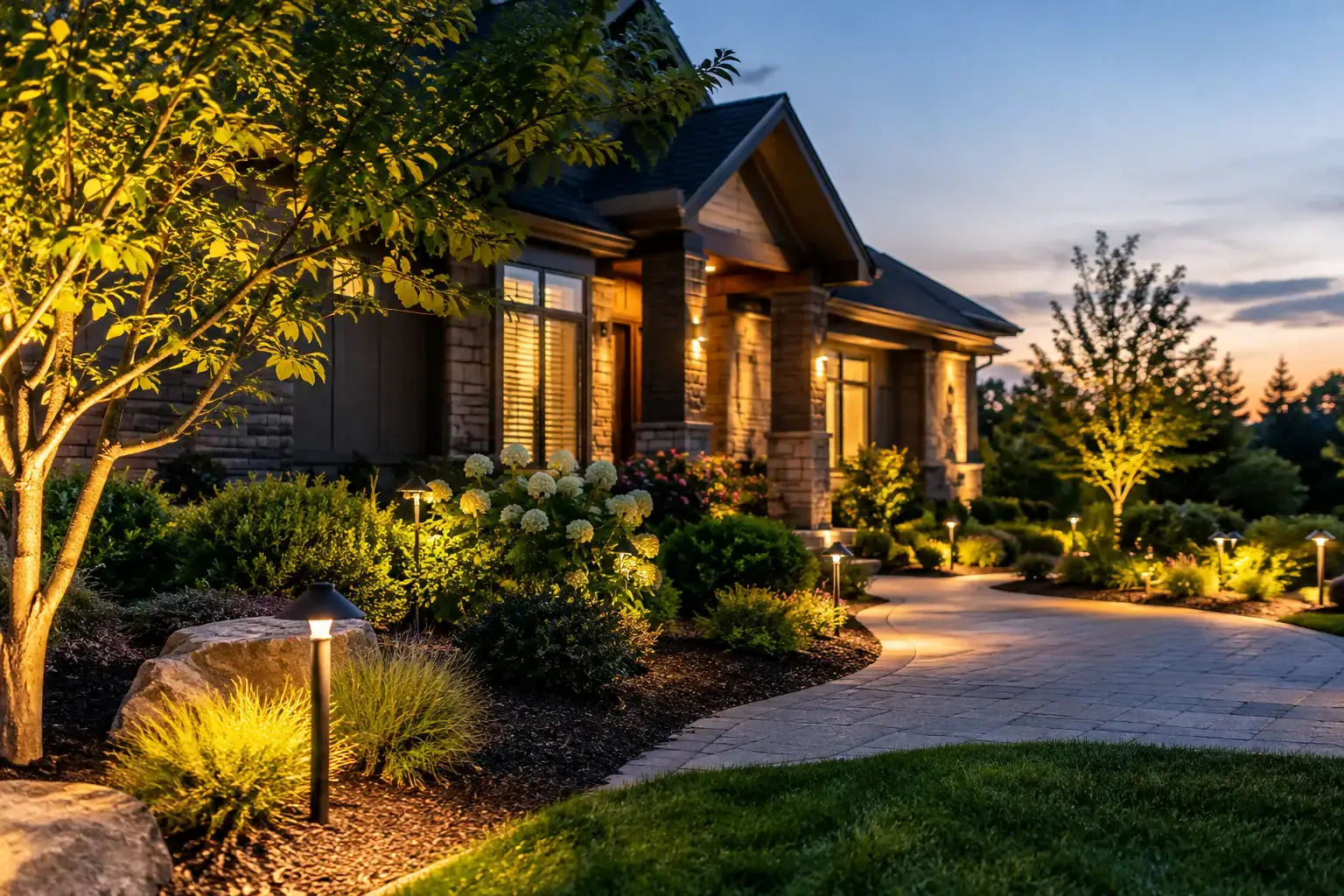
A beautifully designed backyard should not disappear when the sun goes down. Thoughtful landscape lighting gives a pool terrace its evening glow, makes a garden path feel welcoming, and turns an outdoor kitchen or fire feature into a place guests want to linger. It is not simply about adding fixtures. It is about giving your exterior environment a second life after dark.
For homeowners who entertain, relax outdoors, and invest in a complete property vision, lighting is one of the details that separates a nice backyard from a true private retreat. The right plan adds drama where it belongs, provides confidence underfoot, and lets the architecture, materials, and plantings hold their presence well into the evening.
Landscape Lighting Is Part of the Design, Not an Add-On
The most successful lighting plans begin alongside the larger outdoor design. When lighting is considered after a patio is installed, a pool is complete, and plantings are in the ground, the available choices can become more limited. Wiring routes may be harder to conceal, fixture locations may feel improvised, and the overall effect can become overly bright or inconsistent.
Planning early allows every component to work together. Low-voltage lines can be routed beneath hardscapes before final installation. Fixtures can be positioned to complement retaining walls, steps, water features, pergolas, and specimen trees. Control zones can also be designed around how your family actually uses the space – perhaps a subtle setting for quiet weeknights and a more generous glow for a dinner party.
This is especially valuable in a full backyard transformation. A paver walkway should be easy to follow without looking like an airport runway. A pool should feel elegant and inviting without competing with the sky or reflecting glare across the water. A fireplace should remain the visual anchor, while the surrounding seating area stays comfortably usable. Great design balances these moments rather than treating every area with the same amount of light.
What a Well-Lit Outdoor Space Should Accomplish
Luxury exterior lighting has a practical purpose, but its real impact is emotional. It creates anticipation at the front entry, comfort around a dining table, and a sense of depth across the property. Instead of one bright wash of light, a layered plan guides the eye from one beautiful destination to the next.
Create safer movement without flattening the space
Steps, elevation changes, pool edges, and transitions between a patio and lawn deserve careful attention. Path lights, recessed step lights, and discreet downlighting can help family and guests move naturally through the property. The goal is visibility at the walking surface, not bright fixtures shining into people’s eyes.
This distinction matters around stairways and retaining walls. A fixture placed too high or aimed poorly can create harsh shadows, which may make navigation less comfortable rather than more secure. Soft, directed light reveals the edge of each step and preserves the refined character of the hardscape.
Highlight the details worth seeing
During the day, sunlight reveals texture and scale. At night, landscape lighting gives you the opportunity to curate what stands out. The rich face of a natural stone wall, the canopy of a mature oak, the movement of ornamental grasses, or the sculptural lines of a pergola can become focal points.
Uplighting is particularly effective for tall trees, columns, and architectural features. Grazing light placed close to a textured wall can bring out the depth of stone or masonry. Downlighting from a tree canopy can create a soft moonlit effect over a lawn, garden bed, or seating area. Each technique has its place, and a strong plan uses restraint so the eye has room to rest.
Extend the life of your favorite spaces
A backyard kitchen, pizza oven, covered pavilion, or poolside lounge has more value when it remains useful after sunset. Task lighting at a grill or preparation counter helps the host cook comfortably. Warm ambient lighting near seating encourages conversation. Accent lighting gives the pool, water feature, or garden a sense of occasion without demanding attention.
There is a meaningful difference between lighting an area and creating an atmosphere. A single floodlight can technically make a patio visible, but it rarely makes anyone want to stay there. Layers of warm, carefully controlled light make the same space feel hospitable, composed, and ready for a long evening with friends.
The Best Fixtures Depend on the Feature
There is no one-size-fits-all fixture package for a custom property. The strongest lighting plan responds to the layout, architecture, materials, and intended use of every outdoor zone.
Path and area lights work well along walkways, planting beds, and garden transitions, where they offer a low, welcoming pool of illumination. Step lights are ideal for stairs, seat walls, and changes in elevation. Well lights and directional uplights can dramatize trees, columns, and stonework, while downlights mounted in mature trees or structures can provide beautiful, natural-looking coverage.
For outdoor kitchens and covered spaces, task lighting should be deliberate. A cook needs useful light at the grill, bar, and preparation surfaces, while dining and lounge zones benefit from a softer treatment. Under-cap lighting on a bar, integrated lighting beneath bench seating, and subtle fixtures within a pavilion ceiling can create polish without making the setting feel commercial.
Water deserves its own approach. Light can make a waterfall shimmer, give a fountain dimension, and showcase the clean geometry of a pool. Yet too much brightness around water can create glare and distract from the calm, reflective quality homeowners often want. The best choice depends on the pool’s finish, surrounding materials, sightlines from the home, and how the space will be used at night.
Choose Warmth, Control, and Quality
For most high-end residential settings, warmer color temperatures create the most inviting result. Light in the warm-white range generally complements natural stone, wood, brick, lush planting, and outdoor living finishes far better than a stark blue-white tone. Cooler light can make an exterior feel clinical, particularly when it is used across a large patio or gathering area.
Color temperature is only one piece of the picture. Beam spread determines whether a fixture highlights a narrow tree trunk or softly washes a wide façade. Fixture shielding helps direct light where it is needed and limits glare. Dimming and zoning give homeowners the freedom to adjust the environment for a casual family dinner, a late swim, or a larger celebration.
Quality also matters because outdoor lighting lives in demanding conditions. Heat, humidity, rain, irrigation, and changing landscapes can expose weaknesses in inexpensive fixtures and connections. Premium materials, professional-grade components, properly sized transformers, and carefully installed wiring protect the investment and help maintain a consistent appearance over time.
LED technology has made it easier to enjoy efficient, long-lasting illumination, but low energy use should not be the only consideration. A poorly placed LED is still a poorly placed light. Design, aiming, shielding, and installation quality determine whether the result feels refined.
Avoid the Most Common Lighting Missteps
The most frequent mistake is overlighting. When every tree, wall, and pathway is equally bright, the property loses depth. The eye needs contrast to appreciate focal points, and darker areas can make a well-lit terrace or water feature feel even more compelling.
Another common issue is glare. Exposed bulbs aimed toward the house, seating areas, or street can interrupt a beautiful view and make guests uncomfortable. Fixtures should be selected and aimed to conceal the source of light whenever possible. You should notice the illuminated stone, tree, or walkway before you notice the fixture itself.
Finally, avoid treating lighting as a collection of isolated purchases. Adding a few fixtures each season can work for a modest garden, but a luxury outdoor environment benefits from a unified plan. It accounts for future plant growth, new entertaining areas, seasonal changes, and the view from inside the home. The result feels intentional from the driveway to the far edge of the backyard.
Design for the View From Inside, Too
Landscape lighting changes what you see through the windows after dark. A softly illuminated tree line can give a living room or kitchen a more expansive feeling. Gentle light on a water feature can create a peaceful focal point from a primary suite. A well-lit patio keeps the property visually connected to the home, even when no one is outside.
That interior-to-exterior relationship is often overlooked, yet it is central to a successful design. Consider the view from the rooms your family uses most, as well as the approach guests experience when they arrive. The best plans make the entire property feel composed, not just the places where fixtures happen to be installed.
A custom lighting design is an invitation to enjoy the home you have created for longer. Begin with the spaces that matter most to your family, then let every fixture support the way you gather, relax, celebrate, and see your backyard after sunset.