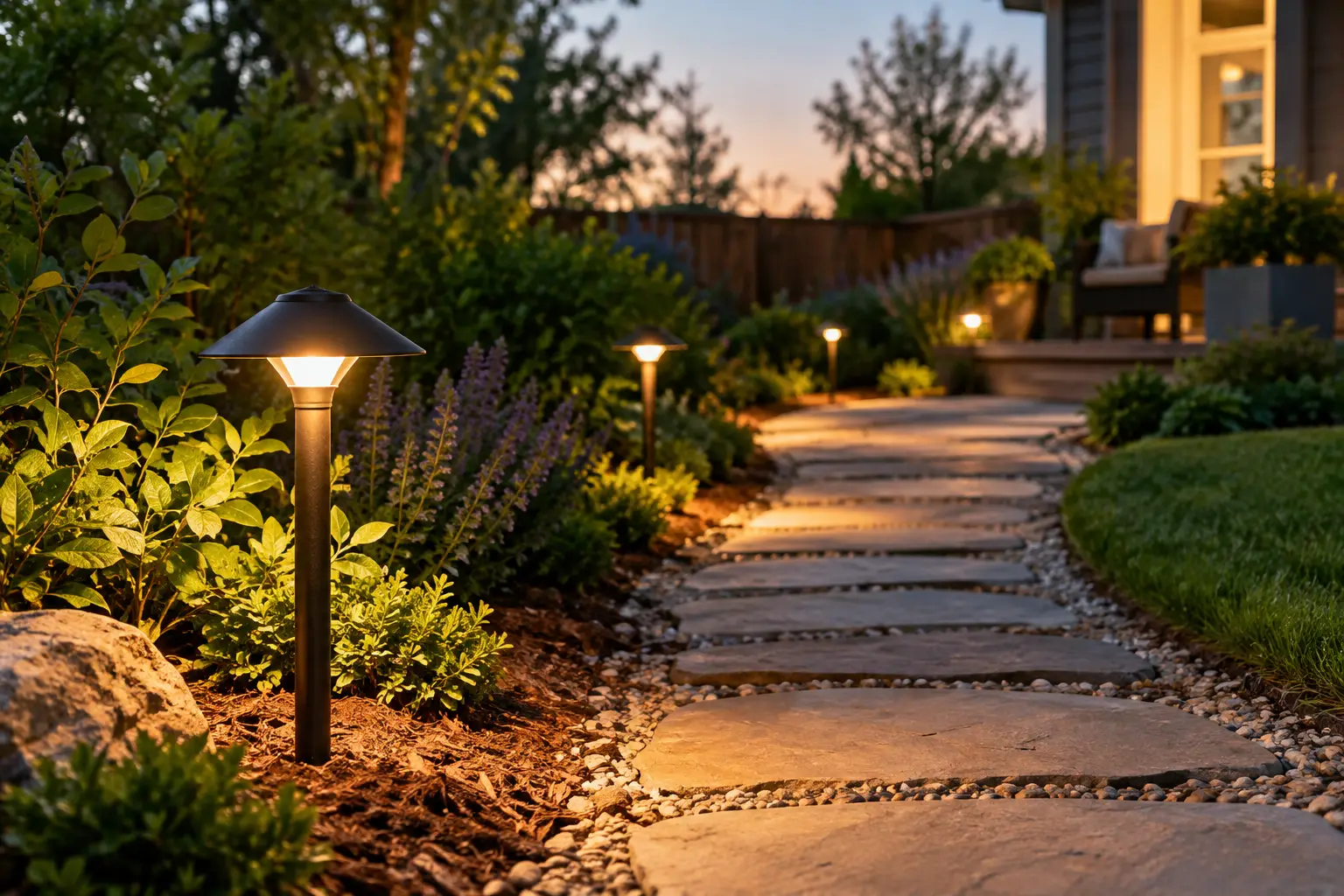
A beautifully planned backyard should not disappear when the sun goes down. The route from the patio to the pool, fire feature, garden, or outdoor kitchen is part of the experience. Learning how to light backyard pathways is less about lining a walk with as many fixtures as possible and more about creating a welcoming rhythm of light that makes every destination feel intentional.
For a high-end outdoor environment, pathway lighting has two jobs: it needs to guide people safely, and it needs to preserve the atmosphere you worked hard to build. The best results feel understated. Guests notice the warm glow across pavers, the soft outline of a planting bed, and the easy confidence of moving through the space after dark. They should not feel as though they have stepped onto a runway.
Start With the Evening Experience
Before choosing a fixture, walk your property at dusk. Start at the door or patio and follow the same routes a guest would take: toward the pool, through the lawn, around the side of the house, or out to the driveway. Notice where the grade changes, where pavers transition to grass, and where a turn in the path could be hard to read in low light.
This walkthrough also reveals the moments worth highlighting. A path may frame a mature palm, lead toward a pergola, or pass a water feature that becomes even more dramatic after sunset. Lighting should support those visual pauses without competing with them. Think of the pathway as the thread connecting the larger outdoor rooms of your property.
A straight service path behind the home may only need discreet guidance. A broad paver walk connecting a covered patio and pool deserves more considered composition. This is where a cohesive lighting plan separates a functional backyard from a true evening retreat.
Choose Warm, Controlled Light
For most residential landscapes, warm-white lighting between 2700K and 3000K creates the most inviting effect. It complements natural stone, travertine, brick, wood, and lush planting palettes while giving outdoor gathering spaces a relaxed, refined character. Cooler light can read harsh or bluish against those materials, especially near a fireplace, fire pit, or outdoor kitchen.
Brightness matters just as much as color. Pathway lighting is meant to illuminate the walking surface, not flood the entire yard. A low-output LED fixture with a shielded or downward-facing beam will usually do more for comfort and safety than a brighter fixture that shines into guests’ eyes.
Glare is the most common mistake in outdoor lighting. If you can see the bare bulb or a hot spot from the patio, the fixture is either too exposed, too bright, or positioned poorly. Aim for pools of light that overlap gently enough to reveal the route without making the landscape feel overlit.
How to Light Backyard Pathways With Layers
A polished lighting plan rarely relies on one fixture type. Path lights provide the foundation, but additional layers create depth and make the backyard feel designed rather than decorated.
Use path lights for navigation
Traditional path lights work well along walkways, stepping-stone routes, and garden transitions. Choose fixtures with solid construction and a finish that complements the architecture and hardscape. Dark bronze, black, and natural metal finishes tend to feel timeless, while a decorative fixture can become a distraction if every light demands attention.
Place path lights on alternating sides of the walkway instead of arranging them in a rigid, symmetrical line. This softens the look and gives the light a more natural cadence. On a narrow path, fixtures generally belong just off the edge of the walking surface so the beam reaches the path without creating a tripping hazard or narrowing the usable width.
Spacing depends on fixture output, surrounding darkness, and the complexity of the route. As a starting point, many paths look balanced with fixtures about 8 to 12 feet apart. Tighten the spacing at turns, stairs, changes in elevation, and intersections. A winding garden path may need a little more light than a wide, straight paver walkway because guests need more visual cues to follow it comfortably.
Add step and wall lights where elevation changes
Steps deserve their own treatment. Small recessed step lights, integrated riser lights, or low wall lights can define each change in elevation without the clutter of multiple path fixtures. The goal is to make the edge of every tread easy to read while preserving the material and craftsmanship of the stairway.
Retaining walls are another opportunity. A carefully placed wall light can wash a lower path with soft illumination and bring architectural structure to the landscape at night. This approach is especially effective around terraced yards, raised planting beds, and patios that transition into a lower pool or recreation area.
Let landscape lighting create depth
Uplighting selected trees, palms, specimen plantings, and textured walls gives a pathway a sense of destination. The key word is selected. A few well-composed focal points are more compelling than lighting every trunk and shrub in the yard.
If a walkway runs near a fountain, waterfall, or pool, subtle light can make moving water and reflective surfaces part of the evening scene. Keep fixture placement deliberate. Water features are naturally eye-catching, so they often need less illumination than homeowners expect.
Consider integrated hardscape lighting
For luxury patios and custom walkways, integrated lighting can offer the cleanest finish. Lights tucked beneath stone caps, bench seats, handrails, or the edge of a built-in kitchen create visual guidance without adding visible stakes throughout the landscape.
This option works particularly well when lighting is planned alongside a new patio, retaining wall, pavilion, or pool project. Electrical runs, fixture locations, and material details can be coordinated before construction is complete. Retrofitting is possible, but it can require more compromises and disruption to finished surfaces.
Respect the Materials Underfoot
Different pathways call for different lighting strategies. Smooth concrete and large-format porcelain pavers reflect more light than dark natural stone, so they may need lower-output fixtures. Irregular flagstone, gravel, and stepping stones often benefit from closer spacing because their edges are less predictable at night.
Avoid placing fixtures where they will be vulnerable to lawn equipment, energetic pets, or frequent foot traffic. In planting beds, leave room for mature foliage. A path light hidden by ornamental grasses may look charming for a few weeks, then become ineffective once the landscape fills in.
Drainage and irrigation deserve attention, too. Fixtures should be positioned and installed to withstand wet conditions, but no landscape light performs well when it is routinely buried, splashed by irrigation heads, or tilted by shifting soil. Thoughtful layout protects both the appearance and longevity of the system.
Select a System Built for the Long View
Low-voltage LED systems are a popular choice for residential pathway lighting because they are energy-efficient, flexible, and capable of delivering a refined look. Quality matters, especially in the Sunbelt, where heat, heavy rain, irrigation, and intense UV exposure can challenge outdoor materials.
Solar fixtures can be useful for a temporary garden path or a small, low-stakes area. For a primary route in a premium backyard, however, their output and consistency are often limiting. Performance changes with weather, shade, battery condition, and seasonal daylight. A professionally installed low-voltage system offers greater reliability, control, and a more tailored result.
Smart controls can make the experience even easier. Timers, astronomical scheduling, dimming, and zoning allow the lighting to respond to how you use the property. The route from the house to the driveway may need dependable nightly illumination, while accent lighting around a pool or pavilion can be set for entertaining nights only. A layered system should feel effortless to use, not like another task to manage.
Design for Safety Without Sacrificing Mood
Pathway lighting should make hazards visible, but more light is not always safer. Excessive brightness can flatten depth perception, create glare, and make darker areas beyond the fixture feel even darker by contrast. A balanced design gives the eye time to adjust as people move through the yard.
Pay special attention to stairways, pool perimeters, transitions between surfaces, gate latches, and routes used when carrying food or drinks from the outdoor kitchen. These areas deserve clear visual definition. Near a pool, keep lighting focused on safe circulation and follow all applicable electrical and local code requirements.
It is also wise to consider views from inside the home. At night, your windows become part of the composition. A well-lit pathway can extend the visual reach of the interior and make the entire property feel connected, even when you are relaxing indoors.
Let the Lighting Belong to the Whole Design
The most memorable backyards do not treat lighting as an afterthought. It is part of the architecture of the space, shaping where people walk, gather, pause, and look. When pathway lights, planted borders, stonework, water, and gathering areas are planned together, the result feels calm, polished, and unmistakably personal.
If your backyard is evolving into a more complete outdoor retreat, bring lighting into the conversation early. The right glow does more than lead guests from one place to another. It makes every evening outdoors feel like an invitation to stay a little longer.