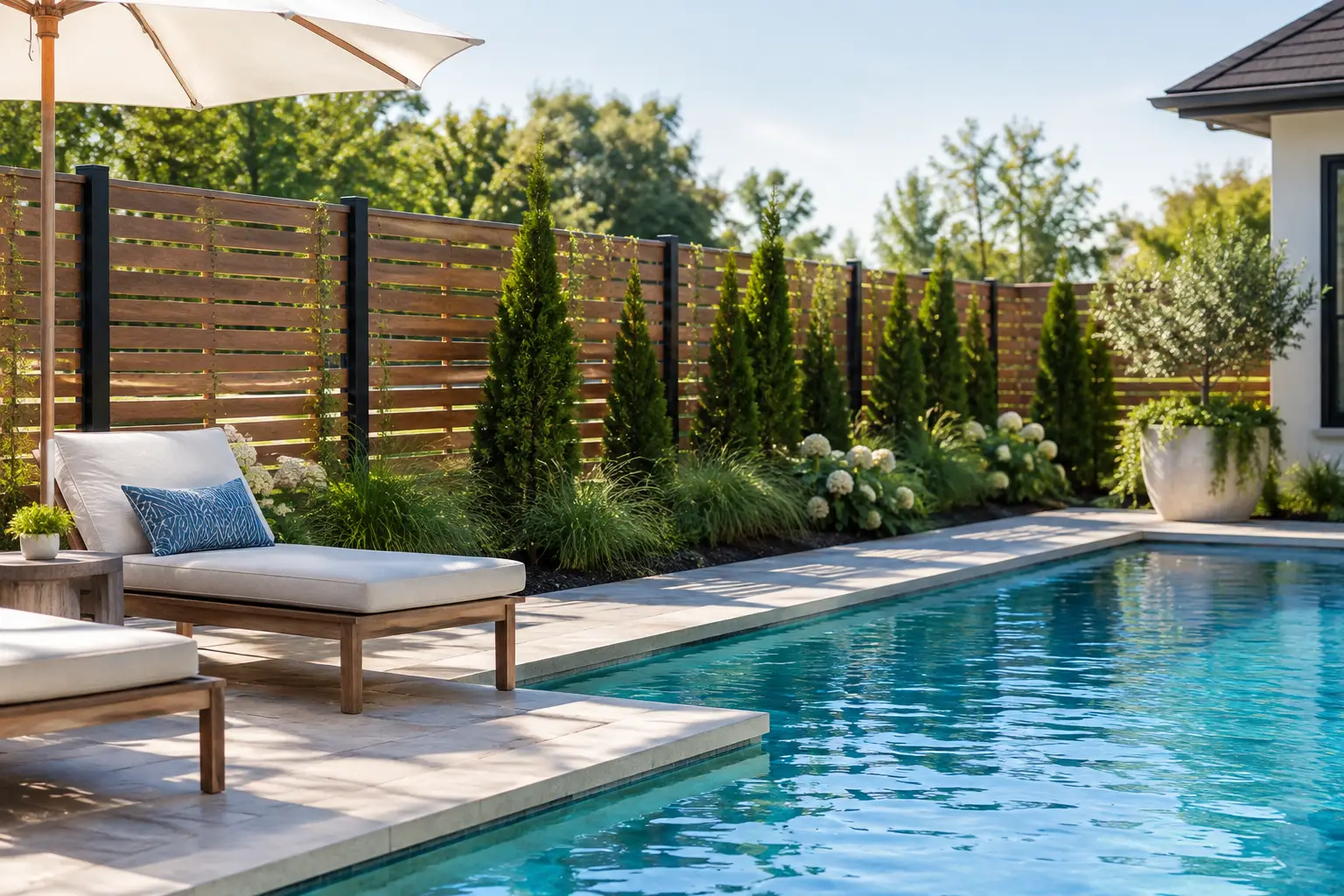
A pool should feel like the most relaxing part of your property, not a stage in full view of the neighbors. Learning how to add pool privacy is less about putting up the tallest possible barrier and more about shaping a backyard that feels intentionally sheltered, open to the sky, and worthy of the way you want to live outdoors.
For a high-end backyard, privacy is not an afterthought. It is a design layer that influences where the pool sits, how guests move through the space, where the outdoor kitchen faces, and which views you preserve from inside the home. The best solutions create a sense of arrival and retreat without making the yard feel boxed in.
Start With the Views That Matter Most
Privacy is rarely an all-or-nothing issue. You may only need to block a second-story window beside the spa, soften a direct view from a neighboring patio, or create separation around a chaise lounge area. Before selecting plants, walls, or screens, stand at the pool at different times of day and look outward from the places you will actually use.
Consider the view from the waterline, the tanning ledge, the dining table, and the fire feature. Then look back toward the house. A privacy feature that protects the pool but blocks a favorite sunset or makes the kitchen feel disconnected may solve one problem while creating another.
This is where a comprehensive site plan makes a meaningful difference. Rather than treating privacy as a fence-line decision, a designer can frame it around sight lines, elevation changes, sun exposure, drainage, and the natural flow of entertaining. The result feels composed instead of added on.
How to Add Pool Privacy With Layers
The most inviting poolscapes use layers. A single, solid privacy wall can work in the right setting, especially on a compact lot, but several lighter elements often create a more polished resort effect. Layering also gives a backyard depth, texture, and seasonal interest.
Use evergreen planting as the living backdrop
Evergreen trees and hedges offer a lush, enduring way to screen neighboring homes. In many Sunbelt landscapes, choices may include clumping bamboo, podocarpus, sweet viburnum, wax myrtle, holly, palms, or carefully selected ornamental grasses. The right selection depends on your growing zone, soil, irrigation plan, desired height, and how much maintenance you are willing to take on.
A hedge is not always the fastest solution. Young plants need time to mature, and planting too tightly can lead to crowding and decline. For homeowners who want immediate coverage, larger specimen material or a combination of planted screening and architectural features can provide privacy now while the landscape fills in over time.
Planting should also feel generous rather than flat. A layered bed with taller screening plants behind medium shrubs and softer foreground plantings creates a richer view from the pool. It can make the property line disappear into the landscape rather than announcing exactly where it begins.
Add architectural screens where plants cannot do enough
Decorative screens are especially effective beside a spa, outdoor shower, changing area, or seating nook. Slatted wood, powder-coated metal, masonry breeze blocks, and custom-cut panels can all provide a sense of enclosure while allowing light and air to move through the space.
The design matters. Horizontal slats can make a narrow yard feel wider, while vertical elements add height and formality. A screen repeated in the pergola, kitchen cabinetry, or gate design creates visual continuity across the entire backyard. It becomes part of the architecture, not a one-purpose partition.
For a pool environment, material selection should account for sun, splash, humidity, and maintenance. Wood brings warmth but requires a finish plan. Metal can offer crisp contemporary lines, while masonry has a more permanent, substantial presence. Each can be beautiful when it belongs to the home and the larger landscape palette.
Use grade changes and retaining walls strategically
If your property slopes, elevation can become one of the most useful privacy tools available. A retaining wall with planting above it can raise the green backdrop enough to block sight lines without requiring an excessively tall fence. Conversely, lowering a pool terrace slightly into the site can make the water feel tucked away while maintaining an open horizon.
Retaining walls can also define destinations. A raised planter near the pool might separate the lounging area from a lawn or court, adding privacy without closing either zone off completely. Stone, stucco, or architectural block can be selected to echo the home and establish a refined, permanent character.
Create Private Destinations, Not Just a Private Perimeter
A backyard does not need equal privacy everywhere. The swimming pool may remain open to a landscaped lawn, while the spa is sheltered by screens and tall planting. The dining area might sit beneath a pavilion with drapery panels, while a fireplace lounge has a more intimate wall of greenery behind it.
This approach makes a larger backyard feel more purposeful. It gives guests choices: a sunny social space, a shaded conversation area, a quiet place to read, and a private corner to unwind after a swim. It also helps an outdoor environment feel more like a luxury resort, where every space has its own mood.
Pergolas and pavilions are particularly valuable because they introduce overhead definition. They do not necessarily block neighboring views on their own, but paired with side screens, climbing plants, or drapery, they can create a comfortable sense of refuge. For homes with close side-yard exposure, a covered structure can pull the eye inward toward the kitchen, fireplace, or pool rather than outward toward the property line.
Preserve Light, Breezes, and the Best Views
The common mistake in pool privacy is overbuilding. A tall wall along every edge can make a backyard feel dark, still, and smaller than it is. In warm climates, blocking breezes may also make a pool deck less comfortable during the months when outdoor living should be at its best.
Instead, use solid elements only where the view is most intrusive. Choose open slats, filtered planting, or raised planters where you want a softer boundary. This balance is especially useful around water, where reflected light and open sky contribute to the sense of escape.
Nighttime deserves equal consideration. Thoughtful landscape lighting can make a privacy wall or planting bed feel like a dramatic backdrop rather than a dark edge of the yard. Uplighting specimen palms, washing a textured wall with soft light, or illuminating a water feature adds depth after sunset while keeping the setting welcoming for guests.
Make Privacy Part of the Pool Design From Day One
Adding privacy after a pool is complete is possible, but it often costs more and offers fewer options. Designing it with the pool allows the entire space to work together. The pool can be oriented away from neighboring windows, equipment can be screened within the architecture, and circulation can be routed through planted transitions rather than exposed side yards.
It is also the right time to plan practical details. Pool barrier requirements, local zoning rules, drainage, utility access, HOA guidelines, and setbacks may affect where fencing, walls, structures, and trees can go. Mature plant size matters too. A tree that looks perfectly placed at installation may overwhelm a deck, interfere with a roofline, or create more debris in the water than expected a few years later.
A custom plan weighs these realities against the lifestyle you want. If you host large gatherings, privacy features should not pinch the patio or interrupt service to the outdoor kitchen. If the pool is primarily a family retreat, the design may prioritize a quiet spa zone, shaded lounging, and visual softness from the house.
Choose a Style That Belongs to Your Home
Privacy features should feel like they were always meant to be there. A clean-lined contemporary home may call for smooth stucco walls, dark metal screens, and sculptural planting. A more traditional residence may feel at home with natural stone, painted wood details, flowering shrubs, and layered evergreens.
Water features can contribute as well. The gentle sound of a sheer descent, scupper, or raised spa spillway brings acoustic privacy, helping soften street noise and the everyday sounds of nearby homes. It will not replace physical screening, but it can make the pool experience feel more secluded.
At Beyond Backyard Living, privacy is considered alongside the pool, patio, planting, structures, and gathering spaces, so the finished backyard reads as one complete environment. That is how a practical need becomes an element of beauty.
The right privacy plan does more than hide a neighbor’s view. It gives you permission to linger in the water, host dinner under the lights, and enjoy your own property with a little more freedom. Begin with the sight lines you want to change, then let the architecture and landscape turn them into a setting you will be proud to share.