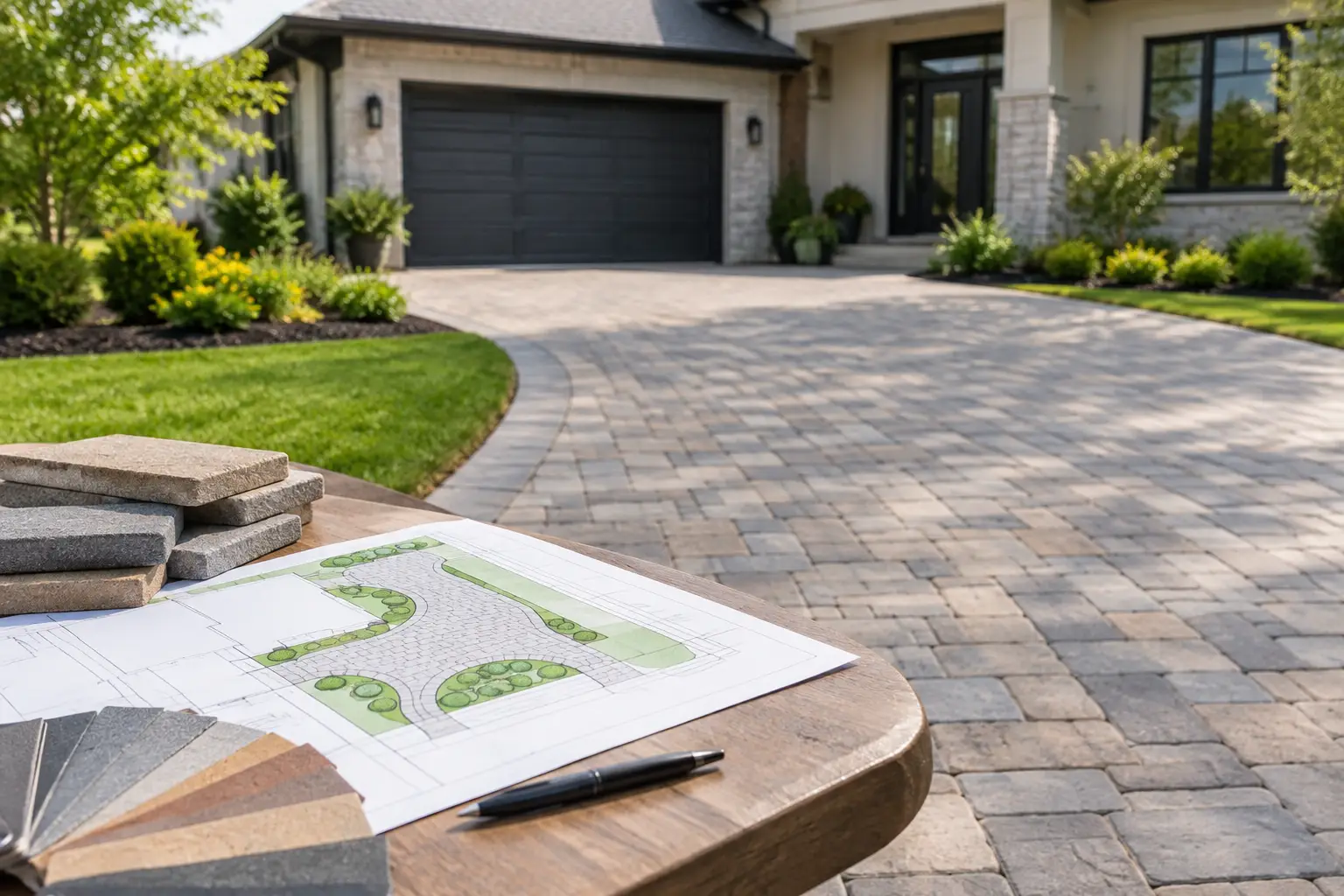
A driveway is the first room of your property, even if it lives outdoors. It frames the approach home, sets expectations for guests, and carries the daily weight of vehicles, deliveries, and family routines. This paver driveway planning guide helps you make the decisions that turn a utilitarian surface into a polished arrival experience built for the way you live.
For a high-end home, pavers offer something poured concrete and asphalt rarely can: dimension. Thoughtful pattern, color, borders, and transitions can connect the street to the architecture of the home, then carry that visual language toward a front entry, courtyard, or backyard gathering space. The beauty matters, but performance matters just as much. A paver driveway should feel effortless for years because the planning underneath it was anything but casual.
Paver Driveway Planning Guide: Begin With the Whole Property
The best driveway designs do not begin with a sample board. They begin with the full site and the experience you want to create. Consider how the driveway meets the street, where guests park, how vehicles turn around, which views deserve to be revealed, and how the front approach relates to existing walkways, gates, lighting, and planting beds.
A straight drive can feel clean and architectural, particularly on a formal facade. A curved approach creates a slower, more gracious arrival and can soften a large front yard. On properties with the space, a circular drive or motor court can improve traffic flow while creating a natural place for landscape focal points, a fountain, or a specimen tree. The right answer depends on the lot, local requirements, and how many cars regularly use the space.
It is also worth planning beyond the driveway itself. If your home has a paver pool deck, a stone-clad entry, or a future outdoor kitchen, the driveway should feel related without looking overly matched. Repeating a warm undertone, a complementary border color, or a similar natural texture creates continuity across the property. That level of coordination is what makes outdoor improvements feel designed rather than added over time.
Establish the Layout Before Choosing the Pavers
Driveways have to work on their busiest day, not just look good from the curb. Think through everyday movement: backing out, unloading groceries, parking guest vehicles, maneuvering larger SUVs, and accommodating service vehicles. A beautiful narrow entrance can become frustrating if it does not allow comfortable turns or leaves no room for two cars to pass.
Your design team should assess the driveway’s width, turning radius, parking areas, garage access, and any pinch points around walls, trees, or utility structures. If the existing drive feels cramped, widening only one section or adding a flared entry may deliver a major improvement without rebuilding the entire front landscape.
Transitions deserve special attention. The point where pavers meet the public street, garage slab, front walk, or existing concrete must be designed for clean movement and a finished appearance. These details may seem small on a plan, but they are where a project either feels tailored or feels pieced together.
Plan for Guests, Not Just Cars
A driveway often doubles as event infrastructure. When friends arrive for a holiday dinner, a graduation party, or an evening around the fire pit, they should not be left guessing where to park or how to reach the front door. Defined guest parking, a graceful walkway, low-voltage lighting, and landscape edges can make the experience intuitive after sunset.
For homes that host frequently, a motor court or widened parking bay may be more valuable than a purely decorative planting bed. This is not a compromise in a well-composed design. It is hospitality expressed through the landscape.
Build the Foundation for Vehicle Weight and Climate
Pavers are only as strong as the system below them. A driveway installation requires excavation, a properly compacted aggregate base, bedding material, edge restraints, jointing material, and deliberate grading. Skipping any of these steps can lead to shifting, low spots, loose edges, or water collecting where it should not.
The required base depth varies by soil conditions, local climate, drainage needs, and expected loads. A driveway used by passenger vehicles has different requirements than one routinely accessed by heavy delivery trucks, RVs, trailers, or work vehicles. Existing soil should be evaluated rather than assumed to be stable simply because an older concrete drive has been in place.
Compaction is equally critical. The base must be installed and compacted in controlled lifts to create a stable platform. Proper edge restraints keep the paver field locked together, especially at curves, drive lanes, and transitions where vehicles create repeated lateral pressure.
A premium driveway should not merely look level. It should be graded with intention. Water needs a clear path away from the home, garage, and neighboring property. Depending on the site, that may involve subtle surface slope, channel drains, catch basins, swales, or permeable paver systems designed to manage stormwater through the surface.
Choose Materials That Belong With the Home
Concrete pavers are a popular choice for driveways because they offer strength, extensive color options, and a wide range of textures and shapes. They can support a refined traditional, Mediterranean, transitional, or contemporary look depending on the selected profile and pattern. Natural stone can create a more organic, estate-like character, although its cost, thickness variation, and maintenance expectations should be considered carefully.
The most successful color selections usually take cues from the home’s permanent materials: roof tone, brick, stucco, siding, stone veneer, and trim. A driveway does not need to match these elements exactly. In fact, overly close matching can make a property look flat. Instead, choose a field color that supports the home and a border or accent color that adds definition.
Lighter pavers can feel bright and expansive in sunny climates, but they may show tire marks or staining more readily. Darker pavers can create a dramatic, tailored look, yet they may absorb more heat and visually dominate a smaller front yard. Blended colors often offer a forgiving, natural appearance, especially in areas with dust, pollen, or frequent outdoor activity.
Pattern and Borders Create the Finished Look
For driveways, pattern is not purely decorative. Interlocking patterns such as herringbone help distribute vehicle loads effectively and often suit high-traffic applications. Running bond and linear patterns can complement modern architecture but should be specified with the driveway’s structural demands in mind.
Borders are one of the strongest design tools available. A contrasting soldier course can frame the driveway, emphasize a curve, and create a visual transition at the garage or street. Used with restraint, it adds the tailored finish associated with custom hardscape work. Used everywhere, it can feel busy. This is where a complete site plan is more useful than choosing features one at a time.
Budget for the Details That Protect the Investment
Paver driveway pricing is shaped by more than square footage. Demolition and disposal of an existing surface, excavation depth, base preparation, drainage solutions, site access, material selection, curves, borders, steps, lighting, and landscaping all affect the final scope. A simple rectangular driveway on an open lot will require a different investment than a curved, gated approach with retaining walls and integrated planting.
It can be tempting to reduce cost by simplifying what sits below the pavers. That is usually the wrong place to economize. A modestly priced paver installed over a properly engineered base will outperform a premium paver placed on inadequate preparation. When comparing proposals, look for clarity around excavation, base material, compaction, drainage, edge restraints, and the finish details at every transition.
Also leave room in the plan for the surrounding landscape. Fresh pavers can make aging beds, undersized lighting, and worn entry walks more noticeable. Coordinating a few thoughtful improvements at the same time often produces a more cohesive result and avoids disrupting the new driveway later.
Prepare for Construction With Clear Expectations
Driveway work affects daily access to your home, so the construction plan should account for where vehicles will park, how deliveries will be handled, and when the driveway can safely return to service. Timing depends on project scale, weather, material availability, demolition needs, and whether the work includes drainage, walls, gates, or landscape installation.
Before installation begins, confirm property lines, utility locations, neighborhood requirements, and any permits needed for curb cuts, drainage changes, or alterations near the public right-of-way. Mature trees also deserve early consideration. Their roots, canopy, and long-term health may shape the route, grade, or material choices more than expected.
A paver driveway is an investment in the first impression your home makes and the ease with which people move through it. Give it the same design attention you would bring to a pool terrace or outdoor kitchen, and it can become more than a place to park – it can become the beginning of every memorable welcome.