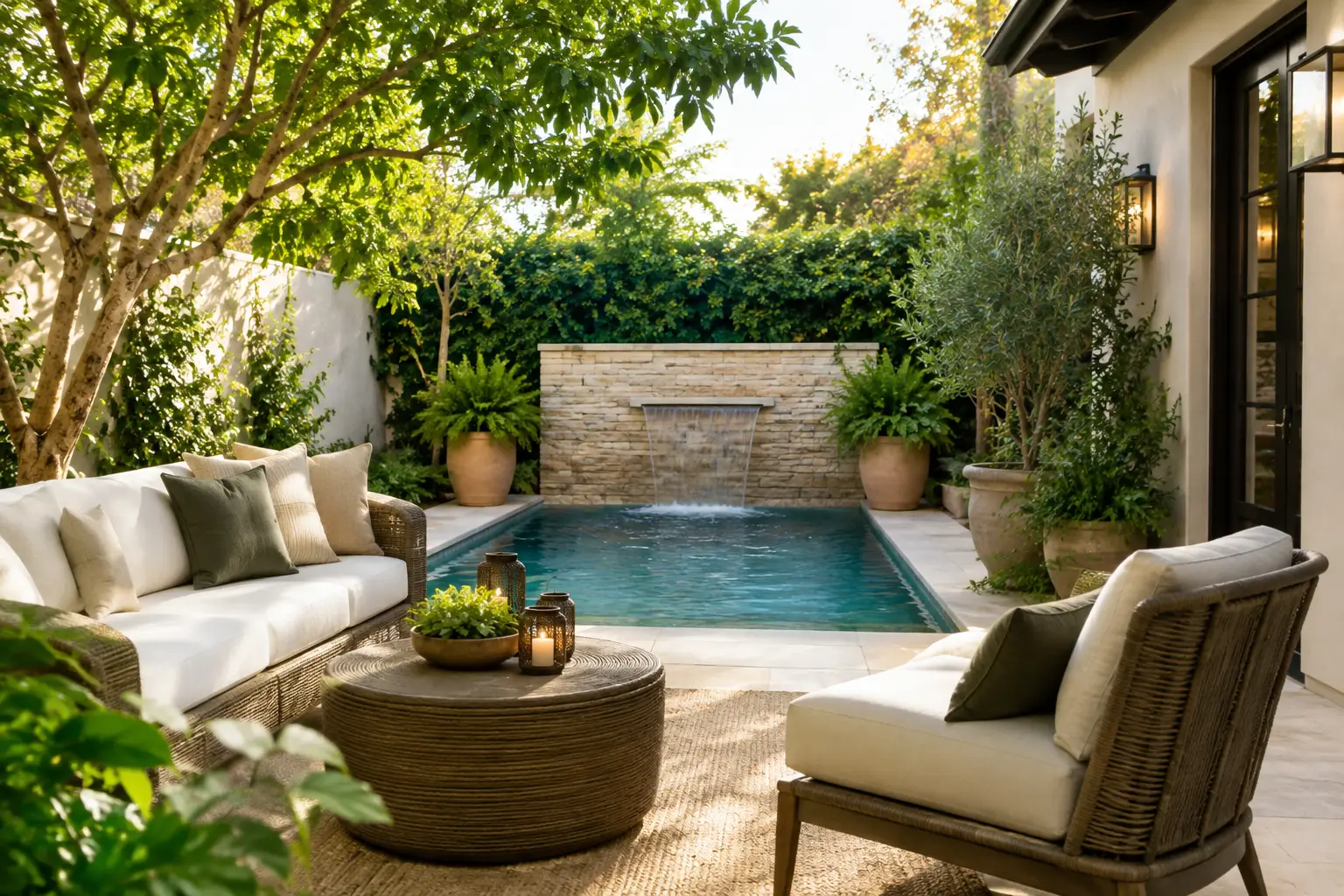
A courtyard should feel like a destination, not a leftover strip of patio between the house and the fence. Learning how to create private courtyards starts with a shift in perspective: privacy is not simply about blocking a neighbor’s view. It is about shaping an outdoor room with a sense of arrival, enclosure, comfort, and beautiful places to gather.
For homeowners investing in a high-end outdoor environment, the most memorable courtyards balance concealment with openness. They create a retreat from the street, nearby homes, or pool activity without becoming dark, boxed in, or disconnected from the rest of the property. The result can be a morning coffee garden, an intimate dining room under the stars, or a quiet extension of a primary suite.
Start With the Experience You Want to Create
Before choosing a wall, hedge, or pergola, define how the courtyard should serve your life. A private courtyard for two looks very different from one designed for cocktail hour, family dinners, or a poolside escape. Its location, scale, circulation, and amenities should follow that intended experience.
A dining courtyard needs convenient access to the kitchen or outdoor cooking area, enough clearance around the table, and lighting that allows guests to linger after sunset. A lounge courtyard may call for deeper seating, a fireplace or fire pit, and an architectural focal point that draws the eye away from surrounding homes. A wellness-focused courtyard can feel especially restorative with a spa, fountain, fragrant planting, and a secluded path from the house.
Also consider what you want to see from inside. A courtyard positioned outside a living room, kitchen, or primary bedroom becomes part of the view every day. Framing that view with structured planting, a water feature, or a statement fireplace gives the home a stronger connection to the landscape.
Design Privacy in Layers, Not With One Barrier
The most polished private courtyards rarely rely on a single tall fence. A solid barrier can provide immediate screening, but on its own it may feel flat or overly defensive. Layered privacy creates more depth, softness, and visual interest.
Begin with the permanent architectural boundary. This might be a stucco garden wall, natural stone wall, masonry privacy screen, or a carefully detailed wood fence. Materials should relate to the architecture of the home and other hardscape elements, such as patios, walkways, pool coping, or retaining walls. A courtyard feels more intentional when its enclosure appears to belong to the property rather than having been added as an afterthought.
Next, use a middle layer to filter views and light. Decorative metal panels, horizontal slats, masonry openings, lattice, and custom trellis work can shield sightlines while allowing air movement. These features are particularly useful in warm Sunbelt climates, where a fully closed space may limit the welcome breeze that makes an outdoor room comfortable.
Finally, bring the enclosure to life with planting. Evergreen hedges offer year-round screening, while ornamental trees, palms, clumping bamboo suited to the region, and layered shrubs soften walls and create a more natural sense of seclusion. The right plant palette depends on local climate, irrigation, maintenance expectations, and mature size. A hedge that looks perfect on installation day but outgrows its space in three years is not a luxury solution.
Use Views Strategically
Privacy does not mean every view needs to be closed. Often, the better approach is to block the unwanted sightline and preserve the beautiful one. If a mature oak, distant water view, or dramatic sunset sits beyond the courtyard, frame it with planting or architectural openings.
This selective approach makes a courtyard feel larger. It also prevents the space from becoming a walled box. A designer can study standing and seated sightlines from the home, dining table, lounge furniture, and pool deck to determine exactly where screening is needed most.
Establish a Strong Sense of Enclosure
A courtyard feels private when the boundaries are clear, but those boundaries do not need to be four solid walls. The home itself may form one edge, while a pavilion, pergola, planted border, or raised planter establishes the others.
Vertical elements matter because they create the feeling of a room. A freestanding fireplace can anchor one side of the courtyard. A pergola can define an outdoor dining area. Tall planters or a low retaining wall topped with lush greenery can separate a lounge space from an adjacent lawn or pool area without cutting it off completely.
The ideal degree of enclosure depends on the courtyard’s exposure. A sunny west-facing courtyard may benefit from stronger overhead shade and more substantial planting. A shaded courtyard surrounded by mature trees may need lighter structures and brighter materials to avoid feeling enclosed in the wrong way.
Choose a Ground Plane Worth Gathering On
The surface underfoot sets the tone for the entire courtyard. Natural stone offers timeless variation and a refined, substantial feel. Large-format porcelain can deliver a clean, contemporary look with easy maintenance. Premium pavers provide flexibility in pattern, color, and drainage-friendly installation. The best choice depends on the home’s architecture, the desired style, sun exposure, and how the space will be used.
A courtyard intended for entertaining should have a stable, generous surface that accommodates furniture without making circulation feel cramped. Leave enough room to pull out dining chairs, move comfortably around a fire feature, and create a natural route between doors, gates, and adjacent outdoor rooms.
Drainage deserves attention early in the design process. Courtyards are enclosed by nature, so water needs a carefully planned route away from the home and gathering areas. Proper grading, drainage systems, and material selection protect the investment while keeping the space usable after a heavy rain.
Add Shade Without Closing Off the Sky
In warm climates, privacy and shade often need to work together. The challenge is providing relief from direct sun without turning the courtyard into a dim enclosure. A custom pergola is an elegant answer when filtered light and architectural presence are the goal. Adjustable louvers offer greater control where sun exposure changes throughout the day. Shade sails can feel modern and light, while a covered pavilion creates a more protected entertaining room.
Climbing plants can soften a pergola and add seasonal character, but they should be chosen with maintenance in mind. Fast-growing vines may create a romantic canopy, yet they can require regular pruning and may not suit every structure. For some homeowners, a clean-lined pergola paired with strategically placed trees offers the better long-term balance.
Make the Courtyard Feel Alive After Dark
A private courtyard should not disappear when the sun goes down. Thoughtful lighting creates atmosphere, improves safety, and turns architectural details into evening drama.
Use layers here, too. Soft path lighting helps guests move comfortably. Uplighting on specimen trees, textured walls, or palms adds depth. Downlighting from a pergola or mature canopy can mimic moonlight. Warm accent lighting near seating, an outdoor kitchen, or a fireplace makes the space inviting rather than overlit.
Avoid treating every surface equally. Bright, uniform lighting can flatten a courtyard and make it feel more exposed. The goal is a gentle contrast between illuminated features and quieter shadowed areas. Controls should be simple enough that the courtyard’s mood can change from a quiet weeknight dinner to a lively gathering with the touch of a button.
Bring in a Focal Point That Draws People In
The strongest courtyard designs give the eye somewhere to land. A sculptural fountain, tiled water wall, fireplace, pizza oven, mature specimen tree, or custom art piece can become the signature element that gives the space its identity.
Water features are especially effective in private settings because they contribute more than visual beauty. The sound of moving water can soften neighborhood noise and create a calmer sensory experience. A fireplace adds warmth, glow, and a natural gathering point, extending the use of the courtyard into cooler evenings.
There is a trade-off: a courtyard does not need every possible feature. A compact space with a fireplace, fountain, outdoor kitchen, and oversized furniture can quickly feel crowded. Choose one primary focal point and let secondary features support it.
Connect the Courtyard to the Larger Backyard Vision
A courtyard should feel distinct, but it should not feel stranded. Consider how it relates to the pool, outdoor kitchen, lawn, garden, and interior living spaces. A transition in paving, a garden gate, a short path, or a change in planting can create separation while preserving a graceful flow.
This is where a comprehensive design process becomes especially valuable. Privacy walls affect drainage and views. Pergolas influence shade patterns. Planting choices shape maintenance needs and sightlines over time. When these decisions are made together, the finished courtyard feels composed from every angle rather than assembled feature by feature.
The most successful private courtyards do more than hide what is outside their walls. They give homeowners a reason to step outdoors, slow down, and enjoy a space that feels entirely their own.