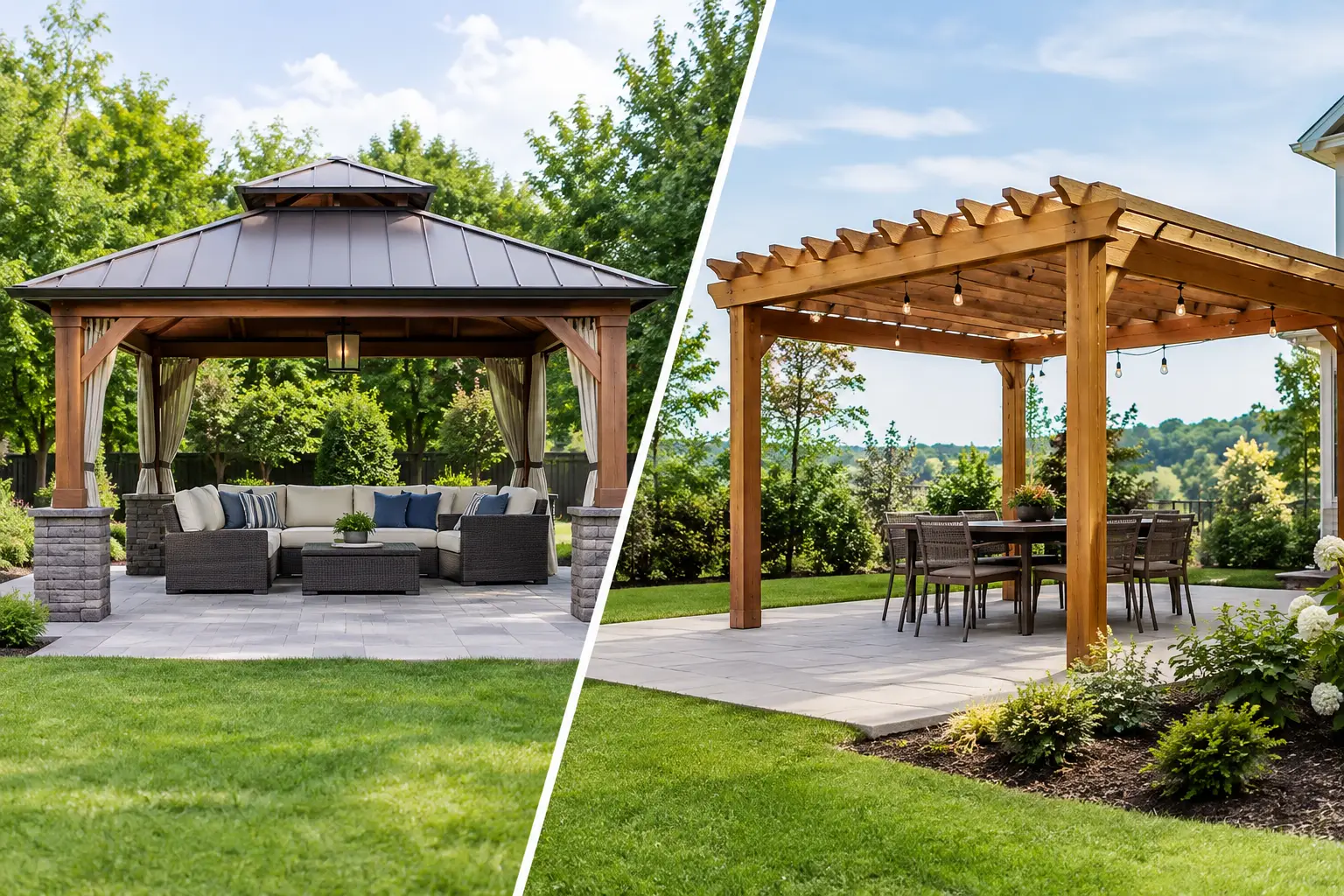
A great backyard structure does more than fill open space. It gives summer dinners a destination, turns a quiet morning coffee into a ritual, and makes your patio feel like a true extension of home. When considering a pavilion versus pergola, the best choice is not simply about appearance. It is about how much shelter you want, how often you entertain, and the kind of outdoor life you want your property to support.
For Sunbelt homeowners, that decision carries real weight. Strong sun, sudden rain, and long outdoor seasons call for a structure that feels beautiful in every season while working hard on the days you use it most. A professionally designed pavilion or pergola can become the architectural anchor that ties together a pool, outdoor kitchen, fire feature, and custom patio.
Pavilion Versus Pergola: The Essential Difference
A pavilion is a freestanding or attached outdoor structure with a solid, fully covered roof supported by posts or columns. Its roof may match the home, complement its architecture, or introduce a distinct resort-style presence in the landscape. The defining feature is dependable overhead coverage.
A pergola is an open-roof framework, traditionally built with beams and rafters that create patterned shade rather than full protection. It can be freestanding, attached to the home, placed over a dining terrace, or used to frame a path, lounge area, or poolside retreat. A pergola brings definition and vertical interest without closing off the sky.
Both can be custom-crafted in wood, metal, vinyl, or a combination of materials. Both can be elevated far beyond a basic kit with substantial columns, finished ceilings, integrated lighting, privacy screens, and carefully selected finishes. Yet their experience is fundamentally different: a pavilion offers refuge, while a pergola offers an inviting sense of openness.
Choose a Pavilion When Comfort Needs to Be Reliable
A pavilion is often the natural choice for homeowners who picture their backyard as a true entertaining environment. If your plans include a dining table for eight, a built-in grill, a pizza oven, a fireplace, or a lounge space beside the pool, a solid roof makes that space far more dependable.
Protection from sun and rain
The greatest advantage of a pavilion is consistent shade. In a warm climate, an uncovered patio can become unusable during the brightest part of the afternoon. A properly designed pavilion gives guests relief from direct sun and helps protect furnishings from harsh UV exposure. When a summer shower arrives halfway through dinner, the gathering does not have to end.
A roof also creates a better setting for ceiling fans, recessed lighting, speakers, heaters, and finished ceilings. These details matter because they extend the hours your outdoor space feels welcoming. Under a pavilion, a backyard can shift easily from an afternoon pool party to a relaxed evening meal.
A stronger architectural presence
Pavilions make a statement. Their height, roofline, and column details give the landscape an immediate focal point, especially on larger properties where a small structure could get lost. With the right proportions, a pavilion can echo the character of the home while creating the feeling of a private destination at the far end of the yard.
That visual impact comes with a need for thoughtful design. A pavilion should not feel dropped onto a patio as an afterthought. Its footprint, roof pitch, materials, drainage, views, and relationship to nearby features all deserve consideration. A pavilion that is too small can feel cramped. One that is oversized can block views, dominate the pool, or make the patio feel dark.
What to consider before building
Pavilions usually require a greater investment than pergolas because they involve a more complex roof system, stronger footings, and potentially electrical work, finished materials, and permitting. They may also require attention to setbacks, property coverage rules, and drainage planning.
Those added requirements are often worthwhile when the structure will be used as an outdoor room. The key question is simple: Would you still want to use this space if the sun is intense or rain is nearby? If the answer is yes, a pavilion may be the better long-term fit.
Choose a Pergola When Light and Openness Lead the Design
A pergola is ideal when you want shade without the visual weight of a full roof. It creates a sense of arrival and enclosure while preserving breezes, sky views, and the natural brightness of the patio. For homeowners drawn to a refined garden-resort aesthetic, that balance can be exactly right.
Defined space without a closed-in feeling
An open patio can feel unfinished, even when it has beautiful stonework and furniture. A pergola gives that area a ceiling line and a sense of purpose. Place one over a dining table, a pair of chaise lounges, or a conversation area, and the space immediately reads as intentional.
Because the roof is open, pergolas work especially well where you do not want to interrupt views from the home or conceal a beautiful mature canopy. They can also soften the transition between architecture and landscape, particularly when paired with climbing plants, planters, drapery panels, or subtle lighting.
Shade that can be tailored
Not every pergola creates the same amount of shade. Rafter spacing, beam depth, orientation to the sun, and added shade elements all influence the result. A pergola facing strong western exposure may need closer-spaced slats, retractable fabric, or a louvered roof system to provide meaningful late-day comfort.
That flexibility is a benefit, but it is also why planning matters. A pergola that looks beautiful in a design rendering may underperform if it is not oriented for the way the sun crosses your yard. Design should begin with the experience you want at 3 p.m. in July, not just the way the structure looks from the kitchen window.
Where a pergola excels
Pergolas are particularly effective over smaller patios, poolside lounges, garden walks, and secondary seating areas. They can also complement a larger covered structure elsewhere in the backyard. For example, a pavilion may shelter the outdoor kitchen and dining area, while a pergola defines a quieter fireside lounge near the pool.
Compared with a pavilion, a pergola generally uses fewer materials and has a simpler construction process. That can make it a more approachable investment, though custom scale, premium materials, motorized louvers, masonry columns, and integrated lighting can raise the overall project scope. The right choice should be based on the role the structure plays in the complete landscape, not on price alone.
Design the Structure Around the Way You Gather
The best pavilion or pergola begins with a clear picture of how you live outdoors. A family that hosts holiday meals, watches games outside, and cooks year-round will likely value the protection and utility of a pavilion. A homeowner who wants a sculptural poolside feature with filtered sunlight may prefer the lighter profile of a pergola.
Consider the elements already planned for the backyard. A pavilion can provide a natural roof over an outdoor kitchen, bar seating, dining zone, or fireplace. A pergola can frame a paver terrace, highlight a water feature, or create a graceful passage from the house to the pool. Neither structure needs to stand alone. At its best, it becomes part of a layered outdoor environment with hardscape, planting, lighting, and amenities working together.
Scale is equally important. Measure for circulation around furniture, cooking areas, and pool access rather than sizing the structure only around the table you own today. Account for ceiling fan clearance, nearby trees, roof runoff, and sightlines from inside the home. These details are where a tailored design earns its value.
Materials and Details That Make It Feel Custom
A pavilion or pergola should feel connected to the home, not merely installed behind it. That may mean a roof finish that complements existing architecture, stone bases that echo the facade, warm timber details, or clean modern lines in powder-coated metal.
Lighting changes the experience after sunset. Recessed fixtures and pendant lights can make a pavilion feel like an outdoor dining room, while low-glow string lighting or integrated beam lighting gives a pergola a more atmospheric presence. Fans, privacy walls, curtains, outdoor-rated audio, and carefully placed landscaping can add comfort without sacrificing elegance.
The most successful designs also respect maintenance expectations. Natural wood offers warmth and character but needs ongoing care. Metal and composite options can reduce upkeep, though they create a different visual expression. There is no universal best material. The right selection should suit your architecture, climate, desired maintenance level, and the character you want the space to carry for years.
A backyard should invite people outside, then give them a reason to stay. Whether that calls for the sheltering presence of a pavilion or the airy structure of a pergola, start with the moments you want to create – then let the design shape a setting worthy of them.